

This Week's Show
Air Date: September 25, 2026
FULL SHOW
SEGMENTS
Leaders Meet Amid Climate Warnings
/ Vernon LoebView the page for this story
The 2026 United Nations Climate Summit and Climate Week, which just wrapped up in New York City, took place in the wake of a summer marked by deadly extreme heat, the Nepal flood disaster and a UN report on the inevitable “overshoot” of the 1.5 degree C warming goal. Vernon Loeb, the executive editor of our media partner, Inside Climate News, speaks with Host Aynsley O’Neill about the disjoint between urgent warnings and pleas for help from vulnerable nations, while countries like the US continue boosting fossil fuels -- amid the rapid growth and cost savings of renewable energy. (14:19)

Climate Justice and Healing for Nepal
View the page for this story
After the deadly floods in Nepal this August, researchers from the World Weather Attribution group rapidly assessed the event and concluded that climate change played a “very strong” role in the catastrophic glacial collapse. Tanuja Pandey, a climate justice activist and lawyer based in Kathmandu, Nepal, joins Host Paloma Beltran to discuss the human toll of the floods and the moral duty of the world to slow the climate crisis and help Nepal adapt. (12:17)
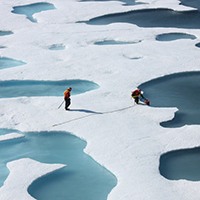
12 Trillion Tons of Melted Ice
View the page for this story
A recent study in the journal Scientific Data shows that since 1979, around 12.5 trillion tons of ice have melted from glaciers in Greenland and Antarctica -- enough to cover the entire US in 5 feet of ice. And the melting has been speeding up in the last two decades. Associated Press science writer Seth Borenstein and Host Aynsley O’Neill discuss the implications for future melting and global sea level rise. (11:21)
Tiny Microbes in Tree Bark
View the page for this story
In addition to storing carbon through photosynthesis, trees have another carbon cycle trick up their sleeve, or rather, bark, and it's been hiding in plain sight. Scientists recently discovered that tree bark hosts millions of microbes involved in consuming and producing methane, a powerful greenhouse gas. Biogeochemist and forest ecologist Jonathan Gewirtzman of Yale University, who was not part of the study published in the journal Science, has been studying the relationship between trees and microbes, and he spoke with Living on Earth’s Jenni Doering. (08:15)
Show Credits and Funders
Show Transcript
260925 Transcript
HOSTS: Paloma Beltran, Aynsley O’Neill
GUESTS: Seth Borenstein, Jonathan Gewirtzman, Tanuja Pandey
REPORTERS: Vernon Loeb
[THEME]
O’NEILL: From PRX – this is Living on Earth.
[THEME]
O’NEILL: I’m Aynsley O’Neill.
BELTRAN: And I’m Paloma Beltran.
As world leaders gather in New York countries like Nepal are on the frontlines of the climate crisis.
PANDEY: The problem is that Nepal’s climate story, you know, it often becomes internationally visible only after a disaster reaches a catastrophic death toll. But in fact, we lose our people amounting to hundreds and so on every year. It has become a new normal to us.
O’NEILL: Also, how tiny tree microbes affect the climate.
GEWIRTZMAN: We already know that you know when you walk through a forest, there's an amazing amount of diversity and complexity, and I think this just adds even another layer on top of that. So I know when I go outside now, every time I look at a tree, I'm also thinking about the trillion microbes that live inside that tree and what might they all be doing.
O’NEILL: That and more, this week on Living on Earth. Stick around!
[NEWSBREAK MUSIC: Boards Of Canada “Zoetrope” from “In A Beautiful Place Out In The Country” (Warp Records 2000)]
[THEME]
Leaders Meet Amid Climate Warnings
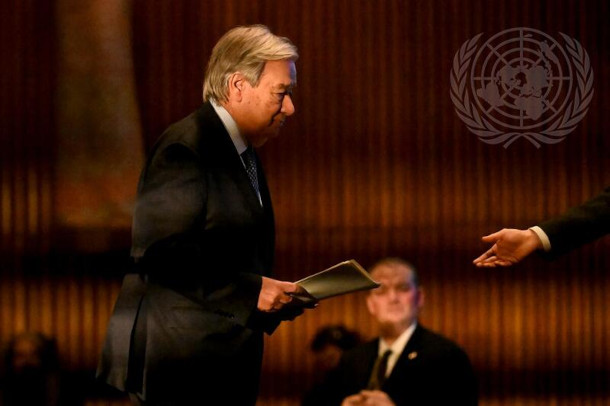
Secretary-General António Guterres addressed the High-level Meeting on Climate Action and the Just Transition on September 23, 2026, urging world leaders to set concrete timelines for phasing out fossil fuels and rapidly scaling up renewable energy. “Because the crisis is accelerating – but so are the solutions,” said Secretary-General in his opening remarks. (Photo: Laura Jarriel, UN Photo under Fair Use)
BELTRAN: From PRX and the Jennifer and Ted Stanley Studios at the University of Massachusetts Boston, this is Living on Earth. I’m Paloma Beltran.
O’NEILL: And I’m Aynsley O’Neill.
The 2026 United Nations Climate Summit, alongside Climate Week, just wrapped up in New York City. The two events brought together private and public sector leaders to discuss the urgent challenges and opportunities on all things climate. These sessions took place in the wake of a summer marked by deadly extreme heat and a glacial collapse and flood in Nepal that killed thousands. One of the key speakers at the UN climate summit was the Minister of Foreign Affairs for Nepal, Shisir Khanal.
KHANAL: Let me recall a message by Secretary General, three years back, from the lap of Mount Everest, when he urged the world to stop the madness, he warned that Nepal's mountains are crying for help, and that global inaction risks catastrophe for millions downstream. The question before us is whether the international community truly heard this warning with sincerity, with conscience, and with resolve.
BELTRAN: Meaning, whether the world’s biggest polluters are willing to sharply reduce emissions of the planet warming gases that are causing the climate crisis. And willing to finance a “just transition” to renewable energy, and the costly recovery from disasters like the Nepal floods.
O’NEILL: Prime Minister of the Solomon Islands Matthew Whale reminded the world that while small island nations did not cause climate disruption, they are on the front lines of it, and what matters now is that the big emitters of the developed world correct course on both emissions and funding.
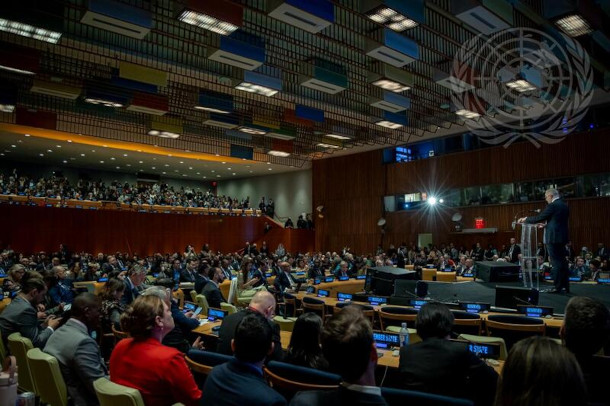
The United Nations High-level Meeting on Climate Action and the Just Transition met on September 23, 2026, joined by the annual NYC Climate Week. (Photo: Laura Jarriel, UN Photo under Fair Use)
WHALE: We don't want to guilt trip anybody, if it makes some feel better about making their contributions that it is charity, well, give it as charity. We don't think it's charity, but if it makes you feel better for it, give it as charity.
BELTRAN: And despite the growing costs of adapting to climate change, leaders highlighted the good news on the accelerating shift to green energy sources that are now cheaper than fossil fuels. Here’s Dr. Fatih Birol, the executive director of the International Energy Agency.
BIROL: Excellencies, many many years in the energy world, we had three choices in front of us. Shall I choose the most secure energy option? Shall I choose the most economic energy option? Or shall I choose the cleanest energy option? We have to make choices. We have to make trade-offs, but when we look at the world today, all of these three objectives are getting aligned, they are getting very, very close to each other.
O’NEILL: To help us think through both the devastation and the hope running through this year’s Climate Summit and Climate Week is Vernon Loeb, the executive editor of our media partner, Inside Climate News. Hi Vernon and welcome back to Living on Earth.
LOEB: Yeah, thanks so much. It's great to be here.
O'NEILL: And then UN had recently put out a report confirming that the Earth will exceed the 1.5 degrees Celsius warming that was outlined in the 2015 Paris Agreement. How did that news shape the conversation at this UN event?
LOEB: Yeah, that's really the sort of overarching context for this week's discussion in New York about climate change. The term the UN uses for that is overshoot. We are now looking at overshooting the goal of the Paris Agreement, which was to keep warming at 1.5 degrees Celsius. Overshoot means that, based on current emissions levels and current world policy, sometime in the next few years, global temperature averages are going to exceed 1.5 degrees Celsius for the first time, and that's a big deal. Every 10th of a point means more extreme weather, more calamity, more deaths from climate. So that's really the context kind of hanging over this week's deliberations in New York on climate, which I thought were really set by the two opening speeches: one by President Lula of Brazil and one by President Trump of the United States. Lula talked about the need for a rapid reduction of carbon emissions and a rapid transition to renewable energy. Trump talked about America's fossil fuel dominance and how that was the most important factor in global energy. He again denied climate and talked about how his administration had ended a global carbon tax on shipping and really mocked people who were concerned about climate change. This is how the high-level UN week opened with these two sort of dueling speeches.
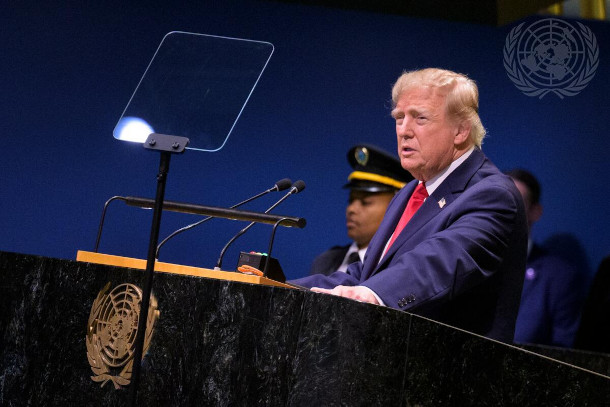
Donald Trump, President of the United States of America, addresses the general debate of the General Assembly’s eighty-first session on September 22, 2026. (Photo: Manuel Elías, UN Photo under Fair Use)
O'NEILL: Now, what did you hear from U.S. leaders and public figures who were speaking this week?
LOEB: There was obviously a lot of comment from U.S. leaders, not so much at the U.N. where the United States has sort of abdicated its leadership role and exited the process. But throughout events at Climate Week, you had U.S. leaders at all levels talking about renewables, talking about slowing down data center developments in their states. A lot of progress in this country and leadership in the United States now on climate comes at the state level and at the local level and not the federal level. You have a federal government that denies the importance of climate change and doesn't even really want to talk about climate change and in fact has removed the words climate change from the documents it produces. At the local level, of course, that isn't happening. And you know, in the U.S. you've got half the country is red states and half the country is blue states. And in red states, the legislatures and the governors pretty much follow Trump's lead, and remain focused on fossil fuels. And in the blue states, you still have state policies that are trying to reduce carbon emissions. You have state policies incentivizing the use of renewable energy. And so, at Climate Week, certainly people like Michelle Wu and Gavin Newsom were there talking about the continuing progress in their states toward the renewables transition, toward reducing carbon emissions. So it's a very kind of mixed bag when you talk about local leaders in the U.S., certainly, at Climate Week, you had far more blue state leaders here talking about the things they are doing to reduce emissions and to cope with climate, and the red state people were largely absent from, you know, the events of Climate Week.
O'NEILL: And now a huge theme of these discussions is, of course, global climate action. UN Secretary General Antonio Guterres reiterated his call for $300 billion in investments in developing countries to help them navigate the climate crisis. Where does the world stand on that goal?
LOEB: The world is nowhere close to that goal. The concept of a loss and damage fund to help developing nations was first discussed about five years ago at the Conference of the Parties, the COP meeting in Glasgow, and then the fund was formally created several years later at the COP in Egypt, and contributions right now from donator nations are something like 1% of what is needed on an annual basis to help the developing world cope with climate. So, as is the case with emissions, the contributions to this fund are just nowhere near the UN's goals and nowhere near where they need to be.
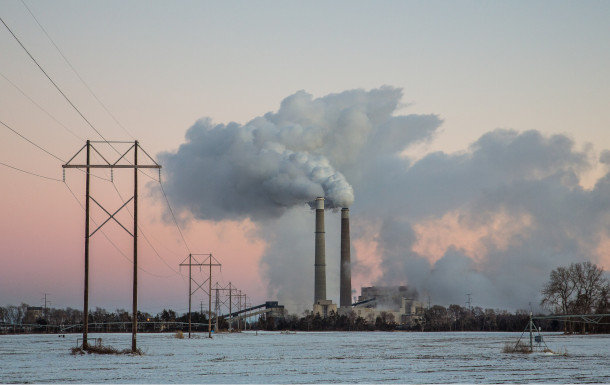
Minnesota’s largest coal-burning plant, the Sherburne County Generating Station, or Sherco, is undergoing a phased shutdown and transition to a renewable energy hub with solar and battery storage. A just transition is seen by many as a critical component to slowing the progress of climate disruption. (Photo by Tony Webster, Wikimedia Commons, CC BY-SA 2.0)
O'NEILL: Energy security was also a significant topic of discussion. Why is it gaining so much traction in the international community at this point in time?
LOEB: Well, I think probably that flows from the war in Iran, which has highlighted the world's continuing dependence on fossil fuels at a time when the flow of oil through the Strait of Hormuz is being held up by the war, by Trump's war with Iran. And another extreme aggregating factor right now comes from the war in Ukraine, where Ukraine has been attacking Russia's fossil fuel infrastructure, including its diesel-refining capacity, and this has made diesel prices escalate globally even faster than gasoline prices, and so, as the world desperately needs to begin reducing its carbon emissions, we're seeing its continued reliance on fossil fuels, you know, as a sort of dominant energy force on the planet.
O'NEILL: And how would you say that that situation is shaping climate efforts?
LOEB: Well, one of the points that UN Secretary General Antonio Guterres made in his remarks was that while we've overshot the warming goal of the Paris Agreement, we now have the tools to deal with emissions reduction, and that is renewable energy. I mean, the one bright spot really in global climate is that renewable energy continues to exceed all expectations in terms of growth and availability. And it's now clear, in a way that it wasn't really clear 20 or 25 years ago, that the world economy can be powered by renewable energy and not oil and gas and fossil fuels. So that's a big deal in terms of a global approach to climate. And it's very clear now that you know renewables are the cheapest and the fastest means of replacing fossil fuel.
O'NEILL: And now, as the U.S. government pulls back from climate action and indeed from even acknowledging the basic science, China's role in clean energy is growing. How much of a presence did China have at this UN climate summit?
LOEB: It wasn't a huge presence. President Xi did not even attend the proceedings in New York. He went directly to Washington for his meeting with President Trump. So China wasn't big in New York, but it's huge in the world of renewable energy. China is by far and away the world's leading renewables power. It produces, I think, 80 percent of the world’s solar panels. It's hugely dominant in battery technology and rare earth minerals. Its car industry is now exporting EVs all over the planet, and they are moving rapidly and radically toward renewable energy in China. While they're still building coal plants, they're phasing way back from coal and really accelerating the expansion of renewable energy. So China is the world leader now in renewable energy, by far.
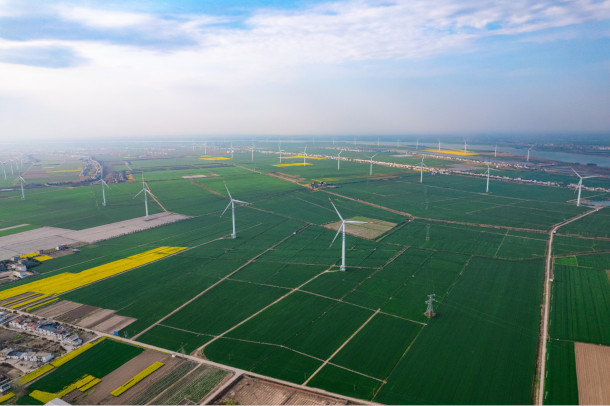
Expansive view of wind turbines rises above farmland in Jiujiang, China. China is the global leader in renewable energy, having installed more wind and solar capacity than the rest of the world combined. (Photo by jason hu, Pexels)
O'NEILL: How did the nations that are on the front lines of climate change seem to speak to the rest of the world, you know, especially the big polluters, about the level of urgency that's needed right now?
LOEB: Well, their level of urgency gets greater and greater, and they're bearing more and more of the brunt of climate change disasters. And so, again, with every COP, their level of urgency increases, and the level of action by the developed nations sort of stays the same, which is again led by the petrostates. Nothing really happens on fossil fuel phaseouts, and also in terms of aid for the developing world. As I said, contributions by the developed nations have been very, very disappointing. As I said, a mere fraction of really what's needed now to help developing worlds cope with climate.
O'NEILL: Well, you've been on the climate beat for most of your career, and you're still here, still standing strong. When international negotiations stall like this, what gives you hope? What keeps you going?
LOEB: Well, I guess at this point you really have to look to renewable energy and see that it is surpassing expectations in ways that are quite hopeful. In the U.S. even states like Texas show the strength of wind and solar power and battery storage. Great things are possible. I think China's focus on renewable energy is something that you have to feel good about. It's funny our relations with China are so fraught. Right now the big flashpoint with China is AI, and we haven't even talked about the enormous energy implications of AI. You know, are we going to power AI with oil and gas, with fossil fuels, or will we power AI with renewable energy?
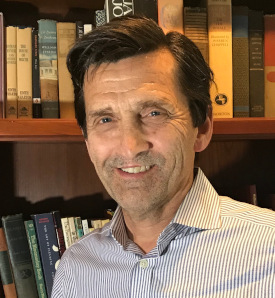
Vernon Loeb is Executive Editor for our media partner, Inside Climate News. (Photo: Courtesy of Vernon Loeb)
It's a constant struggle on the climate beat I think between pessimism and even doom, feelings of doom, you know, we're often accused of being doomers, and I don't think that's true. I think we try to be truth tellers, and I think we think it's important for people to know the truth about climate. But I think when you get into the truth about climate, you also see that it's not too late to turn around the global situation on climate. It's not too late to keep the world a livable place. It's not as livable as it was 50 years ago, and if we do nothing, it's not going to be nearly as livable 50 years from now as it is now. But I think there's still time to keep it livable for humanity, and certainly we can never give up on humanity, and we can never stop trying. I nonetheless continue to, to feel hopeful that change is possible. I mean, there are elections in in the U.S. in a month, and the outcome of those elections will mean a tremendous amount in terms of the country and the world's response to climate.
O'NEILL: Vernon Loeb is Executive Editor of our media partner Inside Climate News. As always, Vernon, thank you so much for taking the time with me today.
LOEB: Thanks for having me.
Related links:
- Inside Climate News | “Competing Climate Visions Clash at UN General Assembly”
- Inside Climate News | “What Happens When Earth Passes 1.5 Degrees of Warming?”
- Original Audio for the segment above is at Living on Earth for September 18, 2026
[MUSIC: Guitar After the Rain]
BELTRAN: Coming right up, Nepal is facing severe climate impacts, even though the country has played virtually no role in causing climate change. Stay tuned to Living on Earth!
ANNOUNCER: Support for Living on Earth comes from the Waverley Street Foundation, working to cultivate a healing planet with community-led programs for better food, healthy farmlands, and smarter building, energy and businesses.
[CUTAWAY MUSIC: Lowtone Music, “Spring Forest” Single, Lowtone Music]
Climate Justice and Healing for Nepal

Recovering from a major disaster isn’t just economically challenging, but emotionally traumatic as well, Pandey says. Above, a border crossing between China and Nepal, destroyed by the August 26, 2026 flash flooding. (Photo: CCTV screenshot, Wikimedia Commons, Public Domain)
O’NEILL: It’s Living on Earth, I’m Aynsley O’Neill.
BELTRAN: And I’m Paloma Beltran.
In the weeks following the deadly floods in Nepal this August, researchers from the World Weather Attribution group rapidly assessed the event, and concluded that climate change played a “very strong” role in the catastrophe. Warmer weather melted ice, thawed permafrost, and increased rainfall, destabilizing the glacier before its collapse. Nepal estimates that damages from the floods could exceed $4 billion. That’s over a tenth of the country’s total GDP. For more on this, we turn now to Tanuja Pandey, a climate justice activist and lawyer based in Kathmandu, Nepal. Tanuja originally hails from Sudur Paschim, a region affected by the floods, and she is co-founder and Chair of Harin Nepal, an intersectional climate justice organization. Tanuja, welcome to Living on Earth!
PANDEY: Thank you for having me.
BELTRAN: So it's been nearly a month since devastating floods hit Nepal and Tibet due to glacial collapse in the Himalayas. Talk to us about what you've seen in the weeks since the disaster. You know, how are you and your community holding up?
PANDEY: You know, life after a flood is incredibly difficult, especially for those who have lost someone they love. The water may eventually recede, but the grief does not. And you know, imagine waking up every morning knowing that the person you share your room, your home, your meals, your life is no longer there. And some of the families are still waiting for their loved ones to be found, while others are trying to give a final farewell without having the chance to properly say goodbye. And then they are expected to, you know, rebuild their home, return to their work, and somehow continue with their lives. We often see the images of flood when the water is rising, but we don't see enough of what happens afterward. So it's quite traumatizing to see everything. And when we talk about flood, you know, we talk about the water, the death toll, the missing person. But for communities, the real story, you know, continues long after the water disappears. They are left rebuilding the homes and livelihoods, memories, dignity, and sometimes their entire sense of security. So, it is what Nepal is going through right now, and it's really traumatizing to see everything and to feel helpless because all we can give is sympathy at the moment, even though we want to help with everything we could.

Nepal is a very religious country, Pandey says, and people often associate climate disasters with the actions of spiritual figures. Above, candles lit at Muktinath, an ancient Vishnu temple sacred to both Hindus and Buddhists, in Nepal. (Photo: Polyflux, Wikimedia Commons, CC BY-SA 4.0)
BELTRAN: And Tanuja, you visited the affected zones in Nepal. What did you see?
PANDEY: Yeah, you know, I saw the life fading away. I saw the children waiting for their parents. I saw the wife waiting for her husband, a mother waiting for their child, and I saw the entire community, you know, swept away. And the community, it was actually used to be one of the Indigenous land of Nepal, and the community who did nothing to contribute in climate change lost everything within second. And Nepal is one of the very religious country. It's a very sacred country. They worship nature. You know, even today, a lot of climatic disaster is related not to the anthropologic reason, but to the demonic factor in majority part of our country. People don't know what climate change actually is, and I saw people not praying this time, and it was quite heavy for us to see everything, and even heavy for us to talk about it now.
BELTRAN: I'm sure it is. And Nepal estimates that the recovery from the disaster will cost more than $4 billion. Please tell us, you know, what are the non-economic costs that the world should consider regarding this catastrophe that happened in Nepal?
PANDEY: Economic cost is important for everything, but we don't talk about the, you know, amount of anxiety the community had gone through, the amount of fear we have in our mind. You know, a lot of people in mountain communities who lives in downstream are migrating after that event because people are scared to live nearby the water resources, while in fact you know Nepal's historical settlement, traditional settlement has always been nearby the riverside, so it's quite hard to talk about it because we are giving up on our identity, our traditional way of living, just because few countries refuse to stick to their commitment.
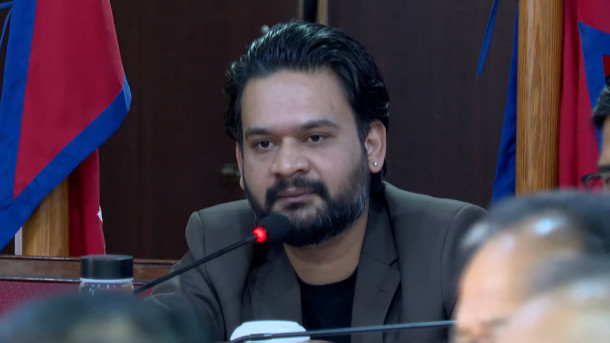
Nepal Prime Minister Balendra Shah has been outspoken about the country’s call for climate justice after the floods. (Photo: Metro News, Wikimedia Commons, CC BY 3.0)
BELTRAN: And in the days following the flood, Nepal's government wrote to the United Nations Fund for Responding to Loss and Damage, Nepal is requesting $20 million. That's the maximum amount a country can request, and Nepal framed the request in terms of climate justice rather than a request for aid. Tell us about that distinction.
PANDEY: See, the problem is that Nepal's climate story, you know, it often become internationally visible only after a disaster reaches a catastrophic death toll. But in fact, where we lose our people amounting to hundreds, and so on every year, it has become a new normal to us, and that creates a, you know, dangerous cycle. The world responds to the headline event rather than to underlying the accumulating loss and damage, and the factors that is causing the climate crisis at the first hand, and Nepal has done its part. We have restored our forests on an impressive scale, and we are rapidly moving toward clean energy. Even though people don't know what clean energy actually is, and we are promoting the electric mobility and you know implementing the climate adaptation plan at the local level, and we even we are going back to our traditional knowledge, Indigenous practices. Yet a country responsible for less than, you know 0.02% of global greenhouse gas emission is playing an even higher price for a crisis it did not create. Today, our Prime Minister Balendra Shah is leaving to General Assembly. We are not here to blame any nation, but demand what is rightfully ours, and we demand the solidarity and to seek the solution because at this moment we want international communities and polluters' country to stick to it.
BELTRAN: And from what I understand, Nepal has still not received any money from the UN fund. This UN pot of money is severely underfunded because wealthy nations have not contributed what they initially pledged. For example, the United States withdrew from the fund in 2025. What role do wealthier nations have to play in addressing this crisis?
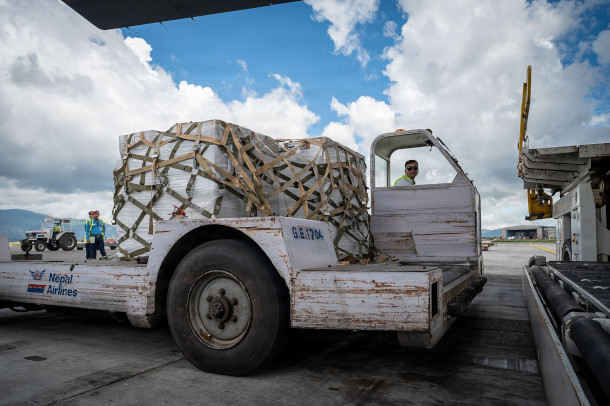
Pandey says wealthier nations have a responsibility to compensate low-emissions countries for climate disasters. Above, supplies from the U.S. Air Force are transported at an airport in Nepal in September 2026. (Photo: United States Air Force, Wikimedia Commons, Public Domain)
PANDEY: So to bounce back from this event like this, you know, we need money. You know, we could have saved our people if we had early warning system. You know, if we had good infrastructure, or if we had invested on preventing everything, so I think financial resources play a huge and most important role when it comes to adaptation. And all these polluters country are making the most out of fossils fuel industry, and all they are doing is they are increasing their wealth, but at the cost of that, country like Nepal are suffering, and it is just against the principle of, basic principle of environmental justice. So, to transitioning away from fossil fuel, it might not be easy for them to do it overnight, but they are in the position to compensate to the communities that are being affected by their actions.
BELTRAN: So, alongside other damages to infrastructure, Nepal estimates that 10% of the country's hydropower capacity was destroyed in the floods. How significant was that energy infrastructure to Nepal?
PANDEY: See, it's not the first time it's happening in Nepal. Even two years ago, we lost our major hydropower plants, and that's why you know we've been saying that no investment is good for Nepal if it is not sustainable or or if it is not green, because you're building hydro plants one day and another day it is being swept away by landslide and flood. So I think we need to re-evaluate all the project, especially the hydropower project we have in Nepal, because a lot of Indigenous community of Nepal actually they were telling the government, and they were asking the government to reevaluate everything because it didn't look sustainable to the community. And the way government sidelined all the Indigenous voices and proceed with the hydropower project, it turned a disaster to Nepal, and we have lost, in fact, we have lost a lot of people inside the hydropower tunnel. Still, thousands are missing. Thousand died inside. So, you know, we of course need development, but it's high time we should start, you know, talking and practicing about sustainable development rather than some colonial practices of development. If we try to build the big skyscraper in Nepal, it will not work here because our soil is not ready for it. We should redefine what development looks like to us, rather than just feeding ourselves the idea of development from the Global North.
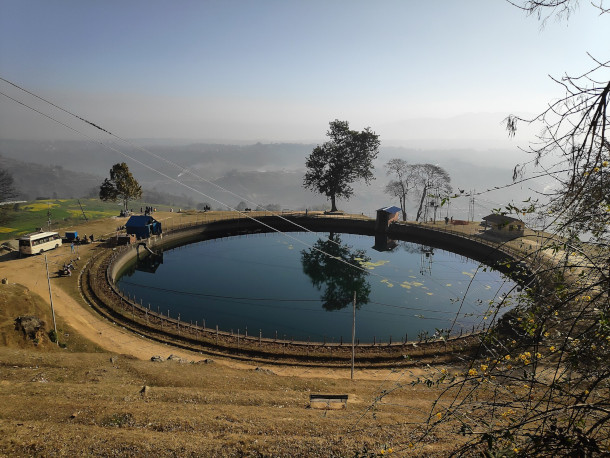
Pandey emphasizes that while Nepal needs development, it must do so in a way that is sustainable and community-oriented. Above is Pharping Hydropower Station reservoir, part of Nepal's first historic hydroelectric project. (Photo: Gaurav Dhwaj Khadka, Wikimedia Commons, CC BY-SA 4.0)
BELTRAN: You know, Tanuja, this moment feels like a turning point for many people. The floods in Nepal, the hottest summers on record, and the recent UN report warning about the trajectory of future warming. How, in your view, can we turn this moment into action?
PANDEY: You know, I think for Nepal, even though we have lost thousands of people, thousands are still missing. It's a very sad event. It's a very traumatizing event, but also it's a good opportunity for everyone to get united because what happened today with us could happen to anyone tomorrow. You know, it's not an isolated event. It is not something that will happen for the last time, you know. So we've been seeing the flood everywhere. We've been seeing it in Global South. We've been seeing the heat waves and other stuff in Global North. We need to hear the scientists what they are saying, and we need to actually act with the urgency, rather than you know denying the fact, because the clock is actually ticking and it does not wait for anyone. It didn't wait for Nepal and it will not wait for any other world. It will impact everyone eventually. So I believe that it's a fight of humanity as a whole.
BELTRAN: And Tanuja, what gives you hope?
PANDEY: You know, hope, hope is a very political thing to have, and it is something that does not really help you to survive, but also to thrive. Hope is a very powerful thing to have, and looking at young people confronting their leaders, looking at children trying to educate their parents on what is right and what is wrong in an individual capacity, looking into a grassroot mobilizer working tirelessly, looking at a journalist having a courage to cover issue that is quite hard and challenging for them to do so, and basically looking at humanity to save the humanity itself is something that gives me a hope.
BELTRAN: Tanuja Pandey is a climate justice activist and lawyer based in Nepal. She is a co-founder and chair of Harin Nepal, an intersectional climate justice organization. Tanuja, thanks so much for joining us.
PANDEY: Thank you. Thank you for having me.
Related links:
- World Weather Attribution | “Rapid Warming in the Himalaya Exacerbates Geohazard Cascades Beyond Adaptation Limits”
- Follow Harin Nepal on Instagram
[MUSIC: Hope of the Himalayas]
O’NEILL: We’ve got lots more ahead after the break, but first we wanted to invite you to tune in next week. We’ll be talking to environmental law professor Pat Parenteau about the Supreme court case, Suncor Energy Inc. versus County Commissioners of Boulder County. Oral arguments are scheduled for October 5th, and according to Scotus Blog it’s the first climate lawsuit of its kind to reach the Supreme Court. If the Court rules in Suncor’s favor it could impact multiple climate liability lawsuits nationwide by closing the door on using state courts to hold fossil fuel companies liable. But if the Justices rule in favor of Boulder, they could ease the way for local governments to require fossil fuel companies to pay for costly climate adaptation and damage. So tune in to Living on Earth next week to hear about the future of climate change liability cases in the United States.
[MUSIC: High Lonesome Dusk]
BELTRAN: After the break, how just a centimeter of sea level rise can flood 2 to 3 million people worldwide. Keep listening to Living on Earth!
ANNOUNCER: Support for Living on Earth comes from Hansjörg Wyss in honor of Rosamund Stone Zander. Celebrated painter, environmentalist, and author of The Art of Possibility, who inspired others to see the profound interconnectedness of all living things, and to act with courage and creativity on behalf of our planet. Support also comes from Sailors for the Sea and Oceana. Helping boaters race clean, sail green and protect the seas they love. More information at sailorsforthesea.org.
[CUTAWAY MUSIC: Lafayette Harris, Jr. “Wonder Why” on You Can’t Lose with the Blues, Savant Records, Inc.]
12 Trillion Tons of Melted Ice
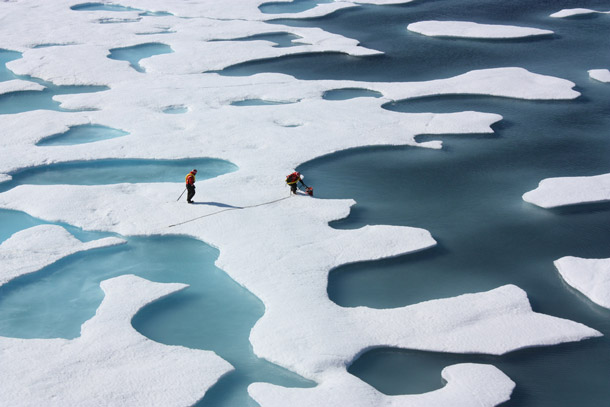
Warmer water and air creates ponds of melting Arctic ice. (Photo: NASA Goddard Space Flight Center, Flickr CC BY 2.0)
BELTRAN: It’s Living on Earth, I’m Paloma Beltran.
O’NEILL: And I’m Aynsley O’Neill.
As the planet gets warmer, melting glaciers are wreaking havoc in places like Nepal and Tibet. And on a larger scale huge ice sheets in Antarctica and Greenland are a massive driver behind sea level rise. A recent study in the journal Scientific Data shows that since 1979, around 12.5 trillion tons of ice have melted, just from glaciers in Greenland and Antarctica. This study compared the research of several dozen scientists, working from NASA and European Space Agency satellite data to measure the change in glacier volume over the past half-century. And the melting has been speeding up, especially in the last two decades. Seth Borenstein is a science writer at the Associated Press, and he joins me now for more. Seth, welcome back to Living on Earth!
BORENSTEIN: Thank you for having me.
O'NEILL: So, Seth, we're here to talk about a study in the journal Scientific Data published by Nature, which shows that over the last five decades or so, about 12.5 trillion tons of glacier ice have melted. Now, that's a pretty unfathomable number. So, what's a real-world comparison you could give us that would help put that 12.5 trillion tons into perspective?
BORENSTEIN: I asked a few ice scientists this. How much, if you took all that ice and covered the lower 48 states of the United States? And it would be about five feet thick of ice One of the scientists, the lead author of the paper, her way of putting it is a different one, and I'm not sure if it's easier to think of it this way. Think of a giant ice cube that's five and a half miles tall, five and a half miles wide, five and a half miles long. So that's another way of thinking it, but I think it might be easier to think of the United States covered in five feet of ice.
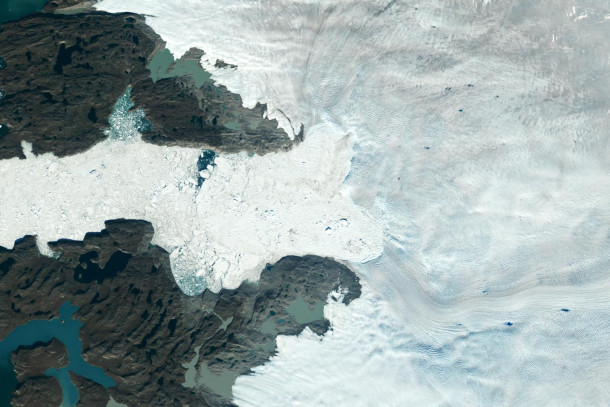
The Jakobshavn Glacier, on Greenland’s west coast, is one of the fastest melting glaciers in the world. (Photo: NASA/USGS, NASA.gov, Public Domain)
O'NEILL: And so, during this time period, how variable was the rate of the ice loss? To what extent was it acceleration and deceleration versus a more steady decline?
BORENSTEIN: And that's actually one of the best and most interesting parts of this new study. Previously, the studies went back to 1990, and that's about the time they started seeing the loss, slow loss in the 90s and the early 2000s, and then they saw a big acceleration in the 2010s. So by going back further, they could say this is not something that's always happened on Earth. Then, from 2020 to 2023, which is the last year they did the study for, mostly because of increased snowfall in both Greenland and Antarctica, the rate of ice loss decreased quite a bit. It decelerated, but the study stops in 2023. The researchers kept looking at the data not as deeply as they will later, but they said things went sort of back to the old ice loss in '24 and '25. So that was, they think, a blip of natural variation. And the reason was interesting is because only 16 percent of the ice loss comes from what you may think of normally when you think of melting ice, especially in Greenland and Antarctica. I think most people would say, "Hey, the air is warmer and it's melting from the top.” That's only 1/6 of the ice in both continents melting. Most of it is coming from the water below and the sides of the ice sheets, which are essentially water again, warmer water. The best way to think about that is, I happen to love iced coffee, being a New Englander at heart. So just the other day, I put a bunch of ice in my cup, then poured hot coffee in it, and within five minutes I had no ice. But I didn't pour hot air into it; I poured hot liquid. That's sort of what's happening to the ice sheets in Antarctica and Greenland.
O'NEILL: And so these ice sheets in Antarctica and Greenland are the largest that we have on the planet. So this ice loss is undoubtedly going to affect sea level rise. What does this study say about any of the previous ice loss and what that is meant for sea level rise now and in the future?
BORENSTEIN: So when you look at 12 and a half trillion tons of ice, it only comes down to one inch, or three centimeters of global sea level rise, and that sounds like such a small amount, which is so strange because here we're dealing with an unfathomably big number of 12 trillion, and it's even more unfathomable if you want to put it into gallons. Then we're into quadrillions of gallons, so probably shouldn't go there. So that's just this huge number, and then it comes down to one inch of sea level rise, and to the average person, an inch of sea level rise, eh, that doesn't sound like much, but the studies show that for every third of an inch, which is about a centimeter of sea level rise globally, we see two to three million people flooded. That's because so many people in the world live by the coast. Just a little increase in sea level rise, because if you remember, that's just the average level. When a storm comes, when it's a king tide or other unusual high tides. Then it's going up even higher. People who lived through Hurricane Sandy or Super Storm Sandy in New York, that was aided by sea level rise levels that were globally minuscule, but caused billions upon billions of dollars of damage in New York.
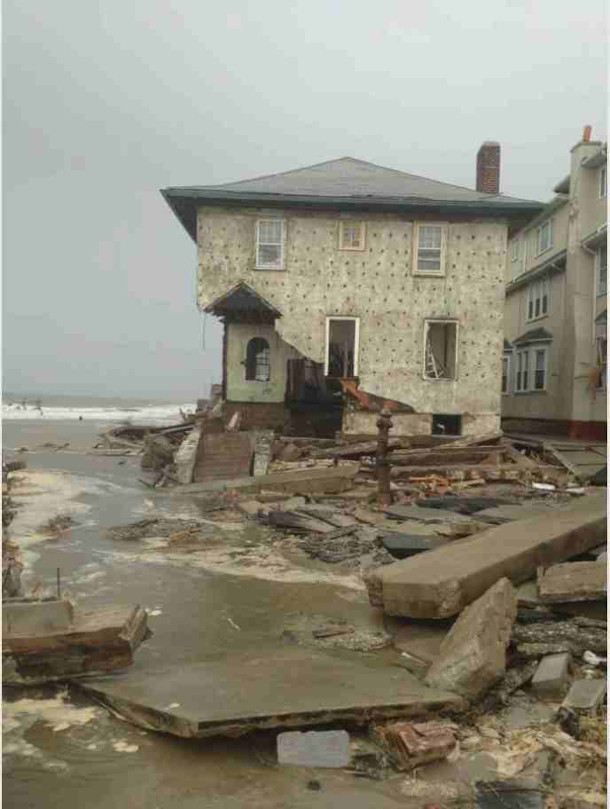
Sea level rise helped contribute to the devastating storm surge from Superstorm Sandy in 2012. Shown above is a house in Brooklyn, New York. (Photo: Proud Novice, Wikimedia Commons, CC BY-SA 3.0)
O'NEILL: Now, what have you heard about a potential tipping point when it comes to ice loss?
BORENSTEIN: So, since so much of this is on the ice sheets, there are glaciers, and much of this is glaciers retreating and water coming in and eating away at these glaciers, and that's what's concerning. So, for example, let's look at Antarctica, if you don't mind. In Antarctica, first off, it's really a story of two different continents. East Antarctica, the ice sheet is essentially growing. East Antarctica is colder. There's more snow, so for years it has grown. The theory is that it eventually starts to shrink, but East Antarctica, which is much bigger, is least stable. West Antarctica and the Arctic Peninsula are a whole different story. The ice there is shrinking. It's shrinking rapidly, especially on the peninsula. And in West Antarctica, there is a glacier called the Thwaites Glacier. You may have heard of this glacier. It often gets the nickname the Doomsday Glacier, which is a little over the top, but the reason it's been called the Doomsday Glacier is that it is sort of the cork on a bottle, and that cork is slowly being eaten away. And the fear is that once Thwaites completely loses its ice, then there's a whole section of glaciers behind it that just keep flowing and flowing, and that's sort of the tipping point concept that you get to a point where it is just irreversible. Now the scientists unfortunately don't know when that tipping point is, and there's a distinct possibility that we've passed it. We just don't know it, but the fear is that we are getting close to that point. But in Greenland, you have sort of the world's fastest shrinking glacier. It's called Jakobshavn. That glacier, it's losing up to 165 feet a day. That is, if you do the quick math, that's like eight feet an hour. I've been told that if you stand there long enough, you can actually see the ice sheet loss there. Now it's slowed down, especially during that slow period, but it has gone back up again.
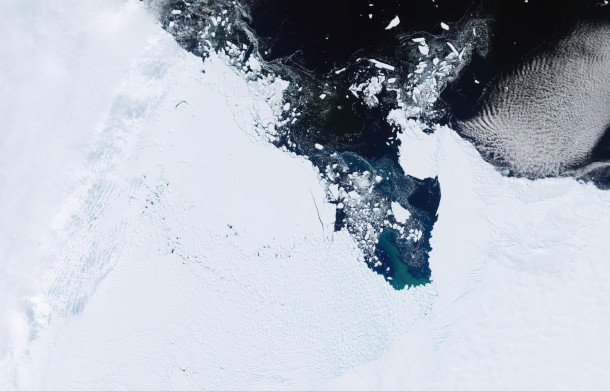
The Thwaites glacier in West Antarctica holds back an incredibly large amount of ice, so it acts almost like a cork in a bottle, that is so far preventing the ice on land behind it from melting into the ocean. (Photo: IMBIE, Imbie.org media pack photo)
O'NEILL: Well, so as we were talking about this timeline going forward is pretty uncertain. You know, this data is starting in 1979, and we can already look at the big difference from then to now, 12.5 trillion tons. So, what do we know about the next half century or so? Or rather, what are some of the concerns that the scientists you spoke with have shared with you?
BORENSTEIN: Well, their concerns is that this is accelerating, and if you look at the numbers, yeah, it is accelerating except for this little blip from 2020 to 2023, and even if it's not accelerating, there's an awful lot of ice there, and if all the ice sheets in the world melted, we're looking at 60 meters, 200 feet of sea level rise. That would be just absurd. It would reshape life on this Earth. That's not going to happen in our lifetime, the lifetime of our grandchildren or great-great-grandchildren even. Ice loss is a slow glacial process, and actually, in some ways, that's a problem because people look and say, "Eh, what's an inch of sea level rise?" It's sort of like a good-sized leak on a boat that you can't patch. You're definitely having trouble here, and the trend is not good, but you're not underwater yet.
O'NEILL: Now, in early September of this year, 2026, the United Nations released a report saying that global warming is soon to exceed the 1.5 degrees Celsius rise that they had looked to prevent during the Paris Agreement in 2015. What can you tell us about the ice loss in the context of that?
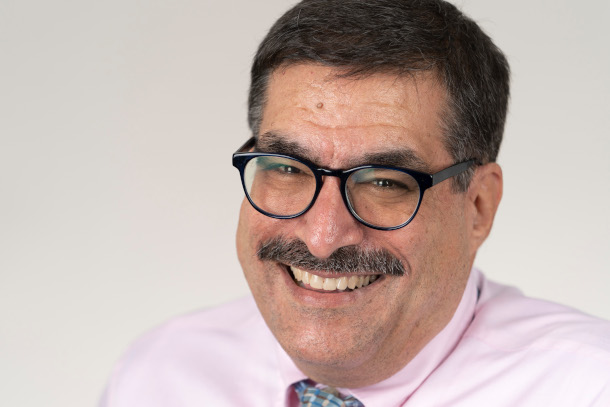
Seth Borenstein is a science writer with the Climate and Environment team at the Associated Press. (Photo: Courtesy of Seth Borenstein)
BORENSTEIN: As long as the air and the water keep warming, scientists figure the ice will keep melting. If warming stops or slows down and then stops, the theory is that in many cases, unfortunately, not all, the ice sheet loss will either slow or stop. There is some concern about tipping points that we don't know if we're at that point yet. The one other good thing to come out of this is 20, 30 years ago, when scientists were calculating sea level rise, they didn't take into account melting glaciers, melting ice sheets. It really did catch modelers of the future by surprise. This is no longer surprise. We know what's coming. Whether we do something about it, that's a different issue.
O'NEILL: Seth Borenstein is a science writer with the climate and environment team at the Associated Press. Seth, thank you so much for taking the time with me today.
BORENSTEIN: Thanks for having me.
Related links:
- Associated Press | “Satellites Show Earth Lost More Than 12 Trillion Tons of Ice From Greenland, Antarctica in 47 Years”
- Read the study on the Scientific Data website
[MUSIC: Winter's Quiet Warning]
Tiny Microbes in Tree Bark
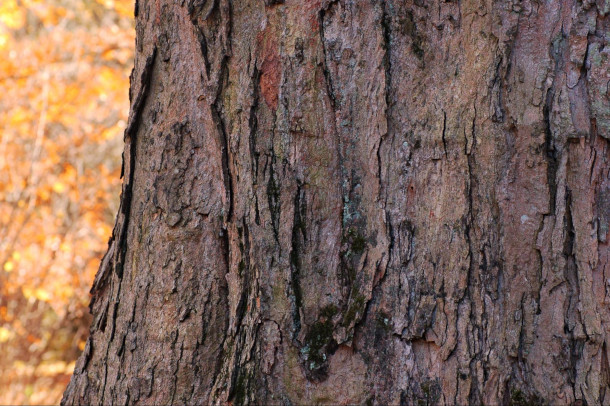
New research suggests that tree bark hosts millions of microbes that can both consume and produce methane, a powerful climate warming gas. (Photo: Derek Ramsey (Ram-Man), Wikimedia Commons, CC BY-SA 2.5)
BELTRAN: Thanks to photosynthesis trees absorb carbon dioxide and release oxygen.
So they play a vital role in regulating the carbon cycle by storing carbon in their wood, roots, and soil. But it turns out trees have another carbon cycle trick up their sleeve, or rather, bark, and it's been hiding in plain sight. Scientists recently discovered that tree bark hosts millions of microbes involved in consuming and producing methane, a powerful greenhouse gas. Biogeochemist and forest ecologist Jonathan Gewirtzman of Yale University has been studying the relationship between trees and microbes, and he spoke with Living on Earth’s Jenni Doering.
DOERING: So how does this discovery advance our knowledge about the relationship between trees and greenhouse gasses such as methane?
GEWIRTZMAN: So, this is some really exciting work that is adding to a building understanding that trees play a much more complicated and much more nuanced role in greenhouse gas cycling than we understood before, by hosting these large microbial ecosystems, both on and inside their tissues, and those microbes, those microbiomes are complicated and diverse and have their own processes that sort of add on or supplement to what the processes that are carried out by the trees themselves. And so those microbiomes do things like take up some forms of carbon and release other forms of carbon. Increasingly, we're understanding that they release things like methane or nitrous oxide under certain conditions but also capture methane and nitrous oxide under certain conditions. And so there are these really interesting, really complicated interactions that make tree microbiomes these active players in the global cycles of carbon and other greenhouse gasses.

Methane is produced under high-water, low-oxygen, high-carbon conditions, like inside a cow’s stomach. Scientists believe the inside of some trees may create a similar environment. (Photo: Keith Weller/USDA, Wikimedia Commons, Public Domain)
DOERING: And by the way, what kinds of trees have these methane munching and producing microbes in their tree bark?
GEWIRTZMAN: It turns out that pretty much every tree seems to host a microbiome that does some amount of methane cycling. It's complicated. Some trees release more methane than they take up. Some take up more methane than they release. And for every tree, it's a balance of how much methane the tree transports from the soil to the atmosphere, how much it produces inside its own tissues, especially deep inside the wood and the inner tissues called heartwood, and how much methane is consumed on the outer tissues and especially the bark. So there are certain places, especially in the tropics, where we think that the conditions are right for trees to host high rates of methane consumption, and so that's been observed recently in, in a couple of places around the world, in Brazil, in Panama, now in Australia, but here in New England, the trees aren't cycling as much methane than in tropical systems. A lot of trees are actually releasing small amounts of methane, really small amounts of methane, but measurable amounts.
DOERING: What kinds of environmental conditions influence like whether these microbes are releasing or absorbing methane?
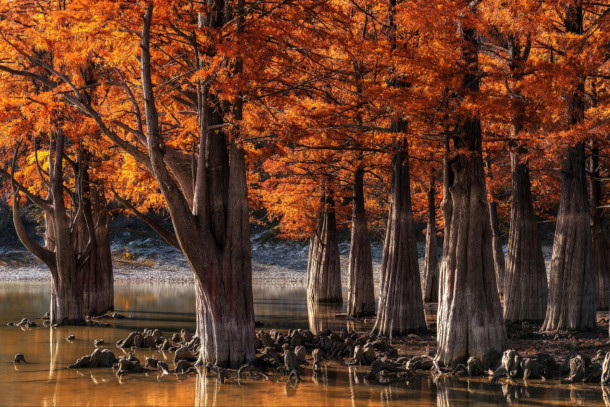
Some trees may fluctuate between producing and consuming methane, depending on the environment available to its microbiome at any given time. (Photo: HoroshilovAleksandr, Wikimedia Commons, CC BY-SA 4.0)
GEWIRTZMAN: Right, we're really just starting to understand the conditions that shape the way microbiomes form and the way that they function within trees. Even though there's been lots and lots of research on microbiomes of things like the human gut or soils or other environmental surfaces and areas around the world, we're only just starting to look inside trees. It's this sort of funny thing where there are these complicated ecosystems that have been kind of hiding in plain sight. That said, there are some things that we know that definitely influence things like methane production and consumption. Methane is produced in environments that are really high in water, high in carbon, and low in oxygen, and so historically we've thought that those kinds of conditions—high-water, low-oxygen, high-carbon—those exist in places like wetlands or landfills or even wastewater treatment, and even inside the gut of a cow. If you've heard about cows releasing methane, it's because their guts are full of water and carbon and not a lot of oxygen, and those are the conditions that methane-producing microbes like to live in. The conditions that methane-consuming microbes like to live in are sort of the opposite. It's where there's methane around, but where it's not too wet, and there's lots of oxygen available. And so, when we think about trees, when we think about deep inside a tree, like if you go into the very middle of a tree, it's pretty wet. It's full of water. It's far from the atmosphere, and so there, there's low oxygen, high water, lots of carbon in the wood, and that seems to be a place where tree microbes like to produce methane. And if you go to the outside of the tree, the outer tissues or the bark especially, there they're getting lots of nice air exposure. So there's oxygen around. There may be getting methane that's coming out of the tree, what's being produced in the inner tissues, or transported from the soil. And so they've got methane to eat. They've got oxygen from the atmosphere, and they're nice and happy there, munching up that methane.
DOERING: I guess you can see why these microbiomes developed. I mean, there's an energy source, methane. There's carbon in there. There's energy to consume, and so you can kind of see where if some microbes are producing methane, or there's methane coming from the swamp beneath, then you have some microbes in the tree bark that are going to consume that.
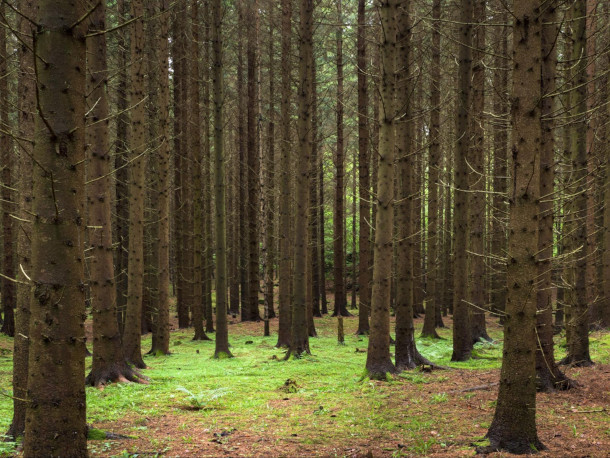
Alongside fossil fuel emissions reductions, harnessing natural ecosystems like methane-consuming forests could be another tool used to address climate change, says our guest Jonathan Gewirtzman. (Photo: W.carter, Wikimedia Commons, Public Domain)
GEWIRTZMAN: Exactly, and there's a lot of variation from one species to another. So some species have denser wood, some have wetter wood, some have drier wood, and there's also going to be variation over time. So one of the things that's really interesting about the work that this group in Australia did is they found that the conditions even inside the bark fluctuate over time. So depending on the weather and depending on the processes that the tree is carrying out. Sometimes that bark is transporting more oxygen. Sometimes it's transporting less. And so you can have these changing or fluctuating conditions that lead to the same tree switching from producer to consumer, just based on the substrates or the, the compounds that are available to the microbiome at any given time.
DOERING: That certainly seems like really useful information as we're thinking about you know climate solutions, which scientists have told us need to include landscapes, not just you know renewable energy and driving EVs things like that, but actually harnessing landscapes to be able to take up carbon from the atmosphere at a higher rate.
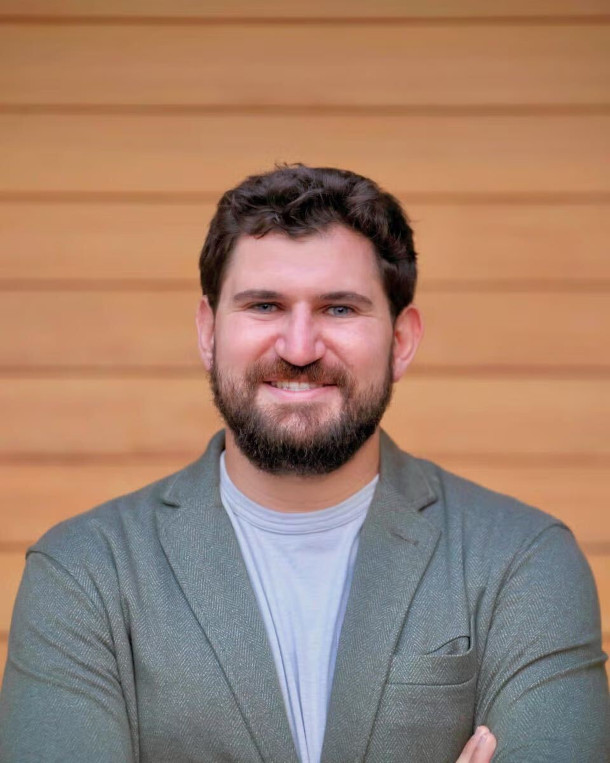
Jonathan Gewirtzman is a forest ecologist and biogeochemist at Yale University in New Haven, Connecticut. (Photo: Courtesy of Jonathan Gewirtzman)
GEWIRTZMAN: Yeah, that's totally right. So we all know that the most important solutions to climate change are curbing fossil fuel emissions, and nothing about the tree microbiome changes the fact that we need to, to cut fossil fuel emissions from things like energy and transportation. But we're increasingly recognizing that we need to think about natural systems as part of our portfolio of what we're managing, both to keep greenhouse gasses out of the atmosphere and maybe even to think about pulling what's in the atmosphere back out. If we're trying to get to negative emissions or we're trying to remove carbon or methane that's already in the atmosphere, then we can think about natural ecosystems being sort of one tool in our toolkit for how we might think about that. So we're at a really early stage of understanding these processes. So before we can think about using trees to remove atmospheric methane, first we need to understand some really basic things like which species are better at removing that methane, and which microbes are doing it, and what are the conditions that are beneficial for those microbes. So there's lots left to learn, but as we begin to understand all of those things, we can start to think about how can we prioritize planting or conserving or restoring the sorts of trees that are better for removing greenhouse gasses and using that in our portfolio of tools for addressing climate change.
DOERING: Well, the next time I go outside and hug a tree, I'm going to be thinking about all those microbes right underneath the bark.
GEWIRTZMAN: Totally. We already know that you know when you walk through a forest, there's an amazing amount of diversity and complexity, and I think this just adds even another layer on top of that. So I know when I go outside now, every time I look at a tree, I'm also thinking about the trillion microbes that live inside that tree and what might they all be doing.
BELTRAN: That’s Jonathan Gewirtzman, Yale University forest ecologist and biogeochemist, speaking with Living on Earth’s Jenni Doering.
Related links:
- Science News | “Hidden Tree Bark Microbes Munch on Important Climate Gases”
- Learn more about Jonathan Gewirtzman
[MUSIC: Curious Pricks]
O’NEILL: Living on Earth is produced by the World Media Foundation. Our crew includes Naomi Arenberg, Jenni Doering, Abby Edgecumbe, Swayam Gagneja, Mark Kausch, Mark Seth Lender, Don Lyman, Ashanti Mclean, Nhung Nguyen, Sophia Pandelidis, Jake Rego, Andrew Skerritt, Bella Smith, and El Wilson.
BELTRAN: Tom Tiger engineered our show. Allison Lirish Dean composed our themes.
You can hear us anytime at loe.org, Apple Podcasts and YouTube Music, and like us please, on our Facebook page, Living on Earth. Find us on Instagram, Threads and BlueSky @livingonearthradio. And we always welcome your feedback at comments@loe.org. Steve Curwood is our Executive Producer. I’m Paloma Beltran.
O’NEILL: And I’m Aynsley O’Neill. Thanks for listening!
ANNOUNCER: Funding for Living on Earth comes from you, our listeners, and from the University of Massachusetts, Boston, in association with its School for the Environment, developing the next generation of environmental leaders. And from the Grantham Foundation for the protection of the environment, supporting strategic communications and collaboration in solving the world’s most pressing environmental problems.
ANNOUNCER 2: PRX.
Living on Earth wants to hear from you!
Living on Earth
62 Calef Highway, Suite 212
Lee, NH 03861
Telephone: 617-287-4121
E-mail: comments@loe.org
Newsletter [Click here]
Donate to Living on Earth!
Living on Earth is an independent media program and relies entirely on contributions from listeners and institutions supporting public service. Please donate now to preserve an independent environmental voice.
NewsletterLiving on Earth offers a weekly delivery of the show's rundown to your mailbox. Sign up for our newsletter today!
 Sailors For The Sea: Be the change you want to sea.
 The Grantham Foundation for the Protection of the Environment: Committed to protecting and improving the health of the global environment.
 Contribute to Living on Earth and receive, as our gift to you, an archival print of one of Mark Seth Lender's extraordinary wildlife photographs. Follow the link to see Mark's current collection of photographs.
 Buy a signed copy of Mark Seth Lender's book Smeagull the Seagull & support Living on Earth
© Copyright World Media Foundation. All Rights Reserved
Home | Contact | RSS | Donate | Newsletter