

November 27, 2026
Air Date: November 27, 2026
FULL SHOW
SEGMENTS
Fossil Fuels Impasse at UN Climate Treaty
View the page for this story
When petro states rejected transitioning away from fossil fuels at this year’s UN climate treaty negotiations in Türkiye, the European Union, small island nations and allies refused to accept what they said was a dangerous deal. Longtime COP observer and E3G senior associate Alden Meyer joins Host Steve Curwood to analyze the breakdown of the treaty talks, progress that was made on other agenda items, and why the world is much better off thanks to the UN climate treaty, despite the challenges of reaching consensus. (19:07)
Rancor and Relief at COP31
/ Paloma Beltran Fontes and Sophia PandelidisView the page for this story
As the UN climate treaty negotiations in Türkiye stretched a grueling 40 hours into overtime, Living on Earth Producers Paloma Beltran Fontes and Sophia Pandelidis were there, talking with frustrated delegates and members of civil society. They share what they heard with Hosts Steve Curwood and Jenni Doering as they look back on the failure of nations to reach consensus, and despite the impasse, what was in fact accomplished at COP31. (11:26)
Kelp ‘Forests of the Sea’
View the page for this story
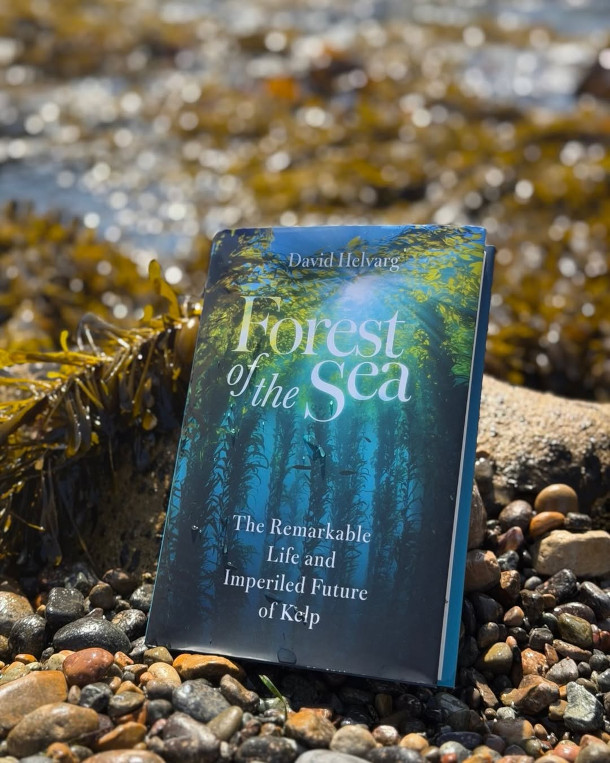
Kelp forests are among the most productive ecosystems on the planet and produce as much oxygen as all Earth’s rainforests – so you could say they’re the Amazon of the ocean. That’s according to David Helvarg in his latest book, Forest of the Sea: The Remarkable Life and Imperiled Future of Kelp. And just like the Amazon, as the planet warms, kelp forests can burn -- not with flames, but with marine heatwaves and pollution. David Helvarg speaks with Host Steve Curwood about these threats and ways to bring kelp back. (15:59)
Show Credits and Funders
Show Transcript
HOSTS: Steve Curwood, Jenni Doering
GUESTS: David Helvarg, Alden Meyer
REPORTERS: Paloma Beltran Fontes, Sophia Pandelidis
[THEME]
CURWOOD: From PRX – this is Living On Earth.
[THEME]
CURWOOD: I’m Steve Curwood.
DOERING: And I’m Jenni Doering
Petro states reject transitioning away from fossil fuels at this year’s UN climate session.
JETNIL-KIJINER: We will not be forced to accept false solutions. We will not compromise our future to benefit fossil fuel interests. We will not accept an outcome that undermines our security and threatens our future.
CURWOOD: Also, the wonder of kelp forests, which help soak up carbon dioxide.
HELVARG: When they twist together when you're diving through it, it looks like redwoods going up. So, it looks like you're in a forest, except that the forest is swaying around you and instead of birds you're looking up at shoaling fish or down at leopard sharks, and there's always a couple of curious harbor seals, you know, nipping at your fins or getting in your face.
CURWOOD: That and more, this week on Living on Earth. Stick around!
[NEWSBREAK MUSIC: Boards Of Canada “Zoetrope” from “In A Beautiful Place Out In The Country” (Warp Records 2000)]
[THEME]
Fossil Fuels Impasse at UN Climate Treaty
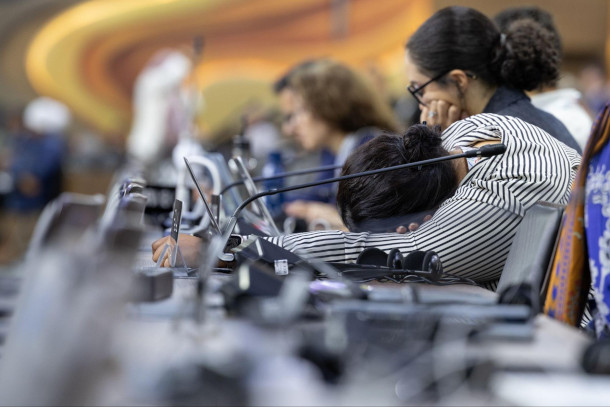
The COP31 talks ran over by two days before ultimately collapsing when negotiators could not finalize language for a climate pact. (Photo: Kiara Worth, UN Climate Change, Flickr, CC BY-NC-SA 4.0)
DOERING: From PRX and the Jennifer and Ted Stanley Studios at the University of Massachusetts Boston, this is Living on Earth. I’m Jenni Doering.
CURWOOD: And I’m Steve Curwood.
Today we are following up on our report last week on the UN climate treaty’s COP31 in Türkiye with reporting and analysis of the dramatic breakdown of the talks when delegates failed to reach consensus on the critical issue of committing to the transition away from fossil fuels. The COP or conference of the parties’ process has only imploded twice before, first back at COP6 in the year 2000 when the US insisted on getting credit for afforestation in the Adirondacks as an offset for its emissions, and so doomed the full adoption of the Kyoto Protocol.
DOERING: Consensus also failed at COP15 in Copenhagen in 2009 when the US and major economies bypassed the COP's official negotiating channels to craft what some developing countries called a back room deal to avoid binding limits on emissions and minimize help for poor nations. This year Saudi Arabia and Russia, two of the world's biggest hydrocarbon producers, refused to join consensus if it called for the transition away from fossil fuels, though such language was agreed in Dubai three years ago.
CURWOOD: And though COP31 foundered on its most central issue, delegates were able to adopt several decisions, moving forward things like the Just Transition Work Program and a Global Goal on Adaptation. Joining me now is Alden Meyer, a senior associate of the climate think tank E3G, just back from Türkiye. Hi there!
MEYER: Hey Steve, it's great to be with you again.
CURWOOD: Alden, you have been to all but one of these COPs for the last 30 years. How do you feel about the outcome of this one?
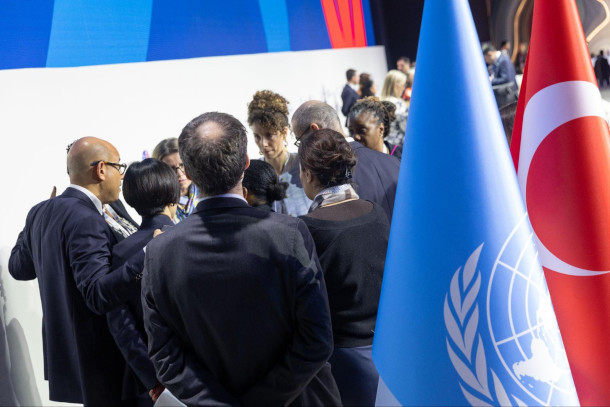
Alden Meyer notes that discussions broke down in part over petrostates refusing to include language on a transition away from fossil fuels in the cover decision text. (Photo: Kiara Worth, UN Climate Change, Flickr, CC BY-NC-SA 4.0)
MEYER: Well, it was obviously a disappointing outcome on the major cover decision that they were trying to negotiate. It's reminiscent a bit of Copenhagen when they could barely get agreement on the Copenhagen Accord. We did make progress on a lot of underlying decisions, and in the real world there were a lot of announcements in the action agenda on electrification, on national transition away from fossil fuel roadmaps, and other things that we can talk about. But on the centerpiece negotiation that Australia and Turkey were trying to drive forward, you have to say it was a failure or a collapse, mainly over the issue of fossil fuels, which has bedeviled us for the whole process. It took 28 COPs before we even got a formal acknowledgement in a COP decision on the need to transition away from fossil fuels, as they are the source of over half of global warming emissions, and clearly some of the countries that agreed to that in Dubai three years ago, Saudis, Russia, other petrostates have had buyer's remorse, and they have been trying to back away from that agreement ever since. And they insisted on scrubbing any reference to the need to address fossil fuels from this cover decision text, and that was too far for the European Union, the UK, the small island countries, and some of the other developing countries that said we're just not going to be held hostage by these big emitters that are trying to block progress.
CURWOOD: So, in your view, what went wrong? What wasn't done right for the conduct of this COP?
MEYER: Well, it's always a hard time when you're trying to get a consensus among 194 countries. But I think some of the fault lies with the Australian-Turkish hybrid presidency for the way they conducted the negotiations. We were hearing that they were meeting frequently with the Saudis, Russia, China, some of the other big players, and were not giving much air time to the small island states, to the vulnerable countries, even at times to the European Union. So it was not the transparent and inclusive negotiation process that they had promised. But let's be honest: the real problem here was the decision by a handful of these major petroleum and and fossil fuel-based economies that they would disrupt the process at any cost if it threatened their business interest. And for whatever reason, the Australians and Turks didn't go ahead and put forward a decision that included the fossil fuel transition language and forced them to try to block it on the floor of the plenary, in the view of the entire world, that was the way I would have suggested they do it. Rather, they continued to water down the text to the liking of the Saudis, the Russians, and others, and they forced the European Union and progressive developing countries to block it in the closing plenary, which is what we saw play out.
CURWOOD: There was very visible audio and video about Africa standing up and saying, "We didn't come here to beg." What went wrong, in your view, with the concerns about finance?
MEYER: Well, I think you have to lay this on the European Union and other developed countries that, really, in my view, didn't come to the COP prepared to negotiate about finance. It's one thing to say we can't put new money on the table right away, but they should have been more forthcoming in the discussions about how they intend to deliver the pledge they made last year on tripling adaptation finance by 2035. They should have come prepared to say more about what they are going to do to deliver the 300 billion a year commitment by 2035 that was made two COPs ago in Baku, and they should have come having diplomatically engaged the small island states, the least developed countries, and others before the COP so they came in with a strategy rather than angering developing countries by saying, as Commissioner Hoekstra did before the COP started, that any idea that we're going to put additional finance on the table is dead in the water, quote unquote. And of course, having seen what we just saw in Nepal, with the glacial collapse and the flooding, that was a very unfortunate phrase for him to use.
CURWOOD: And that's the EU Commissioner you're referring to there.
MEYER: That was the EU Commissioner Hoekstra, and he was the leader of the European delegation there, along with the minister from Ireland, because Ireland holds the rotating presidency of the European Union right now.
CURWOOD: And Alden, please briefly summarize what went right. What do you see are some of the key accomplishments of COP31?
MEYER: On the negotiation side of the house, we did get agreement on extending the just transition work program, which is trying to help countries and communities make a transition away from fossil fuels. We did get agreement on the global goal on adaptation, which is trying to help countries develop national plans to deal with the mounting impacts of climate change. So that's on the negotiation side. On the non-negotiations or coalition of the willing side, we saw over 20 countries indicate that they either were developing or intended to develop their own national plans for transitioning away from fossil fuels. And of course, that's something the Saudis and Russia can't block, since it's a national commitment. We saw over 70 countries endorsing the Turkish pledge to try to increase the share of electricity in energy to 35% by 2035, up from the current 23%, which of course, if it's fueled with clean electricity, would do quite a bit to accelerate emission reductions. We saw some very interesting commitments on methane, on forests, on other sectors, clean industrialization for steel, cement, and other sectors. So a lot of progress, sort of out of the limelight at the COP in moving forward what's called the action agenda.
CURWOOD: And Alden, tell us what happened with methane.
MEYER: Well, methane is a very important front. It's the second largest greenhouse gas, and because it doesn't stay in the atmosphere as long as carbon dioxide, if you can make progress on methane, it can actually help quite a bit in the near term. We already had the global methane pledge going into this COP, with a number of the major countries committing to take action on methane. There was some building on that, both in the oil and gas methane emissions sector and in waste landfills. I had my annual check-in with Al Gore near the beginning of the meeting, and he told me an amazing fact, which is that methane emissions from uncovered landfills globally are six times the emissions in total from data centers around the world. Now, given how much attention data centers and data center emissions are getting, that was an amazing factoid to me. And that's only one part of the methane problem. A much bigger part, obviously, is unchecked fugitive emissions from oil and gas production, and that's something that we need to really crack down on. So, as again, you make incremental progress on these initiatives year by year, as we saw in forests, as we saw in other sectors. But I think methane, there's a growing recognition that there's some real opportunities here to address warming in the short term by making methane emission reductions.
CURWOOD: So, Alden, after 30 years, there's still no worldwide cap on global warming emissions. How up to the job is this UN climate treaty in the face of the growing climate emergency, do you think?
MEYER: Well, it is true that we're not where we need to be. But if we didn't have this process, if we didn't have the Paris Agreement, we would probably be on track for four degrees Celsius or more. Right now the estimates range from two and a half to 2.8 degrees Celsius, depending on whether countries implement all the commitments they made. That's far above the 1.5 degrees that we need to be shooting for, but it's not nothing. We've basically cut the gap in half or more because of Paris. We need to double down and do more. The problem is, of course, this is a voluntary, bottom-up process. As we just saw in Antalya, decisions can be blocked by a small minority of countries that don't agree with the direction of travel. But it's not the process at fault. It's the governments, it's the disinformation campaign by the fossil fuel industry and other factors. We hold up a mirror to ourselves every year at these COPs and say, "How are we doing as a species in dealing with the climate emergency?" And I say, if the image that we see in the mirror is ugly, it doesn't do a heck of a lot of good to blame the mirror. So yes, we do need to make some reforms in the COP process, but the deeper problem is the countries that have no interest in responding to the climate crisis and the fossil fuel industry.
[MUSIC: Çözülmemiş]
DOERING: We’re speaking with Alden Meyer, longtime observer of the UN climate process and senior associate of the climate think tank E3G, and we’ll be back with more after the break. Stay tuned to Living on Earth.
ANNOUNCER: Support for Living on Earth comes from the Waverley Street Foundation, working to cultivate a healing planet with community-led programs for better food, healthy farmlands, and smarter building, energy and businesses.
[CUTAWAY MUSIC: Çözülmemiş]
DOERING: It’s Living on Earth, I’m Jenni Doering
CURWOOD: And I’m Steve Curwood.
Let’s get back to my conversation with longtime UN climate observer Alden Meyer, a senior associate at E3G. Before the break we heard what went wrong at the session in Türkiye known as COP31, which failed to reach consensus on a key document. Petro states like Saudi Arabia and Russia pushed to scrub any reference to transitioning away from fossil fuels, while the European Union, small island states and other low-income countries insisted on preserving that language, which the world already agreed to three years ago in Dubai. The dramatic breakdown of the talks as they ran days into overtime rekindled doubt from some about the entire UN climate process. But Alden as you pointed out, if we didn’t have these COPs the world would probably be on track for four degrees Celsius or more of warming, rather than the 2.6 or so we’re headed for now. So, Alden - what about the overshoot problem? The target of one and a half degrees warming seems to be out of reach, perhaps, now.
MEYER: Yes, it's clear that we now are going to exceed the one and a half degree Celsius Paris temperature limitation goal. The challenge now is to keep that exceedance as short-lived and as shallow as possible. There is analysis that has been done that say if we take the action we need to take, implementing the current commitments and going beyond them, we can limit temperature increases at most to maybe 1.7 or 1.8 degrees, and return to 1.5 degrees by the end of the century. That obviously is not ideal. It means we will see some greater impacts than we should have seen, but it certainly is better than the track we're headed on now for two and a half degrees or more, which would be truly catastrophic, according to the scientists.
From Antalya to Addis Ababa, the journey to #COP32 begins!
At #COP31, #Ethiopia reaffirmed its readiness to host COP32 in 2027. The momentum continues as Addis Ababa prepares to welcome the world for the next chapter of global climate action. https://t.co/Fi0YZNO98V
— COP32 Ethiopia (@cop32ethiopia) November 23, 2026
CURWOOD: So, what's planned next for the UN climate treaty?
MEYER: Well, the next stop on this tour is Addis Ababa next year, the COP32 summit hosted by Ethiopia. They obviously have the burden of salvaging a lot of the things that did not get done at this COP, so climate finance we've discussed, landing the implementation strategy for the adaptation finance tripling goal, creating the new just transition mechanism to help countries, particularly developing countries, access finance for their own national strategies, laying the groundwork for the next global stock take, which happens at COP33. And every five years we do a very deep dive into how well are we doing implementing the Paris Agreement. So that will be the time when we will need to look at what's working well and what's not working well in this process and how we reform it. So a lot will be on Ethiopia, but not just Ethiopia. Next year we have the UK being the presidency of the G20. We're working with them to try to get some progress on finance, on impacts, on climate security issues, and other fronts. And of course, there will be the next meeting of the Santa Marta process, which is the 50 plus countries that came together in Santa Marta, Colombia, in April to talk about ways to move forward on fossil fuel reductions. Ireland and Tuvalu are picking up the lead, and that summit will be next July. So there's a lot of things that will be happening in the run-up to Addis Ababa that help lay the groundwork, hopefully for a much better COP. But we're still going to be dealing with some of the geopolitical headwinds, trade tensions, conflicts in the Middle East, Ukraine, and elsewhere, and of course the absence of the U.S. from any of this process.
CURWOOD: And to be clear, that what's coming up in July in Tuvalu is in the framework of having no fossil fuels anymore.
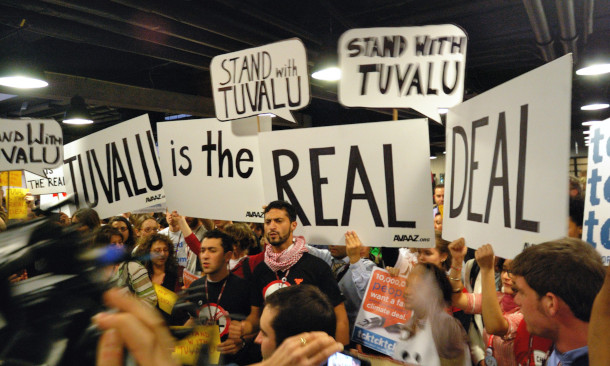
Above, a demonstration in support of Tuvalu at COP15. Tuvalu is one of the nations on the front lines of sea level rise, and will be co-hosting a conference in 2027 as part of an effort to create a fossil fuel non-proliferation treaty, geared to promote the effort to make the transition away from fossil fuels, alongside Ireland. (Photo: Lauri Myllyvirta, Wikimedia Commons, CC BY 2.0)
MEYER: It's basically saying how do we live into the commitment we made by consensus three years ago in Dubai, to transition away from fossil fuels, and it's getting very specific about how do you develop national roadmaps? How do you deal with workers and communities that are reliant on fossil fuel production and make sure that they're dealt with equitably? How do you deal with whole of economy issues? For example, Colombia, which hosted the talks in Santa Marta in April complained that when it indicated it wanted to reduce exports of fossil fuels, the credit markets downrated their debt and their bonds and said, we don't know how you're going to service and repay the money you owe us, so we need to deal with whole of economy issues. So there's a lot of momentum on that front. I think we'll have more than the 57 countries that participated in the process last time. And very interesting, President Lula, when he was in Antalya the week before last, indicated that Brazil had a moral responsibility to continue to provide leadership in this transitioning away from fossil fuels, and indicated that Brazil would be willing to host the next major gathering of these countries in 2028 in Brazil.
CURWOOD: So, Alden, America has played a positive role in this process, such as the Paris Climate Agreement in 2015, when the U.S. hammered that out directly with China. But the U.S. is also linked to the failures of COP6 and COP15 that we talked about before, and this time the U.S. didn't even participate. What should Americans know about our role in climate negotiations, and what should America be doing?
MEYER: Well, let's break this down. As you mentioned, the U.S. was not present in Antalya. This is the second year in a row because President Trump has withdrawn the U.S. from the Paris Agreement, and early next year, withdrawal from the entire framework convention that was negotiated in Rio will take effect. So the U.S. is not present. Of course, they have allies there like the Saudis and Russia who were doing some of the work for them in terms of trying to block progress on fossil fuels. They didn't really need to be there, and most of the negotiators and NGOs I talked to said, with the current stance of the Trump administration, it's probably better that they weren't there. On the other hand, we did have a very robust delegation of governors, mayors, business leaders, and a congressional delegation that came in and gave a very different view of where the U.S. stands and the need for U.S. leadership, and that I think brought some hope to people that maybe there's some change underway that in a couple of years could lead to a different stance of the U.S. And meanwhile, our companies, investors, states, and governors are very engaged in the global network of activists and subnational allies that are driving forward some of these technology deployment strategies in different sectors. So it's sort of two faces of the U.S. The U.S. federal government is AWOL, absent without leave, not at the table, but the U.S. is represented at the subnational level, and that's been very important.
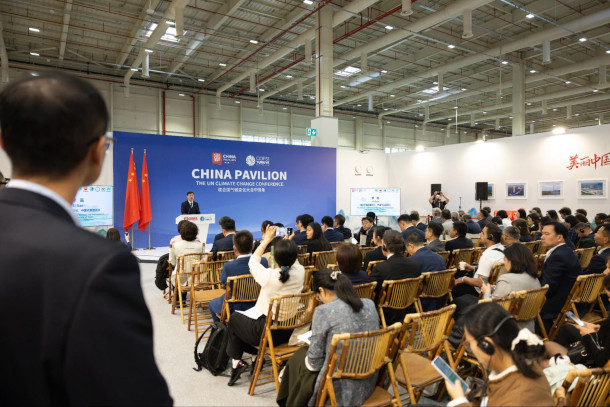
China has to strike a balance when it comes to decarbonization, says Alden Meyer, pointing out the country’s current reliance on coal power as well as their position as a global leader in clean energy technologies. (Photo: Miranda Grant, UNEP, Flickr, CC BY-NC-SA 4.0)
CURWOOD: And by the way, where was China in all of this?
MEYER: China was very active behind the scenes, and actually, just a day or two before the end of the COP, reached an agreement with Australia to commit to the 35 by 2035 electrification target, and we're told they were supporting that behind the scenes. But of course, China is a member of the like-minded developing country group, and so they were aligned with their positions on issues like climate finance and resistance to putting any specific quantified emission reduction goals in the decision. China is kind of complicated because, on the one hand, they are benefiting tremendously from the drive to decarbonize the global economy. They're the leading source of clean emission technologies from batteries, electric vehicles, photovoltaics, wind, etc. But on the other hand, they still have massive investments and reliance on coal domestically as part of their energy strategy, and they don't want to come under any pressure to reduce that. So you always have to watch what China is doing, understanding that just like us, they have complicated politics and interest groups at play back in Beijing.
CURWOOD: If there was one thing you could point to that might lead to a breakthrough, what would it be?
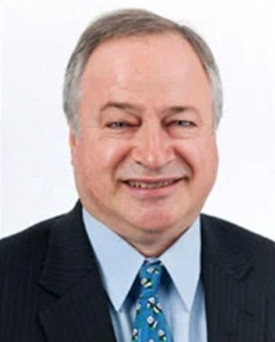
Alden Meyer is a Senior Associate at E3G working on US and international climate policy and politics. He is a Principal at Performance Partners, which provides a range of consulting services to clients in government, business, and the non-profit sector. (Photo: Courtesy of Alden Meyer)
MEYER: I would say, as Rahm Emanuel, former White House chief of staff, liked to say, never let a good crisis go to waste, and I think just like Copenhagen was in 2009, this might be a wake-up call to leaders, to governments that we need to really get our act together and come in with a much more coherent strategy at the next COP. I'm hopeful that can happen. I'm seeing this generate some interest in doing that in countries around the world. That, together with what's continuing to drive forward in the coalitions of the willing that I mentioned on methane, on forests, on energy, clean industrialization, etc., gives me hope. Of of course, you know, there is no way the way the rules are set up now that you can overcome the resistance of a handful of blocker states, and we're just going to have to live with that. But I think we can get a lot done despite that limitation if we build more powerful coalitions between developed and developing countries.
CURWOOD: Alden Meyer, senior associate of the climate think tank E3G. Alden, thanks so much for taking the time with us today.
MEYER: It was good to be with you again.
Related links:
- Inside Climate News | “UN’s COP31 Climate Conference Fizzles Out as Global Policy Divides Deepen”
- The United Nations Environment Programme | “UNEP Executive Director Statement on Closing of COP31”
- BBC | “What Failure of COP31 Reveals About a Divided World”
- International Institute for Sustainable Development | "COP31 Summary Report, 9–21 November 2026"
- More on Alden Meyer at E3G
- Alden Meyer’s full profile at Performance Partners
[MUSIC: Umuda Doğru]
Rancor and Relief at COP31
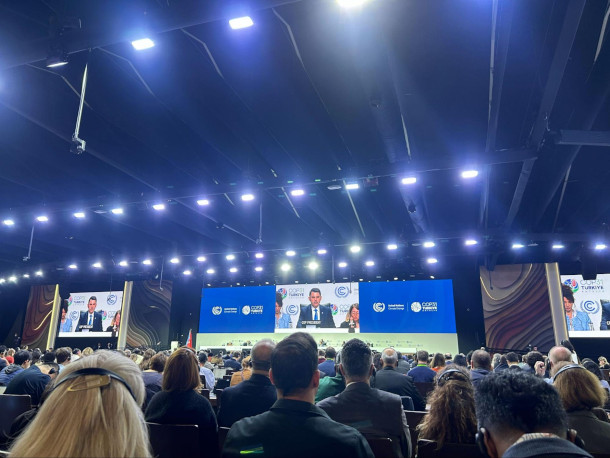
The 31st Conference of the Parties of the UNFCCC ended without a formal update of measures under the UNFCCC and Paris Climate Agreement, a decision that Climate Action Network’s Tasneem Essop said “opens the door for the fossil fuel industry.” Above, the COP’s President, Murat Kurum, addresses the plenary. (Photo: Courtesy of Paloma Beltran Fontes)
DOERING: Let’s turn now to our colleagues, Living on Earth producers Paloma Beltran Fontes and Sophia Pandelidis who were also there on the ground at COP31. Hey Paloma, how are you?
BELTRAN: Hi Jenni, I’m good. COP 31 was definitely an exhausting experience but quite gratifying.
CURWOOD: And what about you Sophia?
PANDELIDIS: Well, Steve, I’m okay, we survived, over 40 hours past the official close of these negotiations, it was actually so long it turned out to be a record for these COPs. It was supposed to be over on Friday, but we, along with other journalists and delegations, kept waiting through delay after delay until that final plenary meeting on Sunday afternoon.
BELTRAN: Yes, there were endless hours of boredom, filled with constant suspense that an agreement to achieve consensus might be announced at any time. And finally, right before the plenary started, a lot of drama was going down. Several civil society groups expressed their discontent with the final draft, including the Climate Action Network or CAN. They actually waited for Australia environment minister and COP31 co-president Chris Bowen to hand him a letter. Here’s CAN’s executive director Tasneem Essop, speaking as storm clouds seemed to be thickening for a deluge to wash away consensus.
ESSOP: The cover decision includes so many dangerous options, opens the door for the fossil fuel industry. There's in fact nothing in this cover decision that protects people who are dying because of climate impacts. We have come here from the start, raising our voices about the need for finance to protect people who are dying, who are being impacted by the climate crisis. We call on governments to reject this cover decision unless it is dramatically changed, which, of course, the presidencies could facilitate in these very last and late hours.
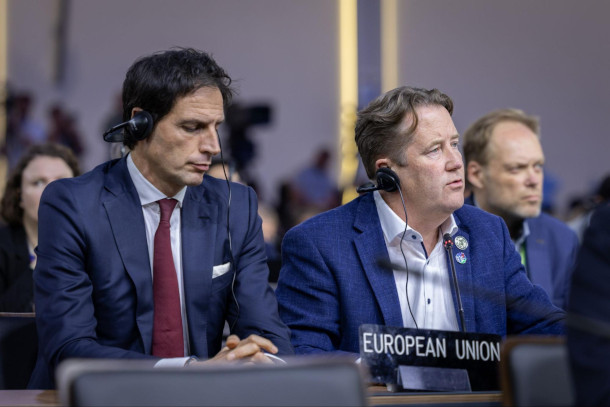
Above, the EU Commissioner for Climate, Wopke Hoekstra (left), and the lead negotiator for the EU, Darragh O'Brien (right). O'Brien declared the EU would not endorse a climate pact that does not mention fossil fuels. (Photo: Kiara Worth, UN Climate Change, Flickr, CC BY-NC-SA 4.0)
PANDELIDIS: Yet there was still hope. Up until the last moment we still didn’t know what would happen. Would there be a walk out? Would they push through? We truly were on the edge of our seats.
DOERING: Wow! Down to the wire… And as we now know, negotiators did not reach consensus on several key issues. And You guys were in the room when these objections started rolling in to be officially recorded in the plenary. What was that like?
BELTRAN: Honestly, it was quite tense. Country after country rejected consensus, starting with the EU, then Panama, the Marshall Islands and you know it became clear that this document was not going to make it through.
PANDELIDIS: And in a very ordered and polite space like the UN, this scene felt very dramatic. Here’s what Ireland's Climate Minister Darragh O'Brien, representing the EU, had to say:
O’BRIEN: We will not endorse a decision that does not respond to the science, that disregards the implementation gap, and that actually risks deepening the chasm between global commitments and the action required to correct the overshoot and bring 1.5 degrees back to within reach. We will not endorse a cover decision or an Antalya pact that does not even mention fossil fuels, which is the key driver of climate change, and we will not accept negotiating backwards in time, and we will not accept a COP that greenwashes fossil fuel.
Panama’s Environment Minister, Juan Carlos Navarro, was a leading voice of opposition to the draft language that omitted reference to a transition away from fossil fuels. Above, Navarro addresses the press in Spanish. (Video: Courtesy of Paloma Beltran Fontes)
CURWOOD: And of course, this summer the climate emergency hit Europe especially hard with deadly heat that killed at least 50,000 people.
BELTRAN: Right Steve, and the stakes of the climate crisis are even more dire for those who live right at sea level like the Marshall Islands.
JETNIL-KIJINER: We were presented with the worst possible response to overshoot, a response to enhance oil and gas, we will not be forced to accept false solutions. We will not compromise our future to benefit fossil fuel interests. We will not accept an outcome that undermines our security and threatens our future. Presidencies, we sincerely appreciate the efforts you have made throughout this process, but we cannot accept this text. To accept this deal would be a betrayal to the Marshallese people. Thank you, Chair. (applause)
BELTRAN: And that was the Marshall Islands lead negotiator, Kathy Jetn̄il-Kijiner.…
DOERING: Ah - the poet and climate activist we’ve had on Living on Earth before! I thought I recognized her voice.
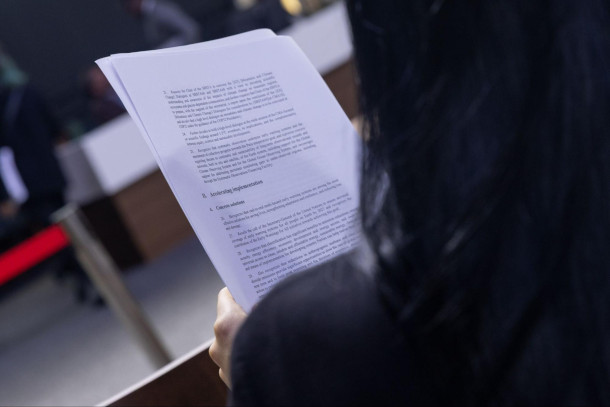
Living on Earth’s Paloma Beltran Fontes says she got the sense from many participants that they would sooner reject a climate treaty than to accept one that doesn’t meet their needs. Above, a COP31 participant reads a text on the final day of the conference. (Photo: Kiara Worth, UN Climate Change, Flickr, CC BY-NC-SA 4.0)
PANDELIDIS: And you know there was a growing number of countries that made their disapproval of the drafts known in the days leading up to the final decision like Panama. Here’s their minister Juan Carlos Navarro, a strong voice of opposition speaking to the press on Friday before the plenary.
NAVARRO: We fully respect the position of every country. However, this is the climate change COP. We are not going to change the name to the Conference of the Petroleum. We're going to keep the climate change COP. Here, we're fixing the climate change crisis, and our position is very clear: to fix it, we need to cap and maintain the current levels of petroleum production. This doesn't even cost them anything, petroleum producers. We're saying, as a first step, stop getting so rich. Let's just keep it as it is. Let's keep the balance. We don't want trauma. We don't want to affect the quality of life of any citizen on Earth.
CURWOOD: So Paloma, Sophia, this breakdown at COP has only happened a couple of other times. So what other reactions did you hear from civil society?
BELTRAN: Well, many people were obviously disappointed that the text did not mention transitioning away from fossil fuels, and that electrification didn’t prioritize renewable energy sources… We talked to Teresa Anderson of Action Aid.
ANDERSON: We all came here assuming that electrification meant that renewable energy would be promoted, and that that would help the phase down of fossil fuels, and indeed that people that lack energy access would be prioritized. But in fact, none of those conditions or elements made it into the electrification target. So, it was more likely to position actors such as data centers and indeed the fossil fuel companies to benefit from that target. When people realized that the target was nothing about the climate, that's when the death knell sounded for this text.
PANDELDIS: The championing of unproven carbon capture and storage technology was another line in the sand for some delegations and activists. Here’s Bill Hare, CEO of Climate Analytics.
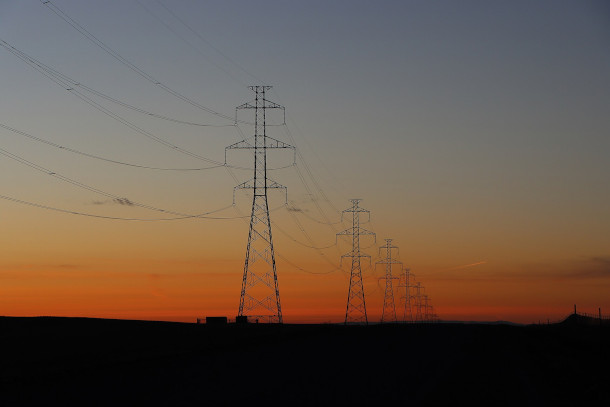
The “35 by 35” goal of increasing the global electrification rate to 35% by 2035 was criticized by Bill Hare of Climate Analytics, who said that implementing the goal without mandating clean power would encourage more gas in the power sector. Above, power lines in Alberta, Canada. (Photo: Kkiefuik, Wikimedia Commons, CC BY 4.0)
HARE: The only thing in the text that relates to fossil fuels is text on carbon capture and storage, which would enable more fossil fuel use. And indeed, if you look at the electrification text, the 35% electrification by 2035 decision, it also allows for more gas in the power sector. So, I would say it's a bit of a win for the fossil fuel industry.
BELTRAN: And to be clear, while there wasn’t an official text adopted, voluntary 35 by 35 pledges on electrification did move forward. And depending on who you talked to, there was a sense that rejection of a bad text was better than acceptance of a weak one. Here’s Savio Carvalho from 350.org.
CARVALHO: You could hear the clapping and the applause in the hall itself. That shows that there is a pretty much pressure around the place that this text, the cover decision, is unacceptable and it cannot go through. And I think that that voice from Panama and more will come as we go along. Is it's not just it's a roaring sound. It's a shout. It's a plea. Stop this. This has to stop. COP 31 leadership has failed. Not COP itself, but the leadership of COP 31 have failed this process and have failed the planet this year.
PANDELIDIS: Some say delegations stood up for what was important rather than giving in. But the EU was accused of using their rejection of the deal to cover up their limited commitment to climate finance. Here’s Teresa Anderson of Action Aid again.
ANDERSON: I personally hope that the EU's terrible language coming into climate negotiations that any deal on climate finance would be dead in the water. I think that that astonishingly bad position, actually really needs to be exposed and needs to lead to a reboot and a questioning of EU's values. Now, EU has in fact been poised as the hero of this COP by being the first to stand up to a weak text on fossil fuels, and that is really doing a lot of good for their reputation. But that crown sits crookedly if they if they continue to be unwilling to help those who are suffering the impacts of the EU’s historical pollution.
BELTRAN: Now the EU countries weren’t the only nations under scrutiny Australia, the UK, and other rich nations were called out as well. And let’s not forget the US has removed itself entirely from the process under President Trump and is pledging NO new money to UN climate funds.
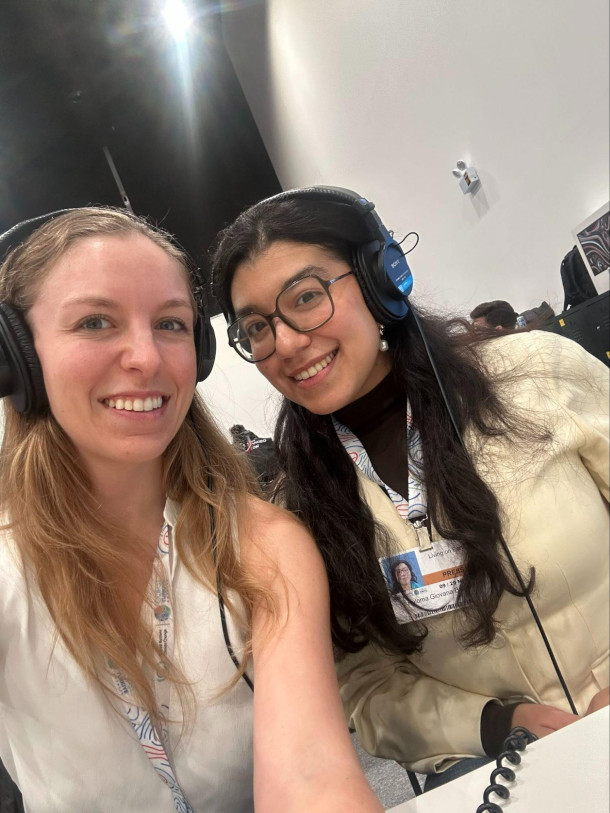
Living on Earth’s Sophia Pandelidis (left) and Paloma Beltran Fontes (right) report from COP31 in Antalya, Türkiye. (Photo: Courtesy of Paloma Beltran Fontes)
CURWOOD: Okay Paloma and Sophia so we know that the central process here did not end in agreement. But, there were some bright spots that Alden shared from the negotiations, what about those?
BELTRAN: Yeah, even though the headline text was not accepted, the process didn’t break down completely. Like we heard from Alden, there were agenda items that were passed. And the star of the show really were those voluntary pledges, on issues like electrification, methane, and decarbonizing industries like steel.
DOERING: And last week, you talked to us, Sophia, about the call for this to be the “Blue COP,” highlighting oceans in the climate conversation. So, just how successful was that agenda?
PANDELIDIS: Well, we did lose binding agreement on oceans with the rest of the official decision. When it was clear consensus could not be reached, Fiji led a bid to pass a standalone resolution on oceans. That didn’t happen. But it should be noted that no countries actively objected to the formal oceans proposals and voluntary pledges still stand.
CURWOOD: Okay, let me ask you both – what did you take away from reporting on COP31?
BELTRAN: Well, it was a whirlwind, honestly a complicated process. But on a more personal level it’s bittersweet, I feel a mix of disappointment and inspiration. And I truly commend the delegations, activists, and civil society who worked hard to address the climate crisis in Antalya, Türkiye.
PANDELIDIS: Yeah, my favorite part was definitely meeting folks from all over the world they are all so passionate about protecting our survival. It’s frustrating, tiring, but it seems people are going to come back and meet in Ethiopia to try again.
DOERING: So, the work continues. Well, thank you both for all of your hard work over these last two and a half weeks, that’s Paloma Beltran Fontes and Sophia Pandelidis.
CURWOOD: Yes, thank you to you both!
BELTRAN: Thanks Steve and Jenni!
PANDELIDIS: Thank you!
Related links:
- UN News | “COP31 Ends Without Climate Pact as UN Chief Warns There Is ‘No Ambiguity in the Science’”
- Read a statement from the Marshall Islands during COP31 on Nov. 11, 2026 on the need for a clean energy transition linked to renewables
- Read Panama's press release following COP31 (Spanish language)
- Read the European Union's Joint Declaration on the COP31 Cover Decision
- Learn more about Climate Action Network
- Learn more about Action Aid
- Learn more about Climate Analytics
- Learn more about 350.org
[MUSIC: Fırtına Sonrası]
DOERING: Just ahead, how kelp forests help the oceans absorb a fifth or more of our carbon dioxide emissions. Keep listening to Living on Earth!
ANNOUNCER: Support for Living on Earth comes from Hansjörg Wyss in honor of Rosamund Stone Zander. Celebrated painter, environmentalist, and author of The Art of Possibility, who inspired others to see the profound interconnectedness of all living things, and to act with courage and creativity on behalf of our planet. Support also comes from Sailors for the Sea and Oceana. Helping boaters race clean, sail green and protect the seas they love. More information at sailorsforthesea.org
[CUTAWAY MUSIC: Fırtına Sonrası]
Kelp ‘Forests of the Sea’
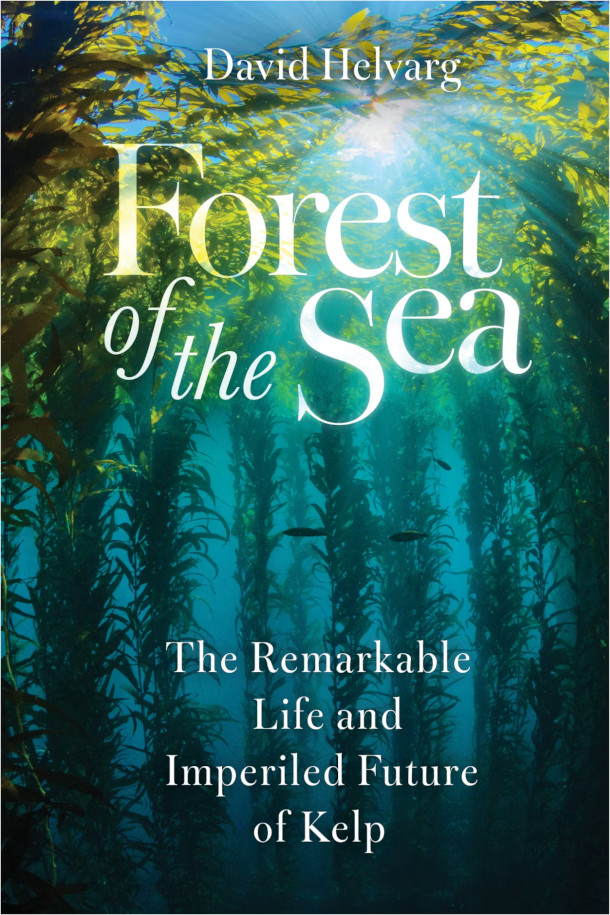
In his latest book, Forest of the Sea, David Helvarg takes you on his deep dives into the ocean’s kelp forests. (Photo: Courtesy of David Helvarg)
DOERING: It’s Living on Earth, I’m Jenni Doering
CURWOOD: And I’m Steve Curwood.
Kelp forests are one of the most productive ecosystems on Earth, and the nearly one million square miles of them along the colder coastlines of the world have increasingly come under threat from climate change. But the vulnerability of kelp to changing ocean temperatures was barely mentioned at “the 2026 blue COP” in Türkiye and only recently these giant algae have even been given a place in ocean conservation next to mangroves and coral reefs. Yet kelp fronds, leaves and stems with a total area the size of Mexico pull a lot of carbon out of the sea and give back a fifth of the Earth’s oxygen. That’s as much as all of our rainforests combined. In other words, kelp forests are the Amazon of the ocean, as our guest David Helvarg argues in his latest book, Forest of the Sea: The Remarkable Life and Imperiled Future of Kelp. And like the Amazon, as the planet warms, kelp forests can burn, not with flames, but with marine heatwaves and pollution. David Helvarg joins us now, welcome back to the show, David!
HELVARG: Thank you, Steve. Been a long time.
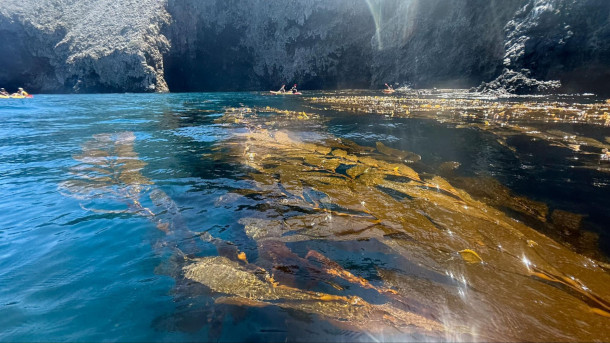
From the surface, kelp forests – like one here in California’s Channel Islands National Park — look like patches of light-brown blades, swaying in the waves. (Photo: Nhung Nguyen
CURWOOD: Indeed. Now this is what your sixth book, your seventh book. How many of these?
HELVARG: Seventh book, six about the ocean, and one about environmental politics.
CURWOOD: Yeah, you know, reading your book, one of the takeaways is: look, there's so much going wrong with the ecosystem based on what we've done to the climate, and people kind of feel a little helpless. But one possible inflection point is to deal with kelp because we still have a lot of it, comparatively speaking, and it will make a huge difference for dealing with a climate emergency. To what extent is that statement true?
HELVARG: It's very true. Unfortunately, unlike coral reefs or rainforests, people know very little about the world's kelp forests, which actually cover more territory than the Amazon, up to almost a third of the coastlines of the world. And along with estuaries and salt marshes, mangroves and seagrasses, they generate 20% of the oxygen. They have a tremendous amount, obviously, because they're an algae that photosynthesizes, they absorb huge amounts of carbon dioxide in the water in the agriculture sector. Unlike farmland, which often results in deforestation and also needs all these inputs like fossil fuel-based herbicides and fertilizers, kelp and seaweeds get their nutrients out of the water and produce very high value foods. Most people don't know; they still think that seafood is mostly wild caught. Today, it's 140 million tons of agricultural product a year versus 90 million of wild caught species, and of that 100 40 million, 30 million tons a year is seaweeds, including kelps and other high nutrient value crops.
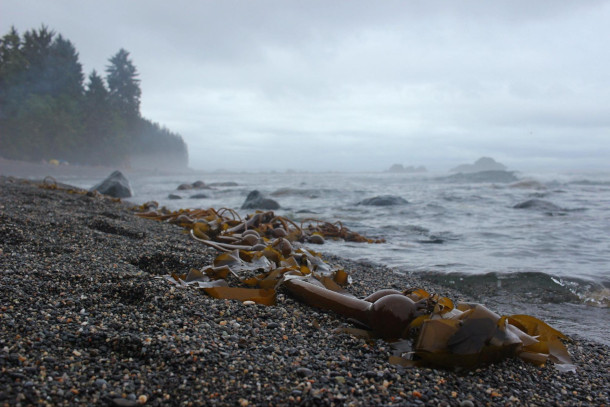
Few people get to see these underwater wonders, and many simply associate kelp with the piles that have washed ashore. (Photo: Thomas Mastromonaco, Pexels, Pexels license)
CURWOOD: So, David, you know, given that kelp forests are so large and so vital, why do you suppose most people don't know about them? They seem to be unknown to the general public.
HELVARG: They're just offshore, but they're offshore in really colder waters where tourists don't go. People walking the beach, they may see the canopy offshore, but mostly they just see it as piles of smelly kelp that's washed up and is covered with flies. And most people don't realize that, in fact, the kelp is 40% alginate, which is a great stabilizer and emulsifier. And and so that kelp product is in all our processed foods, in our toothpaste, our cosmetics.
CURWOOD: Ice cream too, right?
HELVARG: Ice cream too. It makes it more creamy and less icy. We wouldn't have chicken nuggets without alginate, and at the same time, it's in medicines like take an anti-acid capsule, and there's algae there too. It's worth 500 billion a year, and yet, as you said, few people kind of know it's there.

Kelp-derived emulsifiers are found in a number of foods. For example, they can be used to make ice cream smooth and stable. (Photo: Elchino portrait, Pexels, Pexels license)
CURWOOD: So let's go into the science of this for a bit. I've seen some kelp forests. There's some wonderful ones in Monterey Bay and also off of South Africa, Cape Town, where I spent a little bit of time. They look like trees, but in fact, there's something else. There, some sort of super algae we're talking about here.
HELVARG: Yeah, I mean, it's what they call evolutionary convergence. The kelp forests look a lot like plants, but they're actually an algae. They're really big algae, like the giant kelp we have here in California, and the bull kelp. Literally, they're the bamboo of the ocean. They can grow a foot, two feet a day. But it's better than plants, you know, because the algae gave birth to the plant system. The first complex life on Earth was 1.2 billion years ago when different algae formed in the seaweed, and eventually that led to the plant systems on land. And 600 million years later, the animal kingdom rose up. So it's you know when we say the forest of the sea, we scientifically have to point out it's algae, it's not plants.
CURWOOD: So David, talk to me about what the kelp do in the ecosystem. What organisms, aside from themselves, of course, do they nurture?
HELVARG: Sure. I mean, aside from providing protection from erosion and storm impacts and providing oxygen, they protect over 1000 species, like leafy sea dragons and wolf eels that I've encountered, but most people don't know that the life cycles of a lot of our edible wildlife, like salmon and cod and herring, also depend on the kelp forest where they mature and spend a year or more breeding. Herring roe on kelp is one of the first foods of springs for indigenous community all along the Pacific Coast. Again, it's this diversity of food. So commercial fishers around the world are very dependent on it, and other people are dependent on it as a harvest. That in Asia there's huge amounts of kelp harvesting for food and other products.
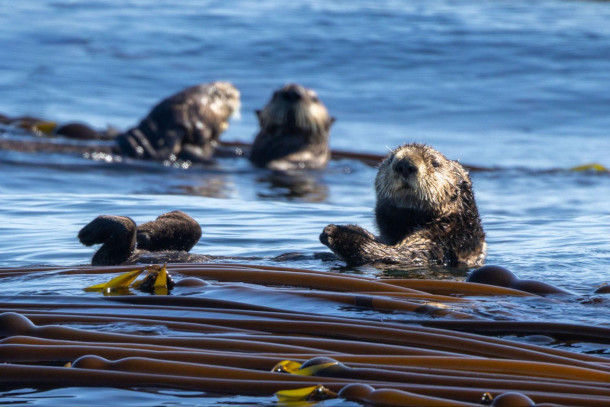
Sea otters wrap kelp around their bodies as an anchor to keep themselves from drifting while resting. Predators like sea otters and sunflower seastar act as keystone species in these forests, hunting sea urchins and preventing them from overgrazing the kelp. (Photo: Sergey Guk, Pexels, Pexels license)
CURWOOD: David, you're both a journalist and a scuba diver. What was it like to experience these forests for the first time? Tell me what happened when you went down there.
HELVARG: Well, it's kind of amazing. So even if it wasn't producing $500 billion in a year in goods and services, it's just inherently one of those places with a sense of awe and wonder that you're part of something mysterious, and it's like fun to dive in coral. But kelp diving is a full contact sport. You're going through these thick and tangling kelp, and it's dark and it's murky. And then suddenly the light will break through. And I looked up, and it was like somebody fired a shotgun through a barn door. You just had these intense shafts of light that were lighting up the world around us, which is a world of giant Garibaldi's. They're like goldfish on steroids, and then I look down, and there's a big eel, wolf eel, they call them, just big gray teeth and snaggle tooth, just so ugly it's attractive.
CURWOOD: Ooh, scary.
HELVARG: Well, it's it's all scary, but in a way that makes you know you're alive, and sometimes suddenly something large moves nearby, but there's only six foot visibility. You wonder what it is, and yeah, it could be a sea lion, it could be a leopard shark, it's-
CURWOOD: or a great white, huh?
HELVARG: Yeah, they tend to only transit through the kelp.
CURWOOD: So, how did this experience of encountering the kelp forest change your perspective as a environmental journalist?
HELVARG: Well, it's sort of you know, as I saw it beginning to decline, it kind of fed into what I've been doing for a long time as an environmental journalist advocating for what I call the blue beat. And so, when the blob, as they called it, the marine heat wave, struck down California's kelp beginning around 2015, I thought, here's a great story that needs to be told.
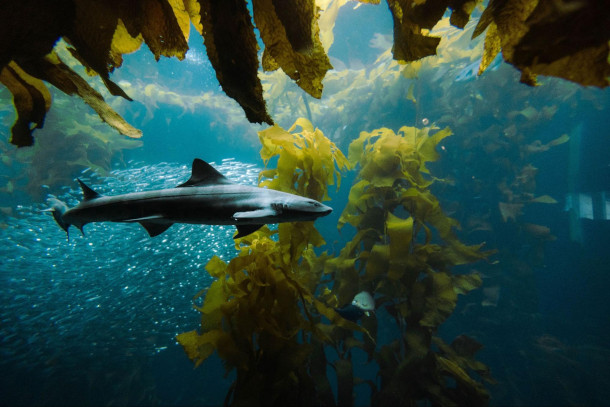
As you plunge into a kelp forest, you’ll find it teeming with life, so get ready to swim alongside sharks, seals and schools of fish. (Photo: isaac mijangos, Pexels, Pexels license)
CURWOOD: Yeah, I mean, the situation is pretty dire, though. I mean, you document that kelp forests are in great decline around the world. Tasmania has this giant kelp that's 95% gone. In Northern California, the bull kelp has suffered the same fate, and the kelp highway along the Pacific Rim is is a moonscape. Tell me, why are we having this decline in kelp in such large numbers? Is this human activity extracting kelp and the critters that are part of the kelp ecosystem? Is it our warming? Is it the change in the acidification of the ocean? What's causing this massive decline that you've documented?
HELVARG: 20 years ago, when I started my ocean nonprofit Blue Frontier, the main issues for both coral and kelp were overfishing and pollution. I mean, there's illegal harvesting down in South America now, in Chile and Peru, but the mechanical harvesting, the overfishing, the pollution were the problems 20 years ago. Today, I'd say the overwhelming problem is the ocean's hotter than it's ever been, and 80% of the ocean saw marine heat waves at some point last year. The kelp forests like it in the 40 to 50 degree range, but when I was up in Alaska, Prince William Sound had had a marine heat wave where it went to 76 degrees and killed all the kelp and all the species that depend on it. I mean, this is normally 46 degree water that jacked up, and we had this blob that between 2013 and 2017 that took out 95% of our bull kelp in Northern California. So, to keep the forest alive, we really need to deal with the marine heat, which means we need to deal with climate.
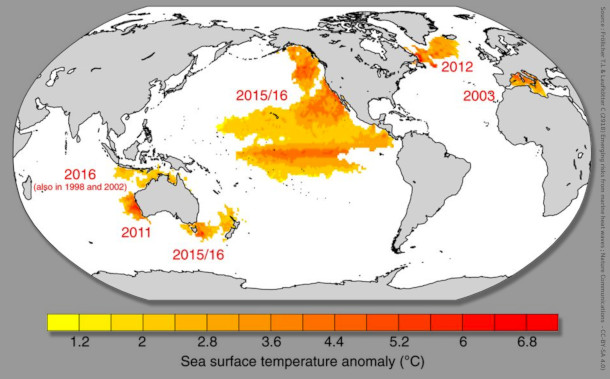
The map shows the maximum sea surface temperature anomaly in regions where temperature exceeds the 99th percentile using NOAA’s daily Optimum Interpolation sea surface temperature dataset. These major marine heatwaves — prolonged periods when ocean temperatures are abnormally high — have been observed occurring around the world, upending underwater ecosystems, including kelp forests. (Photo: Lamiot, Wikimedia Commons, CC BY-SA 4.0)
CURWOOD: So, David, what will happen if the kelp go away? If the kelp get overheated as the climate overheats, what will happen to the ecosystems?
HELVARG: The worst-case scenarios for kelp loss have been in Tasmania and Northern California. And here in Northern California, what we saw is that communities like Fort Bragg, fishing community up a few hours north of San Francisco and the Golden Gate, they lost their urchin fishery. They lost the recreational abalone diving season, which brought in 20 to $30 million a year because the abalone feed on the kelp, and the big urchins went away when the little purple ones took over. What had happened there was when this hot water came in, it supercharged sea star wasting disease. The last top predator in Northern California was this sunflower sea star. It's like this giant cannibalistic starfish that can grow 24 arms and weigh as much as a bald eagle. They were up there eating the little urchins that would otherwise eat the kelp. They got wiped out. 99% of them got wiped out by this wasting disease, and so there's nothing left. The little purple urchins came out of their hidey holes and ate the kelp forests away for 350 miles and replaced them with what are called urchin barrens. And what's scary is people are literally out there with mineral hammers smashing the urchins in Southern California. I visited 80 acres of restored kelp forest, but it took them 10 years and had to take out 6 million urchins to create the conditions for the kelp to come back.
CURWOOD: Oh my! So, in the midst of this huge decline in kelp, it does seem to be recovering in other places. What are those places, and what's behind the advancement of kelp there?
HELVARG: With kelp, luckily, I mean, I've been diving in a kelp forest that 10 years ago was in urchin barrens, two years later it was back. So if you create the conditions, kelp can recolonize very quickly and grow incredibly fast. It's triage. It's saving what we can while we can, and making the right decisions. I mean, South Korea, their fisheries agency realized that healthy wild kelp forest, the mother seed for the aquaculture industry, that's essential. It's a food security issue. So they invest $29 million a year in restoring kelp. They've restored 50,000 acres. They plan to restore 130,000 acres by 2030. There's also massive healthy kelp forests in the southern cone of Latin America that are being protected by marine parks, we gave the president of Azores an award recently for protecting his kelp. The best way to resist also involves intact kelp systems, which means like having predators like marine weasels that we all know as sea otters. They're the keystone predators that eat the urchins that keep the kelp forest healthy. The scientist that I spoke with down in Tasmania in Australia, he said it's amazing. We can we know how to restore kelp. We can do it. It's expensive, but if we're not off fossil fuels by the end of the century, we're not going to have real kelp forests. We're not going to have coral reefs.
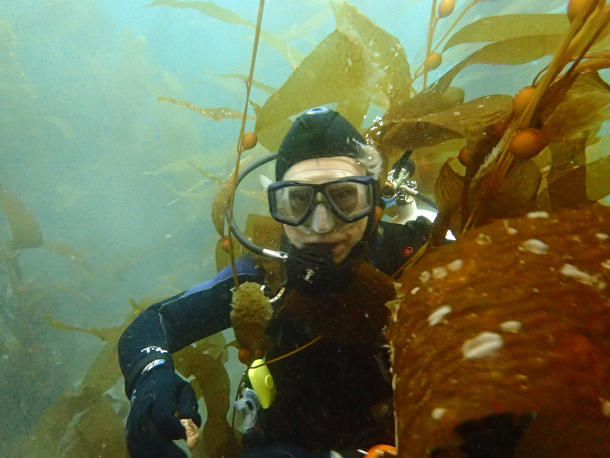
For author David Helvarg (above) — a journalist and a scuba diver — plunging into the world of kelp gives you a sense of awe and wonder. He says it makes you feel “that you're part of something mysterious”. (Photo: Jessie Altstatt)
CURWOOD: Now you explore the growing interest in kelp and seaweed as part of the so-called blue economy. Take us to one of the places you visited that is taking economic advantage of this notion that saving kelp can also help save money, save economies.
HELVARG: Yeah, I mean, up in Alaska, I went out with indigenous fishermen who's now harvesting kelp. He sees the problems with the warming ocean. He thinks that to maintain marine-based harvesting, which his community has done for 1000s of years, they need to diversify kelp's away. In Maine, I went out with a lobsterman who's also planting kelp because, as he pointed out, with the changing warming of the Gulf of Maine, the lobster going further north or further out to sea, so he's looking his kelp his way to diversify, and then in Turkey, it's micro, not macro algae. But I visited the first carbon negative bio refinery where they're growing different algae, feeding them with carbon dioxide from a cement factory and sugars from a soft drink factory, and these algae are being used for jet fuel for Turkish airlines and downstream products like omega threes and soil supplements. So the potential that's offered by algae and kelp is just beginning to be realized, and that's what I mean by a blue economy. That this is something that can really get us more into a nature-based chemistry and product lines.
CURWOOD: So replanting them is one thing, but restoring the forest, the size that we've lost, is another. So, in your view, what would it take to do this to scale?
HELVARG: Not my view, but a scientific report in Nature suggested that for $14 billion, you could at least expand the kelp forest significantly closer back to what they were when I was young, and 14 billion is sounds a lot until you realize there's half a trillion dollars of value, including like right here in California with this year's Super El Niño coming ashore. Areas that have kelp forests, like Central California and Monterey Bay, are much more protected from storm surges than areas that don't have the kelp forest. It's very much like the coral reefs protecting island from their impacts. Again, you're not going to get that 14 billion until people have the awareness of like the South Korean fisheries agencies and communities where they have kelp festivals and where they they commit the money for their own sense of security. People are amazed. You tell them there's like a whole rainforest, but it's under the water and you don't know about it. I wrote stories about the wildfires here in California, but to discover that there's a second forest disaster underway can wake people up. And I think when people become aware, then they're going to engage. And there's you know there's a help the kelp bill in in Congress that would put 5 million a year into restoration and research. It's not a hopeless story. It's what's hopeless is if we don't act.
David Helvarg is a journalist and author. (Photo: Courtesy of David Helvarg)
CURWOOD: So, David, before you go, tell me what are your hopes for the future of kelp?
HELVARG: My hopes for the future of kelp are at this point much like my hopes for the future of coral in all living seas, and in terms of the kelp forest, they're more resilient. I've been diving off Palos Verdes in a kelp forest that was just urchin barrens a decade ago, and to see all the shoaling fish and the lobsters returning was just hopeful. I think the hope for the kelp is the hope for the ocean, which we expand our awareness, appreciation, and then do what we can to save what we can.
CURWOOD: While we have time.
HELVARG: While we have the time, now is the time. We've delayed too long. We've done too much damage, but we have the knowledge. What we need is the awareness and the political commitment to do what needs to be done.
CURWOOD: David Helvarg's latest latest book is called Forest of the Sea: A Remarkable Life and Imperiled Future of Kelp. David, thanks so much for taking the time with us today.
HELVARG: Thanks for having me, Steve.
Related links:
- Monterey Aquarium | "Kelp Forest Resilience and Recovery Research"
- Proceedings of the National Academy of Sciences 113, no. 48 | "Global Patterns of Kelp Forest Change over the Past Half-Century.”
- Purchase Forest of the Sea: The Remarkable Life and Imperiled Future of Kelp and support Living on Earth and independent booksellers
- David Helvarg on Substack
[MUSIC: Cathedral of Kelp]
CURWOOD: Living on Earth is produced by the World Media Foundation. Our crew includes Naomi Arenberg, Paloma Beltran Fontes, Claire Brandes, Abby Edgecumbe, Swayam Gagneja, Mark Kausch, Mark Seth Lender, Don Lyman, Ashanti Mclean, Nhung Nguyen, Aynsley O’Neill, Sophia Pandelidis, Andrew Skerritt, Bella Smith, Jake Rego and El Wilson.
DOERING: Tom Tiger engineered our show. Allison Lirish Dean composed our themes. You can hear us anytime at loe.org, Apple Podcasts and YouTube Music, and like us please, on our Facebook page, Living on Earth. Find us on Instagram, Threads and BlueSky @livingonearthradio. And we always welcome your feedback at comments@loe.org. I’m Jenni Doering
CURWOOD: And I’m Steve Curwood. Thanks for listening!
ANNOUNCER: Funding for Living on Earth comes from you, our listeners, and from the University of Massachusetts, Boston, in association with its School for the Environment, developing the next generation of environmental leaders. And from the Grantham Foundation for the protection of the environment, supporting strategic communications and collaboration in solving the world’s most pressing environmental problems.
ANNOUNCER 2: PRX.
Living on Earth wants to hear from you!
Living on Earth
62 Calef Highway, Suite 212
Lee, NH 03861
Telephone: 617-287-4121
E-mail: comments@loe.org
Newsletter [Click here]
Donate to Living on Earth!
Living on Earth is an independent media program and relies entirely on contributions from listeners and institutions supporting public service. Please donate now to preserve an independent environmental voice.
NewsletterLiving on Earth offers a weekly delivery of the show's rundown to your mailbox. Sign up for our newsletter today!
 Sailors For The Sea: Be the change you want to sea.
 The Grantham Foundation for the Protection of the Environment: Committed to protecting and improving the health of the global environment.
 Contribute to Living on Earth and receive, as our gift to you, an archival print of one of Mark Seth Lender's extraordinary wildlife photographs. Follow the link to see Mark's current collection of photographs.
 Buy a signed copy of Mark Seth Lender's book Smeagull the Seagull & support Living on Earth
© Copyright World Media Foundation. All Rights Reserved
Home | Contact | RSS | Donate | Newsletter