

This Week's Show
Air Date: November 6, 2026
FULL SHOW
SEGMENTS
Blue Wave, Green Hope
/ Vernon Loeb, Dan Gearino, Marianne LavelleView the page for this story
Though climate was not directly on the ballot in the midterm elections, high fuel prices and concerns about data centers boosted Democrats to a “blue tsunami.” And the new Democratic majority in both houses of Congress means Republican anti-environment measures like fossil fuel expansion and public land exploitation may be slowed down or even halted. Colleagues from our media partner Inside Climate News – Executive Editor Vernon Loeb, clean energy reporter Dan Gearino, and Washington Bureau Chief Marianne Lavelle -- join Hosts Steve Curwood and Jenni Doering to talk us through the results. (14:37)
Blue Wave, Green Hope (Cont'd)
/ Vernon Loeb, Dan Gearino, Marianne LavelleView the page for this story
Hosts Steve Curwood and Jenni Doering continue our roundtable discussion with Vernon Loeb, Marianne Lavelle, and Dan Gearino of Inside Climate News about voters’ frustration with high fuel prices and the opportunity for a Democratic-led Congress to now focus on clean energy to reduce energy costs. We talk about what voters expect the Democratic party to deliver in the final two years of the Trump presidency and beyond. (17:23)
Public Lands Protection in the New Congress
View the page for this story
Congressional committees originate legislation and oversight investigations, and as Democrats take control their senior members will presumably become chairs with broad subpoena powers. Congressman Jared Huffman, who has represented northern California since 2013 is an environmental lawyer and in line to chair the House Natural Resources Committee. He joins Hosts Steve Curwood and Jenni Doering to share his priorities for the committee in the new Congress. (14:25)
Show Credits and Funders
Show Transcript
261106 Transcript
HOSTS: Steve Curwood, Jenni Doering
GUESTS: Jared Huffman
REPORTERS: Dan Gearino, Marianne Lavelle, Vernon Loeb
[THEME]
CURWOOD: From PRX – this is Living On Earth.
[THEME]
CURWOOD: I’m Steve Curwood.
DOERING: And I’m Jenni Doering
Republicans failed to convince voters that Democrats should be blamed for high gas prices.
LAVELLE: Voters just were not buying it. They know what they're paying for energy, and they know that that's related to this fossil fuel energy policy of the administration.
CURWOOD: Also, the incoming chair of the House Natural Resources Committee on what’s next in a Democratic led Congress.
HUFFMAN: We have gone from leaning into climate action and environmental protection and environmental justice to actually a scorched earth agenda. That's what we have to now start tackling, and the values and the agenda are going to get reset, and we're going to work like heck to begin repairing all of this damage.
CURWOOD: That’s this week on Living on Earth. Stick around!
[NEWSBREAK MUSIC: Boards Of Canada “Zoetrope” from “In A Beautiful Place Out In The Country” (Warp Records 2000)]
[THEME]
Blue Wave, Green Hope
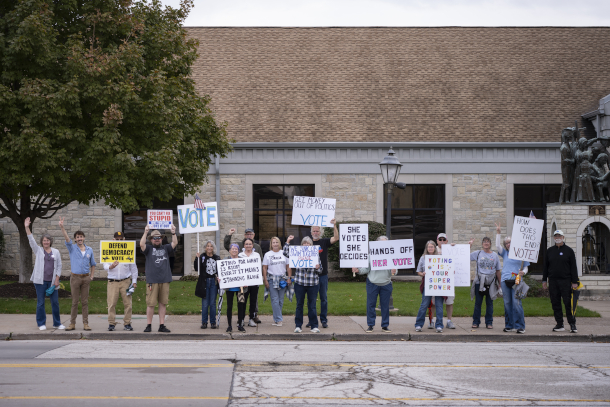
Democrats of Scott County, Iowa, marched to the polls at St. Anthony's Church in Davenport on the first day of in-person voting in the 2026 midterm elections. The midterms saw decisive Democratic victories across the Senate and House, flipping both chambers of the legislative branch. (Photo: Chris Bentley, Flickr, CC BY-NC-ND 4.0)
DOERING: From PRX and the Jennifer and Ted Stanley Studios at the University of Massachusetts Boston, this is Living on Earth. I’m Jenni Doering
CURWOOD: And I’m Steve Curwood.
On November 3rd, millions of Americans repudiated the policies of Republican President Donald Trump and swept the Democrats back into power in both the House and Senate. The new majorities are the biggest switch in decades, and when the 120th United States Congress convenes in early January, depending on final vote tallies, Democrats will have at least 70 more members of the House and as many as ten more Senators than the GOP.
DOERING: President Trump is still in office for 2 more years, so Democrats are not guaranteed legislative victories, but they are expected to provide a check on the extraordinary expansion of executive power under Mr. Trump. And while Democrats said little directly about the climate emergency and the environment during their campaigns, the change of control means Republican anti-environment measures like fossil fuel expansion and public land exploitation may be slowed down or even halted.
CURWOOD: To talk us through what these results could mean for the climate and environment, Jenni and I are joined by our colleagues from our media partner Inside Climate News. Executive Editor Vernon Loeb is based in Philadelphia; clean energy reporter Dan Gearino is based in Columbus, Ohio; and Marianne Lavelle is ICN Washington Bureau Chief. Welcome back to Living on Earth, everyone!
GEARINO: Good to be here.
LAVELLE: Hello, good to be here.
CURWOOD: So we're talking the day after we got the results from the midterm elections, and I think it's fair to say that it was a heck of a night for Democrats, and it's been a busy day for all of us working on these stories. How do you feel about all of this? Let's start with Vernon.
LOEB: Well, I'm still processing what happened. Perhaps still in a bit of shock, really, at how dramatic these results are. I expected a pretty strong blue wave, but I can't say I anticipated a tsunami with winds in places like South Carolina and Kansas and Texas.
CURWOOD: And possibly even in Mississippi, what's going on?
LOEB: You know, it's a new day, and we're seeing a realignment, I guess, or perhaps it's the end of the Trump era. I don't know, it's too early to tell, but something big is happening.
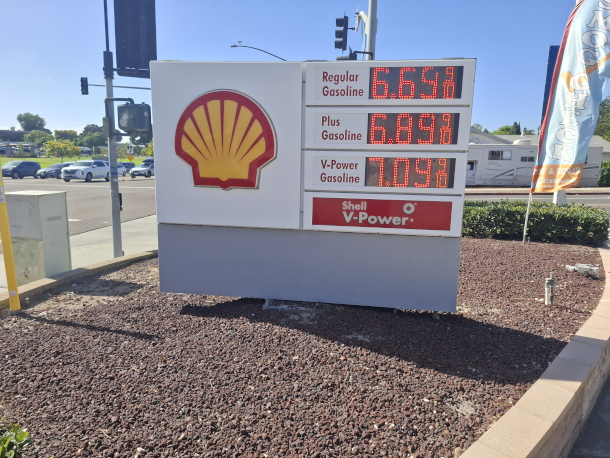
Gas price board in Chula Vista, CA, in September 2026. High fuel prices and general energy affordability were crucial concerns for many voters during the 2026 midterm elections, our guest Marianne Lavelle suggests. (Photo: Bnuuy, Wikimedia Commons, CC0 1.0)
DOERING: So, although climate change may not have been super present in terms of this campaign and the candidates and the way they were talking about it, how much of a role do you think that the climate emergency may have played in getting these voters out? Marianne?
LAVELLE: Yeah, well, when we look at the issues that voters really cared about, it's clear that the whole suite of climate policy issues was right beneath the surface. People were very, very angry at what had happened to their energy bills. Not only filling up their trucks and their gas tanks, but their utility bills. And they see the change that's going on. All of these data centers going up, this whole new industry being built up. At the same time, this war that no one asked for and that no one has control of has just shaken up the whole economy. And the reason is that we are really vulnerable because we're so stuck on fossil fuels, and it's pretty clear that the whole policy of the Trump administration has been to produce more fossil fuels and consume more, and really has taken steps to reduce clean energy, and reduce any move toward electric vehicles, and that all comes down to both price and security.
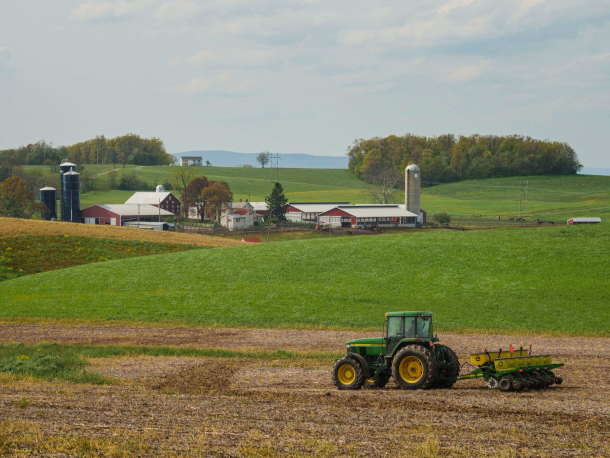
Our guest Dan Gearino suggests that many Midwestern farmers were alienated from the Republican party by high fossil fuel prices and the Trump administration’s tariff policies. (Photo: USDAgov, Wikimedia Commons, Public Domain)
CURWOOD: So, Dan, I want to ask you to comment for a moment on the middle of America. I think the people who do farming, either on a local level or industrial farming, really challenge tariffs, the price of fuel, the price of fertilizer, and they for years have been very conservative. And yet, I'm seeing a Democrat go to the Senate in Iowa. What about the middle of America? How did they respond? What role did they play in this tsunami change, and what do you think made the difference for them?
GEARINO: If you look at farmers and anyone connected to the agricultural economy, and you look at the things that they spend money on and the things that they kind of depend on to make a living, Trump administration policies have made it much more expensive for them to just exist and do business, and it has reduced some of their incomes and some of their income streams, through a combination of high fossil fuel prices and tariffs. So, if you wanted to alienate the heart of the Republican base, if you look at especially these midwestern states, Democrats will run up the score in the big metro areas, and then Republicans will win these impossibly high margins in rural areas. That's the kind of election paradigm we've become so used to. That just isn't what happened in this election. You saw Democrats doing better in formerly deep red rural areas, and it's just because of this profound dissatisfaction with U.S. policies, and you could see a direct connection between those policies and harming household finances. It's not always that direct as it has been these last couple years.
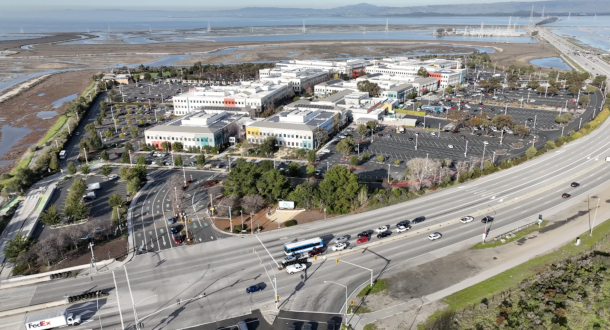
Meta’s Hyperion data center in Louisiana. Data centers were a central issue in the midterm elections of the neighboring state of Texas, where many Democrats campaigned against their expansion. (Photo: InvadingInvader, Wikimedia Commons, CC BY-SA 4.0)
DOERING: Now, I think we've already touched on the data center issue that was so important in this election, and Vernon, that seems to have had a big role in the turnout in Texas. Can you tell us about what happened there?
LOEB: Sure. You know, I've been saying since 2016, when I was managing editor at the Houston Chronicle, that Texas was going to turn blue, and it took a decade. But indeed, Texas has now turned blue. I think part of what we're seeing now is just the natural course of demographics in Texas, which happens to be a very, very diverse state, especially in the cities like Houston. But this year, there were two other factors that I think really produced this shocking, not only huge turnout among Democrats, but this flipping of a state that hasn't elected a Democrat statewide in three decades. First is Trump's immigration policies, which finally did the trick when it came to energizing Latino voters in Texas, a huge voting bloc in Texas. And in 2024, the Latinos swung to Trump. In this midterm, they swung back to the Democrats in dramatic fashion. That's number one, and then number two is this crazed development of data centers across Texas. I mean, Texas has sort of become the epicenter of data center development, partly due to its very laissez-faire approach to business regulation, which is like, come and open your business here, we don't have many regulations, and thus Elon Musk moved from California to Texas. We did a story last week about a town called Taylor, Texas, 17,000 people, 30 miles from Austin. It's a small town in Texas. Right now it's encircled by three data centers and a gigantic Samsung chip factory, and this constellation of industry in this town has completely changed the nature of life for the people who live there, and many of them were Trump kind of people. And this is happening all over the state of Texas. So you put immigration policies, you put data centers together, and you have this incredible turnout. And this came in the face of Elon Musk, new Texan Elon Musk, spending $160 million to support Ken Paxton's Senate candidacy, and Paxton got killed by Talarico, by James Talarico. A poll last week showed that 80% of Texans want a limit on the number of data centers, and they spoke loudly last night.
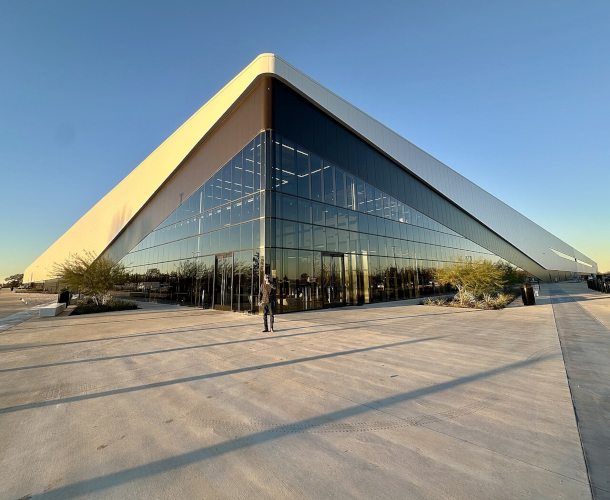
Starlink manufacturing facility in Bastrop, TX. SpaceX CEO Elon Musk contributed millions of dollars to Republican campaigns in Texas where a win for Democrats would create an unfavorable environment for his expanding businesses. (Photo: jurvetson, Wikimedia Commons, CC BY 2.0)
CURWOOD: What about the governor's race there?
LOEB: The governor's race is almost more shocking and surprising than Talarico's defeat of Paxton because Abbott was, this would have been his fourth term as governor. He was not considered a weak governor, and he was beat by kind of a nobody, an absolutely fine state lawmaker, but was not particularly well known before this campaign. You know, a year ago, Abbott was this huge booster of data centers. Couldn't get enough data centers, and then the politics changed, and he did a 360 earlier this year and started ordering audits on all data centers to slow them down. He ordered environmental regulators to do a permit review of all data centers. We did a piece a couple of weeks ago that actually showed they continued issuing permits despite this supposed moratorium, and Abbott immediately responded and told them to stop issuing permits. But it was all too little, too late. And in voters' mind, clearly, the Republicans are seen as the developers of data centers. And Gina Hinojosa campaigned on a data center moratorium.
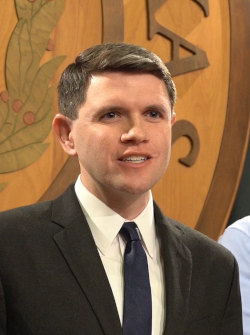
Democrat James Talarico is the Senator-elect for Texas. Talarico is outspoken against unregulated data center expansion in the state. (Photo: Antonioaesparza, Wikimedia Commons, CC BY-SA 4.0)
CURWOOD: Of course, the name Hinojosa didn't hurt her, did it, in this demographic?
LOEB: It did not. And she's from a traditional Texas Democratic family from the border, so she turned out to be, I think, a very strong candidate. As was Talarico. I mean, these are two really up-and-coming, impressive young Democrats in Texas, and you know, you look forward to '28, and you think of those electoral votes in Texas potentially going in the Democratic column. That changes everything in terms of national presidential politics in this country.
DOERING: And speaking of young, I mean, we saw a huge turnout of young voters across the country, and a big shift among them. What are the implications here for climate policy? Marianne?
LAVELLE: Right. It's so interesting because back in Trump's first term in 2018, the midterm of his first term, that was when the Green New Deal was born. The youth-led movement, Sunrise, kind of led this charge and really galvanized young voters, and that was very effective in its time. This year, when I talked to Sunrise Movement, they said it's clear that we have to change for the political environment we're in today, and we have to broaden the movement and focus on what's salient to young people. And for young people, they absolutely care about climate, but it's tied up with their other huge concerns about their futures. It's all tied up in their concerns about the economic climate that they'll be raising their own kids in, and so the concerns of young voters are really a big reason why they moved to Trump in 2024 because they were suffering economically, and Trump promised them relief, and that promise was just clearly broken. And what we saw last night was like a 38 point shift of young men away from the Republicans, which is just astounding, and young voters of color as well. Now it's time to make sure that the Democrats deliver on the promises to this generation.
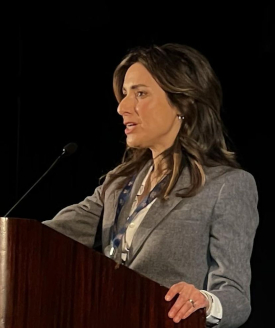
Democrat Gina Hinojosa is governor-elect of Texas. She pledged to enact an immediate moratorium on new data center approvals as part of her campaign. (Photo: RRC1701, Wikimedia Commons, CC0)
DOERING: So let's talk a little bit about the state level elections that we saw. Some of these big wins for Democrats in legislatures and governors, even some trifectas. Dan, you and I have chatted in recent weeks about what those trifectas might mean for clean energy at the state level, what were your reactions to what happened in these midterms?
GEARINO: It's kind of like this larger theme of the evening, which was if you looked at maybe the best case scenario for Democrats, and then you add like 20% to it. So going into this election, Democrats expected to get trifectas. A trifecta is having the governor and both chambers of the legislature. They expected to gain trifectas in Minnesota, in Wisconsin, and in Michigan. They thought the chances were pretty good, and then the real reach was Pennsylvania and Arizona. So they got all five of those. Arizona, they're still counting the votes, but if you look at where those races currently stand, it would be very difficult for them not to have a trifecta there once all the votes are counted. You also may add Alaska to that list once the votes are counted there, whenever that is. That's going to be a while. This is right at the very outer edge of expectations, maybe even beyond the outer edge of expectations. And so, why is a trifecta important? A governor can come in with an agenda to do something like have incentives for electric vehicles, maybe have a climate plan, have a plan to reduce emissions, and do a climate inventory. Maybe, I mean, you could just kind of go down a list in a state where one party controls the entirety of state government, you can pass those things, and you just have to look at other states that have done this. Look at Illinois, where electing Governor Pritzker with the Democratic legislature, my goodness! I mean, it made a huge difference. And you look at the legislation that came from Illinois, it was almost like that state just turned on a dime, and there's going to be a heck of a lot happening in all of those states. Wisconsin is one I'm keeping an eye on in particular.
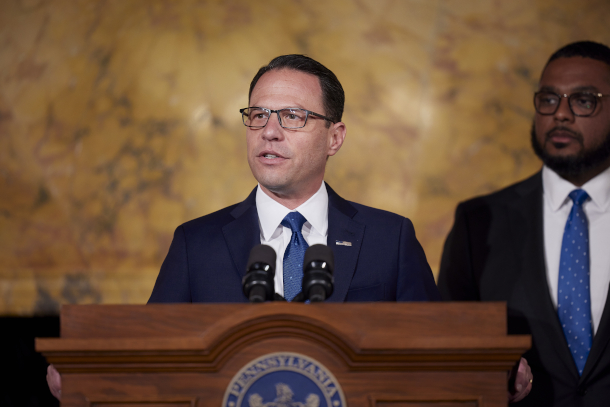
Josh Shapiro has been Pennsylvania’s Governor since 2023. Pennsylvania, the number two gas-producing state in America, gained a “trifecta” in the 2026 midterms, with the governorship and both state legislatures in the hands of Democrats for the first time in 30 years. (Photo: Governor Tom Wolf from Harrisburg, PA, Wikimedia Commons, CC BY 2.0)
LOEB: And if I could add, I mean Pennsylvania is, is a sea change almost on the scale of Texas. It's the number two gas producing state in America, and the Pennsylvania Senate has been in Republican hands since the mid 1990s, and suddenly you've got a pretty progressive, actually sort of a moderate but very successful Democratic governor, moderate on energy, progressive in most other ways, talking about running for president from Pennsylvania with both houses of the legislature for the first time in 30 years. Pretty amazing.
Related links:
- Inside Climate News | “Democrats’ Big Statehouse Wins Could Transform Climate and Energy Policy”
- Inside Climate News | “Rural Charms Drew Residents to Taylor, Texas. Then Came the Data Centers.”
- Inside Climate News | “Texas Continued Permitting Data Centers After Abbott’s Pause, Report Finds”
[MUSIC: Keystone Run]
CURWOOD: You’re listening to our post-election roundtable with Vernon Loeb, Marianne Lavelle and Dan Gearino of our media partner Inside Climate News, and we’ll be right back after the break. Stay tuned to Living on Earth.
ANNOUNCER: Support for Living on Earth comes from the Waverley Street Foundation, working to cultivate a healing planet with community-led programs for better food, healthy farmlands, and smarter building, energy and businesses.
[CUTAWAY MUSIC: Count Basie, “Hay Burner” on Straight Ahead, The Verve Music Group]
Blue Wave, Green Hope (Cont'd)
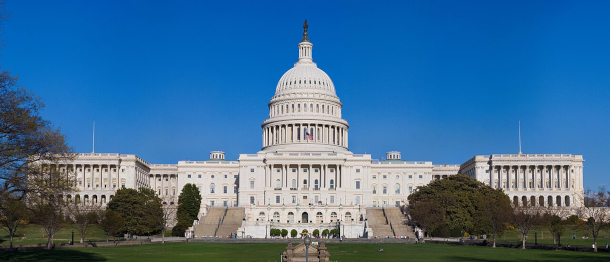
The United States Capitol building in Washington, D.C. A new Democratic-majority Congress will convene in early January 2027. (Photo: Noclip, Wikimedia Commons public domain)
DOERING: It’s Living on Earth, I’m Jenni Doering
CURWOOD: And I’m Steve Curwood.
We’re here with colleagues from our media partner Inside Climate News, unpacking the blockbuster win for Democrats in the midterm elections and what it could mean for environmental protection during President Trump’s final 2 years in office. So, Marianne, let’s drill down on how energy played with voters, what did we see here?
LAVELLE: Right, some of the polling before the election showed that voters were much more worried about Republican energy policies than they were about Democratic climate policies being costly. And this is after the last two years the Trump administration has been ringing that bell that the Democrats want to give you the costly Green Deal, but voters just were not buying it. They know what they're paying for energy, and they know that that's related to this fossil fuel energy policy of the administration.
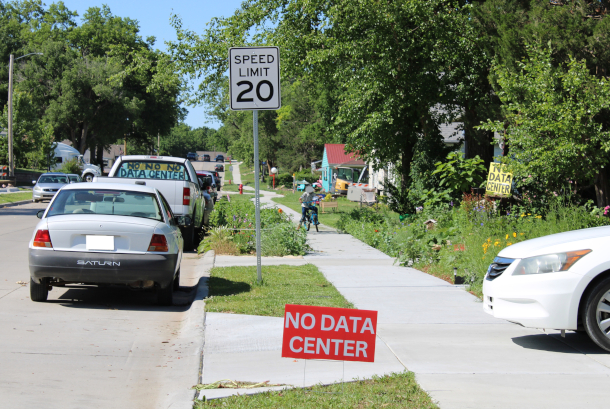
Anti-data center sentiment in a rural Kansas neighborhood. Opposition to data centers may be one bipartisan issue Democrats can leverage in Congress. (Photo: Catboy69, Wikimedia Commons, CC BY 4.0)
CURWOOD: With great profits for the fossil fuel industry through this campaign. I mean, underscored.
LAVELLE: It just so happened that they reported their profits last week, right before the election, and they're like triple what they were last year. And that's not because they're putting out a better product or anything. It's because purely the run-up in global prices.
LOEB: And Trump went on the campaign trail bragging about how great the oil industry profits were, and essentially saying, "I don't really care about people's concerns about pump prices. Isn't it great that all the money the oil industry is raking in?"
LAVELLE: What he said is this is money we're raking in as a country. But that's not how, how consumers experience it. It's really the oil companies that are raking in those profits, and their executives are the ones who have the most shares in those companies and who feel the benefits the most.
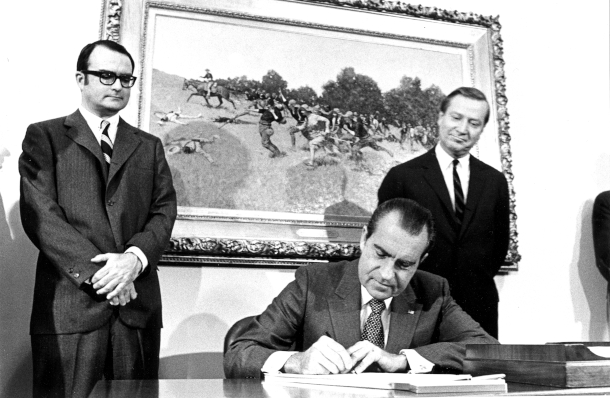
President Richard Nixon signs the Clean Air Act of 1970. Some energy experts note that some of the nation’s most significant environmental policy was passed with a Democratic Congress and a Republican president. (Photo: National Archives and Records Administration, Wikimedia Commons, Public Domain)
DOERING: So I mean, this is fascinating. Like, to what extent do you think Democrats now have the upper hand when it comes to issues like energy affordability, and what do they need to do to deliver on that in this Congress?
LAVELLE: Well, for the last 10 years at least, we've been in this incredibly polarized atmosphere where it's hard to imagine Democrats and Republicans working together on anything. But look at the way people voted, across the board in a bipartisan way, and the people they're sending to Washington know some of the voters were Republicans as well. They're all wanting the same thing, which is action on the out of control costs and the power that industries like the fossil fuel industry, like big tech, have over their lives. And so, I think what you're going to see is the Democrats trying to find some common ground with the Republicans who are now going to be there in the minority, on how they can address these issues that all of their voters said they cared about. I mean, one thing that comes to the top of the list is windfall profits taxes on the oil and gas industry as we were just talking about. What other industry has seen its profits, not its revenue, its profits, triple? And so there's so much that that money could be invested in to transition us away from this vulnerability that we have. The first ideas you're going to see are all going to be about affordability, and of course, the cheapest form of energy are the renewables, and that is the messaging we're going to see around what kind of legislation is going to be tried in the next Congress.
CURWOOD: So, in this tsunami for the Democrats, we've seen this huge switch from control away from the Republicans. But correct me if I'm wrong, but I think the electorate is mostly in the middle, mostly independent, and in many of these elections, the folks who really end up deciding what happens. I don't think there were a lot of defections from the hardcore Republicans this time around. What do the Democrats need to do now in this sector of protecting the environment and dealing with the climate emergency and and energy affordability? What do they need to do to keep that vast middle that, at the end of the day, elected them this time, and if they want to keep getting reelected, will need to show up next time?
LAVELLE: One of the interesting things is the moderate members of the Democratic Party up on the Hill already have gathered in this new Democrat coalition, and have organized, and talking about just these things, putting affordability front and center. And there also has been a lot of effort in the leadership to get the more centrist Democrats working with more left Democrats and seeing where their common ground is, so that the party doesn't have the inter-party fighting that has really made it hard for the Republicans to govern over the last few years. So I think it's a challenge, there's no question, but I think that people are going into this new Congress with a lot of positive vibes, so to speak. At least that's what the sense I'm getting from talking to people. They're not talking about what divides the Democrats, but what they can do together.
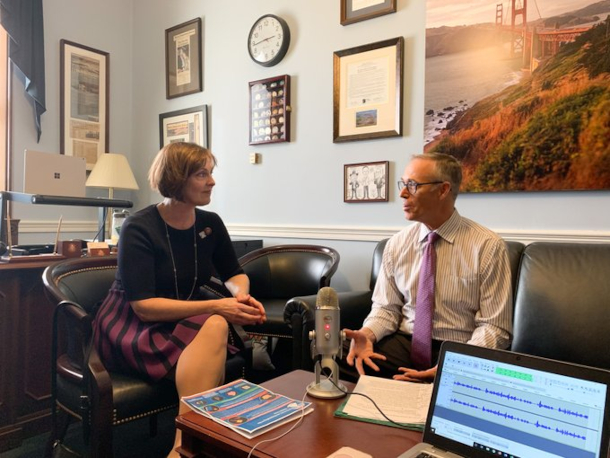
Kathy Castor, Democratic Representative for Florida’s District 14, sits with Jared Huffman (D-CA) back in 2020 on his podcast, “Off the Cuff.” Castor won her race in 2026 despite significant redistricting. Rep. Huffman is also a guest on our show this week. (Photo: United States Congress, Office of Jared Huffman, Wikimedia Commons, Public Domain)
CURWOOD: Vernon, talk to me about this.
LOEB: The last time the Democrats did pretty well in the midterms in 2018, they came back to Washington talking about the Green New Deal, and it turned into very quickly a culture war slogan that they got clubbed with over the head for the next two years. Now, they're not talking about the Green New Deal. They're not even talking about climate change. They're talking about data centers and affordability, and those are populist slogans, if you will, that play across both sides of the aisle very effectively. And so they've learned a powerful lesson there, and it's easy now to make the case for solar and wind as cheaper alternatives. With Iran in, in charge of the Strait of Hormuz and gas still sitting at $4.50 a gallon and diesel sitting at $6.30 a gallon, and so the Democrats rhetorically, I think, are in a much smarter, stronger tactical position now than they were in 2018.
CURWOOD: So, looking ahead, you know, the next two years, Mr. Trump is still president of the United States. How does this win stack up against dealing with him in the White House?
LAVELLE: One of the models I've heard some of the Democratic lawmakers talk about is the housing affordability bill that Congress passed that Trump did not want to sign. He actually wanted to put his voter bill in it, and Congress wouldn't do it. But it was a bipartisan bill, and it had just such strong support across the board, and he let it pass without his signature. He let it go into law without his signature. That's kind of the model for what they're looking to do: bills that are just so popular that Trump will either deal with them or will just back away from a fight that just doesn't look good for him or his legacy. But of course, Trump is mercurial, if nothing else, so we'll have to see. One of the energy experts that I talked to today pointed out that a lot of the big environmental legislation of our era, the National Environmental Policy Act, the Clean Air Act, passed with Democratic Congresses and a Republican president, and that divided government sometimes can work if both sides see a way to compromise.
DOERING: Yeah.
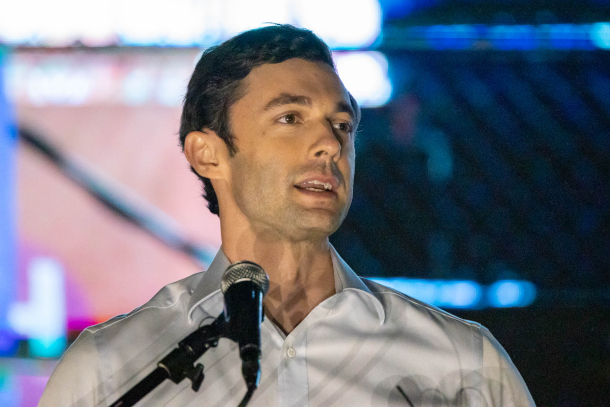
Jon Ossoff (D) has served as Senator for Georgia since 2021. Our guest Vernon Loeb suggests that young politicians like Ossoff could change the playing field for Democrats in the 2028 presidential election. (Photo: John Ramspott, Wikimedia Commons, CC BY 2.0)
CURWOOD: Vernon, you're thinking. I can see.
LOEB: Well, Trump sounded a sort of conciliatory note last night, saying, "Yeah, we'll work with Democrats. We'll figure out a way to do it." How much interest and energy he has left for legislating, he's never had much of a legislative agenda. He's bypassed Congress almost completely. How much energy he has for governing, it remains to be seen. Who knows what we're going to get from Trump in his last two years. A lot of people feel his health is sort of failing. His mental acuity clearly is not what it once was, so I think it's an unknown at this point, and it's also in my mind an unknown how Republicans now will react to him. He kept them in line amazingly well. They were really afraid of crossing him and crossing MAGA, but now he's a lame duck. Everybody's a free agent, and I think you're going to see a lot of Republicans starting to chart a more independent path away from Trump, thinking about their next election in the House two years from now. One of the most interesting things I heard last night was somebody quoting Lindsey Graham from 2015 when Trump came down the golden escalator, and right around that time, Lindsey Graham said, "If we support this man for president, he will destroy us. He will destroy the party, and he will destroy us all." And fast forward a decade, with Lindsey Graham's sister on the ballot, and she loses to a neophyte Democrat pediatrician.
LAVELLE: Because she was handpicked by Trump, and South Carolina voters were very upset at his intervention, and yeah, the irony is unbelievable.
LOEB: Yeah, and if you look at Trump's influence on the Senate races, you can argue that both Democratic seats in Georgia were the result of Trump picks a cycle ago. You can say that Talarico's victory over Paxton was attributable to Trump's support for Paxton. You've got Lindsey Graham's sister, and so Trump clearly gets an assist for the Democrats in about four or five Senate seats.
CURWOOD: Hey Dan, before we go, how can the Democrats keep support of middle America? Take advantage of, of the wins that they've had now to build up something solid there.
GEARINO: Well, to try to kind of unpack that, when's the last time Democrats had a night as good as this? And it wasn't a lot of these wave elections we've seen just in the last couple decades. You have to go way back. You have to go back to post-Watergate. So, who was elected out of the post-Watergate era in Iowa? Tom Harkin was one of those elected. He was one of the Watergate babies as they called them, and you saw this generation of a lot of them were in the Midwest. A lot of them were everywhere. You were winning in conservative areas. Oh wow, a Democrat won there? There were some really politically talented people who may not have won except for the political climate of that very precise moment. But once they got there, they stayed. And I can look at a couple of these people who won in the House and the Senate, and it'd be hard to imagine them losing when they run for reelection in two years or in six years, they're just political talents who happen to be running at the right time. And a key part of that is just listening to your constituents, realizing who you represent, and delivering for them. It is really not that complicated. I think there are names that were part of this election cycle that we are going to have as part of our lives for a very long time because they're good at politics, and that's in Democrat-leaning states, Republican-leaning states, swing states. So yeah, that's, that's kind of how you do it, I think.
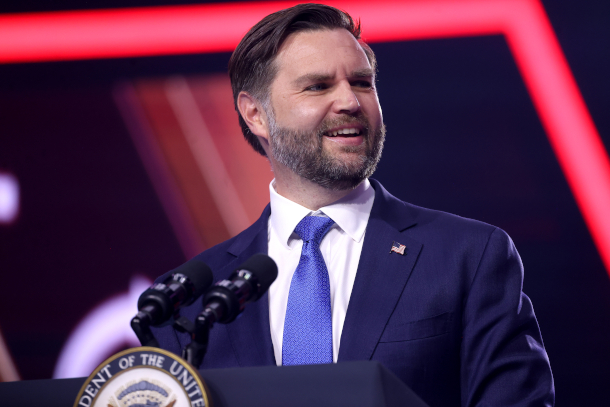
Vice President JD Vance is a likely candidate for Republicans in the 2028 Presidential race, Vernon Loeb suggests. (Photo: Gage Skidmore from Surprise, AZ, United States of America, Wikimedia Commons, CC BY-SA 4.0)
CURWOOD: All right, that then brings up the question: dare I ask about 2028?
LOEB: Well, like Dan was just saying, there's a lot of young talent out there in the Democratic field now. You've got Jon Ossoff, who's in his 40s. You've got Turek in Iowa. You've got Josh Shapiro in Pennsylvania. You have Andy Beshear in Kentucky. Got Mark Kelly in Arizona. You've got Gavin Newsom in California. I think all of those guys would fare well against, who-knows-who will be the Republican candidates. But if the MAGA holdovers are still there, I guess it would either be J.D. Vance or Marco Rubio. But I think the Democratic candidates stack up pretty well. And remember, the Senate wins pretty much guarantee the Democrats the Senate through the next presidential election. So you're going to have the presidential election with a Democratic Congress, and you've got Texas in place suddenly that completely changes the whole electoral map that the country has sort of played by for 30 or 40 years. You know, you had that group of swing states that the Democrats had to win. Suddenly, they're not so important anymore if the Democrats win Texas and all those electoral votes. So '28 is going to be, like unbelievably interesting.

Marianne Lavelle is the Washington Bureau Chief for our media partner, Inside Climate News . (Photo: Courtesy of Marianne Lavelle)
CURWOOD: All right, Dan, what do you think?
GEARINO: There's this fascinating inversion of the way this gets talked about, and it's just changed so much in the last year or so. There was a time not long ago when reasonable people would say the Democrats had no bench. You could probably go eight or nine deep with Democrats that would be plausible presidential candidates, and there are a few of them who won yesterday. And then you look at this rupturing of the kind of Trump base; it makes it so that all of a sudden they're the ones that don't have a very deep bench. It's like you've got J.D. Vance and who, you know who would be next Marco Rubio, and then okay, who's fifth or sixth up? And it's just wild, and it just kind of shows things change rapidly, you know. And if you fixate too much on the moment that you're in, you're gonna just go nuts, because things change quick. The piece I'm writing today, I'm trying to fit in this quote from, oh, the former Colorado Governor Bill Ritter, and he had this comment in an interview a couple weeks ago where he was talking about like the swinging screen door, and that the thing is the door hits you in the rear end. You know, basically there are ups and downs in political life, and that reversal can come quick. And I think that that's something on a day when Democrats are just celebrating, they can just see just in recent history how that can turn quick.

Dan Gearino is a clean energy reporter who writes for Inside Climate News, covering renewable energy and utilities. (Photo: Dan Gearino)
CURWOOD: Hey, before we go, of course we are objective journalists. We have views and responses, of course, but one of the dogs in this particular fight is our own profession: the ability to report the news and to function in a democracy with a free press that's enshrined in the Constitution. What does this win by the Democrats mean for press freedom in America, do you think?
LOEB: Well, I think it's important. You know, Trump has shown a willingness to go after the press, to file lawsuits, to intimidate, to throw reporters out of institutions that they have a right to cover, to decide who can come to the Pentagon, who can cover wars, who can go to the White House briefing room, and I think a democratic victory, taking the country back to the norms that we operated under in terms of government and the press for my entire career, which is like going on 50 years now, I think it's an important moment to kind of reestablish those norms, and I think it augurs well for press freedom going forward. The other big thing that, when you talk about press freedom, has really now become ownership of networks. You know, you've got Fox News, you've got CBS now in the hands of a billionaire family. You've got CNN, you know, in the hands of a conglomerate that's more friendly to Trump, and that's something that we really didn't have, you know, a generation ago. That kind of bifurcation, almost, of the mainstream media. So how that's going to play out really remains to be seen. But from my perspective, in terms of picking which reporters can go to the White House briefing room and which ones can't, I, I hope, you know, we're, we're moving to an era where that's not going to happen quite so easily.
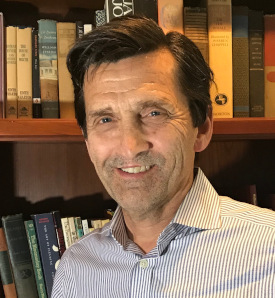
Vernon Loeb is the Executive Editor of Inside Climate News. (Photo: Courtesy of Vernon Loeb)
DOERING: Well, we want to thank you, Vernon Loeb is Executive Editor of Inside Climate News. Thank you so much for being here.
LOEB: Sure, thanks for having me.
DOERING: And Marianne Lavelle, Washington Bureau Chief at ICN.
LAVELLE: Thanks, glad to be here.
DOERING: And Dan Gearino, clean energy reporter at ICN. Thank you all so much.
GEARINO: Yep, thank you.
LAVELLE: Thank you.
CURWOOD: And thanks to all three of you for coming and keeping the story going. And I'm looking forward to what's coming next.
Related links:
- Inside Climate News | “Democrats’ Big Statehouse Wins Could Transform Climate and Energy Policy”
- Inside Climate News | “Rural Charms Drew Residents to Taylor, Texas. Then Came the Data Centers.”
- Inside Climate News | “Texas Continued Permitting Data Centers After Abbott’s Pause, Report Finds”
[MUSIC: Blue Wave]
DOERING: Coming up, Democratic Congressman Jared Huffman on what he’d like to tackle as incoming Chair of the House Natural Resources Committee. Keep listening to Living on Earth!
ANNOUNCER: Support for Living on Earth comes from Hansjörg Wyss in honor of Rosamund Stone Zander. Celebrated painter, environmentalist, and author of The Art of Possibility, who inspired others to see the profound interconnectedness of all living things, and to act with courage and creativity on behalf of our planet. Support also comes from Sailors for the Sea and Oceana. Helping boaters race clean, sail green and protect the seas they love. More information at sailorsforthesea.org
[CUTAWAY MUSIC: Blue Wave]
Public Lands Protection in the New Congress
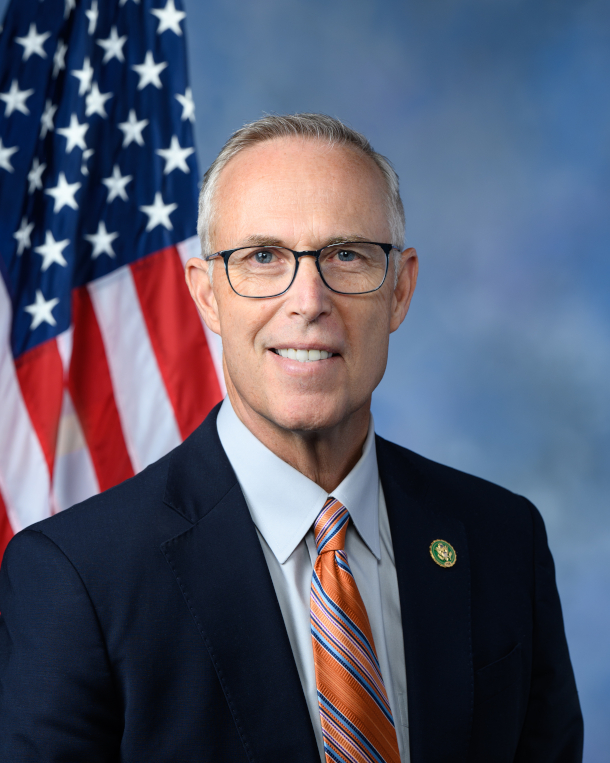
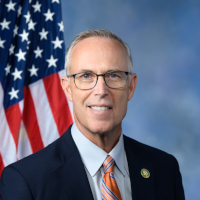
US Congressman Jared Huffman (D-CA). (Photo: United States Congress, Wikimedia Commons, Public Domain)
CURWOOD: It’s Living on Earth, I’m Steve Curwood.
DOERING: And I’m Jenni Doering.
Congressional committees originate legislation and oversight investigations, and under the seniority system, as Democrats take control, their senior members will presumably become chairs, and many house chairs have broad subpoena powers.
CURWOOD: Jared Huffman, who has represented northern California since 2013 is an environmental lawyer who is in line to chair the House Natural Resources Committee. He’s on the line now – Congressman, welcome to Living on Earth!
HUFFMAN: Well, thanks. It's great to be with you.
CURWOOD: So, Representative Huffman, what can we expect to be a top priority from you and your committee when it comes to energy, say?
HUFFMAN: On all of the subjects before our committee, within our jurisdiction, it's going to be a two-part agenda. We're going to have to do oversight and investigations to make up for the fact that we haven't really had a Congress for the last two years. There haven't been checks and balances. So we will be digging into and investigating so many different things on energy and, and other subjects that we oversee. But then we've got to move an affirmative policy agenda as well. And we can't, in my opinion, constrain ourselves to just what Donald Trump might sign into law. I think we've got to advance an agenda that reflects our values and our priorities, even if we draw some vetoes from this president. There's enormous value in drawing that contrast.
DOERING: And Congressman, just how important do you think energy and access to affordable energy was in these midterm elections?
HUFFMAN: It was part of the affordability backlash that I think helped shape this blue wave for sure. The fact that electricity bills, utility bills have been skyrocketing as Donald Trump pays offshore wind developers to walk away from projects that could bring cheap, reliable, clean energy onto the grid, as he does everything he can to strangle clean energy, which is the cheapest, fastest form of energy that can help lower utility bills. I think people connected those dots, and they also, I think, put together the connection with the corruption, with just the fact that the fossil fuel industry was so programmed with Donald Trump on all of this and was making money hand over fist, war profiteering, and Donald Trump in his closing argument boasted, in his words, "We are making a killing on the war in Iran" while people were struggling to afford fuel, so I mean, all of that I think helped shape the election in a big way.
Our guest, Congressman Huffman, says consumers are frustrated by the recent energy affordability crisis. (Photo: Rama, Wikimedia Commons, CC BY-SA 2.0 FR)
CURWOOD: I think it's fair to say that in many campaigns we didn't hear the words climate change or the climate emergency, and yet, to what extent do you think the concern about the climate is part of this blue wave?
HUFFMAN: Yeah, climate is part of it, even if it wasn't articulated with that specific phrase. When you look at the inability to get insurance or the inability to afford insurance, when you look at skyrocketing food costs, when you look at all of these other impacts. When you look at the fact that American consumers found themselves stuck on the fossil fuel roller coaster once again, with no way off, because Donald Trump had burned the bridge to clean electric vehicles, or at least tried to do so, while the rest of the world is moving forward in a way that will liberate them from that fossil fuel roller coaster. So, I think these were significant elements, and climate was on the agenda, whether folks realized it or talked about it as such or not.
DOERING: And Congressman, how is the climate crisis affecting your district and your constituents? What are you hearing from them?
HUFFMAN: Well, right now, I'm hearing them kind of stunned that in the middle of sunny days, at high tide, we have coastal areas under water because of what's called a Kelvin wave. This pulse of warm water that's moving up the west coast due to El Niño, which is more intense because of human-caused climate change. All the science tells us this, and the reality that really comes home when you're in the middle of a sunny day. There's been no storm, and you have roads and bike paths and trails and coastal buildings underwater.
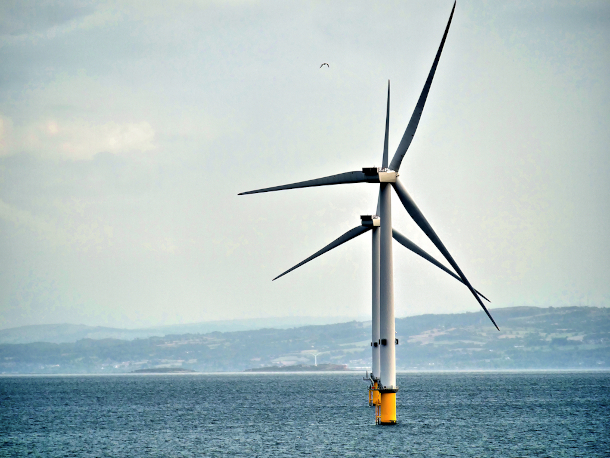
President Trump has halted many offshore wind projects, cutting off consumers from clean, affordable energy. (Photo: Offshore Wind Turbines at Burbo Bank by David Dixon, Wikimedia Commons, CC BY-SA 2.0)
CURWOOD: So you are chair, in a few weeks, of the House Energy and Natural Resources Committee, if I have that correct.
HUFFMAN: Yeah.
CURWOOD: That's a very powerful position over a number of things. Looking at your newfound power, your expected power, what's at the very top of your list to get done while you have this opportunity to influence things?
HUFFMAN: We need to do a permitting reform bill on our terms. That's going to be high on my priority list, if I'm allowed to do it. You know, when we get back to Washington next week, everybody's going to be consumed with this fight over the Senate permitting reform deal, a deal that was cut behind closed doors by four people, two of whom are coal state Republicans. A deal that was written largely by the oil and gas industry. And I think waking up after that just profoundly huge blue wave statement by the American people, people I hope are going to question why we would constrain our permitting reform ambition to this, which was negotiated with zero leverage for Democrats. Why wouldn't we give Democrats a chance to use this newfound power to cut a better deal that doesn't throw the Endangered Species Act and Native American tribes and the Clean Water Act, and all of these other core values under the bus. And a deal that actually ends the war on clean energy, so that we can give, you know, the next president a chance to lead on climate action instead of tying his hands, which is one of the things that this bill would inadvertently do.
CURWOOD: So, to what extent is that going to move ahead, though, in a lame duck session?
HUFFMAN: They're going to try to jam it. That's very clear. This deal is premised on a very rapid, no hearings push through the Senate and the House. A lot of the votes have already been lined up, and it is just a good old-fashioned jam job that is going to hit us as soon as we get back to town next week.

Coastal flooding from the planetary-scale “Kelvin Wave” is one climate concern of Congressman Huffman’s constituents. (Photo: Earth Science and Remote Sensing Unit, Lyndon B. Johnson Space Center, Wikimedia Commons, Public Domain)
DOERING: Now, I believe a part of this permitting bill fight that you're referring to is public lands. When it comes to the lands that all Americans hold as a public trust, what are your priorities with the Natural Resources Committee?
HUFFMAN: So, our public lands are an intergenerational trust. I mean, we've always understood them to be something that weren't just there for us to sort of extract and monetize and exploit to the maximum degree for the here and now. It was something that needed to be stewarded and passed on to people we'll never know in better shape than we found them. That entire trust has been broken by this administration. We have a Secretary of Interior who talks about our public lands like they're assets on a corporate balance sheet, like they can just be, sort of leveraged and given away and liquidated and monetized like you would a, a corporation in some sort of a private equity deal. That all has to change, and, and I think our opportunity in the next Congress will be to reset that trust.
DOERING: Now, one of the things that the Trump administration has proposed is this land swap with a private developer for parts of Yosemite National Park. What are some of the concerns that you have on this front as a congressman from California?
HUFFMAN: Yeah, this is the kind of thing you just don't do. Yosemite is one of our most sacred places, not the only one, but certainly a beloved part of our public land portfolio. And to simply give part of it away in order to facilitate the interest of a private developer, not to enhance the park, not to improve public access or anything else, but to just cut a deal, that's sort of the poster child of what's wrong with this administration. Nothing is sacred with these folks. Nothing about tribal lands, national monuments, our pristine oceans, any of these public trust resources that we are supposed to steward for future generations, they just see it all as a grift, as a chance to make some money and to dole out favors to their friends. So we're going to be digging into this. I think we'll stop it. This is so outrageous, and the backlash has been so loud, including from some Republicans, that I think we should be able to stop it. But it tells us a lot just the fact that they were even considering it.
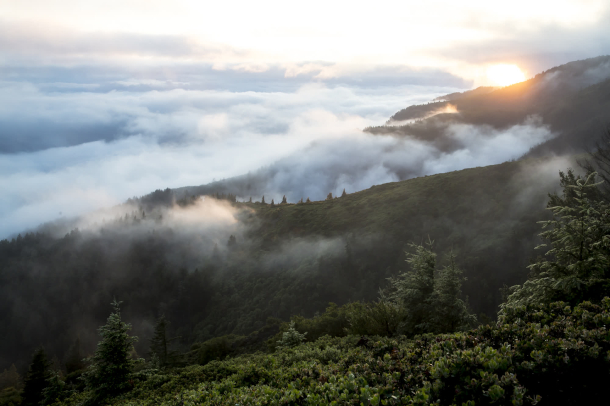
Headwaters Forest Reserve in California. Congressman Huffman says that public lands should not be exploited solely for monetary gain, and instead protected for future generations. (Photo: mypubliclands, Wikimedia Commons, Public Domain)
CURWOOD: So you now have subpoena power come sometime in January. What rocks do you want to turn over for the public to understand when it comes to natural resources for the United States?
HUFFMAN: Lots of rocks. We want to dig into these mineral deals where the administration has taken equity stakes in companies where members of Trump's inner circle just happen to have financial interests. We want to look at ethical lapses by senior members of this administration. We want to look into the very shady operations of the Freedom 250 entity and the way they hijacked America's 250th celebration, and the way they have reprogrammed funds that were supposed to go to national parks and other public lands into these other activities, and in some cases into Donald Trump's vanity projects, which are also on our agenda for oversight and investigation.
CURWOOD: You're not referring to the arch, are you?
HUFFMAN: One of several vanity projects, amazingly. That joy ride is going to stop.
CURWOOD: What power do you have in this lame duck situation? They have the White House. They have both parts of Congress. And if they put things on a fast track, they can jam things through. Yes? Or no?
HUFFMAN: Well, you're right. A lame duck is very fluid, and it is kind of hard to predict what happens and why. I think the fact that there was such an overwhelming mandate from voters for the Democrats makes it harder for them to really roll the Democrats in the lame duck. Democrats, I hope at least, are a little fortified and less willing to let themselves just be rolled, but we'll see. And you know there will be two months of chaos, and it's going to be a wild ride until we seat the next Congress. So, stay tuned. A lot of weird stuff can happen in a lame duck.
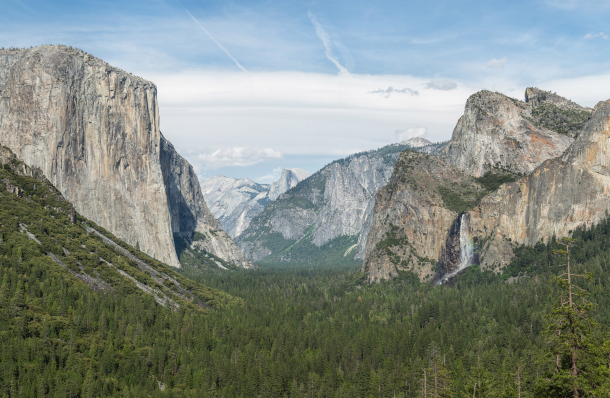
President Trump has threatened to allow private developers in parts of California’s famous Yosemite National Park. (Photo: Diliff, Wikimedia Commons, CC BY-SA 3.0)
DOERING: Now earlier this year, you introduced along with Chairman Westerman, this bipartisan Great American Outdoors Act 250. Tell us about why the bipartisan aspect is very important there and how that might help this move forward, and what's the current status?
HUFFMAN: That's a good example of something good that could happen in the lame duck, because there's overwhelming bipartisan support for the Great American Outdoors Act. This is a fund to tackle the deferred maintenance backlog on our public lands and, and especially at our national parks. And it's something that some members of the Republican Conference look at as an expenditure, something that we have to go find an offset for, and so they think that whatever it's going to cost, you will have to make a parallel cut in some social program or something. That's why the bill hasn't advanced at this point. But in a lame duck, we might be able to get past that objection. I don't think you have to offset or find cuts to pay for this because this is money we already owe. I regard this as a debt that we have incurred. It's, that's what deferred maintenance is, it's stuff you were supposed to have done all along, but you, you failed to do, and we are now catching up. So the idea that we would need to do cuts for what we were supposed to have been doing all along, I think, is, is just fundamentally flawed, and that that's the argument that we'll make, if we can find enough Republicans to get on board. Mr. Westerman and I are shoulder to shoulder in supporting this bill. The president has said he would sign it, so I think there's a chance.
DOERING: And remind us, please, because I believe this comes after the Great American Outdoors Act of 2020, which President Trump did sign.
HUFFMAN: Yeah.
DOERING: And there was a lot of bipartisan support for that bill.
HUFFMAN: There was, and he has said he'll sign this one too. So we've worked hard. We've negotiated a bill that doesn't have any partisan baggage. It's just a clean funding of this deferred maintenance obligation, the kind of basic governing work that Congress ought to be doing. So, I'll do my best to try to get that through the lame duck. If we don't, we'll make it one of our early priorities in the next Congress.
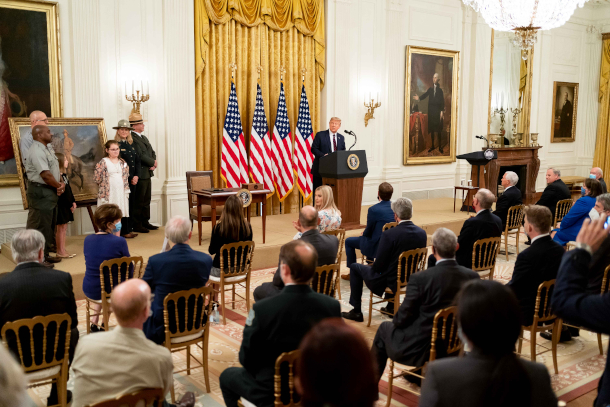
President Trump signs the Great American Outdoors Act in 2020. Earlier this year, Congressman Huffman and Chairman Bruce Westerman introduced another bipartisan bill, the Great American Outdoors Act 250, that they hope to pass during the lame duck session. (Photo: The White House from Washington, DC, Wikimedia Commons, Public Domain)
CURWOOD: We have just about run out of time, but before you go, I want to ask you to share your perspective as someone who's been involved with the question of the environment and climate for a long time. I believe you were an environmental lawyer before you became a member of Congress. So after decades in this space, how are you feeling today about the future of environmental protection and stewardship and the climate in the United States?
HUFFMAN: That's a great question. We've taken some hits, and I can't sugarcoat the amount of damage that's been incurred for the past two years. We have gone from leaning in to climate action and environmental protection and environmental justice to taking several steps backward and actually a scorched earth agenda that has attempted to not only roll back that progress but to kind of burn the bridge and make it harder to rebuild that progress. That's what we have to now start tackling. And I don't want to overpromise, but what I can say for sure is that the values and the agenda are going to get reset, and we're going to work like heck to begin repairing all of this damage and get us back in a forward posture on public lands protection, on clean water, clean air, on environmental justice, and, and on climate action.
CURWOOD: Jared Huffman is incoming chair of the House Natural Resources Committee, and represents California in its second district. Thanks for taking the time with us today.
HUFFMAN: Jenni, Steve, thanks so much for having me.
Related links:
- Learn more about Congressman Jared Huffman
- Read about the Democratic House Committee on Natural Resources
- Learn more about the Great American Outdoors Act 250
[MUSIC: Late Set]
DOERING: And in our next broadcast we’ll talk with Zoe Lofgren, incoming Chair apparent for the House Committee on Science, Space, and Technology, on fixing Trump’s research cuts.
LOFGREN: Whether you're in agriculture or whether you're in a Gulf Coast state, you know, worried about hurricanes or here in the West dealing with droughts, we need to know all of that, and they have impaired that capacity. So we're going to put a spotlight on all of it, try to unwind the misconduct, and prospectively be in a legislative posture that will make it more difficult for them to engage in misconduct in the future.
DOERING: That’s next time on Living on Earth.
[MUSIC: Late Set]
CURWOOD: Living on Earth is produced by the World Media Foundation. Our crew includes Naomi Arenberg, Paloma Beltran, Claire Brandes, Abby Edgecumbe, Swayam Gagneja, Mark Kausch, Mark Seth Lender, Don Lyman, Ashanti Mclean, Nhung Nguyen, Aynsley O’Neill, Sophia Pandelidis, Andrew Skerritt, Bella Smith, Jake Rego and El Wilson.
DOERING: Tom Tiger engineered our show. Allison Lirish Dean composed our themes. You can hear us anytime at loe.org, Apple Podcasts and YouTube Music, and like us please, on our Facebook page, Living on Earth. Find us on Instagram, Threads and BlueSky @livingonearthradio. And we always welcome your feedback at comments@loe.org. I’m Jenni Doering
CURWOOD: And I’m Steve Curwood. Thanks for listening!
ANNOUNCER: Funding for Living on Earth comes from you, our listeners, and from the University of Massachusetts, Boston, in association with its School for the Environment, developing the next generation of environmental leaders. And from the Grantham Foundation for the protection of the environment, supporting strategic communications and collaboration in solving the world’s most pressing environmental problems.
ANNOUNCER 2: PRX.
Living on Earth wants to hear from you!
Living on Earth
62 Calef Highway, Suite 212
Lee, NH 03861
Telephone: 617-287-4121
E-mail: comments@loe.org
Newsletter [Click here]
Donate to Living on Earth!
Living on Earth is an independent media program and relies entirely on contributions from listeners and institutions supporting public service. Please donate now to preserve an independent environmental voice.
NewsletterLiving on Earth offers a weekly delivery of the show's rundown to your mailbox. Sign up for our newsletter today!
 Sailors For The Sea: Be the change you want to sea.
 The Grantham Foundation for the Protection of the Environment: Committed to protecting and improving the health of the global environment.
 Contribute to Living on Earth and receive, as our gift to you, an archival print of one of Mark Seth Lender's extraordinary wildlife photographs. Follow the link to see Mark's current collection of photographs.
 Buy a signed copy of Mark Seth Lender's book Smeagull the Seagull & support Living on Earth
© Copyright World Media Foundation. All Rights Reserved
Home | Contact | RSS | Donate | Newsletter