

This Week's Show
Air Date: November 13, 2026
FULL SHOW
SEGMENTS

COP31 Kicks Off
/ Paloma BeltranView the page for this story
The annual negotiations of the UN climate treaty or COP31 are now in full swing in the coastal city of Antalya, Turkiye, with some one hundred thousand attendees. Assisted by field producer Sophia Pandelidis, Living on Earth producer Paloma Beltran is there. She joins hosts Steve Curwood and Jenni Doering to share some of the voices they have gathered from around the world: from Australia to Vanuatu to Inuit territory and beyond. (14:46)
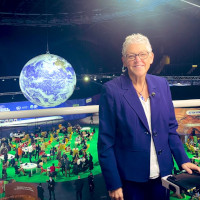
Climate and the Changing Congress
View the page for this story
Although climate did not play a direct role in the "blue tsunami" of the midterm elections, voters' concerns over high energy costs bring it back into play. Gina McCarthy, former EPA Administrator and President Biden's national climate advisor, talks with hosts Steve Curwood and Jenni Doering about the opportunities and challenges ahead for climate policy as Democrats prepare to take charge of the US House and Senate. (14:26)
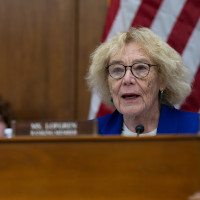
Democrats Look to Restore Science
View the page for this story
A House Committee to watch as Democrats take control in January will be Science, Space, and Technology, which oversees federal grants and research at the National Laboratories and agencies like NASA, NOAA and EPA. In line to become its Chair is Congresswoman Zoe Lofgren of California. She discusses some of her priorities with hosts Steve Curwood and Jenni Doering, including investigations of canceled grants and withheld research funds, as well as the possibility of bipartisan legislation. (17:13)
Show Credits and Funders
Show Transcript
261113 Transcript
HOSTS: Steve Curwood, Jenni Doering
GUESTS: Zoe Lofgren, Gina McCarthy
REPORTERS: Paloma Beltran
[THEME]
CURWOOD: From PRX – this is Living On Earth.
[THEME]
CURWOOD: I'm Steve Curwood.
DOERING: And I'm Jenni Doering
The annual UN climate treaty negotiations kick off in Turkiye
LULA: May the leaders gathered here rise to the expectation of everyone throughout the world who aspire to a just and sustainable future. Brazil is back to defend the continuity of a healthy planet.
CURWOOD: Also, Democrats call for reform at the EPA.
LOFGREN: 20% of the agency's workforce has quit, retired or been fired; they’ve shut labs down. Their basic mission is to use the best available science to protect health and the environment, and they’ve not done so.
CURWOOD: We’ll have those stories and more, this week on Living on Earth. Stick around!
[NEWSBREAK MUSIC: Boards Of Canada "Zoetrope" from "In A Beautiful Place Out In The Country" (Warp Records 2000)]
[THEME]
COP31 Kicks Off
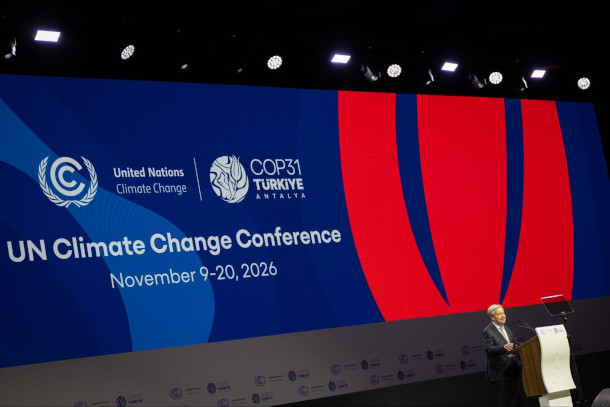
United Nations Secretary-General Antonio Guterres speaks at the opening of the high-level segment of COP31 on November 11, 2026. (Photo: Kiara Worth, UN Climate Change, Flickr, CC BY-NC-SA 4.0)
CURWOOD: From PRX and the Jennifer and Ted Stanley studios at the University of Massachusetts Boston, this is Living on Earth. I’m Steve Curwood
DOERING: And I’m Jenni Doering.
The annual negotiations of the UN climate treaty are now in full swing in the coastal city of Antalya, Turkiye. And picking up from last year’s session in Brazil, delegates from over 180 countries are at this 31st conference of parties, or COP 31 for short.
CURWOOD: And on the ground there Living on Earth Producer Paloma Beltran assisted by Field Producer Sophia Pandelidis. So, Paloma, we hear there are around a hundred thousand people there. What have you seen?
BELTRAN: Yeah, it’s pretty crazy! And it really kicked into gear on November 11, when world leaders spoke. One of those leaders was Brazil's president Luiz Inácio Lula da Silva who was just reelected after much tension. And as he passed the torch for the COP to the joint presidents of Türkiye and Australia, Lula pulled no punches with his call to action.
LULA [SPEAKING THROUGH TRANSLATOR]: Friends, Brazil went to the ballot box two weeks ago, in an unprecedented mobilization, the Brazilian people took to held the arms of democracy. We contested those who denied the evidence of science that threaten the survival of the biggest tropical forest, the biggest biodiversity, and the biggest fresh water reserve in the world. This was not the triumph of a political party or a candidate, but it was the choice of a project of nations that has sustainability as its pillar. The fight against climate change goes beyond diplomatic halls. It is waged by the vote of each woman, of each man who wishes to make a difference. May the leaders gathered here rise to the expectation of everyone throughout the world who aspire to a just and sustainable future. Brazil is back to defend the continuity of a healthy planet. Good luck to us all.
CURWOOD: “Brazil is back” – with the help from a translator of course. Paloma, what about China?
BELTRAN: Yes, although Xi Jinping did not come to COP he did send his Vice President Han Zheng, who in his remarks pointed to the goal China set this year for non-fossil fuel energy sources to provide 50% of power generation by 2030.
DOERING: Yeah, that’s huge. They are the world’s current largest emitter.
BELTRAN: Yeah, and although COP31 is focused on the climate, it can’t be disentangled from geopolitics. Israel was not invited, and the Trump Administration has withdrawn the US from the UNFCCC process altogether. While Russia and Ukraine sent representatives, neither was on the schedule to speak at the high-level session. But Lebanon was. And Steve and Jenni, I should point out that there are keffiyeh scarves everywhere as a sign of solidarity with Palestinians. The most pointed connection to climate and conflict was made by Masoud Pezeshkian, the president of Iran.
PEZESHKIAN [SPEAKING THROUGH TRANSLATOR]: Today one cannot speak of the future of the planet without speaking of the wars that target soil, water, air, natural resources, and human lives. The environment is the silent victim of wars whose destructive effects will remain for generations after the conflicts have ended. The recent unlawful and murderous aggression by the United States of America and the Zionist regime of Israel against the Islamic Republic of Iran, in addition to its immense human and economic dimension, has caused serious damage to the environment, including by releasing massive volumes of pollutants and greenhouse gasses into the environment, hence endangering public health.
DOERING: Calling for peace for the planet. So, it sounds like much of the rest of the world is moving ahead with tackling the climate crisis. But of course, as you know, ever since the Trump administration entered the picture, the US has been in various phases of being in and out of the 2015 Paris Agreement and of course, is now out of the entire UNFCCC treaty. So they are no longer in the formal negotiating rooms. Paloma, what does the US presence look and feel like at this year’s COP?
BELTRAN: I mean, there are a few pavilions, like the “America is All In” pavilion, and the Oceans Pavillion from Woods Hole Oceanographic Institution. So, some people from the US are participating outside of the official talks. And some well-known US figures have made appearances and hosted panels, like former Secretary of State John Kerry, former EPA administrator Gina McCarthy, governors, mayors and over a dozen members of Congress including Senator Sheldon Whitehouse, a Democrat from Rhode Island.
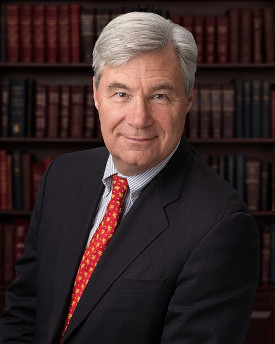
Senator Sheldon Whitehouse (D-RI) has served in Congress since 2007. (Photo: Office of Senator Sheldon Whitehouse)
BELTRAN: What's your message for Americans who are frustrated about the current political governance and are very concerned about the climate crisis?
WHITEHOUSE: Well, I think the first thing to say is thank you, because you just delivered an enormous change in governance in the United States, and we take that very, very seriously. And the second is that as climate change comes home to roost in so many people's family budgets, that has our full attention. And you will see that in the new Congress, real attention is paid to supporting clean energy and reducing climate dangers, and that will be good both on the public concerns about the cost of living and the public concerns about the corruption of government.
BELTRAN: Thank you very much, Senator.
CURWOOD: But you know, Senator Whitehouse and the other US officials there have no say in the negotiations, and they were essentially like the hundred thousand or so other people at COP without diplomatic credentials and simply there as citizens of the world. What do the folks from civil society tell you?
BELTRAN: Yeah, there’s a lot of people here. It’s quite overwhelming to say the least. I actually take the tram line to get to the event every morning and it’s been absolutely packed.
[ SFX TRAM ]
But I did get the chance to talk to some excited COP31 participants. Like Augustín Ocaña, who’s originally from Ecuador and founded the Global Youth Coalition.
OCAÑA: I guess it brings me here, the hope that I have for everyone in the world to have a future, including the youngsters, but also the people older than us, because we all deserve to have a planet where we can actually like coexist, and that sense of hope – Whoa, we almost fall down! That sense of hope keep me bringing to COP. This is my fourth COP actually, and yeah, that's why I'm here.
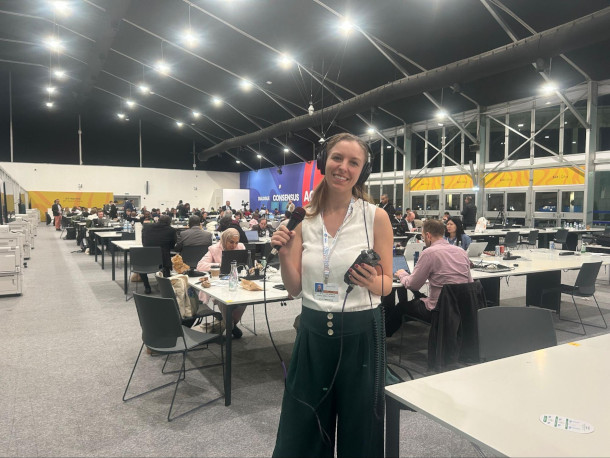
Living on Earth’s Sophia Pandelidis in COP31’s media room. (Photo: Courtesy of Sophia Pandeledis)
BELTRAN: We’re very packed here in the train. [LAUGHS] We’re all pushing each other, it’s an experience.
OCAÑA: It’s the COP31 experience. Every COP has its own details.
YOLI: Is it always busy like this?
OCAÑA: Yeah…
YOLI: It’s my first COP ever, I’m so excited!
BELTRAN: That’s Yoli. She had this huge smile despite the overpacked tram and jet lag from a five hour difference with Singapore. She’s a researcher at the Tropical Marine Science Institute and was invited to COP by Augustín’s org.
DOERING: Right and speaking of marine science, we hear that this COP is actually meant to be a "Blue" COP, meaning there’s a push to focus on oceans. So, how do people there feel about that aspect?
BELTRAN: Yeah, so there’s a lot of people including Yoli who are here because of the push for ocean research.
YOLI: Basically, I came here because I'm a marine ecologist, and this is the first Blue COP ever. And next week they actually have an ocean day. And as marine ecologists, I feel like people don't realize the ability of ocean, of seagrass in absorbing carbon, and they also don't realize how vulnerable the marine ecosystem is under climate change. Like, if we actually exceed the 1.5 degree threshold, we're gonna lose, more than 90% of all the corals. So I'm here to see what kind of actions will be taken on marine this year.
BELTRAN: And on that packed tram I also met some fellow journalists like Mohammad Musad from SATV. He’s covered stories across Bangladesh, Pakistan and Nepal.
MUSAD: Different reports suggest that Pakistan is ground zero when it comes to climate change, and it's one of the worst hit countries. All of South Asia, for that matter, India, Pakistan, Bangladesh, Sri Lanka, even countries like Nepal and Bhutan. You must have seen the news regarding Nepal a few weeks ago, so we're having droughts, we're having cloud bursts, we're having extended periods of rain. So every major problem with climate change, we're experiencing that in our countries.

Living on Earth’s Paloma Beltran (left) and Sophia Pandelidis (right) are reporting from COP31 in Antalya, Turkiye. (Photo: Courtesy of Sophia Pandelidis)
CURWOOD: Paloma, you know, these meetings have been going on for a long time. I was there all the way back in 1997 at COP3 in Kyoto, Japan, and we’ve been reporting on this ever since. And while I guess you can say there’s been consistency, some people feel that time is running out. Others say huge changes can take a lot of time. So, to what extent is there frustration and to what extent is there hope?
BELTRAN: Yeah Steve, you’ve been there from the beginning and I imagine you’ve heard about the frustration that can build up at these negotiations. There are those who no longer believe in the climate talks because you're right, the Paris Agreement was established back in 2015 with the goal to limit greenhouse gas warming below 2 degrees Celsius by the end of the century. But the UN says we’re currently on track for 2.8 degrees. This an existential crisis, so some people are still committed to making it work. For example, Charles Karangwa is from Rwanda. He was dressed quite nicely, you know, sharp suit and briefcase. And he’s the director of International Forest Governance Center. He’s based in the UK.
KARANGWA: Yeah, I think every decision, every action, every change we see comes from how we govern and make decisions. If the governance system is corrupt, the whole entire system is corrupt. If the governance system is inclusive, transparent, accountable, we see more action going forward. We see more benefiting people. We see more action that is inclusive, and I believe in the climate conversation, it is not about the Global South or the Global North. It's about all of us together working towards a common goal.
CURWOOD: So Paloma, I take it this was just the first hour on that tram. And you have, what, another two weeks at this conference?
BELTRAN: Yeah, it was really just the beginning of some of these conversations we got to have, which is really exciting. And it was still chaotic once we got into the venue, but my producer, Sophia Pandelidis, and I managed to pull a few people aside. Like Rikki Dank, whose traditional name is Lludibpina, a Gudanji person from the Northern territory of Australia. She was wearing some white face paint for the occasion. In her women-led Marabana Country, she’s what’s called a traditional owner, which means she makes decisions for the community. And she told us how the setting of COP, you know this huge convention, can feel strange.

Rikki Dank (center) with her daughter and grandmother in front of her. (Photo: Rikki Dank)
DANK: COP's an interesting place because it's far away from what we're actually fighting for, you know. It's really surreal to be in a room, and it feels very, like fake and made up and plastic, and then to see the suits, and that's it, it's corporate! It's so corporate. And then when you're here and you're an Indigenous person and you're fighting for your country, you're fighting for, not only your country, your family, your culture. And for us, it's 65,000 years of culture, continuous culture. It seems really far and really far away from what we are actually fighting for, and we, I think, collectively forget that.
DOERING: Paloma, she sounds a bit skeptical, eh?
BELTRAN: Well, I think the disconnect is somewhat jarring for her. But she did say she still thinks coming to COP is in part valuable.
DANK: I see COP as a way to voice our concerns as women and as, you know, women who make decisions for their country in a patriarchal society. So you know, I'm here because my grandmother can't be here. I'm here to represent my family, who otherwise, you know, we would not have a voice.
CURWOOD: Paloma, did you hear from anyone else in that region? I mean, from my understanding the Pacific is in pretty dire straits in terms of the climate crisis.
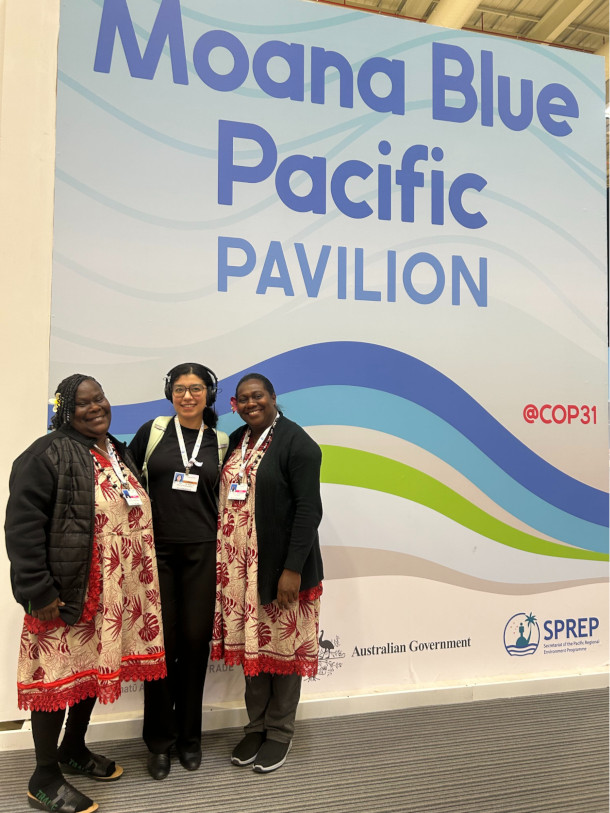
From left to right: Nancy Naupa, Living on Earth’s Paloma Beltran, and Janet Iatiknu. Both Nancy Naupa and Janet Iatiknu are part of the Women I Tok Tok Tugeta (WITTT) network on the island of Tanna in Vanuatu, and they work closely with ActionAid Vanuatu to advance women-led disaster preparedness, climate resilience, and disability inclusion. (Photo: Courtesy of Paloma Beltran)
BELTRAN: Yeah, I also talked to a group of women from Vanuatu at the Moana Blue Pacific Pavillion who were all wearing the same dress stamped with tropical plants and they all had a beautiful flower behind their ear. They had just been part of a presentation on women leading climate resilience on climate and innovation. Nancy Naupa is a community organizer in Vanuatu.
NAUPA: At the moment, there is a lot of climate change changing our weather pattern, sea level rise, and it’s also costing our livelihoods. I want this outcome of this COP 31, that our leaders will understand our issues and will respond immediately because we are facing it, and if they respond, this outcome of the COP meeting, respond positively, we understand that our children will be safe in the future that is coming.
BELTRAN: There are folks here from the South Pacific, and all the way to the far north, like Adamie Delisle-Alaku, a leader from northern Canada.
ALAKU: Well, for us as Indigenous Inuit, we feel we need to be heard and to ensure that our realities are at the forefront and not being spoken about by other third party, or people that do not know our realities. So it's very important that they hear it firsthand from Indigenous people that are truly living in the north and that are seeing the real impacts on climate, from long storms to erratic weather patterns to freezing rain in the dead of winter, to hail to very strong winds for several weeks on end. So, these experiences and these stories matter because they need to be heard from the people that are living them on a day-to-day basis.

COP31 attendees pose for a photo in front of the Moana Blue Pacific Pavilion, which is hosting events with a particular focus on Pacific Island nations. (Photo: Courtesy of Paloma Beltran)
CURWOOD: Indeed, so the most ancient way we communicate is still the most vital. Thanks Paloma Beltran, to you and Sophia Pandelidis for bringing us those stories, and looking forward to what you find next there in Turkiye!
BELTRAN: Thanks, Steve, thanks Jenni!
Related links:
- Visit the UNFCCC website
- The Associated Press | "Brazil Presents Road Map Away From Fossil Fuels and Toward Renewable Energies at UN Climate Talks"
- Reuters | "Iran Tells COP31 It Wants Compensation for Environmental Damage From US-Israeli Strikes"
- More on Rikki Dank
- More on ActionAid Vanuatu and the Women I Tok Tok Tugeta (WITTT) Network
[MUSIC: Ay Isiginda]
DOERING: Coming up, the changing climate and the changing Congress -- Stay tuned to Living on Earth.
ANNOUNCER: Support for Living on Earth comes from the Waverley Street Foundation, working to cultivate a healing planet with community-led programs for better food, healthy farmlands, and smarter building, energy and businesses.
[CUTAWAY MUSIC: Joseph Tawadros, Matt McMahon, Dimitri Vouros, Karl Dunnicliff, James Tawadros “Monsieur Jacques” on The Blue Bird, the Mystic and The Fool, Joseph Tawadros]
Climate and the Changing Congress
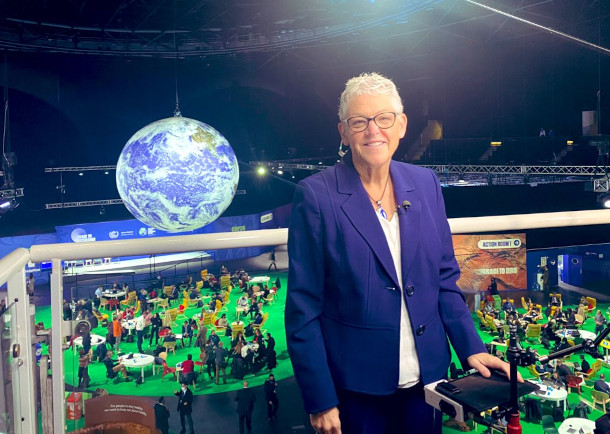
Pictured above is Gina MacCarthy in her role as US National Climate Advisor at COP26 in Glasgow, Scotland in 2021. (Photo: Office of White House Director of Broadcast Media, Wikimedia Commons, Public Domain)
CURWOD: It’s Living on Earth, I’m Steve Curwood.
DOERING: And I’m Jenni Doering.
Following the "blue tsunami" that swept through the US midterm elections, conversations about what a greener future could look like under the incoming Democratic-led Congress are gaining momentum. And although climate did not play a direct role in the election outcome, voters’ concerns over high energy costs bring it back into play.
CURWOOD: Here to talk us through some climate priorities for the Democrats is Gina McCarthy, former Administrator of the U.S. Environmental Protection Agency and President Biden’s national climate advisor. She joined us before traveling to Turkiye for COP31. So, Gina after these election results – do I hear you laughing, do I see you smiling?
MCCARTHY: [LAUGHS] I am smiling ear to ear, in case you're not looking directly at me. You know, I'm really excited. As I think you probably might have guessed that this is a moment of time that I think, at least for me and most of the folks I work with, we're really excited about the way the election turned out. So I couldn't be more thrilled, and it's great to be here with you because I know you know these issues inside and out, and we can have a great discussion about them.
CURWOOD: Yeah, and you know, while not many candidates focused on climate, what do you see as the prospects for dealing with the climate emergency now with this tectonic shift on Capitol Hill?
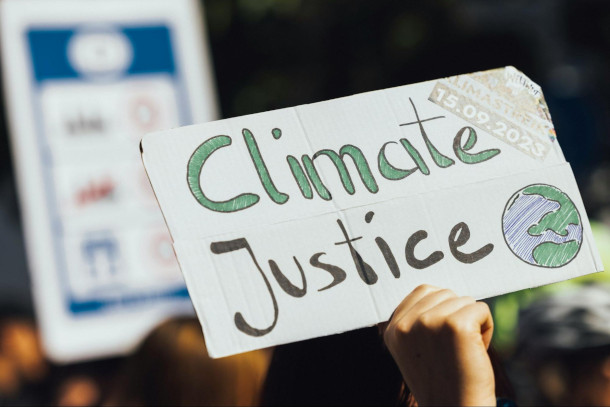
Above, a protester holds a sign calling for "climate justice" during a global climate strike in 2023. According to a 2024 report from the CDC, 11.9 million Americans—disproportionately people of color—live with exposure to unhealthy air pollution levels. (Photo: Markus Spiske, Unsplash, Unsplash License)
MCCARTHY: You know, I think that what you saw was a pretty wise move on the part of the folks that were running in this campaign to realize that people were hurting by high diesel costs, rising power bills, and all of the work that Trump was doing to try to, it seemed to me at least, make our lives more miserable. And I think instead of worrying about climate, we made it a human issue. You know, we wanted to talk about the challenges we were facing and what we needed to do from this point forward, but we had to give it a face. We had to make people see that there were challenges that we were all facing, but we had to face them together, and I think that's what really led to this shift, is you know, you saw all the young people, you know that were campaigning and out on the stump. I mean, I'm 72. I wouldn't look good to them for 50 years from now. Do you know what I mean? It's just so fun to see young people who are taking over our states and local level communities and and really doing the work that they know they had to do. So to me, it was really groundbreaking for me, frankly. I was in seventh heaven and continue to be till now, because it's the first time I can remember when we've had this big a shift in how people are thinking about our country and the challenges that we have, and and how we work together to tackle those challenges. And you know, these young folks seem pretty well prepared to take on the future, and I'm with them all the way.
DOERING: Now, so what are you hoping to see in this next Congress when it comes to anything that relates to climate, energy, environment? What are you hoping to see?

The United States is the largest oil producer in the world, which influences both its national and foreign policy. (Photo: Zbynek Burival, Unsplash, Unsplash License)
MCCARTHY: Well, I think we're going to, you know, obviously have challenges because we still have a Trump administration. And the Trump administration is, I think we all know, they're climate denialists, and I think we have to recognize that he is going to do everything he can to advantage fossil fuels and disadvantage our ability to move forward with clean energy. The only challenge I think he's really going to face is that we're already moving towards clean energy. He may be missing that fact, but you know when you have an energy supply now that can save people's money, that can clean up our air, that can help keep our water safe. This is what the American people want to hear about. They want to know what we can do together, you know. And despite all the craziness during this administration, I think we've still been able to make because of state and local governments and communities that are stepping up, they realize that this is our opportunity to not just clean up our act, but to do it in a way that puts people's money in their pockets again, that makes them recognize the benefits of clean energy that are extraordinary, and it's also an opportunity, I think, right now to look at how the broader communities across the U.S. can get together and to talk across aisles instead of against one another. And what I see from the young people who were elected, we are going to have a real opportunity to get away from the screaming and yelling, and back to what it means to really serve people in our communities. That's what I always wanted to do, and I've tried to do. And I think we all have to figure out how to get this nastiness out of the situation and start taking advantage of it for our kids.
CURWOOD: So we have another two years of President Trump, though, with a new Congress. But the Democrats are in control of this incoming Congress. What could this mean for the future of things like EV tax credits or other clean energy subsidies, the clean energy tax credits that you worked so hard on in the Biden administration? What could it mean in terms of trying to bring those back? Well, in the face of a continued Trump administration.
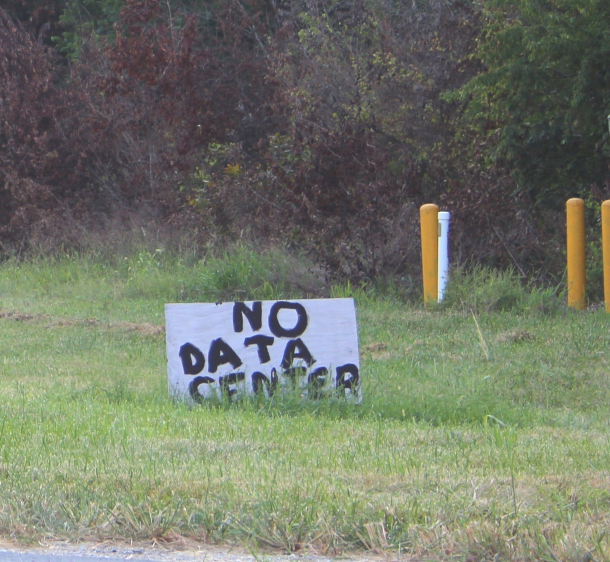
A handwritten sign on the side of Illinois’ Route 4, opposing plans to open a data center in nearby Talkington Township. During the 2026 midterm elections, there were 41 data center-related ballot measures across 10 states and most voters backed restrictions. (Photo: Visviva, Wikimedia Commons, CC BY-SA 4.0)
MCCARTHY: Well, you know, one of the things that at least I think I try to do because I've been in and out of the administrations for a while, and you know, I try not to do what I used to do. I try not to just revisit what we did before and put them in place. Today is a different era. Young people really want to have a voice in these decisions, not just wait around to hear what Congress says, what states are doing. And I think it's just really important for us to recognize that. And I think the good thing that we're seeing is that the opportunities right now to advance clean energy are really quite striking, and I think young people know that. They want to have a future that's clean, they want to have a future they can be proud of, and so for me, I'm going to spend a lot of my time talking about these issues as well as others that are more challenging, like the ongoing data centers that we're seeing. You know, there continue to be, thankfully, something new, right?
CURWOOD: Mm-hmm.
MCCARTHY: I mean, we never talked about data centers before. You know, this is amazing to me, and this is because you know young people are fully engaged. They saw what the Trump administration was doing to try to really take our country away from us, and instead they're giving us that opportunity now to jump on board. And I just think it's a moment in time for all of us.
DOERING: And to what extent might some of this offer bipartisan opportunities?

High gas prices played a major role in 2026 U.S. midterm elections. (Photo: engin akyurt, Unsplash, Unsplash License)
MCCARTHY: I sort of hinted at that. I absolutely believe that bipartisanship is essential. It has never been like it is today, where we don't even talk to each other, where we have Republicans over there and Democrats over there. That's not how it used to be, and I hate to sound as old as I actually am, but I remember the days when we used to negotiate. I remember those opportunities, and frankly, it's about time to revisit those opportunities. We can't just stand in our own little corners and spout about what we want or don't want. That's not how the United States developed. That's not what got us where we are now. So I think one of the huge values of looking at, not just I know that the Democratic wave was a large one, but I don't believe that that wave is going to be designed to actually take out the voices of others. We have to make sure that just because we won a big victory, that that victory shouldn't be shared by others like the Republicans who want to do the right thing, who want to build and have kids that grow up to have healthy lives. There's a human effort here that I think we have to keep reminding ourselves of, which isn't where I grew up, but it's how I'm living. It's about how my kids are going to live, and how we can get away from the incredible partisanship that has divided us, and and it's been going on for a while, a whole lot longer than I think any of us would have liked to have seen. So I'm hoping, and in the meantime, you know, we still have Trump, a president who is supposedly a leader, but is clearly leading us to hell in a handbasket, if I can quote my mother.
CURWOOD: [LAUGHS] And here's the thing: the Trump administration brought a wrecking ball to so many environmental initiatives and opportunities. So, to what extent does this incoming Democratic majority have to do to clean up the mess that's been left behind? I mean, thinking you know the agency that you ran, the EPA, and the administrator Lee Zeldin there implemented a bunch and rather dramatic set of rollbacks of environmental policies and regulations. What should be done with that at this point?
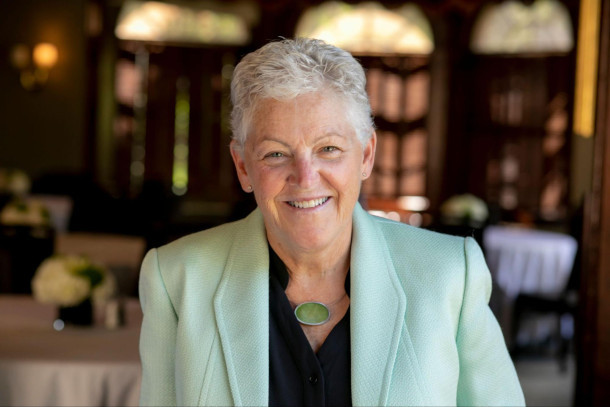
Gina McCarthy was the Administrator for the Environmental Protection Agency from 2013-2017 and the first White House National Climate Advisor from 2021-2022. She is now the Managing Co-Chair of America Is All In. (Photo: Harvard University)
MCCARTHY: Yeah, I'm pretty well aware of all those, [LAUGHS] as you might guess. But you know, honestly, one of the challenges that we still face, obviously, is we still have a Trump administration, and we still have a Lee Zeldin, and you know, we have opportunities, I think, to take action, but we're hemmed in a lot by Trump's veto authority, his veto pen. So Democratic leaders really have to step up and use oversight power, pounce on hot button issues like the data centers, so that we can bring people back to a reality that they can work with or deal with. The trick I think is going to be that we don't just sit up on our high horse, but we also go to folks in the Republican administration whom many of us have worked with before in a collaborative way, and start building those bridges again.
DOERING: So, Gina, what are the stakes here when it comes to environmental justice and public health? I mean, we've seen in the last few years how this current administration has taken away platforms such as EJ Screen that help us identify communities that are vulnerable to pollution. What are your thoughts there in terms of environmental justice and public health, and the stakes?
MCCARTHY: The stakes remain very high. You know, they always have remained high, because we have had in our country so many communities and individuals that have faced environmental risks for like longer than any of us would ever have thought possible, really. So I mean, I spent much of my time at EPA for about eight years there, and I feel like we still didn't make the kind of change we had to make. You keep struggling and doing things, but there's always a river of money and resources in the system that tend to keep pulling you back, questioning whether or not you should be doing what you're doing, or whether or not you're spending money that you shouldn't. And so, for me, the issue of environmental justice is, I think, one that has been far too long, not addressed in an effective way, and I think that's one of the key issues that we really have to make sure become front and center. Look, you can see it in the communities that are stepping forward.
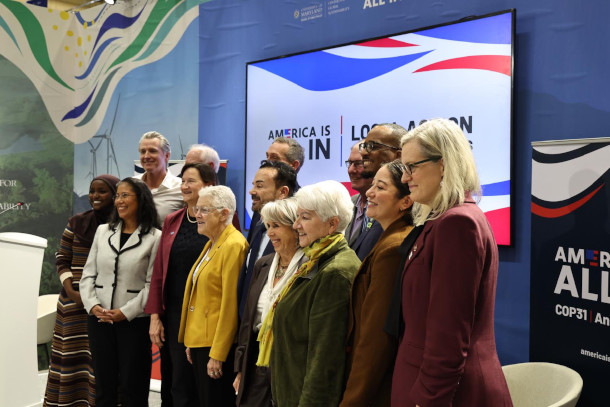
Gina McCarthy (shown center, in yellow) at the America Is All In pavilion during COP31 in Antalya, Turkiye. Other attendees who attended include (back to front, left to right) California Governor Gavin Newsom, Minnesota Governor Tim Walz, Mayor Michael Cahill of Beverly, Massachusetts, Mayor Joe Ganim of Bridgeport, Connecticut, Mayor Aaron Brockett of Boulder, Colorado, Mayor Roderick D. Hampton of Haynesville, Louisiana, Mayor Nadia Mohamed of St. Louis Park, Minnesota, Mayor Martha Guerrero of West Sacramento, California, Mayor Vicki Veenker of Palo Alto, California, New Mexico Governor Michelle Lujan Grisham, and Mayor Janet Cowell of Raleigh, North Carolina. (Photo: Courtesy of Liz Purchia)
If you look at who voted and who voted Democratic, you will see that the environmental justice community stood up for us. When are we going to stand up for them? When are we going to stand up for them? That's what we need to do. And I think it's very difficult because I know we deal with communities that are very much in need, but I also know that there are communities of considerable wealth. We have to find a way to make sure that we're doing our jobs here in the United States in giving people who don't have enough food to eat, who don't have a healthy place to live. Those people need to be served, and they need to be first in line, not last.
DOERING: Gina McCarthy is the former administrator of the U.S. Environmental Protection Agency, who served as the first White House National Climate Advisor. Thank you so much, Gina.
MCCARTHY: My pleasure. Thanks so much for having me.
Related links:
- Learn more about Gina McCarthy
- Learn more about America Is All In
[MUSIC: We Shall Overcome]
DOERING: Just ahead, the incoming chair of the House Committee on Science, Space and Technology looks ahead. Keep listening to Living on Earth!
ANNOUNCER: Support for Living on Earth comes from Hansjörg Wyss in honor of Rosamund Stone Zander. Celebrated painter, environmentalist, and author of The Art of Possibility, who inspired others to see the profound interconnectedness of all living things, and to act with courage and creativity on behalf of our planet. Support also comes from Sailors for the Sea and Oceana. Helping boaters race clean, sail green and protect the seas they love. More information at sailorsforthesea.org
[CUTAWAY MUSIC: We Shall Overcome]
Democrats Look to Restore Science
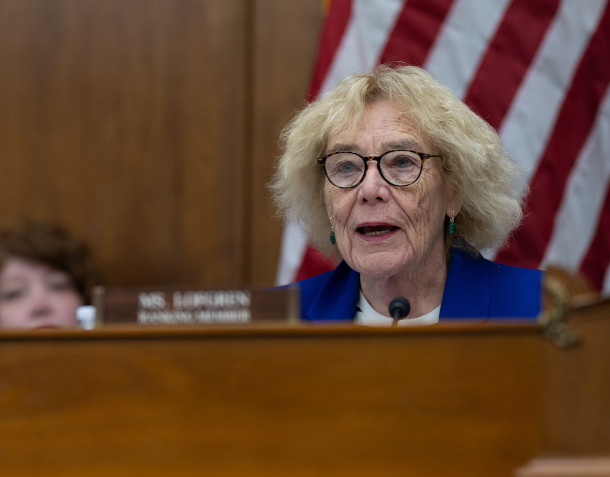
Rep. Lofgren (D-CA), the likely chair of the House Science Committee, says it will be busy with oversight, legislation, and general improvements to the American science enterprise. Above, Congresswoman Lofgren gives opening remarks at a Science Committee hearing in April 2026. (Photo: NASA Headquarters / NASA/Joel Kowsky, Wikimedia Commons, Public Domain)
DOERING: It’s Living on Earth, I’m Jenni Doering
CURWOOD: And I’m Steve Curwood.
As Democrats prepare to take control of the House in January, they’re gearing up to advance a long list of priorities. One key player in that effort will be the House Committee on Science, Space, and Technology, which oversees federal grants and research at the National Laboratories and agencies like NASA and NOAA.
DOERING: Congresswoman Zoe Lofgren represents California’s 18th district and, as the most senior Democrat on the Science Committee, is in line to become its next chair. And she joins us now -- Representative Lofgren, welcome to Living on Earth!
LOFGREN: Well, thanks. I'm glad to be with you.
CURWOOD: How are you feeling? What was your reaction on Election Day and after, as you understood that the Democrats would take control of both the House and Senate with sizable margins?
LOFGREN: It's huge, and it's a wonderful opportunity that we have to deliver for the American people on the things that matter to them. Obviously, the cost of living was top of mind for many, many voters. People are concerned about the corruption of this administration, which in many cases is related to the cost spiking. We need to deal with all of that. Obviously, it's a multifaceted effort. Everything from healthcare costs to energy costs and the like, and each committee in the Congress will have a piece of the remedy that we need to bring to bear as best we can.
DOERING: And now, speaking of the committee that you are currently ranking member of and may become chair of come January, this is the Committee on Science, Space, and Technology in the House. What issues fall under that committee, just for listeners who aren't familiar?
LOFGREN: Well, the entire science enterprise, primarily anything with the research, is related to the Science Committee. We have jurisdiction over the space program as well some of the issues that we've worked on in fusion energy research, quantum computing, AI has been a focus of the committee, as well as just generally basic science research. So we do touch over into issues that relate to climate and in the science portfolio, it's a broad jurisdiction. Very exciting. We've looked at some of the things that EPA has done, which has really been outrageous things that they've done, as well as the Department of Energy and the like. So it's a fun committee. My predecessor Eddie Bernice Johnson used to call it the committee of the future.
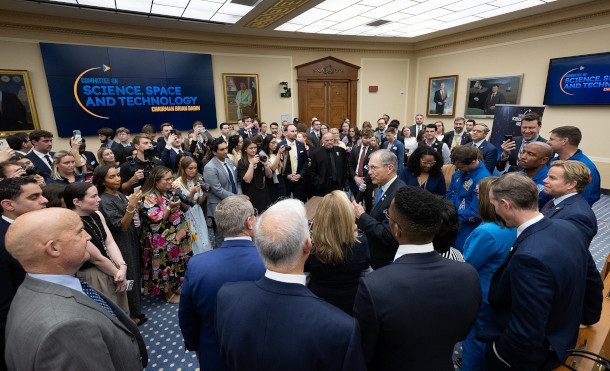
The Science Committee has jurisdiction over governmental scientific research in fields like space, energy, climate, and technology. Above, the committee meets with the astronauts who crewed the Artemis II after their mission in May 2026. (Photo: NASA, Wikimedia Commons, Public Domain)
CURWOOD: There you go. Now, what are your top priorities as you assume this position? The things that have been sort of undone or moved ahead by the Trump administration, that list is fairly long. What's at the top of your list?
LOFGREN: Well, we need to do two main things. One is oversight, to put a spotlight, and in some cases, to uncover what the administration has done that has damaged the science enterprise in this country, and then we also need to do legislation to change policies that will better serve the American people. Now, the committee has a long history of bipartisanship, and it certainly has even in this Congress when it comes to legislation. I will say the Republicans have not been active in criticizing the administration, but we have worked collaboratively to pass a number of bills. I think all the bills that we passed were either unanimous or close to it, and so I'm hoping that that spirit of bipartisanship can continue on some of the bills that we need to enact in our subject area. You know, in terms of oversight, the administrator of the Environmental Protection Agency has done tremendous damage. I mean, 20% of the agency's workforce has quit, retired, or been fired. They've shut labs down. The Office of Research and Development was completely wiped out. We've made multiple requests for records and documents, and they haven't produced a single one. Their science capacity has been gutted, and the science integrity is really impaired. It's an industry capture event, and climate denialism is rampant in the agency. It's pathetic. Their basic mission is to use the best available science to protect health and the environment, and they've not done so. We're preparing our letters right now to Mr. Zeldin to renew our oversight requests. I sent a similar letter to the Department of Energy Secretary Wright last week, and we need to know about their reorganization plans, the Endangerment Finding they made, and a number of other things. But that's, you know, first on the agenda.
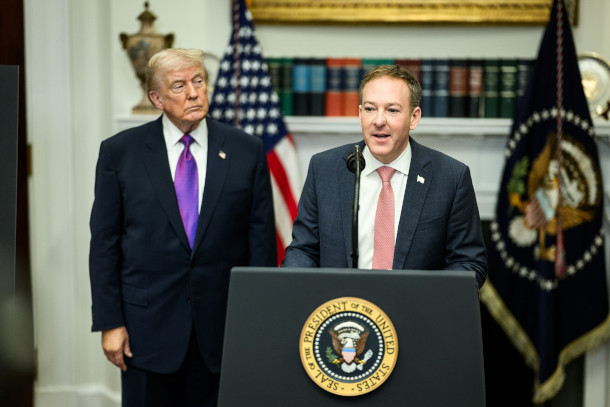
Rep. Lofgren says that under her leadership, the Science Committee will investigate how the Trump administration has unraveled American science institutions and legislation. Above, a February 2026 photo of EPA Administrator Lee Zeldin announcing plans to rescind the Endangerment Finding, which determined that greenhouse gases threaten public health and welfare. (Photo: The White House, Wikimedia Commons, Public Domain)
DOERING: Now we also wanted to ask you about what's been happening at the National Science Foundation. We've reported in the past on how the Trump administration has targeted vital American science establishments by freezing and canceling grants, and also refusing to release obligated funds at the National Science Foundation, how might your committee, the Science Committee, go about investigating those missing funds and ensuring they're returned?
LOFGREN: Well, we're going to get to the bottom of what has happened. The NSF was the crown jewel of our government's support for discovery science across all fields of science and engineering. The president asked for a $3 billion cut in fiscal year '25 and '26, and it's worth reminding ourselves that in a bipartisan way, Congress said no to that cut. We enacted and funded the agency close to the fiscal year '24 level, but as you mentioned, the money does not appear to be going out. There are whistleblower accounts that the administration is sort of taxing up to 30% of funds for some kind of slush fund that they want to do sort of their politicized priorities, not science, but maybe funnel it into tech firms. We're not sure. That would be in complete contravention of the law. So we're going to get to the bottom of that, what they have done. But looking forward, and I've discussed this with the incoming chairwoman of the Appropriations Committee, I think Congress needs to consider and take a look at how we might be more prescriptive in the crafting of authorizations and appropriations, so that the opportunity for mischief is severely curtailed, and the opportunity for court orders is significantly enhanced, and that's something that we will be looking at very carefully.
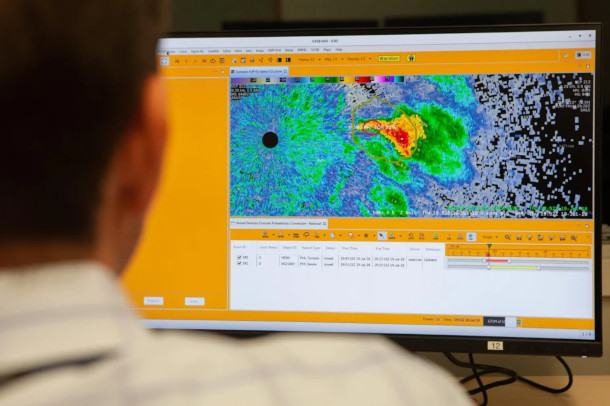
Frozen funds at organizations like the National Oceanic and Atmospheric Association (NOAA) threaten our nation’s ability to predict and prepare for severe weather, says Representative Lofgren. Above, a weather forecaster working in NOAA’s National Severe Storms Laboratory. (Photo: NOAA National Severe Storms Laboratory, Wikimedia Commons, Public Domain)
CURWOOD: Can you talk to us a bit more about what's gotten frozen at NSF, I'm thinking of the National Center for Atmospheric Research, or NCAR, and then also over at NOAA. I think the biggest grant under NSF was going to the Woods Hole Oceanographic Institution to deal with climate stuff, and that simply got stuck.
LOFGREN: It's not going, and you know the interesting thing is the courts have been the sole branch of government that didn't cave, right? With the exception of the Supreme Court, but the trial courts have been pretty good about ordering the administration to comply with the law. But of course, it takes a long time, and so by the time the courts make their decisions, the damage has been done, and they slow walk the compliance, or it's too late to undo it. So yes, we're going to take a look at NOAA, which is so important across the board to every part of America needs NOAA and relies on adequate weather information. I mean, whether you're in agriculture or whether you're in a Gulf Coast State, you know, worried about hurricanes, or here in the West dealing with droughts. We need to know all of that, and they have impaired that capacity. They've not only impaired that, they've impaired the satellite capacity to capture data where they've illegally made changes there. So we're going to put a spotlight on all of it. Try and unwind the misconduct, and prospectively be in a legislative posture that will make it more difficult for them to engage in misconduct in the future.
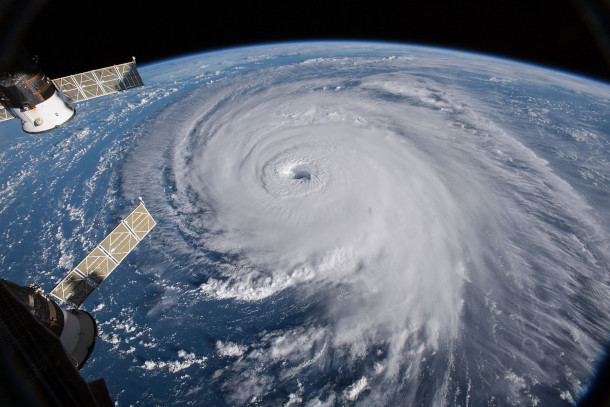
Above, a satellite image of Hurricane Florence in 2018. Rep. Lofgren adds that satellite capacity is imperative to tracking storms and capturing important data. (Photo: NASA/Goddard Space Flight Center, Wikimedia Commons, CC BY 2.0)
DOERING: And just to drill down on the climate aspect of this, when it comes to places like the National Center for Atmospheric Research or NOAA, how important is it at this moment in time when the UN is telling us we are surpassing 1.5 degrees Celsius, this critical threshold? How important is it to have that data as weather disasters mount?
LOFGREN: It's hugely important. We went into an effort to preserve the data. There was an effort to destroy all the data that had been accumulated, and working with scientists in Europe to try and portal some of the data so it would not be lost once this administration is gone. And there was some success there, but the new collection of data and the gaps that are being created are not good for science. And of course we know that climate change is real. Unfortunately, some of my colleagues on the right wing in the Congress they say it well, it's just weather. They don't believe that there is actually climate change. Every farmer in America can tell you that there's climate change. So we need to do something about this. One of the things that I'm very focused on, and I have been through my entire career, and it's the progress that's been made is fabulous, is fusion. If we can score on commercialization of fusion, it is something we need for decarbonization, not just an energy source, but we're way past the time when, I mean, I'm for renewables, and we need to put the tax incentives in, and we need to support the whole renewable, I mean, the cheapest energy is solar at this point, but we also need to recapture carbon not only from the air but from the sea, which is the biggest carbon sink. That's a more difficult challenge, but it is a doable challenge if we're going to try and be successful in preserving a livable planet.

The rapid growth of artificial intelligence is a growing concern across political parties. Rep. Lofgren says ensuring new technology serves the American people, not large corporations, is one of her priorities as chair. (Photo: BalticServers.com, Wikimedia Commons, CC BY-SA 3.0)
CURWOOD: And what about research funds for universities? I mean,
LOFGREN: Yes.
CURWOOD: I hear a lot of complaints that those have been really slashed. I hear that the applications for PhD programs that require grant support are down some 20%. That there's really a lot of concern there.
LOFGREN: There is a lot of concern, and I don't think we have had an adequate complete accounting of that yet. I mean, they stonewall us. The Democrats on our website, our Science Committee website, have a portal for people to tell us if their grants have been canceled. That's how we're getting information from the grantees. This does tremendous damage to our country. You know, since World War II, we had a system in place. Was it perfect? No, and it could be improved. But destroying it is not improving it. Where there would be the bipartisan support for basic research that was primarily university-based, and then from those wonderful discoveries, there would be commercial development and prosperity. And it was the envy of the world.
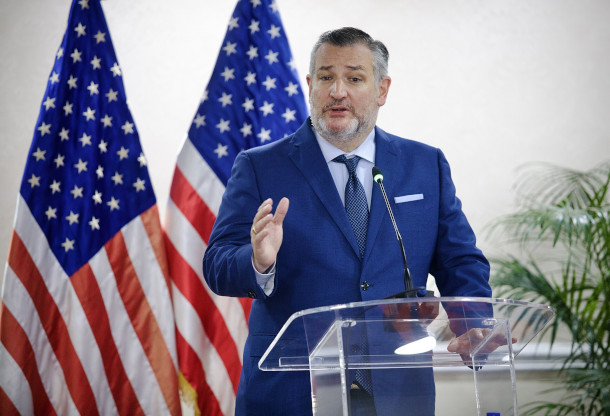
Rep. Lofgren calls for the depoliticization of science, arguing that facts should be put before political parties. Above, Senator Ted Cruz, who released a report targeting grants that referenced diversity, equity, and inclusion (DEI) in October 2024. (Photo: US Embassy San Salvador, Wikimedia Commons, Public Domain)
Everyone was trying to copy what we were doing, and they've dismantled that through just stupid political moves, mindless destruction. I've talked to so many university presidents who've told me that they have not admitted otherwise admissible doctoral and postdoctoral students because they don't know how to pay for the research. So those students are either going into another field or going to another country. Another part of this issue is the steep decline in foreign students. You know, if you take a look at the Americans who won Nobel prizes, somewhere between 40 and 50% are Americans who were born in another country. Americans by choice. The pattern has been best and the brightest in the world want to come to America. They get their doctorates. They love America. They become Americans, and then they win the Nobel Prize for America. Well, there's been a close to 70% drop off in foreign students coming into the U.S. So, for a variety of reasons, they're not being given visas, the universities are being charged. People are being terrorized. That's going to have a bad impact on the science enterprise. We should be happy that super smart people want to come here and become Americans with us.
DOERING: Now, a lot of Americans are concerned about the rapid pace of how artificial intelligence is developing. What do you think the Science Committee might be able to do to impose regulations or slow down the rapid pace of AI?
LOFGREN: Well, it's not clear what the leadership on the Democratic side, how they want to structure the approach to AI. Right now, three committees have most of the jurisdiction over AI, and that's the Science Committee, the Judiciary Committee, and the Energy and Commerce Committee. I'm on two of the three, and we could approach it collaboratively. There's been a discussion among some whether we should do a separate select committee. I don't know if that would be a wise approach, since it'll take six months to get staffed up and organized, but AI has tremendous possibilities. It also poses tremendous challenges, and there do need to be constraints and controls. And we need to assign responsibility and liability to the developers of AI for harm that is caused, so that is something we're prepared to do our part as soon as whatever the leadership decides in terms of how they want to divide up the responsibility, we're ready to serve, and to do what the American people need to make sure that this technology serves their needs, not the needs of the tech bros.
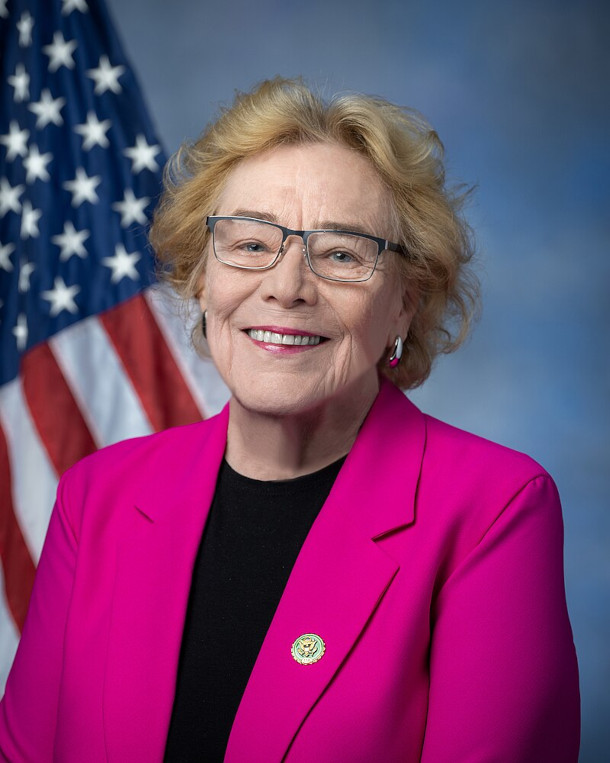
Democratic Congresswoman Zoe Lofgren represents California's 18th district and is incoming chair of the House Committee on Science, Space, and Technology. (Photo: Courtesy of Rep. Zoe Lofgren)
CURWOOD: So you have written that, as Science Committee chair, you will quote, work to put a stop to Trump's politicization of science. Explain that for us. Why is taking the politics out of science so important from your perspective?
LOFGREN: It's important, well I'll just give you an example. Ted Cruz, his staff, put together a little report fingering, you know, DEI in science, right? Which was crazy. So they did a word search, and then looks to me that DOE and NSF and NIH just took that document and started canceling grants based on it. I'll give you an example of a researcher who was doing research on dementia in a university, and she had people who were part of the study, but the people who surrounded the university were all high-income Asian and Anglo individuals, and she needed a broader sample to validate the sample. That's not DEI. That's science. They canceled it, right? They canceled the grant based on the keywords. Stupid stuff. The idea is, and always has been in American science, is if your idea is peer reviewed, it could stand up to review, that's the measure of valid science. It's not somebody saying I don't like blue states. But we're going to be very busy with our oversight activities in crafting legislation that diminishes the opportunity for bad conduct and trying to get this science enterprise back on track and better. I mean, I'm not one who could say it was perfect before, and sometimes the grant making was too attenuated, too bulky, tended to favor large institutions over small ones. We can do better, but that's a lot different than destroying it.
DOERING: Congresswoman Zoe Lofgren represents California's 18th district and is incoming chair of the House Committee on Science, Space, and Technology. Representative Lofgren, thanks so much for joining us.
LOFGREN: Thank you.
CURWOOD: And thank you.
Related links:
- Learn more about Congresswoman Lofgren
- Read about the Democratic Committee on Science, Space, and Technology
- Read Rep. Lofgren's press release, "Ranking Member Lofgren Demands Answers on Over a Billion of Withheld FY26 Funds at NSF"
[MUSIC: Starship]
DOERING: Next time on Living on Earth, Writer David Gessner on a miraculous comeback of ospreys and what they taught him.
GESSNER: I went out there at first, you know, it was mid-March, about when ospreys come back from South America where they've spent the winter to Cape Cod. And I sat out there and it was cold and kind of miserable. I had a lawn chair and, and one thing the book's about is kind of this learned patience. And at first I went up to visit Alan Poole in Westport, Massachusetts. He was kind of my osprey Obi-Wan Kenobi mentor, and he said, you've got to learn to live on osprey time. And I was like, all right, I'll try, but I failed at my early attempts. I would, I'd actually timed myself once thinking I'd, you know, stayed there a long time and it was like 7 minutes had passed. So I would go to these nests, watch as the birds gradually came back. There's a whole fun drama early on where the female rebuilds the nest and orders the male to go get sticks, and if she doesn't like them, throws them off and says go get another. So there was some early drama, but it took a while to kind of settle in, and the settling in was part of the book. I realized early on that I had a character, like the main character was happened to be me. As far as undergoing a transformation, if I could move from ignorance to less ignorant, the reader could come with me and that might be a way to make it less boring, basically.
DOERING: You could say, Zen and the art of birdwatching -- next time on Living on Earth.
[MUSIC: The Osprey Hovers]
CURWOOD: Living on Earth is produced by the World Media Foundation. Our crew includes Naomi Arenberg, Paloma Beltran, Claire Brandes, Abby Edgecumbe, Swayam Gagneja, Mark Kausch, Mark Seth Lender, Don Lyman, Ashanti Mclean, Nhung Nguyen, Aynsley O’Neill, Sophia Pandelidis, Andrew Skerritt, Bella Smith, Jake Rego and El Wilson.
DOERING: Tom Tiger engineered our show. Allison Lirish Dean composed our themes. You can hear us anytime at loe.org, Apple Podcasts and YouTube Music, and like us please, on our Facebook page, Living on Earth. Find us on Instagram, Threads and BlueSky @livingonearthradio. And we always welcome your feedback at comments@loe.org. I’m Jenni Doering,
CURWOOD: And I’m Steve Curwood. Thanks for listening!
ANNOUNCER: Funding for Living on Earth comes from you, our listeners, and from the University of Massachusetts, Boston, in association with its School for the Environment, developing the next generation of environmental leaders. And from the Grantham Foundation for the protection of the environment, supporting strategic communications and collaboration in solving the world’s most pressing environmental problems.
ANNOUNCER 2: PRX.
Living on Earth wants to hear from you!
Living on Earth
62 Calef Highway, Suite 212
Lee, NH 03861
Telephone: 617-287-4121
E-mail: comments@loe.org
Newsletter [Click here]
Donate to Living on Earth!
Living on Earth is an independent media program and relies entirely on contributions from listeners and institutions supporting public service. Please donate now to preserve an independent environmental voice.
NewsletterLiving on Earth offers a weekly delivery of the show's rundown to your mailbox. Sign up for our newsletter today!
 Sailors For The Sea: Be the change you want to sea.
 The Grantham Foundation for the Protection of the Environment: Committed to protecting and improving the health of the global environment.
 Contribute to Living on Earth and receive, as our gift to you, an archival print of one of Mark Seth Lender's extraordinary wildlife photographs. Follow the link to see Mark's current collection of photographs.
 Buy a signed copy of Mark Seth Lender's book Smeagull the Seagull & support Living on Earth
© Copyright World Media Foundation. All Rights Reserved
Home | Contact | RSS | Donate | Newsletter