

May 1, 2026
Air Date: May 1, 2026
FULL SHOW
SEGMENTS
Glyphosate at the Supreme Court
View the page for this story
The US Supreme Court recently heard oral arguments for Monsanto v. Durnell, a case about whether states can require warning labels on pesticides if the EPA does not. This stems from thousands of lawsuits against Roundup maker Monsanto, alleging that farmers and landscapers who developed cancer weren’t warned of the risks. Though the World Health organization has classified glyphosate, the key ingredient in Roundup, as “probably carcinogenic”, the EPA has not found glyphosate can cause cancer. Pat Parenteau is an emeritus professor at Vermont Law and Graduate School, discusses with Host Steve Curwood. (14:26)
How Oil Fuels Conflict
View the page for this story
The US-Israel joint war against Iran has shaken global energy markets, closed the Strait of Hormuz and restricted the flow of oil and natural gas worldwide. It's the latest of conflicts over Iranian oil, though for the first time the growing emergence of fossil free energy sources is prompting visions of ending our decades of dependence on oil, with its pollution and inevitable wars. Michael Klare, emeritus professor of Peace and Security studies at Hampshire College and the defense correspondent for The Nation magazine, speaks with Host Steve Curwood. (12:14)
"Snapping Turtle"
/ Mark Seth LenderView the page for this story
Now that it’s spring in the Northern Hemisphere, before long snapping turtles will be laying their eggs. Living on Earth’s Explorer in Residence, Mark Seth Lender shares this encounter with one old mother turtle. (01:52)
The Indigenous Fight to Save Bristol Bay
View the page for this story
In 2001, a Canadian mining company proposed a massive gold and copper mine at the headwaters of pristine Bristol Bay, Alaska. Local Native Alaskans became concerned about how the mine could harm their plentiful sockeye salmon run, a cultural and economic lifeblood. Alannah Acaq Hurley, Executive Director of the United Tribes of Bristol Bay, helped lead the fight against the mine and was awarded the 2026 Goldman Environmental Prize for North America. Alannah Hurley joins Host Steve Curwood. (17:36)
Show Credits and Funders
Show Transcript
260501 Transcript
HOSTS: Steve Curwood
GUESTS: Alannah Acaq Hurley, Michael Klare, Pat Parenteau
REPORTERS: Mark Seth Lender
[THEME]
CURWOOD: From PRX – this is Living on Earth.
[THEME]
CURWOOD: I’m Steve Curwood.
The Supreme Court considers whether states can warn about the cancer risk of a pesticide when the EPA does not.
PARENTEAU: If the court says that these failure to warn cases can no longer be brought, that is going to have an incredible impact on holding companies accountable and basically slamming the courthouse doors shut on people that could have and probably do have legitimate claims.
CURWOOD: Also, an Alaska Native who fought a copper and gold mine.
HURLEY: If you look at a map of Bristol Bay, there are two major river systems, and the Pebble Mine would be located at the connected headwaters of both. So, you literally could not have picked a poorer location, and in my opinion, it's Creator's test to the people. What are you going to choose?
CURWOOD: That and more, this week on Living on Earth. Stick around!
[NEWSBREAK MUSIC: Boards Of Canada “Zoetrope” from “In A Beautiful Place Out In The Country” (Warp Records 2000)]
[THEME]
Glyphosate at the Supreme Court
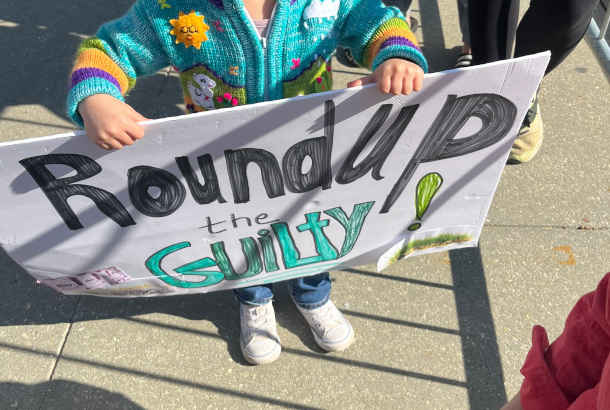
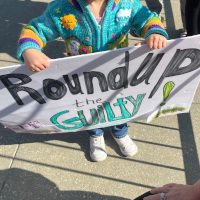
A toddler carries a sign that reads “Round up the Guilty” during the protests outside the U.S. Supreme Court on Apr 27, 2026 for the Monsanto Company v. Durnell hearings. (Photo: Carey Gillam)
CURWOOD: From PRX and the Jennifer and Ted Stanley Studios at the University of Massachusetts Boston, this is Living on Earth. I’m Steve Curwood.
Thirty years ago, commercial agriculture was revolutionized with the advent of soybeans genetically modified to be "roundup ready" which meant they could be sprayed with the weedkiller without being harmed. GMO seeds for corn soon followed and the industrial scale no-till farming it allowed in the following decades boosted US crop yields by some 50 percent or so. But the active ingredient in Roundup, glyphosate, has also grown controversy, with research suggesting it probably causes cancer. Monsanto, which developed Roundup, and is now owned by Bayer, has been the target of numerous lawsuits with some juries making multimillion dollar awards to farmers and landscapers who weren't warned of the cancer risks. But the EPA has not found glyphosate can cause cancer, and the US Supreme Court recently heard oral arguments for Monsanto v. Durnell. The Court will decide whether states can require warning labels on pesticides if the EPA does not. Pat Parenteau is an emeritus professor at Vermont Law and Graduate School and served as an EPA regional counsel under President Ronald Reagan. Welcome back to Living on Earth!
PARENTEAU: Thanks, Steve, it's very good to be with you.
CURWOOD: So talk to me about the background of this case. Why did the Supreme Court hear arguments on failure to warn claims under state laws, Missouri's state law, I believe?
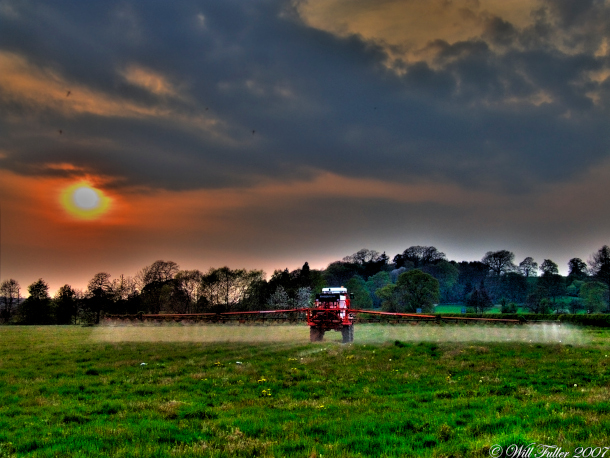
Herbicides like Monsanto’s (now Bayer’s) Roundup are often sprayed through tractors like the one pictured above. (Picture: Will Fuller, Flickr, CC BY-NC-ND 2.0)
PARENTEAU: That's right. It was a $1.25 million verdict that the jury in St Louis handed down in favor of the plaintiff in that case. So the law in question is FIFRA, the Federal Insecticide, Fungicide and Rodenticide Act, and it's a controversial statute in the sense that, unlike other environmental laws, this one has a specific requirement for a cost-benefit analysis. You know, you don't find that with the Clean Air Act, the Clean Water Act, the Superfund law, nor other laws, FIFRA is different. So Congress made a conscious decision that, you know, some of these pesticides that are key to what is considered crop production, they do come with risk. And so there's an explicit recognition that even though a product may pose health risks, unless those are, as the statute puts it, “unreasonable” risk, EPA can go ahead and register these chemicals, knowing that there are some risks, and not knowing what other risks that might emerge from them. So that's what makes this law particularly problematic, I think, to some of us, because it's an explicit recognition that economics can triumph over health concerns. And then you get to the question of labels. So when EPA registers a pesticide like glyphosate or Roundup under FIFRA, EPA also approves the label suggested by the company. That's another problem with this law is that the manufacturers are in control of everything. They're the ones that do the Health Studies and the risk studies, and EPA doesn't have independent means to do that for the thousands of chemicals that are coming onto the market every year. So they rely on industry telling the truth about what their product’s risk might involve. And then when it comes to the label, it's up to the companies to decide. What are they going to put on the label, in terms of warnings or in terms of use restrictions and so forth? So that's all determined by the companies as well. And then EPA does sign off on these labels. And then you come to the question of, does an EPA approval of a label that doesn't contain certain warnings, does that preempt the states from going further with requiring other forms of risk disclosure? That's where we are with this case.
CURWOOD: By the way Pat, to what extent do you think industry influenced this legislation and all the way these rules work?
PARENTEAU: Oh, of course they did. I mean, it's another case of capture, if you want to look at it that way and lots of scholarship has been written about how EPA and other regulatory agencies get captured by the industries they're trying to regulate, because the industries have all of the wherewithal and the knowledge, frankly, about their products, and EPA is constantly trying to play catch up or reacting to what the industry is proposing. So industry data, you know, garbage in, garbage out.
CURWOOD: So what are the plaintiffs from the state of Missouri arguing in this case?
PARENTEAU: So the plaintiffs are saying that, as a result of a World Health Organization study of glyphosate, the World Health Organization's concluded it is a probable human carcinogen. EPA has never found that glyphosate poses a cancer risk, and that's regardless of who's in the White House. I mean, that's Republican and Democrat administrations have basically said that we don't see conclusive evidence that glyphosate causes cancer, specifically non-Hodgkin’s lymphoma, is the particular brand, if you will, of cancer that has been linked to glyphosate. So you have this track record of EPA saying it's safe, basically, I mean, they don't come right out and say it's safe, but they say it is not a proven carcinogen. And then you have the state of Missouri saying that, based on the World Health Organization's studies and some others, we think that you should be including a warning on the label. And that's where you come into the preemption question. So you know, can the state of Missouri and a jury in Missouri, can they impose additional disclosure requirements beyond what EPA has approved? That's the nub of the issue before the Supreme Court.
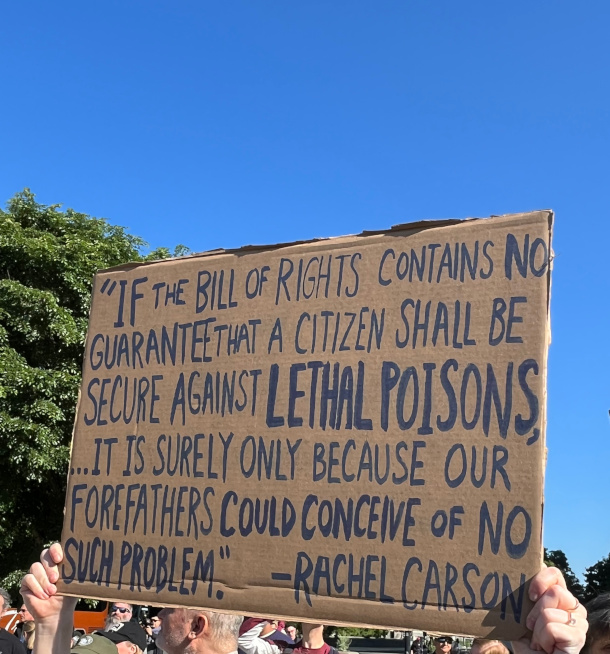
Pictured above is a sign carried by a protester outside the U.S. Supreme Court Apr 27, 2026 Monsanto Company v. Durnell hearings. (Photo: Carey Gillam)
CURWOOD: And this particular plaintiff said that he had not been warned of the risks of using this chemical, and it is, in fact, from his perspective, a dangerous chemical. And I believe, Pat, to what extent did this plaintiff argue originally, that some of the research conducted by the companies involved here, involved people who have fraudulent records?
PARENTEAU: Yeah, he did allege a fraud. The jury did not find in his favor on that count, but they certainly found in favor of the requirement to disclose the cancer risk, and this individual was applying roundup to fields in the city of St Louis on a daily, almost basis. You know, fighting weeds is a never-ending problem, right? So he said that some of Monsanto's advertising in Missouri actually encourage people to apply roundup in their shorts and T shirts when it got really hot in the summer and of course, that's what this guy did for years, and then he did develop non-Hodgkin’s lymphoma. He didn't die from it, thankfully but, you know, cancer is never a fun thing. So yeah, that's what the jury found is that these requirements complement FIFRA, they don't conflict with FIFRA. And the Court of Appeals in Missouri likewise said that there's no real conflict here between compliance with what the jury in this case found, and also Missouri law requiring disclosure of these kinds of risks and what FIFRA requires. In fact, they are mutually reinforcing. That's what the courts in Missouri found.
CURWOOD: So what's at stake in this case here?
PARENTEAU: What's at stake is that there are 100,000 lawsuits. Just think about that for a minute: 100,000 lawsuits claiming that Bayer has to disclose the cancer risk of glyphosate, right? So, I mean, this is unprecedented, frankly, in terms of toxic tort litigation, this is the largest number ever. So you're talking billions and billions of dollars. Literally, you're talking about putting Bayer out of business perhaps, if all of these cases went to verdict. The truth is that the track record of these lawsuits is mixed, okay? So some states have actually enacted laws to shield Bayer and other manufacturers of pesticides from liability. There have been different state court verdicts, some that went against Bayer and Monsanto, and some that didn't, some that went in their favor. So and now there's a split among the US Courts of Appeal over this question of, can states impose additional disclosure requirements beyond what EPA has required, right? So you know, that's why the Supreme Court took it. There is definitely a split in the circuit courts. There needs to be a resolution one way or the other, of to what extent do states have some authority to impose additional disclosure requirements, or is it truly the case that it's just whatever EPA decides? And of course, that means whoever is in charge of EPA at any particular moment in time, right? So that's kind of where we are, and we can talk some more about what happened at the argument.
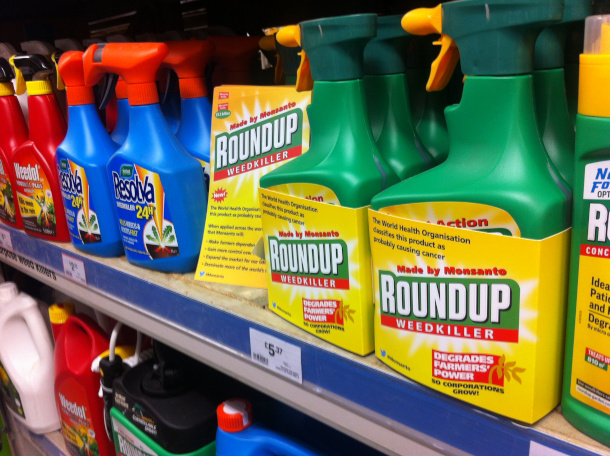
In the United Kingdom in 2016, activists labeled bottles of Monsanto's Roundup weedkiller in garden centers and DIY shops with critiques of Monsanto. Now Monsanto has generally stopped direct sales to consumers, with Roundup only available for farmers. The United States case Monsanto Company v. Durnell addresses whether the Federal Insecticide, Fungicide and Rodenticide Act (FIFRA) preempts state-level failure-to-warn lawsuits regarding cancer risks on Roundup labels. (Photo: Global justice Flickr, CC BY 2.0)
CURWOOD: What did happen at the argument Pat?
PARENTEAU: So what do they say, reading the Supreme Court oral argument is like reading chicken entrails? But the point is that there were tough questions on both sides, and they were coming from the full spectrum of the court. This time it wasn't just totally dominated by the conservative justices. Justice Gorsuch was expressing extreme skepticism about Bayer's arguments that once EPA has approved a label, that's it. And he was saying, you mean even, and the Chief Justice said the same thing, you mean even if a state discovers through a scientific analysis that a product definitely does pose a serious health risk, you mean that states are powerless to do anything about that? So there was that line of argument, but then you had, surprisingly, justice Kavanaugh and Justice Kagan both saying, yeah, but what about the goal in FIFRA of uniformity, right? Don't we want a uniform requirement for what has to be disclosed on these labels? And if you have a patchwork, one state saying this, another state saying that, how does that further Congress's goal of uniformity? So the bottom line is, this is a real split decision. I think this could likely come down to a five-four kind of outcome, and it's not clear exactly how far the court might go in prohibiting states from imposing these additional disclosure requirements, because there's an earlier Supreme Court decision, Bates versus Dow Chemical, which basically said, as long as the state laws are consistent with FIFRA, that is to say, they don't go beyond FIFRA, or they don't conflict with what FIFRA requires, then there's no real problem with preemption, right? So it could be that the court either comes down in favor of the plaintiffs in this case, or if it doesn't, it carves out at least some role for the states under certain circumstances, let's say, for example, a state says, well, you're misbranding your product here. You're not disclosing recent evidence of potential harm, right? So if you couch it as a misbranding kind of problem, then the states have some latitude, some authority, to say, well, you've got to be more careful and not mislead people about what the potential dangers are. So it's hard to say how it's going to come down, but you know, given this Court's track record of sort of siding with industry in these closed cases, it's cause for significant concern, because if the court says that these failure to warn cases can no longer be brought, that is going to have an incredible impact on holding companies accountable to these risks and the disclosure requirements and basically slamming the courthouse doors shut on people that could have and probably do have legitimate claims.
CURWOOD: What about the other side here, Pat? You suggest that this may be an existential threat to Bayer, if the court finds against them, there's just so much money at stake here. So to what extent is the court perhaps considering whether or not Bayer and the company that had acquired Monsanto as a subsidiary will survive? How important is that to them?
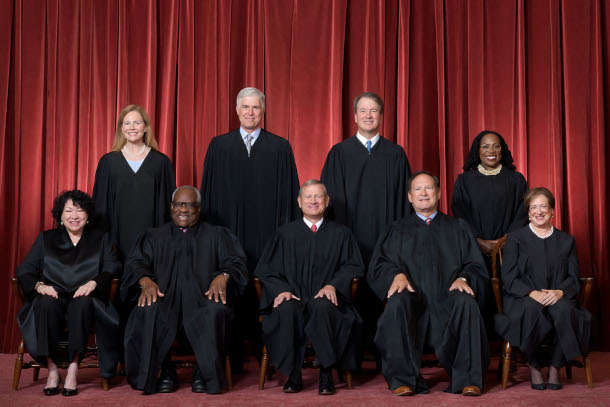
The current U.S. Supreme Court. Seated, from left: Justices Sonia Sotomayor, Clarence Thomas, Chief Justice John G. Roberts, Jr., and Justices Samuel A. Alito and Elena Kagan. Standing, from left: Justices Amy Coney Barrett, Neil M. Gorsuch, Brett M. Kavanaugh, and Ketanji Brown Jackson. (Photo: Fred Schilling, Wikimedia Commons, Public Domain)
PARENTEAU: Yeah, I think that is an important inquiry, certainly for, I would say, all the justices, but particularly for the conservative justices, the idea that these claims about the cancer risk, the court can't adjudicate that question. They can't decide, does glyphosate create a carcinogenic risk or not? All they can do is say, if these 100,000 cases proceed to verdicts like some of the verdicts that are being handed down, these companies will be put out of business and a vital resource, well, you remember President Trump issued an executive order invoking the Defense Production Act and declaring that glyphosate is a national security matter. So that is also, I think, probably factoring into the court's deliberations on this is, it isn't just a matter of do individual plaintiffs have a right to go to court, it's a question of whether a company providing a vital resource that the President believes is a national security matter would be put out of business. So yeah, I mean lots of different high-level issues swirling around a case like this. It looks narrow, but when you back up and look at it from a larger perspective, it has really profound implications.
CURWOOD: Pat Parenteau is an emeritus professor at Vermont law and graduate school. Pat, always so good to have you on.
PARENTEAU: Thanks Steve, pleasure to be with you.
Related links:
- Learn more about Pat Parenteau
- Civil Eats | “Supreme Court Considers Pesticide Warnings, as MAHA Rallies”
- Listen to the Monsanto Company v. Durnell oral arguments from Apr 27, 2026
- SCOTUSBLOG | “Justices Debate Who Gets to Decide That Pesticide Labels Need a Cancer Warning”
- The Guardian | “US Supreme Court Weighs Blocking Lawsuits Against Roundup Makers Alleging Weedkiller Causes Cancer”
- The New Lede | "US judge calls proposed Bayer Roundup settlement a “filthy” deal"
[MUSIC: Joshua Messick, “Woodsong Wanderlust” on Pure Hammered Dulcimer, by Joshua Messick, self-published]
CURWOOD: Coming up, how Iran's massive oil reserves are tied to decades of conflict. Keep listening to Living on Earth.
ANNOUNCER: Support for Living on Earth comes from the Waverley Street Foundation, working to cultivate a healing planet with community-led programs for better food, healthy farmlands, and smarter building, energy and businesses.
[CUTAWAY MUSIC: Joshua Messick, “Woodsong Wanderlust” on Pure Hammered Dulcimer, by Joshua Messick, self-published]
How Oil Fuels Conflict
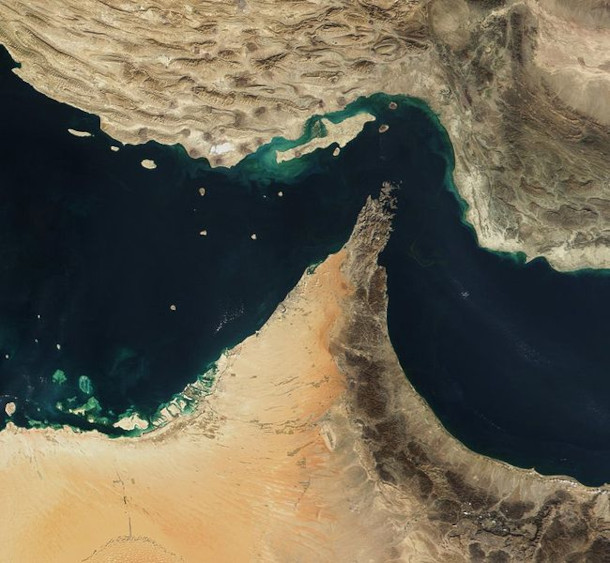
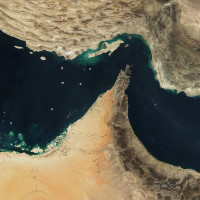
The Strait of Hormuz, effectively closed due to the US-Israel war on Iran, is a key trade route of global oil, natural gas, and critical mineral supplies. (Photo: eutrophication&hypoxia, Flickr, CC BY 2.0)
CURWOOD: It’s Living on Earth, I’m Steve Curwood.
The US-Israel joint war against Iran has shaken global energy markets, closed the Strait of Hormuz and restricted the flow of oil and natural gas worldwide. It's the latest of conflicts over Iranian oil, though for the first time the growing emergence of fossil free energy sources is prompting visions of ending our decades of dependence on oil, with its pollution and inevitable wars. Joining me now is Michael Klare, emeritus professor of Peace and Security studies at Hampshire College and the defense correspondent for The Nation magazine. Welcome to Living on Earth, Professor Klare!
KLARE: It's so pleasure to be with you.
CURWOOD: So the more things change, the more they stay the same. For years, you've written about the problems of war and the environment and such. What's new about this one?
KLARE: You know, what's so striking to me, I would have thought ten or fifteen years ago, I would have said by now, we would have been weaned off oil, or we would have been on a slide downwards from oil. We were talking that by 2025 we would have reached peak oil, meaning peak world oil demand, and be in decline, and renewables would be the dominant fuel. But it hasn't turned out that way. We find a world that's still terribly dependent on oil and natural gas for its energy supply. So when that's cut off with the closure of the Strait of Hormuz, there's a global energy crisis. It's hard to believe how dependent we remain on petroleum after all these years.
CURWOOD: So back in the 20s, the UK went to Kirkuk, it's part of Iraq now, I guess, and started, essentially the British Petroleum Company and worldwide petroleum sales. And of course, there was also a conflict then. To what extent does this planet go to war because we use oil?
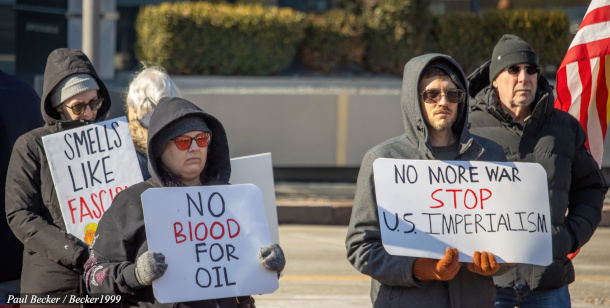
Residents of Columbus, Ohio protest the US invasion of Venezuela in January 2026. Our guest, Michael Klare, says the invasion was another example of oil’s influence on US military operations. (Photo: Becker1999 from Columbus, OH, via Wikimedia Commons, CC BY 4.0)
KLARE: I would say that historically speaking, if you look at the historical record, there's no question that the pursuit of oil has been a major factor in conflict since Churchill's era, when Churchill determined that the British Navy should be powered by oil instead of coal, and nationalized the British Petroleum Company. But as you noted, started out in the Middle East. Since then, oil has been a factor in most wars, one way or the other. And when I taught about this, I would go through this history at length, but turning to current times, the Trump administration's attack on Venezuela, that was directly about oil. Trump wants the US to be able to run Venezuela's oil industry. And now in Iran, Iran is the fourth leading oil producer, and the whole Persian Gulf area is the world's leading producer of oil. So you can't separate oil from the strategic equation. In this case, I would say, it's not that the US is attempting to seize oil in the sense of procuring it for our own use, but rather, this is about controlling the flow of oil around the world, because so much of it, a fifth of world oil every day and natural gas leaves the Persian Gulf. So whoever controls the Strait of Hormuz really controls the global oil flow and thereby controls the world economy. And I think it's the strategic control of the oil flow that's the critical underlying factor in the war with Iran. So oil is still a powerful factor in driving and sustaining warfare.
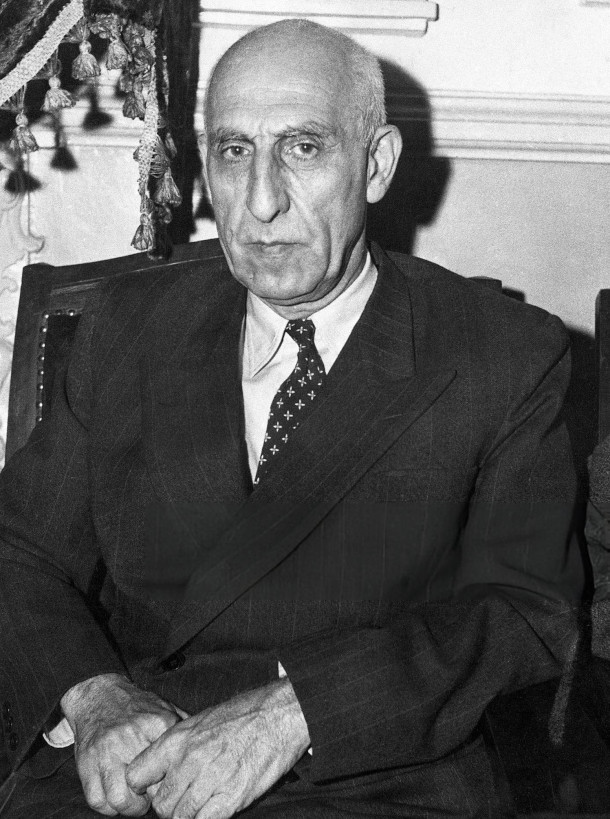
The United States CIA and the United Kingdom orchestrated a 1953 coup to overthrow Iran’s Prime Minister, Mohammed Mosaddegh (above), who had nationalized British Petroleum’s oil holdings in the country. (Photo: International News Photos, Wikimedia Commons, Public Domain)
CURWOOD: Some suggest that when there is conflict around oil, the fossil fuel companies make more money. When the price of gas goes up at the pump for oil that was already pulled out of the ground, it seems to make those fossil fuel companies richer. In fact, in some places there are so called windfall profit taxes. To what extent do you think the private profit-making interest of the fossil fuel industry is a driver of the wars that we are seeing?
KLARE: I would say historically, that was an important factor. But more importantly, it was about first the possession of oil fields. Historically, the United States was highly dependent on imported oil from Venezuela, from Mexico and especially from the Middle East, and those oil fields were owned by American companies. So at first, it was ownership of oil fields that drove wars. The US was unwilling to allow other countries to own those fields, control those fields, or for governments to nationalize them. The root of the crisis in Iran, for example, a very clear case of that is in 1951 when the Iranians elected a nationalist Prime Minister, Mohammed Mosaddegh, who nationalized the British Petroleum holdings in Iran. At that time, that was the leading oil producer in the world. And then the US conspired with the British to overthrow Mosaddegh and to install the Shah, the autocratic ruler who was brought in in 1953, 1954 by the CIA, and he ruled as a dictator for another 15 years or so, suppressing the Iranian clergy who then formed an opposition movement against him and finally overthrew the Shah in 1979, 1980. And that's the regime or their successors who now rule in Tehran, and because of this history of repression under the US backed Shah, they have a bitter, deep hatred of the United States. But this is all to do with the ownership of oil, the possession of oil. Now today, what the oil companies want more than anything is to slow the transition to renewable fuels. So I think they're less concerned with current profits, as you were suggesting, Steve, as with ensuring that governments do not adopt policies to wean us off our dependence on oil. And in the wake of this crisis we're in, there's going to be a lot of pressure in many countries around the world, hopefully in this one too, to say this dependence on oil has gotten us in this trouble that we're in now, and the rising gasoline prices, and so the sooner we transition away from oil, the better off we'll be. But that's where the fight is going to lie.
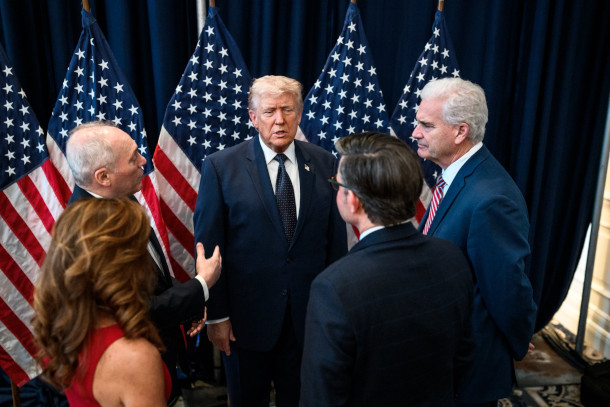
President Trump (center) with Republican House Leadership March 2026. Our guest Michael Klare says President Trump’s policy of discouraging renewable energy investment is a threat to national security. (Photo: Office of Speaker Mike Johnson, Wikimedia Commons, Public Domain)
CURWOOD: Well, in the previous oil choke points, the various embargoes, there was no alternative with renewable energy. But this time, it's different.
KLARE: Yes, indeed, we're very well aware that there are alternatives. Now in light of this crisis, hopefully people in countries around the world will say, maybe this is a wakeup call for us to accelerate that process.
CURWOOD: Now here in the United States, we have a federal government that is actively pushing against the advancement of renewable and clean energy technologies like wind and electric vehicles. And as you say, this war is revealing how disruptive relying on fossil fuels can be. I mean, how do you circle that square?

High gas prices around the world may have many questioning the persistent global reliance on fossil fuels, our guest Michael Klare suggests. (Photo: Oregon Department of Transportation, Wikimedia Commons, CC BY 2.0)
KLARE: You know, this is a predicament that our country has found itself in as a result of the Trump administration's reversal of moves that were being taken under the previous administration to accelerate the transition to green energy. President Trump has disrupted all of those efforts, has blocked wind power and solar power. So he's determined to perpetuate the oil age for as long as possible, and to perpetuate US reliance on coal, on a whole lot of measures he's taken, opening up federal lands to oil and gas exploration, keeping coal plants open. So the consequences for the world will be horrendous, in the sense that there will be higher carbon dioxide emissions coming from the United States, rather than a declining amount, as was the case previously. But on top of that, the United States is going to fall behind other countries like Germany and France and, of course, China, in the installation of renewable energy sources that will give us greater protection against the kind of energy shortages we're seeing right now. One of the ways I often talk about this myself is as a national security matter. Now Donald Trump speaks a lot about national security, and I think he's perverted the use of the term. If you look at what people in the military have been saying to me, they say that climate change poses an existential threat to the survival of the United States of America. It's going to burn our country, flood our country, and deprive our water supplies, and invade our country in ways that no foreign armies are capable of doing, and so switching away from fossil fuels that accelerate climate change is a national security matter.
CURWOOD: Okay, Michael, at this point, what gives you hope? You've been engaged in peace and security studies for decades. What gives you hope about future directions for the United States and the world based on knowing what we need to do?
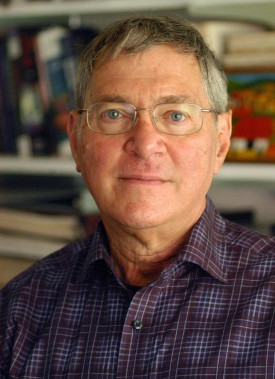
Michael Klare is an emeritus professor of Peace and Security studies at Hampshire College and the defense correspondent for The Nation magazine. (Photo: Hampshire College, Courtesy of Michael Klare)
KLARE: I look for signs of hope all the time, and sometimes it's hard to do that, but I think the one positive outcome of the crisis we're in now, I do think is that people are scratching their head and saying, maybe getting an electric car next time around is a smart move. And I think that's happening around the world. And I think governments around the world are scratching their head and saying, maybe building another coal plant or natural gas plant isn't such a smart move, we should instead invest in solar and wind power. Now that's going to be a struggle, because the fossil fuel companies are going to push back against that, but I do think this is just going to lead people to think twice about their future investments in energy, and demand more reliable, less risky types of energy, and there's no more reliable source of energy than the sun and wind power. So I think people are really going to see more than ever the benefits of converting from fossil fuels to renewable sources of energy.
CURWOOD: Michael Klare is an emeritus professor of peace and security studies at Hampshire College and the defense correspondent for The Nation magazine. Thank you so much, Professor, for taking the time with us today.
KLARE: It's been a pleasure talking with you.
Related links:
- Learn more about Michael Klare
- Le Monde Diplomatique | “The Iran War Exposes a Fragile Energy System”
- Informed Comment | ”How Trump’s Incompetence and Looming Global Catastrophes Intersect”
- Climate & Community Institute | “Two Weeks of War in Iran Unleashed More Carbon Pollution Than Iceland Does in a Year”
[MUSIC: Lance Allen “Rummy Queen” single, guitarlancer]
"Snapping Turtle"
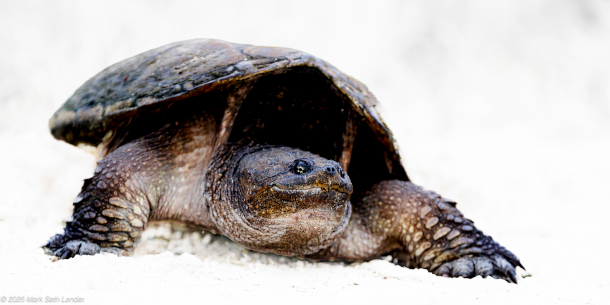
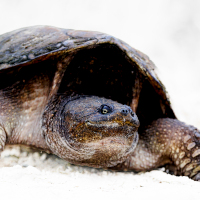
A snapping turtle’s age can be estimated by the rough size and condition of its shell. (Photo: Mark Seth Lender)
CURWOOD: Now that it’s spring in the Northern Hemisphere, before long snapping turtles will be laying their eggs. Living on Earth’s Explorer in Residence, Mark Seth Lender shares this encounter with one mother turtle.
The Snapping Turtle
Seney National Wildlife Refuge
© 2025 Mark Seth Lender
All Rights Reserved
Snapping turtles have taken over the dyke road. As it winds its way through the Seney National Wildlife Refuge the dyke separates the ponds, upper from lower, in a series of cascades. Like the locks on a canal. The snapping turtles crawl up here from those ponds, each one to dig a nest and lay her eggs. They set themselves, clawed feet grasping the earth. And they labor. And will not move. Until the purpose is complete. To drive this road you drive around them. They were here first.
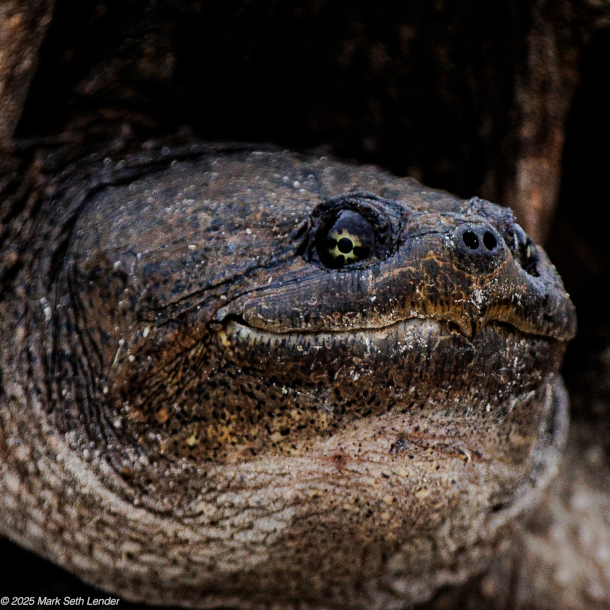
A closeup of a snapping turtle’s eyes. (Photo: Mark Seth Lender)
The shells of snapping turtles tell their age. The measure of their overall size, of course and like tree rings, the concentric circles in the plates. It is much more than this. Putting a number to the years won’t tell you a thing compared to just - looking.
This one in front of me, big and battered, her heavy shell scored and cracked and wounded and healed, many times. Her eyes, the way they take the morning light, gemstones formed in the Earth’s core the color of brown diamond. Age when I look at her, is visceral. It backs towards the vanishing point. Only a snapping turtle. Nothing uncommon. But she has the scent of millennia.
CURWOOD: That’s Living on Earth’s Explorer in Residence, Mark Seth Lender.
Related links:
- U.S. Fish & Wildlife Service | “Snapping Turtle”
- U.S. Fish & Wildlife Service | “Seney National Wildlife Refuge”
- Michigan Department of Natural Resources | “Turtles”
- Michigan State University Center for Lakes and Streams | “Freshwater Friends: Who’s Under That Shell”
[MUSIC: John Fleagle, “Alysoun” on World’s Bliss: Medieval Songs Of Love and Death, a Middle-English love song believed to date between the 12th and 14th century, Magnatune]
CURWOOD: Just ahead, An Alaska Native woman is the 2026 Goldman Environmental Prize winner for North America. Stay tuned to Living on Earth!
ANNOUNCER: Support for Living on Earth comes from the estate of Rosamund Stone Zander - celebrated painter, environmentalist, and author of The Art of Possibility – who inspired others to see the profound interconnectedness of all living things, and to act with courage and creativity on behalf of our planet. Support also comes from Sailors for the Sea and Oceana. Helping boaters race clean, sail green and protect the seas they love. More information @sailorsforthesea.org.
[CUTAWAY MUSIC: Bruce Cockburn, “The End Of All Rivers” on Slice Of Life, by Bruce Cockburn, Rounder Records]
The Indigenous Fight to Save Bristol Bay
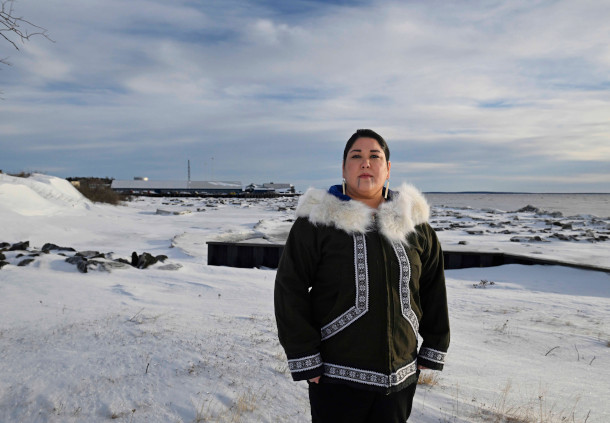
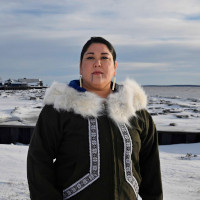
Alannah Acaq Hurley is a Yup'ik leader, executive director of the United Tribes of Bristol Bay, and winner of the 2026 Goldman Environmental Prize for North America. (Photo: Goldman Environmental Prize)
CURWOOD: It’s Living on Earth, I’m Steve Curwood.
In 2001, a Canadian mining company proposed a massive gold and copper mine at the headwaters of Bristol Bay, a pristine water system on the coast of the Alaska Peninsula that’s home to the largest sockeye salmon run in the world. The salmon support a thriving ecosystem and are a cultural and economic lifeblood for native Alaskans, who have stewarded the land and water for thousands of years. And as the company moved ahead with plans to build the largest open pit mine in North America, those indigenous communities joined together to bring it to a halt. In 2023 they secured a rare “EPA veto” of the proposed Pebble Mine, and the 2026 Goldman Environmental Prize for North America recognizes an Indigenous leader in this fight.
HURLEY: My Yup'ik name is Acaq. My Irish name is Alannah Hurley, and I'm the Executive Director of the United Tribes of Bristol Bay.
CURWOOD: And what does Acaq mean?
HURLEY: Acaq is my great-grandmother's name.
CURWOOD: And congratulations on winning this Goldman Environmental Prize.
HURLEY: That's nice, thank you.
CURWOOD: So Alannah, before we start talking about your work protecting Bristol Bay, paint us a picture of the bay. What makes this such a special place?
HURLEY: Bristol Bay is a extremely special place. It has all the different types of terrain in all of Alaska, in one place. Where I live, at the mouth of the Nushagak and Wood River, we have everything from tundra and wetlands to mountains, freshwater lakes, freshwater rivers, the muddy waters of Nushagak Bay, the beautiful, crystal clear ocean waters as you go west towards Togiak and Twin Hills. It's really untouched, pristine beauty, all of Alaska's majesty in one place. It's so pristine you can still hunt and fish and pick berries and eat them straight from the land. You can drink right out of the lake and rivers. It's paradise.
CURWOOD: So Bristol Bay has huge environmental significance, but it's also important to many human communities. I had been told that it produces, what, more than $2 billion of annual revenue from Sockeye fishing alone. It's also an important food source and cultural site for Indigenous communities, First Alaskans. Talk to me about what the bay means to the people in the area.
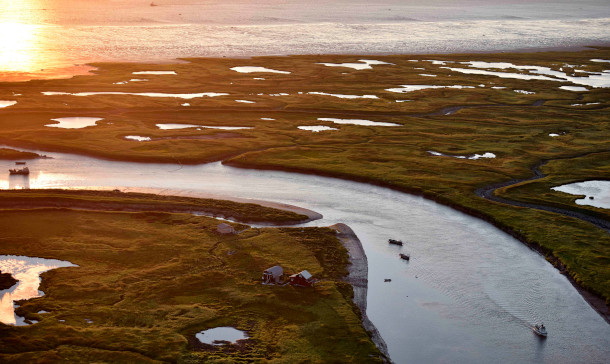
Nushagak Bay in Alaska is home to numerous commercial fishing boats and camps. (Photo: Misty Nielsen for the Goldman Environmental Prize)
HURLEY: So there are three different Indigenous groups in Bristol Bay, the Yup'ik people, the Dena'ina people, and the Alutiiq people. And our homeland, you know, has been stewarded by our people for thousands and thousands of years. They've taken care of this place and entrusted it to us. Our lands, our water, and everything that that entails, the salmon, the moose, the caribou, the bears, us, our freshwater fish, our berries, our plants, our medicines, we very much view it as all very connected. So anything that happens to our lands and waters happens to us. And so it is everything to us. It is the health of our people, physically, culturally, spiritually, it sustains us. It nourishes us. We're so blessed to be able to live in the ways that our ancestors have lived. That kind of foundation is really critical in understanding our perspective and wanting to protect our home.
CURWOOD: So in the year 2001 or so, the Northern Dynasty Minerals mining company proposed the development of what's called the Pebble Mine. It would have been the largest open-pit mine on the continent, one of the biggest, I guess, in the whole world. What would have been the environmental impact of such a project?
HURLEY: The environmental impact of the Pebble project would have been devastation. If you look at a map of Bristol Bay, there are two major river systems, the Nushagak and the Kvichak, and the Pebble Mine would be located at the connected headwaters of both. So you literally could not have picked a poorer location, and in my opinion, it's Creator's test to the people. What are you going to choose? But you could not have picked a worse location to put a low-grade acid-generating project that would have to store tens of billions of tons of toxic waste in perpetuity. That picture is not a question of, if something will happen, but when, especially in an earthquake-prone zone, and in a very interconnected, you know, hydrologically interconnected place, they're like the veins of the bay, like the body, everything is connected, all of that water is connected. And so our people, very early on, came out opposed to the project, because we knew that it would mean the utter devastation of our watershed, our fishery and our people.
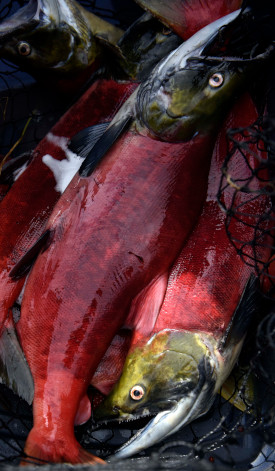
Bristol Bay boasts the world’s largest sockeye salmon run. The fish are crucial to the local ecosystem, indigenous culture, and economy. (Photo: Misty Nielsen for the Goldman Environmental Prize)
CURWOOD: Some say that there are literally hundreds of billions of dollars worth of copper and gold and other minerals in the area for the Pebble Mine. Sounds like a lot of money, but you didn't see this as good news for your community if this got developed.
HURLEY: No, we did not. Early on, before we learned about what type of ore it was, where it was located, what it would mean, what the tailings would mean, people were actually excited for some type of diversification of the economy. Because fisheries can be pretty volatile, and that's how a lot of people would survive in the cash economy as commercial fishermen as well. But it did not take long to learn about those things, the dangers and the threat and the risk that that would cause to our people, and very early on, the vast majority of Bristol Bay's people said, no, no way, this is not worth the risk. You cannot put a price tag on our water and what salmon mean to us as a people. This would be an existential threat to our ability to continue to be Indigenous people in this region, and we will not stop fighting until it is stopped.
CURWOOD: Now, correct me if I'm wrong, but my understanding of a lot of Alaskan politics means that at the state level, there wasn't a huge amount of pushback against this Pebble Mine proposal.
HURLEY: Yeah, our people's concerns were really falling on deaf ears at the state level. We saw the state rewrite our area management plan illegally, without proper input or public process or consultation with our tribes. We saw the governor at the time, really try and pave the way for a mining district, and we're still working to rectify some of those issues in that rewritten management plan to this day. And we're still having issues with the state government really pushing a project on Bristol Bay and Alaskans that they've proven for the last 20 years that they just do not support. And so because our concerns were falling on deaf ears at the state level, our tribal governments really saw the federal government as the place to put some energy, and that was where kind of the petition to the EPA came from, because the state was not listening. They were doing the exact opposite, to really grease the skids for the company to move forward.
CURWOOD: So how did the Environmental Protection Agency, the US Environmental Protection Agency, respond?
HURLEY: So the tribes petitioned in 2010 to prohibit all mines like Pebble within the Bristol Bay watershed. The EPA came back and said, we’re not going to act on a prohibition immediately under our authority under the Clean Water Act, but we are going to study Bristol Bay. We want to do an assessment. And we want to ask, is this place really unique, and what does this fishery mean to the state and people? If this type of development, large-scale hard rock mining, were to move forward, what kind of impact could that have on the waters and people? And so really trying to answer those two main questions, and so they took three years to do a bunch of studies. They were in a lot of different communities, there was a lot of peer review to answer those questions, and after that very long, drawn out assessment, they determined what our people had been saying all along. That this type of development would devastate the water and everyone who was sustained by that water, and so that was really the basis for their action that came later.
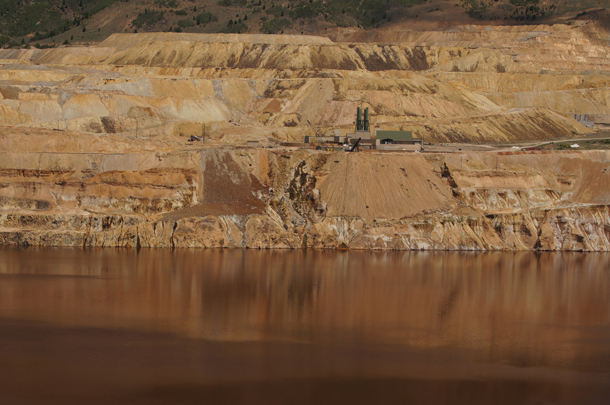
The Berkeley Pit is a former open pit sulfide-ore copper mine located in Butte, Montana that is now filled with heavily acidic water containing arsenic, cadmium, zinc, and sulfuric acid. It’s one of the largest Superfund sites. The proposed Pebble Mine would have resulted in an even larger pit lake with even more room for contaminated water. (Photo: Tjflex2, Flickr CC BY-NC-ND 2.0)
CURWOOD: At the end of the day, how did things turn out with the EPA?
HURLEY: So it was a bit of a roller coaster between the different administrations, but it's really a testament to the dedication of our people and our region, that regardless of the administration, regardless of winning and losing court cases, they did not give up. And so the EPA, in January of 2023, finalized protections to stop the project.
CURWOOD: What's the risk that Trump administration number two could reverse all of that?
HURLEY: There is very much still a risk that that could happen. The company, so Northern Dynasty, the state of Alaska and a few others, have challenged the EPA protections in court, which we anticipated they would. And so far, the Trump administration has continued to defend EPA's action in court, but that is ongoing litigation, and we're not putting all of our eggs in that basket with how unpredictable this administration has been in other arenas. So we're definitely remaining extremely vigilant. And we're continuing to defend the protections in court, and we also are working on legislation that would address the other 20 active mining claims throughout the watershed. Because while we've made great progress, unfortunately, Pebble isn't the only mining claim in the region, and so we're working really hard to put this type of development to bed for good, so that our kids aren't destined to fight project by project, now into eternity.
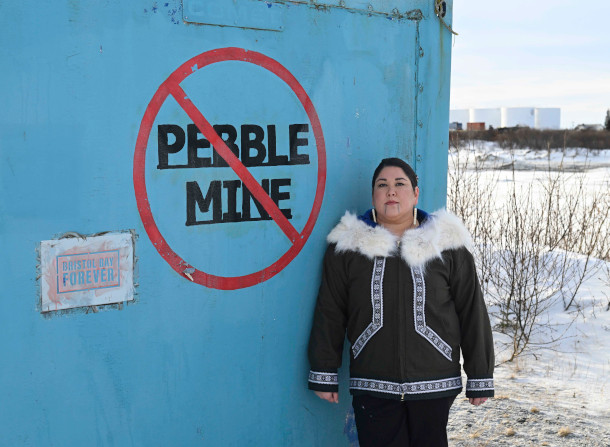
The proposed Pebble Mine project threatened the local waterways and endangered wildlife like the sockeye salmon. After a long fight, the U.S. EPA officially canceled the project in 2023. (Photo: Goldman Environmental Prize)
CURWOOD: You eventually became the Executive Director of the United Tribes of Bristol Bay. How important would you say tribal cooperation has been during this fight?
HURLEY: Tribal unity and cooperation has been absolutely critical. I think in any instance where a coalition is working to protect a place, having Indigenous people leading and centered at the effort is absolutely critical. Local people need to be at the forefront of these fights, and without that unity in the bay, there's no way we would be where we're at today.
CURWOOD: So you were involved in building that coalition, including Native Alaskans, but also other political constituencies, the commercial fisherpeople and such. Talk to me about that. What was it like to build a coalition like that?
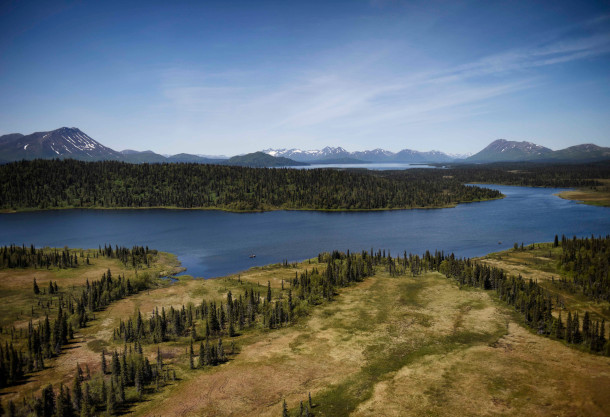
A landscape view near the village of Aleknagik, Alaska. As the executive director of the United Tribes of Bristol Bay, Alannah Acaq Hurley represented over a dozen federally recognized tribal nations and around 80% of the region’s population. (Photo: Misty Nielsen for the Goldman Environmental Prize)
HURLEY: In the case of United Tribes of Bristol Bay, it was really about centering and amplifying the tribal voice and really holding the government accountable for government to government consultation. And there was real unity in that. And I think anytime you're building coalition, it can be challenging. I mean, it's hard to get five people to agree to where you're going to go to dinner, let alone 15 tribal governments from different cultural backgrounds who historically didn't always get along, coming together to fight a common enemy for our continued existence as Indigenous people. That threat really brought us all together in ways that we had never seen before, and that also translated out to non-native groups, commercial fishermen, the conservation community, these aren't people who usually got along. We're used to fighting over fish, [LAUGHS] not working together to protect them, and so anytime you bring different groups together, there's going to be bumps in the road. At the end of the day, the connections between people, the relationships and the commitment to work through hard moments, and there were a lot of hard moments. [LAUGHS] And I think a commitment by especially non-native folks, to be in a respectful relationship with Native people and us having that requirement, like, if we are going to be partners, this is how we expect to engage, I think really helped lay the groundwork for a successful coalition. But like I said, that's never easy, it's never pretty, but it was really the people to people relationships, those kind of connections, held us together even in the hard times.
CURWOOD: Now you've spoken about your grandmother's influence and the values that propelled you through this journey. What lessons have you learned from that that have motivated you to keep going?
HURLEY: Yeah, my grandmother was Mancuaq, when I was raised with her in Clark's Point in Bristol Bay. And it's hard for me not to get emotional talking about her, because even now, even in all the different experiences in my life, and everything important, the most important things that have helped me navigate life in a way that has been good and, you know, really grounded in love and respect and kindness came from her. Also the ability to persevere when things are tough. She passed away in 2019. Sorry, I just gotta take a moment.
CURWOOD: Of course.
HURLEY: I obviously still miss her a lot. Just to continue, she provided me the foundation of values, of how to move forward and live in this world in a good way. And our people have had those teachings for centuries, timeless, timeless teachings of what it means to be a good, real human being on the planet. And that foundation has helped me in life in invaluable and countless ways, and it continues to do so every day.
CURWOOD: And by the way, Alannah, did you know your mother's grandmother?
HURLEY: I did not. She passed away before I was born. In true Yup'ik tradition, we, we name children after people who have passed in the practice that their spirit continues on in the person that takes their name.
CURWOOD: And to what extent have you felt that spirit, do you think?
HURLEY: If you ask my grandma, all the time, all the time. And I feel like I feel that spirit and her spirit with me, always, always, always. And I actually named my daughter Mancuaq, after my grandma. My daughter was born just shortly after my grandma passed, and I see, I see her in her every single day, feisty [LAUGHS] in all the good ways.
CURWOOD: [LAUGHS] Hey, what's in that mitochondria that you women pass along to your girl children?
HURLEY: [LAUGHS] Something special Steve, some magical stuff, for sure.
CURWOOD: What do you see the future of Bristol Bay to be? What does it look like in the future, do you think?
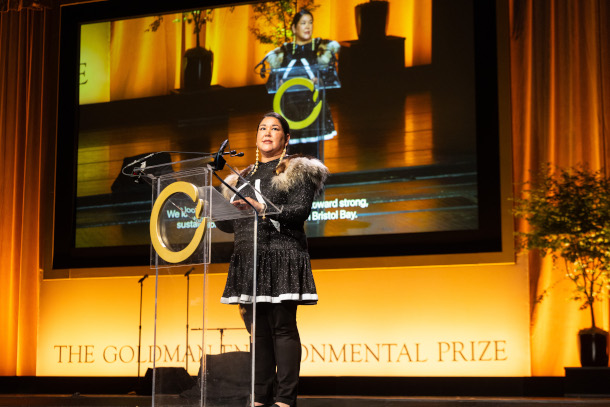
Alannah Acaq Hurley at the Goldman Environmental Prize award ceremony. (Photo: Goldman Environmental Prize)
HURLEY: The future of Bristol Bay is beautiful. We are still struggling with the impacts of colonization, but we have only begun our healing, our reclamation, our revitalization of who we are as Indigenous people, and we have been so lucky that even through all of that and all of those challenges, our people have been able to remember and retain and still pass on our values and way of life. And I'm just so excited. I feel like the potential to be a model of sustainability for the world led by Indigenous communities in modern society is boundless, and so I'm really excited and hopeful that our region can shift from having to put our energy in defense of our homelands, to now build, help build something beautiful and tackle some of the tough issues that we're facing.
CURWOOD: Alannah Hurley is the North American winner of the Goldman Environmental Prize this year and Executive Director of United Tribes of Bristol Bay in Alaska. Thanks so much for taking the time with us today.
HURLEY: Yeah, thank you so much for having me. I really appreciate it.
Related links:
- Alannah Acaq Hurley profile at The Goldman Environmental Prize
- The Goldman Environmental Prize
- Watch The Goldman Environmental Prize video profile of Alannah Acaq Hurley
[MUSIC: River Guerguerian-percussion/James Kylen-percussion/Max Dyer-cello/ Joshua Messick-hammered dulcimer, “Woodland Dance” on Woodland Dance-An Instrumental Outlook Of the Blue Ridge]
CURWOOD: This year the Goldman Environmental Prize for Asia goes to a young woman who led the effort to get the South Korean Supreme Court to honor the country's climate commitments:
KIM [SPEAKING THROUGH TRANSLATOR]: I was inside the courtroom with my colleagues, and I can't describe the exact emotion that I felt in that moment, but we were all crying. We saw that the Korean government recognizes that anybody should be able to be protected in the face of the climate crisis, and the decision was a checkpoint that confirmed the Korean government's responsibility to protect its citizens.
CURWOOD: Youth power to advance climate progress...that's next time on Living on Earth.
[MUSIC: River Guerguerian-percussion/James Kylen-percussion/Max Dyer-cello/ Joshua Messick-hammered dulcimer, “Woodland Dance” on Woodland Dance-An Instrumental Outlook Of the Blue Ridge]
CURWOOD: Living on Earth is produced by the World Media Foundation. Our crew includes Naomi Arenberg, Paloma Beltran, Sophie Bokor, Jenni Doering, Swayam Gagneja, Mark Kausch, Mark Seth Lender, Don Lyman, Ashanti Mclean, Aynsley O’Neill, Sophia Pandelidis, Jake Rego, Andrew Skerritt, Bella Smith, Julia Vaz, El Wilson, and Hedy Yang. We bid a fond farewell to Nana Mohammed this week. Tom Tiger engineered our show. Alison Lirish Dean composed our themes. Special thanks this week to Seney National Wildlife Refuge. You can hear us anytime at L-O-E dot org, Apple Podcasts and YouTube Music, and like us please, on our Facebook page, Living on Earth. Find us on Instagram, Threads and BlueSky @livingonearthradio. And we always welcome your feedback at comments at loe.org. I’m Steve Curwood. Thanks for listening!
ANNOUNCER: Funding for Living on Earth comes from you, our listeners, and from the University of Massachusetts, Boston, in association with its School for the Environment, developing the next generation of environmental leaders. And from the Grantham Foundation for the protection of the environment, supporting strategic communications and collaboration in solving the world’s most pressing environmental problems.
ANNOUNCER 2: PRX.
Living on Earth wants to hear from you!
Living on Earth
62 Calef Highway, Suite 212
Lee, NH 03861
Telephone: 617-287-4121
E-mail: comments@loe.org
Newsletter [Click here]
Donate to Living on Earth!
Living on Earth is an independent media program and relies entirely on contributions from listeners and institutions supporting public service. Please donate now to preserve an independent environmental voice.
NewsletterLiving on Earth offers a weekly delivery of the show's rundown to your mailbox. Sign up for our newsletter today!
 Sailors For The Sea: Be the change you want to sea.
 The Grantham Foundation for the Protection of the Environment: Committed to protecting and improving the health of the global environment.
 Contribute to Living on Earth and receive, as our gift to you, an archival print of one of Mark Seth Lender's extraordinary wildlife photographs. Follow the link to see Mark's current collection of photographs.
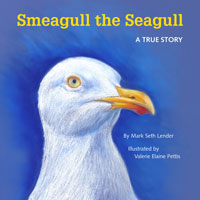 Buy a signed copy of Mark Seth Lender's book Smeagull the Seagull & support Living on Earth
© Copyright World Media Foundation. All Rights Reserved
Home | Contact | RSS | Donate | Newsletter