

March 27, 2026
Air Date: March 27, 2026
FULL SHOW
SEGMENTS
Climate Resilience Grants Resume
View the page for this story
A federal judge recently issued an enforcement order mandating the release of funds from FEMA's Building Resilient Infrastructure and Communities or BRIC program, which the Trump administration had stalled. Alice Hill, a senior fellow at the Council on Foreign Relations, and the former senior Resiliency Director on the National Security Council for President Obama, discusses with Host Steve Curwood why money spent to protect critical infrastructure from disasters like storms, floods and wildfires pays for itself many times over. (14:36)

BirdNote®: Meet the Tiniest Owl in the World
/ Michael SteinView the page for this story
At just six inches tall, the desert-dwelling Elf Owl is the smallest known species of owl in the world. As BirdNote®’s Michael Stein reports, despite its tiny stature the Elf Owl is a fierce predator of crickets, scorpions, and mice. (01:58)
The Story of CO2 is the Story of Everything
View the page for this story
Over billions of years of its history, the planet has frozen over almost completely and then lost all its ice as crocodiles basked in a balmy Arctic. Carbon-based life arose and adapted to all this change. And at the center of it all is the notorious greenhouse gas, carbon dioxide, the focus of journalist Peter Brannen’s book The Story of CO2 Is the Story of Everything: How Carbon Dioxide Made Our World. He joins Host Jenni Doering to describe the extreme climate whiplash of Earth’s past. (21:00)
A Woolly Rhino DNA Discovery
View the page for this story
A recent discovery is giving us insights into the last days of the woolly rhinoceros in Siberia before it went extinct some 14,000 years ago. Researchers studied the DNA of a well-preserved piece of woolly rhino meat that was the last meal of a wolf pup. Study coauthor Camilo Chacón-Duque, a bioinformatician at Uppsala Universitet, speaks with Host Jenni Doering. (07:41)
Show Credits and Funders
Show Transcript
260327 Transcript
HOSTS: Jenni Doering, Steve Curwood
GUESTS: Alice Hill, Paasha Mahdavi, Peter Brannen, J Camilo Chacón-Duque
REPORTERS: Michael Stein
[THEME]
CURWOOD: From PRX – this is Living on Earth.
[THEME]
CURWOOD: I’m Steve Curwood
DOERING: And I’m Jenni Doering. A judge rebukes FEMA for dragging its heels on resilience grants.
HILL: It’s a very important program. It focuses on reducing damage before disasters strike. And it was designed to help Americans better survive in a world with worsening extremes.
CURWOOD: Also, how “the story of CO2 is the story of everything.”
BRANNEN: Basically the legacy of the entire history of life on Earth, in the past few centuries we’ve brought up to the surface and basically just lit it on fire. So there’s no way to do that without completely transforming the surface of the planet. And, I think sometimes we don’t really appreciate how uncanny and weird it is that we’re digging up all the plant life that’s ever existed in Earth history and putting it to work for us.
DOERING: And a discovery of ancient woolly rhino DNA.
We’ll have that and more, this week on Living on Earth. Stick around!
[NEWSBREAK MUSIC: Boards Of Canada “Zoetrope” from “In A Beautiful Place Out In The Country” (Warp Records 2000)]
[THEME]
Climate Resilience Grants Resume
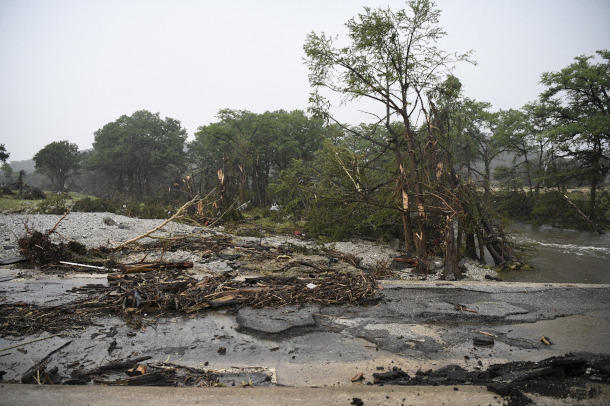
Devastation from the July 4, 2025 floods in Central Texas. FEMA’S decision to cut the Building Resilient Infrastructure and Communities Program (BRIC) stopped nearly 700 disaster preparedness projects across the United States. (Photo: World Central Kitchen, Wikimedia Commons, CC BY 4.0)
DOERING: From PRX and the Jennifer and Ted Stanley studios at the University of Massachusetts, Boston. This is Living on Earth. I'm Jenni Doering.
CURWOOD: And I'm Steve Curwood. In its rush to cut budgets and slash programs considered too progressive by the second Trump administration, a fair amount of chaos has resulted, and a prime example is resiliency funding for states to help save lives and disaster expense. An exasperated federal judge in Massachusetts, Richard Stearns, recently issued an enforcement order mandating the release of funds from FEMA's Building Resilient Infrastructure and Communities or BRIC program.
DOERING: This money is of the ounce of prevention is worth a pound of cure variety to avoid spending many billions of dollars needed to clean up after climate related disasters such as storms, floods and wildfires, but it was abruptly terminated in the middle of a $4 billion grant cycle in April of 2025 upending budgets in 22 states.
CURWOOD: FEMA claimed BRIC was rife with "waste, fraud and abuse, and politicized" code words commonly used by the Trump administration to block what it considers woke climate action. Joining us is Alice Hill, a senior fellow at the Council on Foreign Relations, and the former senior Resiliency Director on the National Security Council for President Obama. Welcome back to Living on Earth.
HILL: Thanks for having me, my pleasure.
CURWOOD: So what is the Building Resilient Infrastructure and Communities Program, or BRIC?
HILL: It's a very important program. It focuses on reducing damage before disaster strikes. So typically, our model has been post disaster we'll try to clean up and fix things, but if you invest ahead of time, you can greatly reduce the damage. BRIC is a program passed by Congress in 2018 that was the largest pre-disaster mitigation program ever offered by the federal government. Substantial money involved, and it was designed to help Americans better survive in a world with worsening extremes.
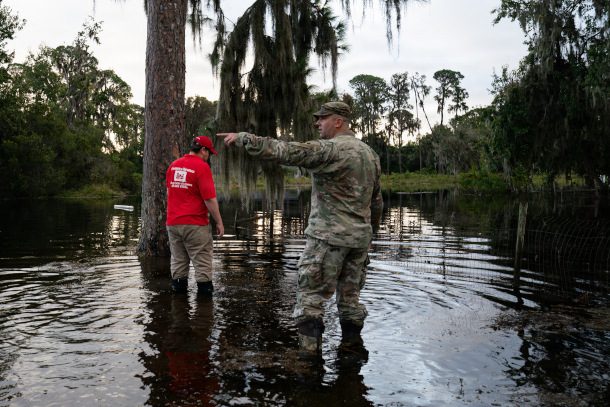
Pictured above is U.S. Army Corps of Engineers (USACE) Jacksonville District Deputy Commander Maj. Matthew Westcott (right) and his liaison officer (Jake Edwards, left), responding to flood impacted communities in Lake County Florida. Florida was one of the many states impacted by FEMA’s cut to the BRIC program. (Photo: US Army photo, Brigida I. Sanchez, Wikimedia Commons, Public Domain)
CURWOOD: How much did the program cost back then, and how much money do you think it saved?
HILL: Well, the program costs somewhere close to 6% a year of all the money that the federal government spends on disaster or up to 6 percent. So years it's been in force since 2018 federal government has spent about $4.5 billion on the programs. The savings, you have to look further back, but over the last several decades, according to 22 states plus the District of Columbia that sued FEMA to get the program going again, the program and other similar programs have saved the federal government taxpayers $150 billion in a couple of decades. That's a lot of savings. And just to show you how significant this could be, cost-benefit analysis shows that, on average, every dollar that the federal government spends on reducing disasters before they strike saves $6 in recovery costs. But if you look at something like building codes for every $1, $11 and then if you get the culverts, making just your culverts wider so they can have more flood waters pass through, II'm told by an Army Corps of Engineer leader that it can be $25 for every dollar you spend. So there's huge payoff. And this is in the interest of all of us. It means the federal government isn't on the hook when disaster strikes for as much to help communities bounce back and get back to business.
CURWOOD: So let's say that I was representing a state or a community and was concerned about the lack of these funds. What would I be saying that my community, my state would need? How would it help the state mitigate a storm or a earthquake or something like that?
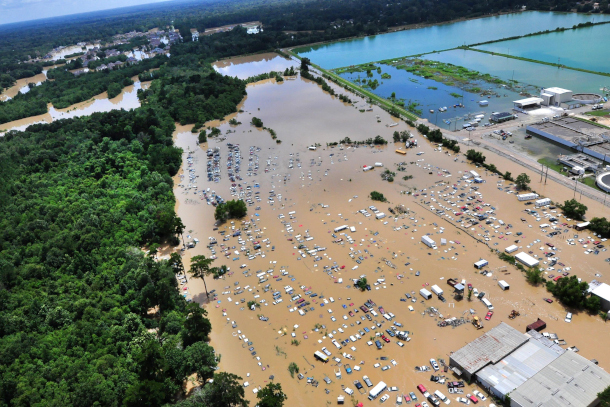
Pictured above is a view from an MH-65 Dolphin helicopter showing flooding and devastation in Baton Rouge, LA on Aug. 15, 2016. (Photo: Melissa Leake, Coast Guard, Wikimedia Commons, CC BY 2.0)
HILL: Well, the BRIC program gave out funds for all kinds of projects. So let's say you have wildfire. It could be for brush clearance. You've mentioned storms. It could be for widening the culverts. It could be for doing a sea wall. It could be for elevating a hospital so that critical infrastructure doesn't get flooded, like we saw in Sandy and the hospitals went dark and we were evacuating people down darkened stairwells because the generators were in the basement. It can be utility hardening so you don't have a substation flooded out during a storm, also something that happened during Sandy and it can be just to make sure that the pumps work for a city like New Orleans in extreme rainfall, it's important that those pumps keep moving the water out of the city to keep the city safe. So all kinds of investments in actual projects, but it also could be used for building codes, and building codes are one of the most important ways to have resilience. So FEMA, under President Biden, had put great emphasis on building codes and then the enforcement of building codes to help local communities have better building practices, so they had stronger buildings. The roof is screwed down, for example, and doesn't blow off in a storm, or the structure is elevated, or there's ceiling of the roof so water doesn't penetrate.
CURWOOD: So please describe for me some of the communities across the United States that benefited from the BRIC program when it was in operations. What projects are we talking about?
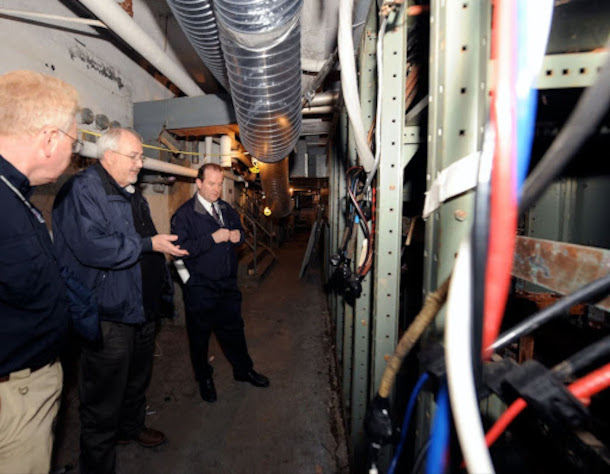
After Hurricane Sandy in 2012, then-FEMA administrator Craig Fugate (center) speaks about mitigation steps to Coney Island Hospital, which was badly damaged during the storm with seawater flooding its basement and emergency room. To his left is FEMA Federal Coordinating Officer Michael Byrne, and to his right is Coney Island Hospital Director of Facilities, Daniel Collins. (Photo: National Archives at College Park - Still Pictures, Wikimedia Commons, Public Domain)
HILL: Well, we've had some projects, very important projects in New York, for example, and New York has been a leader in resilience. So lower Manhattan had a $50 million grant to reduce flooding and integrate flood protection into public spaces so it could improve waterfront access, and then those public spaces would also absorb rainfall because there was more green space. In California the emphasis is not all climate worsened events. In California, there was an emphasis on seismic retrofit. So to make sure the hospitals, if there's a big quake could continue to operate very, very important to have your health care system secure in the course of an event. Detroit has had chronic basement flooding, and then, because there's basement flooding, the sewers overflow and that it's just a health risk and just a foul event, and they received $20 million to install new sewer mains. In Greenville, North Carolina there were efforts to address repeat flooding from hurricanes, helping various households with reducing flooding. So we've seen a spread of projects across the United States. I will say, when the program was first started, early on, there were some problems with richer, more affluent communities being able to access these funds, and poor, more vulnerable communities less able to present the kind of proposals that won awards of money.
CURWOOD: What's going on right now in terms of distributing this money? Now that a judge has said to the Trump administration, “Nope, you've got to reinstate this program.”
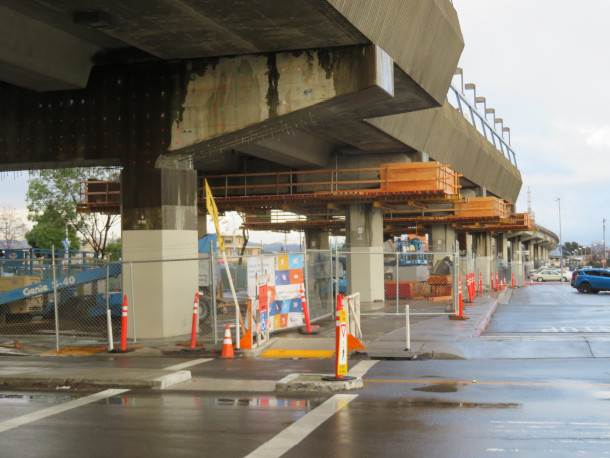
Shown above is seismic refit work, to protect infrastructure from potential earthquakes, being done at Fruitvale station in Oakland, CA in March 2018. (Photo: Pi.1415926535, CC BY-SA 3.0, Wikimedia Commons)
HILL: Well, it's really interesting how this unfolded. Judge Stearns issues his permanent injunction in December 2025 basically saying, “FEMA, you got it wrong, you cannot stop this program on your own, you need to get going again.” They don't do much. So the states come in and file a motion to enforce the order that the judge had issued, and the judge, on March 6, issues an order and says “FEMA's told me they've been really busy, but that's not good enough, they have to do more.” And he sets forth a whole list of things that FEMA needs to do in the next few weeks, like unfreeze the funds and give mandatory status updates and issue a notice of funding. So he's tightened the leash very dramatically, and he's going to oversee the implementation of the order. Well before the time limit has run, FEMA issues a press release just days before the order that the judge has entered is coming into effect, makes no mention of the order and says, “Oh, we are now embracing mitigation, if it's done right,” and they state that they will now go ahead and operate the BRIC program. I found it really interesting that there was complete omission of the legal action, and then they say bluntly in the press release, “When done correctly, mitigation activities save lives and reduce the cost of future disasters.” Well, that was true before the lawsuit was filed, and it's true after but now they are re-engaging on the BRIC program. It remains to be seen. I imagine there'll be further litigation to make sure that FEMA is doing what the judge has ordered it to do.
CURWOOD: So environmental and science programs have been cut across the board by the Trump administration. What do you think the reopening of the Building Resilience, Infrastructure and Communities Program says about how the courts are reacting to this administration?
The Building Resilient Infrastructure and Communities Program, or BRIC, is a pre-disaster mitigation program passed in 2018, and administered by FEMA. (Photo: Andy Feliciotti, Unsplash, Unsplash License)
HILL: The courts have put the brakes on some Trump actions. They have made it clear that they expect their orders to be followed, and they have expressed frustration when the orders are not followed or as we saw here in this instance, a flip-flopping of positions. And once you get into the courtroom, a judge will often look to pinning down one side or the other as to what their actual position is, so that the case can move forward. So we see greater assertion by the judges of authority to make sure that the Trump administration moves forward and does what it says it's going to do. I was a former prosecutor. I was a former assistant United States attorney, and one of the things as an assistant United States attorney, I benefited from the assumption that when I spoke for the federal government, that the federal government was speaking truthfully, so there was some deference to me by the judges from the court. I think that's been eroded because so many Trump lawyers have not been able to state a firm position of the government, and have not followed through in making sure that the government complies with orders. So there has been an erosion of that presumption that the prosecutor is doing their job properly.
CURWOOD: What are some of the areas across the US that are in desperate need of these climate and other natural disaster resiliency programs?
HILL: Well, another effort that was undertaken in recent years is to identify particular communities, looking at census tracts that are highly vulnerable to disasters, but also economically vulnerable, and they created these community Disaster Resilience Zones, CDRZ, and BRIC was now tied to that program to make sure that applicants from those areas were benefited by BRIC, so that it wasn't just affluent communities with more planners, more consultants that ended up with the funds, but instead, these communities in these zones of vulnerability and hazard would end up with adequate funding to help their projects. Many of these are rural communities, and the cost benefit analysis isn't as strong because you have fewer people than you do, say, in lower Manhattan, that benefit from the project, but they still need help. So that it was a major effort under the Biden administration to get some kind of analysis to better share the proceeds of BRIC.

Alice Hill is a senior fellow for energy and the environment at the Council on Foreign Relations, an independent think tank and publisher. During the Obama administration, Hill served as special assistant to the President and senior director for resilience policy on the National Security Council, where she led the development of policy addressing national security and climate change. (Photo: Alice Hill)
CURWOOD: When you were working with the National Security Council about emergency preparedness and the prospect of disasters, gave you insight as to where we stand. So let me ask you this, where does the US stand on climate and natural disaster preparedness?
HILL: The US is not particularly well prepared. We are very wealthy country, and we do have a lot of systems and assets in place, but we are at a juncture right now where FEMA, under President Trump, is pulling back from supporting the states and telling the states, “No, you need to be the folks that are ready when disaster strikes.” That's a political decision, I think you can argue either side of that. But at this moment, we have a system of states dependent on the federal government to purchase fire trucks, for example, to train their police officers, their firefighters, what have you and instead, all of a sudden, that money is no longer there, the training is no longer available, and these states are scrambling to figure out how in their budgets they're going to cover the deficits that were created by the pullback of funds. More broadly, we do not have a national adaptation or resilience strategy. So we are not like the Netherlands, China, France, doing iterations of our adaptation plans to be better prepared for events that can crush us and crush communities. We just are still debating whether climate change is occurring, whether it's woke. The Trump administration has called a disastrous ideology in our national security strategy, so we aren't putting front and center the concern that these events are going to be bigger than what we've ever experienced. So we need to adjust how we get ready for them.
CURWOOD: Alice Hill is the senior fellow for Energy and the Environment at the Council on Foreign Relations. Thank you so much for taking the time with us today.
HILL: Oh, thank you. What a pleasure.
Related links:
- The New York Times | "FEMA to Relaunch Climate Resiliency Grants, Complying With Court Order"
- AP News | “FEMA Will Resume Major Grant Program After Yearlong Hiatus, Following a Court Order”
- FEMA | “FEMA Announces $1 Billion in Federal Funding to Help States Mitigate Impact of Disasters”
- Learn more about Alice Hill
[MUSIC: Rush, “The Trees” on Hemispheres, Geddy Lee, Neil Peart, Alex Lifeson, The Island Def Jam Music Group Inc. 1978]
DOERING: Coming up, the time the planet became a giant snowball, and other climate chaos from way, way back in deep time. Keep listening to Living on Earth.
ANNOUNCER: Support for Living on Earth comes from the Waverley Street Foundation, working to cultivate a healing planet with community-led programs for better food, healthy farmlands, and smarter building, energy and businesses.
[CUTAWAY MUSIC: Oscar Peterson Trio, “D & E” on We Get Requests, comp. by Lewis, Jim Davis, The Verve Music Group 1964]
BirdNote®: Meet the Tiniest Owl in the World
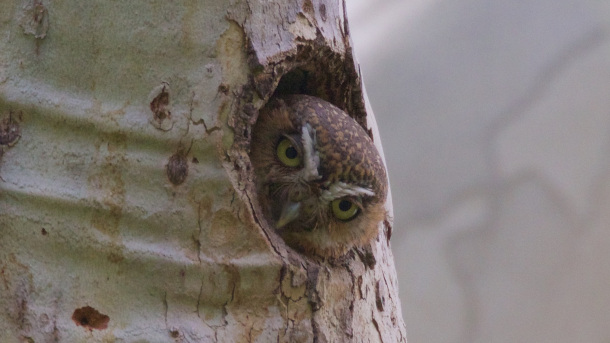
Elf owls are the smallest known species of owl. (Photo: Bettina Arrigoni, Flickr, CC BY 2.0)
DOERING: It’s Living on Earth, I’m Jenni Doering.
CURWOOD: And I’m Steve Curwood.
[BIRDNOTE THEME]
CURWOOD: Here in North America the spring migration is in full swing, as birds big and small return to breeding and nesting grounds. BirdNote®’s Michael Stein shares a glimpse of a pint-sized traveler that just came back to the Southwestern U.S.
BirdNote®
Meet the Tiniest Owl in the World
Written by Bob Sundstrom
This is BirdNote.
[Elf Owl song]
As twilight deepens along a dry desert stream bed, a tiny owl peers out from a hole in a sycamore tree. It’s an Elf Owl, the smallest species of owl in the world.
[Elf Owl song]
Standing less than six inches tall, with gray feathers and big yellow eyes, the Elf Owl weighs less than an ounce and a half — a bit less than a golf ball.
[Elf Owl song]
And they’re determined predators. Flying out from its tree cavity at dusk, the Elf Owl hunts beetles, crickets and spiders, plus the odd lizard or mouse. Larger prey such as scorpions — with the stingers carefully removed — may end up cached in the nest for later dining.
[Elf Owl song]
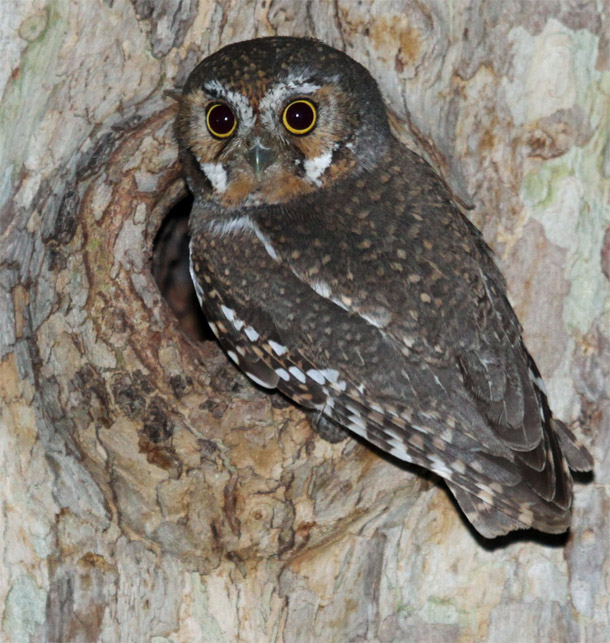
An average elf owl is under 6 inches in height and can weigh as little as 1.2 oz. (Photo: BBODO, Wikimedia Commons, CC BY 3.0)
Elf Owls live in woodlands and desert cactus habitats in northwest Mexico and along the border of the southwest U.S. They often nest in woodpecker holes in tall saguaro cactus. They depart their breeding range by October to central and southern Mexico, where insects are more available in winter. But spring comes early to the desert, and the minuscule owls return by late February or March, ready to begin their breeding season.
[Elf Owl song]
I’m Michael Stein.
###
Senior Producer: Mark Bramhill
Producer: Sam Johnson
Managing Editor: Jazzi Johnson
Content Director: Jonese Franklin
Bird sounds provided by The Macaulay Library of Natural Sounds at the Cornell Lab of Ornithology, Ithaca, New York. Elf Owl ML105533 recorded by Geoffrey A. Keller, and Elf Owl ML 188270 recorded by Bob McGuire.
BirdNote’s theme was composed and played by Nancy Rumbel and John Kessler.
© 2025 BirdNote March 2025
Narrator: Michael Stein
ID# ELOW-01b-2017-03-14 ELOW-01b
Good source: http://www.audubon.org/field-guide/bird/elf-owl
CURWOOD: For pictures, flit on over to the Living on Earth website, loe dot org.
Related link:
Listen to this story on the BirdNote ® website.
[MUSIC: Hermanos Gutiérrez, “Hijos del Sol” on Hijos Del Sol, Daniel Alejandro Hotz and Stephan Ricardo Hotz, 2020]
CURWOOD: Interested in gaining hands-on experience with producing a radio show and podcast? Apply to be a Living on Earth intern this summer! We’re now accepting applications and to learn more, go to loe.org and click on the About Us tab at the top of the page. That’s L-O-E dot O-R-G.
[MUSIC: Hermanos Gutiérrez, “Hijos del Sol” on Hijos Del Sol, Daniel Alejandro Hotz and Stephan Ricardo Hotz, 2020]
The Story of CO2 is the Story of Everything
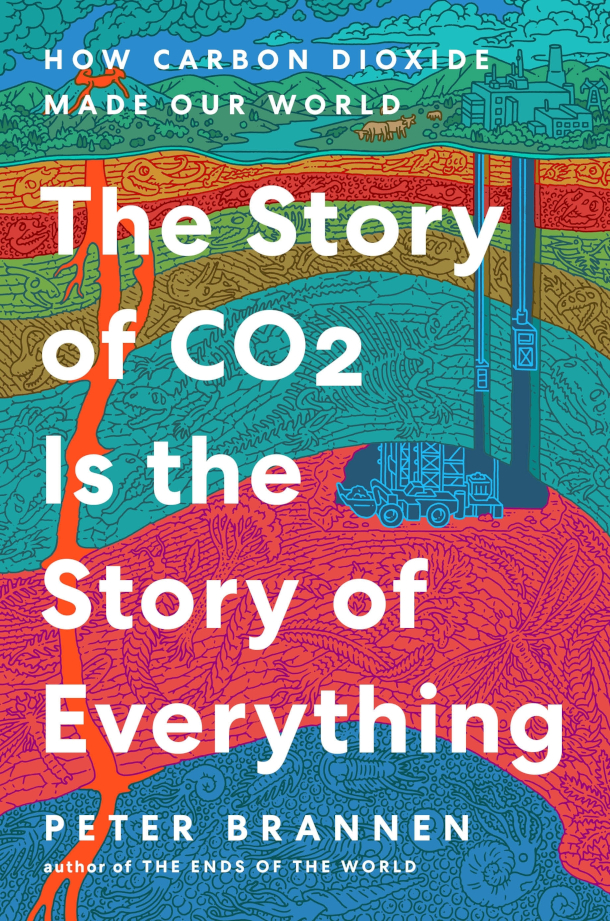
Published in August of 2025, The Story of CO2 Is the Story of Everything explains how crucial carbon dioxide is for life on Earth. (Photo: Courtesy of Ecco Press)
DOERING: Over billions of years of Earth history, the planet has gone through a lot of change — to put it mildly. Earth froze over almost completely, more than once, and then lost all its ice as crocodiles basked in a balmy Arctic.
CURWOOD: Over and over, continents have collided to form supercontinents like Pangea and then been wrenched apart again. And, of course, carbon-based life arose, adapting to all this change and eventually leading to you and me.
DOERING: Well, much of all this has to do with the notorious greenhouse gas, CO2. And to explain how, journalist Peter Brannen wrote The Story of CO2 Is the Story of Everything: How Carbon Dioxide Made Our World. He joins me now. Welcome to Living on Earth!
BRANNEN: Thanks so much for having me.
DOERING: So one of my favorite quotes from the book is from the intro, and it goes, "Today, as in the beginning, life is still made out of carbon dioxide, and the world's problems are made out of carbon dioxide as well." This feels to me like a thesis for the whole book. Can you talk to me about that?
BRANNEN: Yeah, so my motivation for writing the book was sort of to pull back from the headlines and reintroduce people to this thing that they read about in the news, carbon dioxide as this industrial pollutant that comes out of smokestacks that causes warming and all these bad things on our planet. I mean, I sort of wanted to reintroduce the reader to this idea that this stuff, CO2, for some reason, really is fundamental to how the planet operates and has been maintained over hundreds of millions of years, and that while in certain times in Earth history, like right now, when lots of it goes into the atmosphere all at once, it causes warming and all sorts of scary stuff. But in the bigger picture, it has this sort of miraculous centrality to the story of life on Earth, where not only does it cause warming when there's too much of it, it also maintains a habitable temperature for animal life on Earth. If you took it all out of the atmosphere tomorrow, the temperature would drop by something like 60 degrees Fahrenheit in a half century, and probably freeze the ocean of the tropics. But there's also this other miraculous feature of it, that all life is literally made out of the stuff. So I'm sure people have heard that we're carbon based life here on Earth, and the source of that carbon is CO2. So our story, as the story of all animal life, has been one of living off of this magic trick, photosynthesis, that turns CO2 into the stuff of life. At the same time that we have this habitable planet where the temperature is just right for animal life, which is pretty finicky and can only live within a pretty narrow temperature range. I weave those two threads together and sort of today, the story is the cataclysmic collision of those two features.
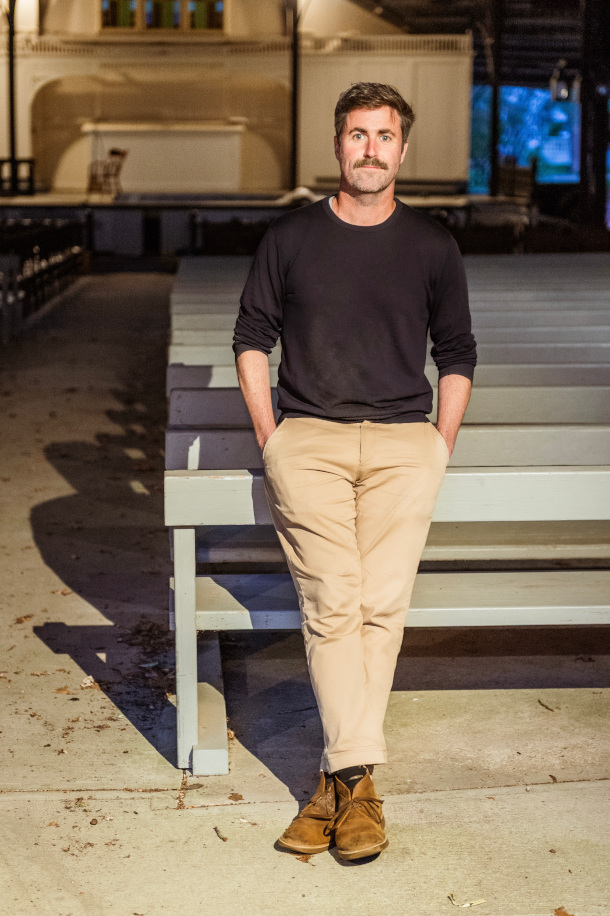
Author of The Story of CO2 Is the Story of Everything , Peter Brannen is also an award-winning science journalist and contributing writer at The Atlantic. (Photo by Ray Ewing)
DOERING: One of my favorite parts about reading your book was how much I felt like I was there watching Earth history unfold like some kind of film on fast forward. And one of the really fascinating parts about this Earth history is the numerous times when the climate really went haywire, and CO2 has a lot to do with that. So talk to me about what on earth happened when the planet turned into Snowball Earth?
BRANNEN: Yeah, so it's kind of incredible. Over hundreds of millions of years, for the most part, the planet has navigated this really narrow window of habitability, but sometimes things go haywire in ways that are relevant to our current moment. I talked about extreme greenhouses when CO2 goes up too fast in Earth history, hundreds of millions of years ago. But then, yeah, I also talked about this thing, Snowball Earth, around 700 million years ago. There's a couple amazing things about Snowball Earth. One is just how severe it is. So what it is — it's almost exactly what it sounds like — a global glaciation that lasts for 60 million years, briefly thaws, and then goes back into a basically global glaciation again for a couple million years longer. And so it's incredible, because it's both so extreme, the temperature at the poles might have been almost cold enough to freeze out CO2 from the atmosphere, like you only see that on Mars. So we're not even talking about Earth anymore. This is like a different planet.
DOERING: Wow, frozen CO2 at the poles. Wow.
BRANNEN: Yeah, which is potentially incredibly dangerous because you could potentially get into like a fatal, eternal Snowball Earth. Animal life would never arise. The other amazing thing about Snowball Earth is after it's over, after 4 billion years, where the most interesting thing the planet has made to that point is microbial muck. In the wake of Snowball Earth, you get this explosion of large, complex life, and eventually the rise of animal life. But it's a CO2 story like you know all the others in my book because one of the leading ideas for why the Earth suddenly plummets into this ice catastrophe is that, just how we're worried about CO2 going up too fast today and getting too warm, you can also have this other threshold on the other side, where, if it drops down too far, you can potentially drop into this ice albedo planetary catastrophe, where, you know, it almost freezes solid.
While CO2 can cause planetary warming, it’s also fundamental to maintaining a habitable temperature for animal life, including human life, on Earth. (Photo by Matthias Heyde on Unsplash)
DOERING: Wait, so why did the world not stay forever frozen?
BRANNEN: Well, I guess to set this up I need to explain what these big geological processes are that sequester CO2. And the main one over millions of years is this thing called rock weathering, which is kind of just what it sounds like, which is when CO2 reacts with rain water, it makes it more acidic, and that rain water reacts with rocks, and eventually what was once CO2 in the air gets washed out into the oceans and precipitates as things like shells and limestone. And so, what was once CO2 becomes, you know, rock at the bottom of the ocean. That's the planet's main sort of thermostat for getting rid of the stuff. But in Snowball Earth, when you suddenly cover up all of the land with ice, none of that precipitation is reacting with rocks. So you're not burying any CO2, but you still have this steady stream of it from volcanoes that are emerging out of the ice sheets. And, you know, when aren't humans around, volcanoes are the main source of CO2 for the planet. They emit it at about 1/100 the rate that humans do. But you can imagine, if you're in a Snowball Earth situation, you have no CO2 being buried, and you're just in this ice world, but you still have these volcanoes puffing into the sky. So it's just building up and building up and building up over millions of years until suddenly it reaches this insanely high CO2 concentration. So, I mean, today, we're worried rightly, that CO2 is now 420 parts per million, which is concerning because CO2 hasn't been that high in 3 million years when the sea level was a lot higher and it was a lot warmer. With that context, now apply that to what might have been the case the thaw of Snowball Earth, where CO2 might have gotten up to something like 100,000 parts per million.
DOERING: 100,000 … oh, my goodness.
BRANNEN: Yeah, right. And I mean, you need it to get that high in order to thaw global glaciation. And so the aftermath of Snowball Earth is extremely hot and chaotic.
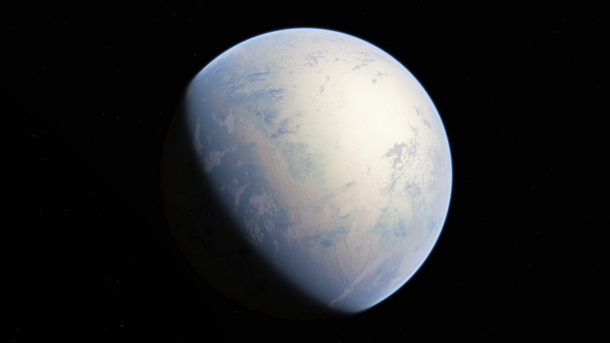
The image shows an imagined representation of “Snowball Earth,” a theory proposing that Earth might have been completely covered in ice hundreds of millions of years ago when carbon dioxide levels dropped too low. (Photo: Oleg Kuznetsov - 3depix, Wikimedia Commons, CC BY-SA 4.0)
DOERING: Wow.
BRANNEN: Like we know something that crazy happened because the thaw out of Snowball Earth is absolutely wild, at least the fossil record of it. There's estimates that the whole thing melted within a few millennia, and suddenly the planet was covered in like a mile deep lid of 120 degree fresh water from all the melted ice. There's evidence for, like, the wildest weather in Earth history, where you just see these, like, really long period waves that left behind these ripple marks in the sea floor. You know, it's kind of amazing that life, or complex life, was forged by the most extreme climate catastrophe in the planet's entire history.
DOERING: Wow, it must have been a crazy world. One of the parts that I found really interesting in this book was the section about Pangea, and I think most of us think of it as the home of the dinosaurs, but it was also the setting for a series of mass extinctions. What was Pangea really like?
BRANNEN: Pangea? Yeah, I think there is this sort of popular understanding, as you said, like this is where dinosaurs lived, and the story of dinosaurs originates on Pangea, but they really take over once it starts to break apart at the end of the Triassic. And before that, it was this kind of miserable time for life on Earth where a few tens of millions of years, depending on how you count them, there are multiple mass extinctions, including two of the biggest ones ever, and the biggest one ever, by far, this thing called the End Permian mass extinction. So there's a sort of long, weird prehistory. If you imagine you have a giant supercontinent, it would be very hard for weather to reach the interior of it. And so for the most part, Pangea had this vast, arid interior, and the planet seem to really struggle to make it through. As I said, there's these two major mass extinctions. And the reason why I focus on these mass extinctions is that unlike the one that wiped out the dinosaurs, that seems to be mostly driven by a big rock falling out of the sky. That's not really relevant to our story today as human beings, where we're worried about CO2. But it turns out there are these older mass extinctions before the age dinosaurs that were caused by huge eruptions of carbon dioxide into the atmosphere from these mind-bending volcanic eruptions. So one I really focus on is the End Permian mass extinction. It's the biggest mass extinction by far. Paleontologists went back to this much bigger one looking for evidence of asteroid impacts. There really isn't any convincing evidence for an impact. And instead, what there is is there's this huge swath of Siberia, which you can even see it on Google Earth today. It's sort of this grayish brown stuff that covers a lot of Siberia, are these ancient lava flows, and they date exactly to the moment of the mass extinction 250, 200 million years ago. To give you some perspective for how mind blowing these volcanoes were, they erupted enough lava and enough magma intruded into the crust that it could cover the lower 48 United States, a kilometer deep in lava.
DOERING: And all that lava and magma comes with a lot of CO2.
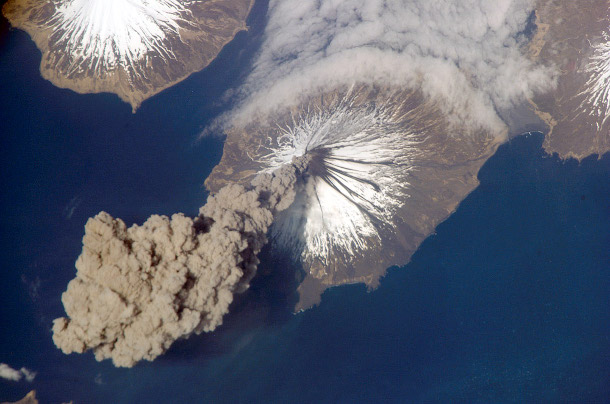
Volcanoes are large emitters of carbon dioxide, and some studies have tied historic warming events to massive eruptions. (Photo: ISS Crew Earth Observations experiment and the Image Science & Analysis Group, Johnson Space Center, Wikimedia Commons, Public Domain)
BRANNEN: Right. As crazy as that is covering a lot of Russia in lava, it doesn't explain why things at the bottom of the ocean on the other side of the world are all going extinct at the same time. And for that, you really need the gasses coming out of the volcanoes to change the chemistry of the whole planet. And the one that geochemists have really honed in on is CO2 because geochemists have all these very clever ways of analyzing rocks, and they've teased out what looks like a huge change in the planet's inventory of carbon itself. Seems like there's a huge eruption of carbon dioxide. You can tell it gets really hot. The best estimates are like ten degrees C warming over a few thousand years. The oceans acidify, which is what happens when too much CO2 reacts with sea water. We're seeing it today on our own planet. So the Permian really is the worst case scenario. If you want to know what happens what we're doing today, just several centuries into the future, if we just keep our foot on the gas, you can eventually end up at this like planetary Armageddon, essentially, which is the End Permian. So it's sort of this helpful cautionary tale in the rocks of what can happen.
[MUSIC: Chris Isaak, Martin Winch, “Wicked Game” on Espresso Guitar, Murray Thom and Carl Doy, THOM PRODUCTIONS LIMITED 1998]
DOERING: We’re speaking with Peter Brannen, author of The Story of CO2 Is the Story of Everything. We’ll be right back with more after the break. Stay tuned to Living on Earth.
ANNOUNCER: Support for Living on Earth comes from the estate of Rosamund Stone Zander — celebrated painter, environmentalist, and author of The Art of Possibility — who inspired others to see the profound interconnectedness of all living things, and to act with courage and creativity on behalf of our planet. Support also comes from Sailors for the Sea and Oceana. Helping boaters race clean, sail green, and protect the seas they love. More information @sailorsforthesea.org.
[MUSIC: Chris Isaak, Martin Winch, “Wicked Game” on Espresso Guitar, Murray Thom and Carl Doy, THOM PRODUCTIONS LIMITED 1998]
CURWOOD: It’s Living on Earth, I’m Steve Curwood.
DOERING: And I’m Jenni Doering. Let’s get back to our conversation with Peter Brannen, author of The Story of CO2 Is the Story of Everything. That title isn’t exaggeration. All known life on Earth is made of carbon dioxide and the other carbon chemistries it cycles through. It’s also the primary thermostat for the Earth, and anytime the Earth has seen changes in atmospheric CO2, the planet has experienced extreme climate whiplash. Before the break, we took a wild ride through the Earth of hundreds of millions of years ago, from the very low CO2 world of “Snowball Earth,” to the hothouse planet that resulted from massive volcanic eruptions releasing astonishing levels of CO2. Now, humanity has its finger on the thermostat, as we burn fossil fuels and release tons of carbon dioxide and other planet warming gases.
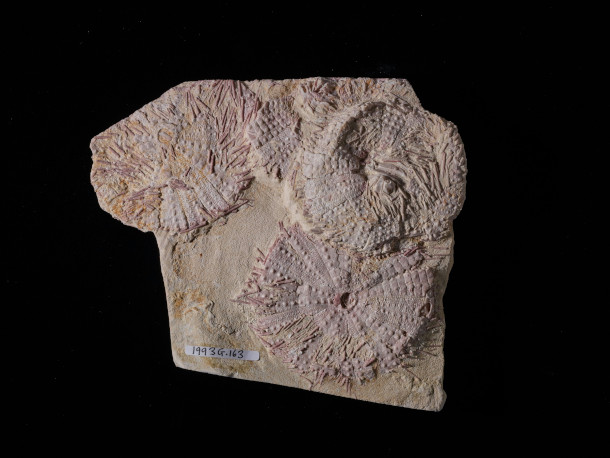
Much of the history of the planet’s life is traceable via fossils, which can also contain carbon records. (Photo: Birmingham Museums Trust, Unsplash, Unsplash License)
BRANNEN: Climate, to put it charitably, "skeptics" in quotes will sometimes point to times deep in Earth history where CO2 was higher and it was warmer and life was happy, which is 100% true, but it's pulled out of its geological context. Where these changes usually take place over tens of millions of years, where CO2 will rise and fall based on planetary processes and changes in volcanoes and subduction zones and where continents are. And it's true that 50 million years ago, there were crocodiles and palm trees in the Arctic Circle, and CO2 was higher and life was happy. But it took tens of millions of years of planetary evolution to get to our world, which is significantly colder and lower CO2. And just reimposing that change in a few decades to centuries, where everything today is evolved for our world into sort of the greenhouse of the dinosaurs is sort of a shock that you don't see from Earth history. And it really is such a narrow window. Like, it's kind of mind blowing how little CO2 makes the difference. The difference between that world I was just talking about with crocodiles and palm trees at the Arctic Circle and the depths of the ice ages, that was difference between .1% of the atmosphere was CO2 and .02% of the atmosphere of CO2. So when things aren't going out of control and mass extinctions, or like since the Industrial Revolution, it's kind of incredible and sort of awe-inspiring that the planet manages to maintain it at just the right level for life on Earth. And it does subtly change, and it does change the climate over millions of years, and that does change life on Earth, which is very adaptable and can evolve, but there's speed limits to that, and what we're doing now is just exceeding the speed limit for life on Earth's adaptive capacity, like you see in the mass extinctions. Hopefully we don't go as far down that road as you see in Earth history, but it’s kind of amazing.
DOERING: With all of the change that's happened — I mean, huge swings in the climate — life has somehow managed to find a way to survive, but I suppose that this planet was always changing, and we always had those swings. And so life has really been pushed and pulled, and it's had to adapt, and here we are today, and for whatever reason, complex life emerged.
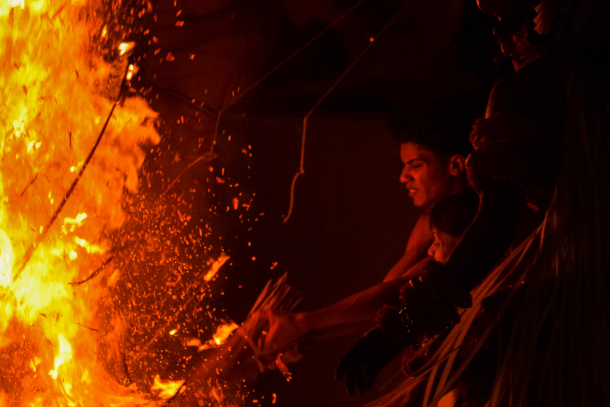
Humans have historically been able to survive changing climates by use of technology and innovation, such as discovering and domesticating fire. (Photo by Vishnuayirp, Wikimedia Commons, CC0)
BRANNEN: Yeah, I talk about in the book how human evolution and the evolution of everything else on the planet really is fundamentally shaped by changes in CO2 over millions of years. The story of the age of mammals, so since the asteroid wiped out the dinosaurs, we basically inherited the high CO2 greenhouse world of the dinosaurs. And over tens of millions of years, CO2 has been declining until suddenly, in the last, you know, three million years ago, we started going in and out of these really deep ice ages where the planet had finally lost enough of its CO2 blanket that small changes in the planet's orbit and tilt and things could plummet the planet in and out of these huge glaciations that fundamentally shaped human evolution. And there's a similar story for plants started evolving form of photosynthesis that's more efficient at lower CO2, once CO2 had declined enough. There's an argument that baleen whales got so big during the ice ages as sort of an adaptation to this cold world. So life on Earth, fundamentally, is evolved for the world of the last few million years, not the world of 50 million years, 100 million years ago.
DOERING: So Peter, in the very last moment, basically, of Earth history, up till now, we humans arrive, and as you write, we are an ice age species. But you know, we're scrawny. We're hairless creatures. We prefer temperatures, at least, I prefer temperatures above 70 degrees Fahrenheit. So what do you mean by ice age, and what climate are humans evolved for?
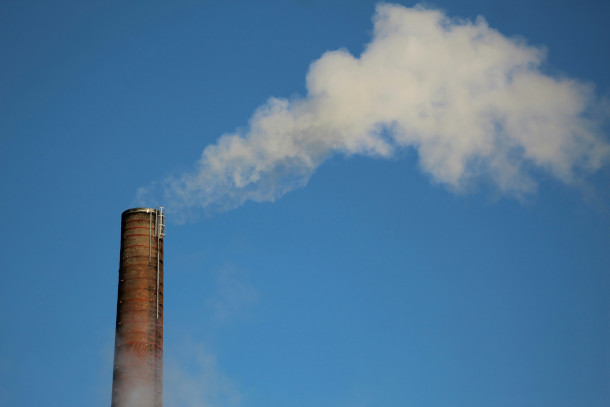
The amount of carbon emissions released by humans from fossil fuels and the destruction and degradation of forests has increased the speed of changing climate dynamics, which can have dire consequences for all life on Earth. (Photo: Anne Nygård, Unsplash, Unsplash License)
BRANNEN: Yeah. So the last two and a half million years have been really volatile, where we have dropped into these deep ice ages. First they were 40,000 years, and then they started getting deeper and longer 100,000 years in the past, you know, million and a half years. And then you'll have these brief breaks between the ice ages called interglacials, where it's sort of these planetary spring times for a few 1000 years, but then you'll go back into an ice age. And so this is a really volatile world where you have to be incredibly adaptive to survive. And it wasn't our thick hides or our big fangs that kept us alive during this period, it was culture and the ability to pass down technologies over generations and reorganizing societies adaptively to a changing landscape. You can obviously imagine why having such a close relationship with fire would be a useful thing during ice ages. It allowed us to not only stay warm in higher latitudes, but also cook our foods, which allowed us to have these huge brains because a lot of other primates and mammals have to spend a lot of their day chewing their food and digesting it. And so you have to invest in larger colons and bigger chewing muscles and big molars and things. And we're just undersized in all those categories. And it's because we've outsourced all of our digestion to this stuff fire that does a lot of the work for us. And instead, we get to invest our energy in these massive brains that allow us to have language and culture and technology and all these things that allowed us to survive the ice ages. So there's a lot of reasons to be worried about what's going on today, but when people ask me, "What's your hopeful story?," I don't know what the next few decades are going to look like because I'm as worried about the headlines as everyone else. But if you look at our history, it's kind of an inspiring one of adaptation and our ability to innovate, both technology-wise, but also societally. So I think that ultimately, we're going to figure out a way of living on this planet that is more in keeping with these big global, planetary cycles that I talk about elsewhere in the book. So the very things that ice age forged in us to keep us alive, I think, are our best hope for keeping us alive in the future.
DOERING: Before reading your book, I don't think I had really understood just how much of an edge we get from this external metabolism, as you call it, you know, from using fire, using heat to transform lentils or grains into things that are more easily digestible, that give us the energy that we need to power the work that we do.
BRANNEN: Fire, yeah, is fundamental to our survival. I think someone in a science paper says we're the only obligate pyrophile. But I also tie it into the fact that, you know, this is a precondition for the Industrial Revolution. You know, we've been using fire in the same way that we had for the entire Pleistocene ice ages. But then you start having people use it to brew beer or evaporate brine to get salt, and so we've put it to use in all sorts of other ways. But then the thing that took the lid off the Industrial Revolution was the steam engine because finally you were able to use fire to literally do work on the surface of the planet and essentially automate human labor with these machines and things. And once you tie that ability to do work with fire through these weird steam engines, and you connect it with all of the plant energy that's ever existed in all of Earth history, these things called fossil fuels. So, basically, the legacy of the entire history of life on Earth in the past few centuries, we've brought up to the surface and basically just lit it on fire. So there's no way to do that without completely transforming the surface of the planet. And I think sometimes we don't really appreciate how uncanny and weird it’s that we're digging up all the plant life that's ever existed in Earth history and putting it to work for us.
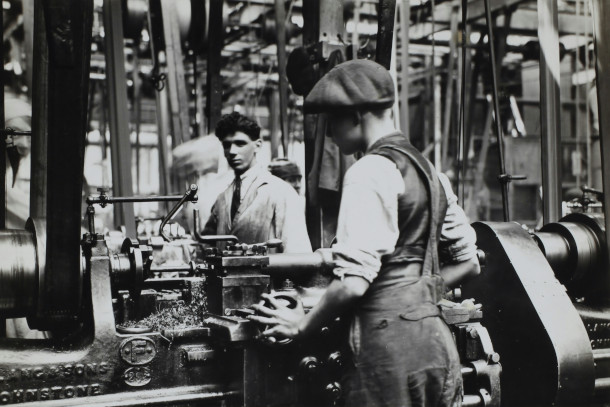
Human carbon emissions started rising dramatically with the start of the Industrial Revolution in the 18th century. (Photo: Museums Victoria, Unsplash, Unsplash License)
DOERING: The reason we have this Industrial Revolution is because we are finding and digging up and burning coal at first, and then oil, and ultimately, that stuff is just the product of ancient photosynthesis. Tell me about how it’s that the Earth has collected so much of this coal and oil and other fossil fuels that we are now digging up out of the Earth.
BRANNEN: Yeah. So the planet has also not only compiled the history of life, but it's also literally, it's the burial ground for all of the history of life. So sometimes you'll find dinosaurs, but much more frequently, or much in much greater volumes, you'll find the remains of old plant life, essentially. So when it's on land, it's coal, and what's in the oceans, big algae blooms and stuff that turns into oil and gas. So yeah, I mean the same rocks we frack today for natural gas, you can find incredible fish fossils and things. And so, over hundreds of millions of years, as we've built up the fossil record, we've also built up this unbelievably huge reservoir of old, living stuff that is still carbon to this day. I remember going to Upstate New York and looking at fossils on Lake Erie, and you'll crack them open, and they'll smell like gasoline, basically. In the book I write about the eerie encounters people would have in Appalachia in their early 20th century, encountering this period called the Carboniferous, which, if Pangea is a long time ago, Carboniferous is even older than that, and it's an even more alien world, where it was a world of gigantic insects, and you have these vast rainforests from Kansas to Kazakhstan, as one geologist puts it evocatively. And this is the world that these miners would have been encountering. And I took a tour with a geologist in Appalachia. And if you go down there and you look in the mines, you look at the ceilings, there's these fern impressions. In fact, one of the leading causes of death for miners in the early 20th century was literally petrified tree stumps falling out of the ceiling and crushing them. So, they were having this encounter with this 300 million year old world in service of digging up this old plant life and using it to power industrial civilization. So we really do live in one of the strangest moments in all of Earth history.
DOERING: What did you take away most from writing this book?
BRANNEN: Even though it might sound gloomy, a lot of the stuff that I've been talking about, I ended the experience of writing the book just with this sense of cosmic gratitude that I was even alive to begin with, or that we're able to have this conversation. When you read about all the incredible contingent things that happened in Earth history to get us to the point where finally, I can be alive and have a breathable atmosphere. It's just kind of miraculous, A, that the Earth was never completely, you know, animal life was never wiped out completely, even though things got pretty close. But it really does take this four billion year span to get to the point where I get to be alive for a couple decades and look around this weird planet, meet all these cool people, and try and figure it out. And so I feel really lucky in that respect. The Earth is an unbelievable place. It's a miracle that we're alive. And given how precious it’s and how miraculous that is, it just redoubles my conviction about how important it’s to preserve it and be good stewards of the planet and be appreciative for being alive to begin with.
DOERING: Peter Brannen's book is The Story of CO2 is the Story of Everything. Thank you so much for joining us, Peter.
BRANNEN: Thanks so much for having me.
Related links:
- Purchase a copy of The Story of CO2 Is the Story of Everything (Affiliate link supports Living on Earth and local bookstores)
- Learn more about Peter Brannen’s work.
[MUSIC: Peter Gabriel, Soweto Gospel Choir, “Down to Earth” on Wall-E soundtrack, comp. Thomas Newman, Walt Disney Records 2008]
A Woolly Rhino DNA Discovery
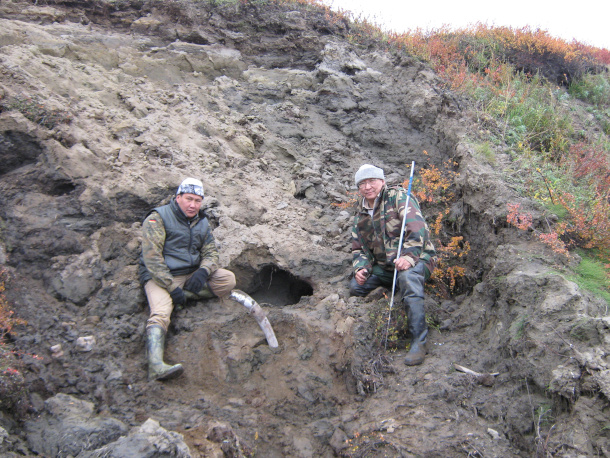
The woolly rhino DNA was discovered in the stomach of a mummified wolf puppy found in this piece of permafrost in the Russian village of Tumat. Pictured above is a coauthor of the paper, Sergey Fedorov (right) and a local colleague. (Photo: Sergey Fedorov, courtesy of J. Camilo Chacón-Duque)
CURWOOD: Thanks to rare remnants of ancient life scattered in the Earth, which we humans dig up, we’ve been able to piece together some of the past of this planet. And one recent discovery is giving us insights into the last days of the woolly rhinoceros in Siberia before it went extinct some 14,000 years ago.
DOERING: Woolly rhinos looked a lot like modern white rhinos, except of course with a thick shaggy coat. The climate they evolved for was a much colder Ice Age world, so like woolly mammoths, woolly rhinos needed that coat to stay warm.
CURWOOD: And they apparently went extinct when the planet was going through some abrupt climate gyrations towards the end of the Ice Age. The woolly rhino sample that is the focus of this latest discovery was the last meal of a wolf pup.
DOERING: And it was so well-preserved that an international team of researchers was able to extract and analyze this rhino’s DNA. Here to speak with us is coauthor of the study Camilo Chacón-Duque, a bioinformatician at Uppsala University in Sweden. Welcome to Living on Earth!
CHAĆON-DUQUE: Hello, Jenni, thank you for inviting me.
DOERING: So I understand that you found this woolly rhino DNA in the belly of a mummified wolf puppy. Can you tell me the story of this ancient pup?
CHAĆON-DUQUE: It all starts in 2011 when some local people that were exploring the permafrost around a village called Tumat in northeast Siberia, found this very unusual mummy. They really didn't know what it was, so they called a team of paleontologists, including one of the coauthors of the study. And then they went to the site. They did all the characterization of the site. They took the specimen to the museum, and they define it was wolf puppy. There's been a lot of studies on this puppy, and actually another puppy that was found in the same site a few years after that, and they found out that they were two female cubs, two female puppies. They were around seven to nine weeks old, and they probably died because the den where they lived collapsed, so they died quite quickly. And since the environment was so cold, they pretty much froze immediately.
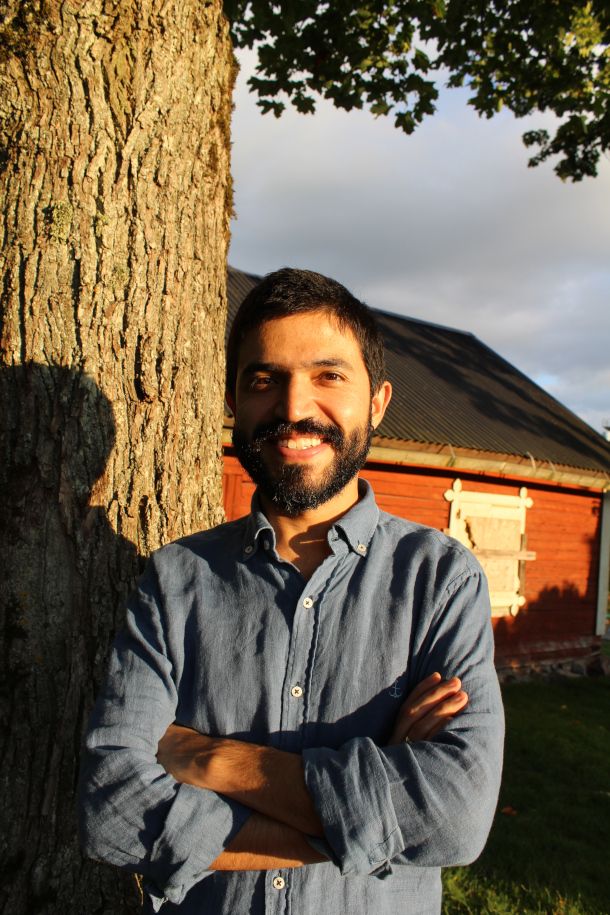
J. Camilo Chacón-Duque is one of the researchers on a recent paper describing how scientists pulled DNA from an extinct species called the woolly rhinoceros. The results have implications for how species go extinct today. (Photo: Natalia Romagosa, courtesy of J. Camilo Chacón-Duque)
DOERING: I guess that immediate collapse and dying pretty quickly helped preserve this ancient DNA. So how did your team manage to extract this DNA from the puppy's stomach?
CHAĆON-DUQUE: Okay, this is where my colleagues at the Center for Paleogenetics in Stockholm come to the picture. Basically, these colleagues from Siberia and other countries that were working on this specimen, they found this piece of meat inside the stomach of this puppy. And it was very surprising to them to see the level of preservation of it because it even had some fur still attached to it. They look pretty much like non-digested. And they were suspecting it could be a cave lion, just based on the color of the fur. And they knew that someone in our center was working with cave lions. So, they sent this sample for some sort of DNA identification because they also knew that in our center, people specializes on getting DNA out of these like challenging samples from the permafrost. And then this colleague managed to get a small amount of DNA good enough to make a species identification. And then when he was running the data analysis, he realized he was not a cave lion. It was actually a woolly rhinoceros. And that's where, sort of all the story with the sample starts for us.
DOERING: What actually makes this discovery special and exciting for you?
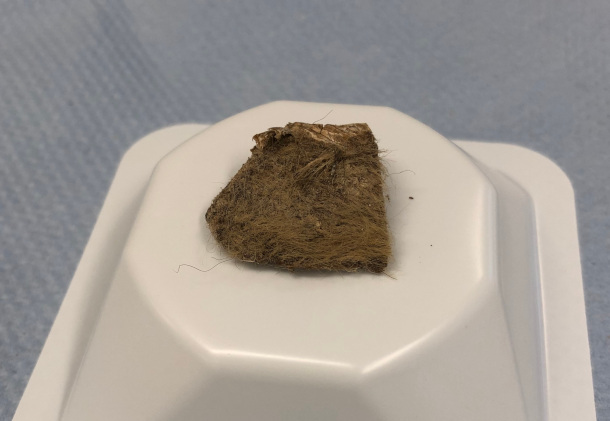
The researchers were astounded by the intact nature of the woolly rhino tissue found inside the stomach of the wolf puppy. Note that the small cut marks are from the DNA sampling done at the Centre for Palaeogenetics in Stockholm. (Photo: Love Dalén, courtesy of J. Camilo Chacón-Duque)
CHAĆON-DUQUE: It's actually, to our understanding, the first time that we can get such a high resolution on the genetic code of an organism from such an unusual and challenging sample. So then being able to get this very detailed picture of its genetic background profile is amazing. Also, the fact that this individual dates back to very close to the extinction of the species. So basically, the species disappear from the fossil record around that time, like some 400 years after the time where this specific individual existed. So it meant for us that we got very, very close to the final extinction event of the species. We could have not done that with just a regular fossil.
DOERING: That's really lucky, how close in time this appears to be to when the species actually seems to have gone extinct.
CHAĆON-DUQUE: Yes, that's something very striking for us. And the other thing that we found fascinating is in terms of genetic diversity, in terms of different signs of potential, like genetic decline, comparing this individual to other two individuals far back in the past, one of them, 19,000 years ago and the other one almost 50,000 years ago, is that they were pretty much the same in terms of diversity, so that probably they were somehow stable through tens of thousands of years before they disappear. So whatever happened happened in those last 400 years.
DOERING: What did it feel like when you realized that you were able to actually piece this together?
CHAĆON-DUQUE: This is probably one of the most fun and challenging projects I've ever worked with. And it feels lucky, even though it's a lot of hard work, so there's nothing of luck in that actually. But it just feels such a privilege to be able to access this sample, to be able to have found a piece of meat inside of an animal that was so beautifully preserved that ended up also having this possibility of getting those take a peek into the history of another species, into the life history of probably the last existing members of another species. That just feels like something that you will never even dream of.
DOERING: So Camilo, what do we know about what caused the extinction of the woolly rhino maybe 14,000 or so years ago?
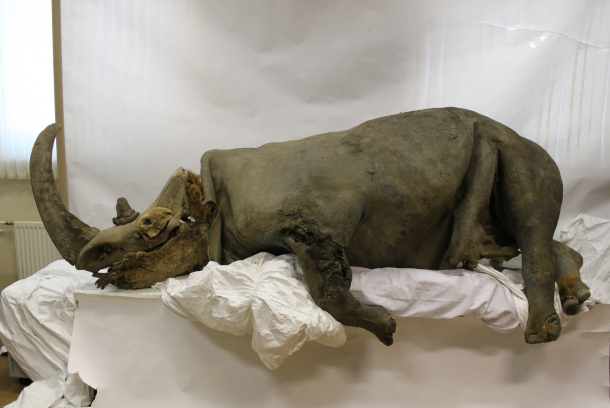
This research built off of previous work done on other preserved woolly rhinos, including this one residing in Yakutsk, Russia. (Photo: Mammoth Museum of North-Eastern Federal University, courtesy of J. Camilo Chacón-Duque)
CHAĆON-DUQUE: Okay, that's pretty interesting question. And there was a big climate change event happening around the same time that the species disappeared, like a warming event, and this tell us that climate change must have been one of the main, or the main cause of extinction. Obviously, we cannot rule out that there were other things influencing like humans, but climate change probably played a main role.
DOERING: We humans are pretty good, unfortunately, at helping species along towards extinction, and right now, experts say that we're currently facing a mass extinction crisis. Some call it the sixth mass extinction. So what can research about previous extinctions teach us about what's happening to species today?
CHAĆON-DUQUE: What we know from a few extinct species for which we have genetic information, such as the woolly rhinoceros or the woolly mammoths, is that it seems that they were stable for long periods of time, even though they declined in population at different points, but then after that, they will have long periods of stability. I mean, this probably tells us that, as many researchers have been finding out on recent species and species that are still alive, it’s a fast process. So, we really need to do more to protect the environment, to stop destroying things, to allow animals to keep their habitats and to deal with the environment changes. If we don't stop destroying their habitats, there won't be ways in which we could help them.
DOERING: Camilo Chacón-Duque is a bioinformatician at Uppsala University. Thank you so much, Camilo.
CHAĆON-DUQUE: Thank you, Jenni for having me here. It was a pleasure to be here.
Related links:
- Explore more of Camilo Chacón-Duque’s work.
- Read the original research paper about the woolly rhino DNA discovery.
[MUSIC: John Powell, “Into the Sunset” on Ice Age: The Meltdown (Original Motion Picture Soundtrack), Twentieth Century Fox Film Corporation and Varese Sarabande Records, 2006]
CURWOOD: If you’re in the Boston area April 6, come see Jenni and me in person at our next Living on Earth Book Club event, presented at Boston’s Museum of Science at 7 PM. We will be talking with Suzanne Simard, forest ecologist and author of the new book, When the Forest Breathes.
DOERING: Simard reveals how the deep cycles of renewal in forests hold the key to protecting threatened ecosystems from climate change and human disruption. Tickets are $30 and include a signed copy of the new book.
CURWOOD: This April 6 event is also sponsored by Brookline Booksmith, and you can learn more at loe dot org/events. That’s loe dot org/events. So, hope to see you on April 6th at 7pm at the Museum of Science in Boston!
[John Powell, “Log Moving” on Ice Age: The Meltdown (Original Motion Picture Soundtrack), Twentieth Century Fox Film Corporation and Varese Sarabande Records, 2006]
CURWOOD: Living on Earth is produced by the World Media Foundation.
Our crew includes Naomi Arenberg, Paloma Beltran, Sophie Bokor, Swayam Gagneja, Mark Kausch, Mark Seth Lender, Don Lyman, Ashanti Mclean, Nana Mohammed, Sophia Pandelidis, Jake Rego, Andrew Skerritt, Bella Smith, Julia Vaz, El Wilson, and Hedy Yang.
DOERING: Tom Tiger engineered our show. Alison Lirish Dean composed our themes. You can hear us anytime at L-O-E dot org, Apple Podcasts and YouTube Music, and like us please, on our Facebook page, Living on Earth. Find us on Instagram, Threads, and BlueSky @livingonearthradio. And we always welcome your feedback at comments@loe.org. Steve Curwood is our Executive Producer. I’m Jenni Doering.
CURWOOD: And I’m Steve Curwood. Thanks for listening!
ANNOUNCER: Funding for Living on Earth comes from you, our listeners, and from the University of Massachusetts, Boston, in association with its School for the Environment, developing the next generation of environmental leaders. And from the Grantham Foundation for the protection of the environment, supporting strategic communications and collaboration in solving the world’s most pressing environmental problems.
ANNOUNCER 2: PRX.
Living on Earth wants to hear from you!
Living on Earth
62 Calef Highway, Suite 212
Lee, NH 03861
Telephone: 617-287-4121
E-mail: comments@loe.org
Newsletter [Click here]
Donate to Living on Earth!
Living on Earth is an independent media program and relies entirely on contributions from listeners and institutions supporting public service. Please donate now to preserve an independent environmental voice.
NewsletterLiving on Earth offers a weekly delivery of the show's rundown to your mailbox. Sign up for our newsletter today!
 Sailors For The Sea: Be the change you want to sea.
 The Grantham Foundation for the Protection of the Environment: Committed to protecting and improving the health of the global environment.
 Contribute to Living on Earth and receive, as our gift to you, an archival print of one of Mark Seth Lender's extraordinary wildlife photographs. Follow the link to see Mark's current collection of photographs.
 Buy a signed copy of Mark Seth Lender's book Smeagull the Seagull & support Living on Earth
© Copyright World Media Foundation. All Rights Reserved
Home | Contact | RSS | Donate | Newsletter