
Health Note
Air Date: Week of July 13, 2001
Living on Earth's Jennifer Chu reports on the dangers of undergoing surgery while taking herbal medications.
Transcript
CURWOOD: Coming up, the rarest wolf on the planet lives in the mountains of Ethiopia. First, this environmental health note from Jennifer Chu.
[MUSIC]
CHU: The popularity of herbal medicine has grown tremendously over the past few years. Right now, more than 1,500 different herbal medications are widely available in the U.S. But for surgical patients, taking some of these substances can lead to serious risks. Herbs can affect heart rate, inhibit blood clotting, and interact with anesthesia and pharmaceutical drugs. Writing in a recent issue of the Journal of the American Medical Association, University of Chicago physicians make recommendations about when to stop the use of herbal medications before surgery. The researchers focussed on the eight most commonly used herbs: echinacea, ephedra, garlic, ginkgo, ginseng, kava, St. John's Wort, and valarian. For example, ginkgo, an herb used to enhance memory function, should be stopped about a day and a half before surgery, since it acts as an anti-coagulant. And echinacea, an herb used to boost the immune system, can impair wound healing and, actually, suppress the immune system, when taken long-term.
The American Society of Anesthesiologists has also weighed in on this question. That group suggests patients discontinue the use of all herbal medications at least two weeks before surgery. However, studies show that a majority of patients who take herbs don't tell their doctors about it, even when asked.
That's this week's health note. I'm Jennifer Chu.
CURWOOD: And you're listening to Living on Earth.
Living on Earth wants to hear from you!
Living on Earth
62 Calef Highway, Suite 212
Lee, NH 03861
Telephone: 617-287-4121
E-mail: comments@loe.org
Newsletter [Click here]
Donate to Living on Earth!
Living on Earth is an independent media program and relies entirely on contributions from listeners and institutions supporting public service. Please donate now to preserve an independent environmental voice.
NewsletterLiving on Earth offers a weekly delivery of the show's rundown to your mailbox. Sign up for our newsletter today!
 Sailors For The Sea: Be the change you want to sea.
 Creating positive outcomes for future generations.
 Innovating to make the world a better, more sustainable place to live. Listen to the race to 9 billion
 The Grantham Foundation for the Protection of the Environment: Committed to protecting and improving the health of the global environment.
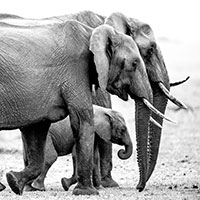 Contribute to Living on Earth and receive, as our gift to you, an archival print of one of Mark Seth Lender's extraordinary wildlife photographs. Follow the link to see Mark's current collection of photographs.
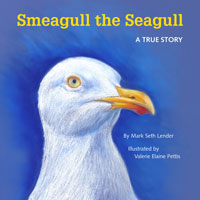 Buy a signed copy of Mark Seth Lender's book Smeagull the Seagull & support Living on Earth
© Copyright World Media Foundation. All Rights Reserved
Home | Contact | RSS | Donate | Newsletter