

A New Approach to Workplace Dangers
Air Date: Week of August 7, 2009
President Obama recently announced the nomination of David Michaels to head up the Occupational Safety and Health Administration (OSHA). Michaels, a public health professional, has been an outspoken critic of polluting industries, accusing them of manufacturing uncertainty so as to undermine the science behind regulation. Host Jeff Young talks to Sidney Shapiro, a Wake Forest Law Professor and OSHA expert, about this nomination.
Transcript
YOUNG: President Obama has picked a new leader for the Occupational Safety and Health Administration, or OSHA. And the nominee, David Michaels, is sure to raise some eyebrows in the business community that OSHA regulates.
As an epidemiologist at the George Washington University School of Public Health, Mr. Michaels was a fierce advocate for worker safety and a harsh critic of industry.
Last year he told Living on Earth how polluting companies manipulate regulators behind the scenes.
MICHAELS: We need a lot more transparency, and I'm hoping that the next administration, the next president, whoever that is—guarantees that all of these decisions around how we regulate chemicals, how we measure the effects on people's health, are done in a way that's transparent.
YOUNG: If confirmed, Michaels will get a chance to do that at OSHA, an agency that’s been widely criticized. Wake Forest University law professor Sidney Shapiro is one of those critics.
In his book “Workers At Risk,” Shapiro says OSHA is in sore need of reform.
SHAPIRO: David Michaels has his job cut out for him. I think it’s fair to say that OSHA is one of the most dysfunctional agencies in Washington. For example, Congress had a plan how to regulate toxic chemicals in the workplace. And OSHA has been almost unable in the last ten years or so to fulfill that plan. In fact, it’s only issued three health regulations in roughly ten to the last fifteen years.
YOUNG: And, you know, as the name implies, there’s both safety and health in OSHA’s charge here. I guess from what you’re saying is they should be doing a better job with work place exposure to toxic substances.
SHAPIRO: Well, I think that most of us think that they need a stronger push in both directions, but if one had to pick which half of OSHA needs the most work, I think there’s almost universal consensus that we have to do something better to protect the health of workers. Science doesn’t fully understand how our exposure to chemicals day in and day out affects our body. But what we do know is if we are exposed to toxic substances in the work place or even the air – air pollution – eventually it takes a toll on our body, but that toll shows up maybe fifteen, twenty, twenty-five years later. So we have this challenge of regulate now and get the protection later, but that’s a very important challenge.
YOUNG: Now we had the opportunity to speak with David Michaels when he published his book called “Doubt is their Product.” And it had some pretty harsh criticism for industry and industry’s role in the regulatory process. Here’s how he summed things up.
MICHAELS: What polluters have seen is that the strategy that the tobacco industry came up with, which essentially is questioning the science, find the controversy and magnify that controversy, is very successful in slowing down public health protections. And so the scientists who used to work for the tobacco industry are now working for most major chemical companies. They don’t have to show a chemical exposure is safe. All they have to do is show that the other studies are in question somehow. And by raising that level of uncertainty, they throw essentially a monkey wrench into the system.
YOUNG: Now that’s a pretty strong condemnation, not just of industry’s role here but of the regulatory process itself, isn’t it?
SHAPIRO: It is, but it’s one that I think is pretty mainstream. If you talk to anyone but the regulated industry, I think most environmentalists, certainly most workers advocates would agree with David Michaels about what’s been happening.
YOUNG: What does that tell us about the kind of approach that Mr. Michaels would bring to OSHA?
SHAPIRO: Well, I think he would bring a breath of fresh air. David has a number of ideas and they follow along the lines that the people who produce the risk oughta really be responsible for understanding it and doing something about it. More profoundly, I think it’s important that we know that David Michaels is a health professional. And I think OSHA’s done best when it’s had administrators from the public health community. It is, after all, a public health agency. More times than many of us would wish, it’s been headed by someone who’s been an adamant critic of OSHA and has come from industry or been an industry lawyer.
YOUNG: Now if confirmed, Mr. Michaels as head of OSHA would work within the Department of Labor. And the Secretary of Labor, Hilda Solice also has expressed a lot of interest in strengthening the regulation particularly of workplace exposure to chemical hazards. Does this indicate that some change is coming here?
SHAPIRO: I think so. The problem that both of them face is two-fold. First, what can we do within the confines of existing legal authority? And then, secondly, can they get the administration to go to Congress and try to rectify what we now know are some of the fundamental problems with our legal approaches to environmental hazards, particularly toxic chemicals – both in the workplace and in the air.
YOUNG: What sort of barriers will he run up against?
SHAPIRO: The political barrier is OSHA’s very unpopular. It’s been unpopular for a long time. The business community has played on that lack of popularity to stymie it and cut its budget. And he’s going to have to try to convince the broader public that OSHA’s out there doing a good job.
YOUNG: Wake Forest University Law Professor Sydney Shapiro. Thanks very much for your time.
SHAPIRO: My pleasure.
Links
Living on Earth wants to hear from you!
Living on Earth
62 Calef Highway, Suite 212
Lee, NH 03861
Telephone: 617-287-4121
E-mail: comments@loe.org
Newsletter [Click here]
Donate to Living on Earth!
Living on Earth is an independent media program and relies entirely on contributions from listeners and institutions supporting public service. Please donate now to preserve an independent environmental voice.
NewsletterLiving on Earth offers a weekly delivery of the show's rundown to your mailbox. Sign up for our newsletter today!
 Sailors For The Sea: Be the change you want to sea.
 The Grantham Foundation for the Protection of the Environment: Committed to protecting and improving the health of the global environment.
 Contribute to Living on Earth and receive, as our gift to you, an archival print of one of Mark Seth Lender's extraordinary wildlife photographs. Follow the link to see Mark's current collection of photographs.
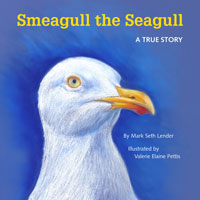 Buy a signed copy of Mark Seth Lender's book Smeagull the Seagull & support Living on Earth
© Copyright World Media Foundation. All Rights Reserved
Home | Contact | RSS | Donate | Newsletter