

Ecotherapy
Air Date: Week of June 19, 2009
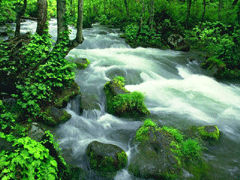
Therapists trade the couch for nature.
Ecotherapy, a new branch of psychotherapy, explores nature-based ways to cope with depression and anxiety. From animal therapy to gardening to wilderness excursions, the practices in this expanding field are gaining notice. Linda Buzzell, co-editor of Ecotherapy: Healing with Nature in Mind, explains to host Steve Curwood the potency of nature in the healing process and why more Americans should know about it.
Transcript
CURWOOD: Xanax, Zoloft, Prozac, Valium. These drugs fill many a medicine cabinet, helping folks relax and cope with depression and anxiety.
But what if a simple walk in the woods could dissolve that black cloud that lingers over your head instead? Linda Buzzell says thatÂ’s part of the treatment she offers her clients. She came into the studio to explain how an emerging practice called Ecotherapy blends nature with traditional psychotherapy.
CURWOOD: Now someone listening to us might say “Hey, okay, this woman’s from Santa Barbara, California. They’ve got hot tubs and crystals and everything out there, and this is – well, hey, this is trendy, but maybe not so real.”
BUZZELL: [laughing] Well actually thereÂ’s a wonderful section of our book that was put together by my coeditor Craig Chalquist, and it details all of the research thatÂ’s been done that shows the nature connection is unbelievably powerful as a healing methodology. Keep in mind the fact that the University of Essex in the UK just did a really important study and they found that connecting with nature, a simple walk in nature, was as powerful an antidepressant as antidepressant medication in cases of mild to moderate depression.
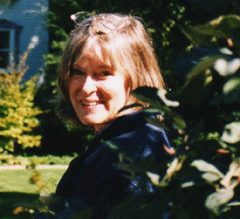
Ecotherapist Linda Buzzell.
CURWOOD: How was it that you decided to incorporate nature into your practice of psychotherapy? Perhaps you could tell us a specific moment that took you down this path.
BUZZELL: Well IÂ’ve been a psychotherapist for over 25 years. And most of that time I wasnÂ’t doing anything to do with nature. But what happened to me was I started a garden. And I became amazed as I was doing this when I began to realize that it wasnÂ’t just me working the garden, that the garden was somehow changing me. And it was having these wonderful affects on my mood and my levels of anxiety, and I thought wow, this is really a very healing thing. I gotta find out more about it.
CURWOOD: So, tell me, Linda, what types of ailments does ecotherapy help with, and how does it differ from, say, traditional psychotherapy?
BUZZELL: Well an ecotherapist really might look at things differently and ask different questions in a session. The assumption of ecotherapy is that humans and nature are not disconnected. That the same way that weÂ’re embedded in a family or in a community, that weÂ’re also embedded in the rest of nature. So, one of the types of questions that an ecotherapist might ask is what is your relationship right now with the rest of nature? Do you have a practice in your life where you walk in nature or you go swimming or youÂ’re somehow connected with an animal or with a garden or a special place? And what meaning does that have for you? And, of course, these are not questions that are typical in psychotherapy, and yet they often evoke a flood of emotion from people.
The new prescription for depression.
BUZZELL: Well one of the interesting things might be that we might not do the session in my office. That I actually have a backyard food forest, a permaculture type backyard food forest on my, you know, not very big lot, with 102 fruit trees. And we might actually go out into the garden and just sort of acknowledge by doing that that weÂ’re part of something larger. ThereÂ’s a condition that people are beginning to talk about now thatÂ’s called ecoanxiety. And it really is the stress, the worry that people have about the state of the environment as more and more of us, weÂ’re waking up and realizing, weÂ’ve kinda screwed up. And now we have to kind of back off and take a whole nother look at this. But if you came to therapy with ecoanxiety, I think one of the things that an ecotherapist might do is acknowledge the reality and the seriousness of your concerns and not just tell you that you really should just take some Prozac or some Xanax and not worry about it.
CURWOOD: So when you have people come to you who do have anxiety and depression and arenÂ’t on medication, what do you do with them?
BUZZELL: One thing that I sometimes ask people to do is fill out a time diary. And a time diary helps them see how much time they spend inside versus outside. How much time they spend looking at a screen, whether itÂ’s a computer or a blackberry or whatever it is, or a television versus how much time they spend looking into the faces of other people or into nature. And its often really amazing to see the results, and people realize that weÂ’re living very, very unnaturally, and that it actually may be true that the way that we live may be causing these epidemics of depression and anxiety that go on in Western civilization. So, one of the easy things that we can do is begin to shift the lifestyle just slightly, have a little more nature, a little more calm, get off some of the media actually allow people to take a media fast for a couple of days and see if that helps at all in terms of helping the depression or lowering the anxiety levels.
CURWOOD: Hey, wait a second, Linda, you said turning off the media. I mean, youÂ’re gonna turn off the radio. YouÂ’re gonna put me out of work.
BUZZELL: [laughing] Well I didnÂ’t say forever. But itÂ’s very interesting. So many of us are living kind of media-oriented lives and just taking a little bit of a media fast has a very interesting effect.
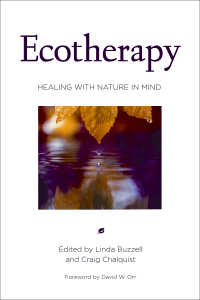
CURWOOD: Linda Buzzell has a job as a therapist and also as the editor of “Ecotherapy – Healing with Nature in Mind.” It’s published by Sierra Club Books.
Links
Living on Earth wants to hear from you!
Living on Earth
62 Calef Highway, Suite 212
Lee, NH 03861
Telephone: 617-287-4121
E-mail: comments@loe.org
Newsletter [Click here]
Donate to Living on Earth!
Living on Earth is an independent media program and relies entirely on contributions from listeners and institutions supporting public service. Please donate now to preserve an independent environmental voice.
NewsletterLiving on Earth offers a weekly delivery of the show's rundown to your mailbox. Sign up for our newsletter today!
 Sailors For The Sea: Be the change you want to sea.
 The Grantham Foundation for the Protection of the Environment: Committed to protecting and improving the health of the global environment.
 Contribute to Living on Earth and receive, as our gift to you, an archival print of one of Mark Seth Lender's extraordinary wildlife photographs. Follow the link to see Mark's current collection of photographs.
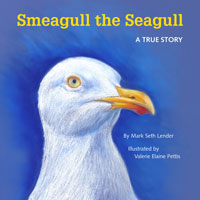 Buy a signed copy of Mark Seth Lender's book Smeagull the Seagull & support Living on Earth
© Copyright World Media Foundation. All Rights Reserved
Home | Contact | RSS | Donate | Newsletter