
Woman Who Speaks Tree
Air Date: Week of January 30, 2009
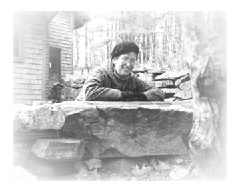
Author Linda Tatelbaum.
Linda Tatelbaum has been homesteading in the woods of Maine with her husband since 1977. She reflects on her life, work, and beliefs in her new book "Woman Who Speaks Tree: Confessions of a Tree Hugger." Steve Curwood chats with her about what she's learned from the trees that surround her home and why she may have to cut some of them down.
Transcript
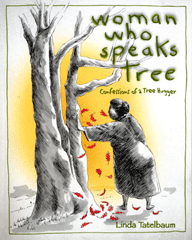
GELLERMAN: Linda Tatelbaum, a professor of English and environmental studies, has a new book out which combines her passion for language and the land. It’s called “Woman Who Speaks Tree: Confessions of a Tree Hugger."
TATELBAUM: One could do worse than be a hugger of trees, press the bark to your heart and feel the beat. Sap flows, pulse goes, trade oxygen and carbon dioxide. Merge
GELLERMAN: Linda Tatelbaum homesteads with her husband in a rural part of Maine.
Recently, the woman who speaks tree spoke with Steve Curwood about living life off the land.
TATELBAUM: I’ve probably been a tree hugger my whole life. But I think maybe I’m more – I’m a more devoted tree hugger now when my – in my sixties than I ever was.
CURWOOD: Linda, you love the place you live. Could you describe it for us?
TATELBAUM: Yes. It’s a clearing of about an acre in the middle of 92 acres of woods, and there’s a big garden where we raise all our vegetables and fruits and we have a house that’s solar electric. It’s a small house, built into a bank, so the back is, you know, sheltered from the cold and the warmth, so it’s very warm and cozy right now and cool in the summer.
TATELBAUM: We felt rooted there and very committed to having the big garden and raising the vegetables and doing canning and putting stuff in the cellar and that whole rhythm was just very soothing to us.
CURWOOD: Many years ago, Linda Tatelbaum, you and I talked about your book “Carrying Water is a Way of Life.”
TATELBAUM: Yup.
CURWOOD: It was a – I think you called it a homesteader’s history.
TATELBAUM: Yes.
CURWOOD: And, you know, at the time you all didn’t have too much. You had to carry your water. You had to keep your stove going. You were short of power. You were off the grid and off the Internet and all that kind of stuff. Nowadays you have what – solar polar, things are pretty warm, you have a pump that pumps your water for you now.
TATELBAUM: Yup.
CURWOOD: And you got a phone and everything, I mean …
TATELBAUM: I have a computer. I’m on the Internet. I have everything.
CURWOOD: So, are you no longer a back-to-the-lander, just part of modern American society?
TATELBAUM: I don’t think so, because of the thing that we do most of our time in the summer – spring and summer – is work in the garden and produce a garden full of food, which I don’t think is the standard American way to spend the weekend. We also don’t spend very much money, we’re non-consumers, pretty much. And we look for the simplest way to do things. But our life is pretty comfortable, and I think that’s another lesson for people too who come and visit us is that they see that you can live that way and still be comfortable.
Linda Tatelbaum.
TATELBAUM: It’s definitely escapism, and I think our coming here, you know, thirty years ago was a form of escapism and getting focused on our life and our, you know, our own needs for wood and for food. And, you know, we keep up with the news, but we weren’t really being very active. So, I remember when I said to somebody, a student, actually, something about well I’m not an activist. And she said, “What are you talking about? Your whole life is activist.” And so I think that my writing is the way that I’ve been active, and I just hadn’t really credited it for that.
CURWOOD: There’s a moment in your book “Woman Speaks of Tree: Confessions of a Tree Hugger” where you write about your home life. I’m wondering if you could read to us from that section, page 83?
TATELBAUM: Sure, I’d be glad to. At the moment in history when we arrived at our place in Maine, we found the scattered remnants of the old settler’s kitchen. A rusted knife, the lid of a crock, blue mason jars, broken plates and cups reminded us that the first mission of life is to eat. Everywhere a tangle of plants grew without help from us two hippies and our books about organic gardening. If we’d never tilled the rocky soil to cultivate our chosen vegetables and fruits, we still could have feasted on wild blueberries, apples, dandelion greens, burdock roots, raspberries. Like the Sukeforth family of 1777, we whole crops into the kitchen and transform them into food, peel and chop, cook and eat. Potato, onions, corn. We insert a kitchen between us and the land, and tunnel our share of the abundance through mouth and gut on its way back to soil. Wielding a knife, we step into the cycle, partners in a porous dance with plants. Plant body becomes our body. Their oxygen becomes our breath. Our carbon dioxide is theirs. Eventually we will be eaten by what we ate. The body returns to soil. We move through the land, and it moves through us.
CURWOOD: The Sukeforths you write about those are the people who – the European farmers who were originally there some 200 years ago?
TATELBAUM: Yes. They were given the land as a payment for being mercenary soldiers in the Revolutionary War. It wasn’t a very good payment, though, because the land is pretty poor and it’s, you know, very rocky. They made the best of it. Then all their children died of small pox. And then they all eventually moved away. And the place was just abandoned when we found it.
CURWOOD: So your view of this is that you’re more of a steward than an owner of this place.
TATELBAUM: Yeah, and I feel like the trees and the plant life sort of watch us and, you know, we’ve come into their space and they’ve been there all the time. And I feel like whatever we do, we’re sort of being watched over by the trees, and I notice lately that some of the trees are getting pretty big and we have solar power, so it’s gonna be a struggle at some point to decide who gets to win.
CURWOOD: Uh-oh, you’re gonna cut down some of these trees.
TATELBAUM: We might have to. We’ve already cut down some pine trees that were blocking the sun – with apologies, of course.
[MUSIC: Billy Preston “Trees” from The Complete Vee Jay Recordings of Billy Preston (VeeJay Records/The Orchard 2002)]
GELLERMAN: Linda Tatelbaum’s new book is "Woman Who Speaks Tree: Confessions of a Tree Hugger." She spoke with Living on Earth’s Steve Curwood.
Links
Living on Earth wants to hear from you!
Living on Earth
62 Calef Highway, Suite 212
Lee, NH 03861
Telephone: 617-287-4121
E-mail: comments@loe.org
Newsletter [Click here]
Donate to Living on Earth!
Living on Earth is an independent media program and relies entirely on contributions from listeners and institutions supporting public service. Please donate now to preserve an independent environmental voice.
NewsletterLiving on Earth offers a weekly delivery of the show's rundown to your mailbox. Sign up for our newsletter today!
 Sailors For The Sea: Be the change you want to sea.
 The Grantham Foundation for the Protection of the Environment: Committed to protecting and improving the health of the global environment.
 Contribute to Living on Earth and receive, as our gift to you, an archival print of one of Mark Seth Lender's extraordinary wildlife photographs. Follow the link to see Mark's current collection of photographs.
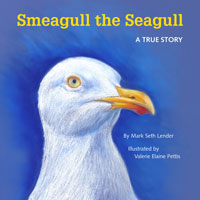 Buy a signed copy of Mark Seth Lender's book Smeagull the Seagull & support Living on Earth
© Copyright World Media Foundation. All Rights Reserved
Home | Contact | RSS | Donate | Newsletter