
Max Capacity
Air Date: Week of November 16, 2007
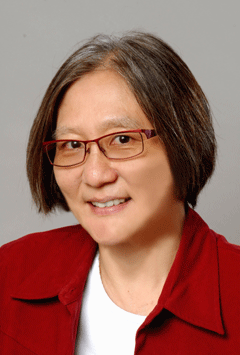
Inez Fung (Photo: Peg Skorpinski)
The atmosphere absorbs about half of the CO2 emitted from fossil fuels; the oceans and the land absorb the rest. But those systems are under strain and more CO2 is staying in the atmosphere. Host Steve Curwood turns to Professor Inez Fung of the Berkeley Institute of the Environment to find out how CO2 affects land and sea.
Transcript
CURWOOD: It’s Living on Earth. I’m Steve Curwood. The Intergovernmental Panel on Climate Change has released its fourth and final synthesis report for 2007, and the news is not good. Perhaps the best way to summarize it is that we are very likely headed towards human catastrophe. And yet, human global warming gas emissions, especially those of carbon dioxide, continue to rise at alarming rates.
Now there is scientific evidence of an unwelcome complication. For years, the planet has been absorbing about half of the extra CO2 in trees, plants and oceans. But now it seems we are maxing out the capacity of the land and sea to rapidly absorb CO2, and that means more is staying in the atmosphere, making the greenhouse effect stronger and stronger.
Professor Inez Fung co-directs the Berkeley Institute of the Environment and joins me now from the University of California at Berkeley to explain this problem.
FUNG: The CO2—the fossil fuel CO2 that is not in the atmosphere has been absorbed by the land and the ocean. And with global warming, the ability of the land and the ocean to store that carbon is decreasing.
CURWOOD: Why?
FUNG: From the ocean side, we’re heating the ocean from above, which means that we have warmer water on the top and colder water underneath. That means that the whole thing is very well stratified and it’s very difficult to mix the stuff at the top down into the deep. So that builds up—for CO2—that builds up the back pressure of CO2 in the upper layers of the ocean and that just pushes the CO2 back into the atmosphere. Imagine there’s a funnel—that’s the upper ocean—and then there’s a bottleneck to the deep ocean. So when we pour CO2 into the funnel, the upper ocean—the funnel can only hold so much. This is why the ocean is not absorbing all the CO2—there’s a time. It takes a long time to pour all that stuff into that little funnel to get it into the deep ocean to hide it from the atmosphere.
Inez Fung (Photo: Peg Skorpinski)
FUNG: Yes. Because when it gets warmer and warmer I think about the funnel as getting smaller and smaller and the bottleneck—the opening into the deep ocean—gets narrower and narrower. So it’s tougher and tougher to get stuff to hide it from the atmosphere to the deep ocean.
CURWOOD: Now what’s going on on the land? Why are—you know, vegetation absorbs carbon dioxide. I mean, it’s the food for photosynthesis—everything from a little grass to a big tree. You’d think that with more carbon dioxide in the atmosphere that the plants would just be getting bigger and happier.
FUNG: Well, that is true if the plants have enough water and enough nutrients. But first, there’s a finite amount of nutrients so the plants can’t grow forever. And the second is the availability of water. So with global warming, there could be increases in precipitation somewhere and drying elsewhere. But, as you know, my laundry dries faster in the hot sun; the soil dries up faster when the climate is warmer. So there’s less moisture in the soils, the plants don’t function as well, and when the plants don’t function as well, they shut down their stomates to conserve the water because that’s the little opening on the leaves are the exit points for the water. So imagine I’m running around, I’m getting hot, and you tell me to put on a sweater. I cannot sweat anymore. I get hotter. So in a sense they’re starving themselves to death in order to conserve the water.
CURWOOD: We’ve seen then a change in the ability of the ocean to absorb CO2 and the land to absorb CO2. Less and less CO2 being able to go into the ocean because it’s getting warmer. The land less able to absorb CO2 in the plants because the plants are getting warmer and they’re shutting down and I guess, are starting to turn into deserts. How important is this trend and where are we going with it?
FUNG: It’s a scary trend because the less CO2 the land can absorb, the less CO2 the oceans can absorb; the more will remain in the atmosphere. So there are two things—three things happening. You know, the emission rate has gone faster, and because of the bottlenecks in the ocean and because of the ability of plants to store, carbon is decreasing. More is staying—more and more of the fossil fuel CO2 is staying in the atmosphere. So, we expect global warming to be much, much faster.
CURWOOD: Professor Fung, at what point do things really break down?
FUNG: I think you have to define what is breaking down. When I look at the floods and droughts, and the predictions that a hundred year—what we call the 100-year event, you know something that—a severity—a drought severity that happens every 100 years is already happening every 30 years and is projected to happen every ten years, I think things are breaking down already. So we don’t need to have a Dust Bowl to say—to confirm that things are breaking down.
CURWOOD: How well do you sleep at night?
FUNG: Not very well. I think I slept better 20 years ago when I started working on this problem and it was a totally theoretical academic problem. But what we are saying now has not changed over 20 years. So, from a scientist’s point of view, I say ‘great, the theory works.’ I should be happy. But I really wish I was wrong.
CURWOOD: Professor Inez Fung is the co-director of the Berkeley Institute of the Environment and an atmospheric scientist at the University of California near Berkeley. Thank you so much, Professor Fung.
FUNG: Thank you, Steve.
Links
The Berkeley Institute of the Environment
To see Dr. Inez Fung's presentation on CO2 absorption and climate change, click here.
Living on Earth wants to hear from you!
Living on Earth
62 Calef Highway, Suite 212
Lee, NH 03861
Telephone: 617-287-4121
E-mail: comments@loe.org
Newsletter [Click here]
Donate to Living on Earth!
Living on Earth is an independent media program and relies entirely on contributions from listeners and institutions supporting public service. Please donate now to preserve an independent environmental voice.
NewsletterLiving on Earth offers a weekly delivery of the show's rundown to your mailbox. Sign up for our newsletter today!
 Sailors For The Sea: Be the change you want to sea.
 The Grantham Foundation for the Protection of the Environment: Committed to protecting and improving the health of the global environment.
 Contribute to Living on Earth and receive, as our gift to you, an archival print of one of Mark Seth Lender's extraordinary wildlife photographs. Follow the link to see Mark's current collection of photographs.
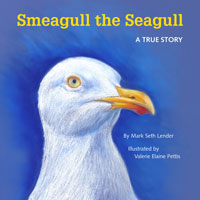 Buy a signed copy of Mark Seth Lender's book Smeagull the Seagull & support Living on Earth
© Copyright World Media Foundation. All Rights Reserved
Home | Contact | RSS | Donate | Newsletter