
Bird Business
Air Date: Week of December 2, 2005
Commentator Katharine Brainard ponders the history and significance of the natural nuisance of bird droppings.
Transcript
CURWOOD: Cars can sometimes be for the birds. Bird droppings can make quite a mess; but they also happen to be historic in nature. Katharine Brainard drops her observations about this natural nuisance.
BRAINARD: Last night I parked my car under a tree. This morning my car was covered with bird droppings. Why can’t those birds watch where they go?
Bird droppings can be very annoying, but that doesn’t mean they don’t have a place in the world besides on my windshield. In ancient Peru, the Inca harvested bird manure and they called it “guano.” Back then, guano was considered “white gold” because it fertilized the soil of overused fields. But when the Spanish arrived, they went straight for the “yellow gold,” bypassing the white stuff, and guano went out of style.
In the mid-1850s, guano’s popularity made a comeback in the United States. When east coast fields began to falter, ships sailed out in search of guano. Tropical islands full of birds and “white gold” became big money, and businesses like the Baltimore Fertilizer Company fought for harvesting rights. The actual work – hacking and dynamiting rock-hard bird excrement from cliffs – was dangerous and difficult. It was not a job many wanted. So the guano companies hired recently freed black slaves from Maryland to do the dirty work.
Eventually, chemical fertilizer was invented and guano’s glory days were over. But bird droppings are still around today, and people still find uses for them.
A company in Benson, Minnesota, just built a power plant fired by, you guessed it, bird droppings. Turkey dung. The company calls it a “poultry litter plant” because “poultry” sounds better than turkey and “litter” sounds better than dung. It will consume 700,000 pounds of turkey droppings a year, and supply 55,000 homes with clean, renewable power, giving a whole new meaning to “turkey leftovers.”
In New Zealand, the Museum of Nonprimate Art hosted an exhibit called “Significant Works of Windshield Art.” Viewers saw framed droppings of barn owl, pigeon, and spotted flycatchers. A portrait of blue-winged teal poop sold for $6,000.
And at a Santa Fe spa you can get a “Japanese Nightingale Facial.” The bird droppings are imported from Japan, pulverized into powder, and then mixed with essential oils to form a facial mask that cleanses and exfoliates skin. All for a hundred and thirty bucks, plus tip.
Which is funny because once my sister got the same thing for free! We were walking down a street in New York City. Suddenly, a pigeon did his business on my sister’s head. Right in her hair! A lady nearby got all excited, said it was good luck and that my sister had been blessed by a bird. “Oh honey,” she said, “Get yourself to the corner market and play the lottery!”
So the next time you or your car get “bombed” by birds, think about the history of bird droppings. And here’s a clean-up tip: pour seltzer water over the droppings, let it sizzle a few seconds, and then wipe it clean with a soft cloth. And consider the children’s rhyme:
Little birdie in the sky,
Why’d you do that in my eye?
I sure am glad that
Cows can’t fly!
CURWOOD: Katharine Brainard will now avoid parking her car under trees outside her home in Bethesda, Maryland.
Living on Earth wants to hear from you!
Living on Earth
62 Calef Highway, Suite 212
Lee, NH 03861
Telephone: 617-287-4121
E-mail: comments@loe.org
Newsletter [Click here]
Donate to Living on Earth!
Living on Earth is an independent media program and relies entirely on contributions from listeners and institutions supporting public service. Please donate now to preserve an independent environmental voice.
NewsletterLiving on Earth offers a weekly delivery of the show's rundown to your mailbox. Sign up for our newsletter today!
 Sailors For The Sea: Be the change you want to sea.
 The Grantham Foundation for the Protection of the Environment: Committed to protecting and improving the health of the global environment.
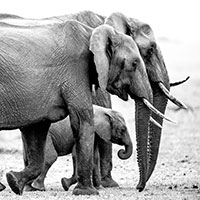 Contribute to Living on Earth and receive, as our gift to you, an archival print of one of Mark Seth Lender's extraordinary wildlife photographs. Follow the link to see Mark's current collection of photographs.
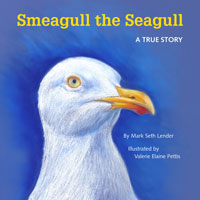 Buy a signed copy of Mark Seth Lender's book Smeagull the Seagull & support Living on Earth
© Copyright World Media Foundation. All Rights Reserved
Home | Contact | RSS | Donate | Newsletter