

Forum: Share your thoughts on the Exxon Valdez oil spill
Published: August 11, 2012
Join our reader forum.
Do you have any thoughts or memories to share about the Exxon Valdez oil spill? Join the discussion here and let Living on Earth and your fellow readers know what you think.
Nancy Conklin
(nconklin@peddie.org)
Let the Exxon Valdez oil spill be a lesson to us! We need to protect the Alaska shoreline and in particular The Arctic National Wildlife Refuge from further oil exploration and drilling. We know all too well that oil excavation is risky business and protecting this last 5% of the Arctic is not too much to ask of Congress. The oil companies will continue to tell us that they can protect the environment but history has not shown this to be true. Let's protect this last piece of the American wilderness!
Chris H.
(cchalm@ucdavis.edu)
Before the spill, I bought the cheapest gas. I haven't been to an Exxon in 10 years, and will never (knowingly) buy an Exxon product ever again!
-chris H.
Andrew Goldberg
(xagold@earthlink.net)
The role of Exxon in the spill could have been predicted based on common corporate behavior. In my opinon, the more serious malfeasance was that of ALISCA (sp), the organization tasked with responding to spills.
Alaska legislated that oil companies shipping crude from the Alaska Oil Pipeline pay for a standing spill response mechanism. The failure of ALISCA to maintain a realistic response infrastructure made the difference between the predictable release of oil from a single-hull tanker, and the unanticipated arrival of that oil at hatcheries and beaches.If the state of Alaska had kept ALISCA honest, Joseph Hazelwood would likely be an obscure footnote of maritime history.The extensive and long lasting damage to Prince William Sound is a shame and a national disgrace.
Russ Lanoie
(russ@RuralHomeTech.com)
Good show, the Exxon Valdex, on the air as I write. I remember visiting the Exxon exhibit at Epcot in spring of 89, just after the incident and listening to the groans of the fellow attendees.More to the point of oil consumption in general. I just finished teaching a course entitled "Alternative Energy/ Energy Conservation...What have we learned in the 25 years since the Oil Crisis". My goal was to determine just what things worked for those of us who built energy efficient/solar houses in the mid 70's and what things didn't.Having lived in my house now for over 20 years and also having consulted with many other folks who did similar projects, I was curious to find whether it was the efficiency of designs that made or broke projects or the human side of it, such as an unwillingness to accept the off-beat nature of some designs.I'm compiling the results of our exploration of several solar homes and government demonstration projects (our area of New Hampshire had a couple of major projects within a few miles of my house.) The title of this work is "A Tale of Two Houses" which contrasts my own house design and that of several other homes that were built on the same basic principle with the other projects I mentioned, and, in particular, a local home that was designed by a high-visibility solar design group and was featured on the Today show in 1978.I'd love to be able to share the results with you and your listeners. Please let me know if you might be interested. People still build houses, and if we are to reduce demand on fossil fuels and the oil spills that are the inevitable result, we should be learning the lessons of the "energy pioneers" of the 70's.An example of my thoughts on energy and building can be found at the following web address. Thanks for listening and giving us in radioland something worthwhile to listen to.
http://www.ruralhometech.com
John Stahura
(ZPGfor2000@AOL.com)
As an ecology professor at Manor College (Pennsylvania), I felt compelled to volunteer in Alaska following the 1989 spill. I also hold a Fish and Wildlife Service bird banding permit, so I wanted to work with rehabilitators on rescued seabirds. Though untold thousands of birds were never rescued and died as a result of the spill, we did have some success in rehabilitating many birds. We also witnessed the death of an adult bald eagle, that living symbol of America. I had the opportunity to work with sea otters as well, also at Seward.These Alaska experiences were most interesting, and something I will never forget. I also will not forget a Greenpeace magazine that summer with a photo of Capt. Joe Hazelwood, with the caption: "It was not his driving that caused the Exxon Valdez spill, it was yours".
Considering our continued addiction to cheaper-than-ever fossil fuels, and the popularity of gas guzzling SUV's, it seems that we really have not heeded the message that those dying seabirds and otters might have been trying to give us.
Melissa Hacker(mhacker@gateway.net)
My first response the the news of the Exxon oil spill was to cry, and every time they showed the devistation to the coastline during news broadcasts, I cried again.
Some of my fondest memories are those of my family camping/vacationing along the coastline in and around Homer and Seward. I remember deep sea fishing with my dad, watching the birds, otters and seals along the rocky coastline as we went along. I remember standing on the beach and seeing a whale for the first time. I was very young when my family lived in Alaska. I was only 9 when we moved away. However, the memories I have of living in Alaska are some of my most vivid. To me the oil spill in some way damaged those memories. To think that those things that I remember with such fondness were being destroyed was more than saddening. There were times that I would even change the channel or turn the TV off so I wouldn't have to see the destruction.As an adult with a family of my own, I have always planned to return to Alaska and show them the things that I remember most fondly. Hopefully, the effects of the oil spill aren't so far reaching that I won't be able to relive my memories. And hopefully, I'll be able to give my family the opportunity to make memories as wonderfull as my own.
Lee Wells(lkwells@iglou.com)
If ships carry oil sometimes they will spill it. We are to blame for that problem. Our cars and boats and aircraft...our recreation caused a lot of that spill.ten years later and we waste more fuel than we did then, we sit in drive thrus that other nations would ban for their enviornmental destruction. We don't even think about it.The oil is on everyone's hands... who wants to give up their car?
Back to Exxon Valdez Oil Spill: Ten Years Later
Living on Earth wants to hear from you!
Living on Earth
62 Calef Highway, Suite 212
Lee, NH 03861
Telephone: 617-287-4121
E-mail: comments@loe.org
Newsletter [Click here]
Donate to Living on Earth!
Living on Earth is an independent media program and relies entirely on contributions from listeners and institutions supporting public service. Please donate now to preserve an independent environmental voice.
NewsletterLiving on Earth offers a weekly delivery of the show's rundown to your mailbox. Sign up for our newsletter today!
 Sailors For The Sea: Be the change you want to sea.
 The Grantham Foundation for the Protection of the Environment: Committed to protecting and improving the health of the global environment.
 Contribute to Living on Earth and receive, as our gift to you, an archival print of one of Mark Seth Lender's extraordinary wildlife photographs. Follow the link to see Mark's current collection of photographs.
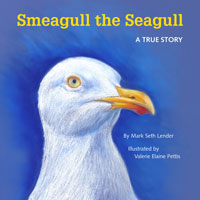 Buy a signed copy of Mark Seth Lender's book Smeagull the Seagull & support Living on Earth
© Copyright World Media Foundation. All Rights Reserved
Home | Contact | RSS | Donate | Newsletter