

Climate Voters in the Midterms
Air Date: Week of November 20, 2026
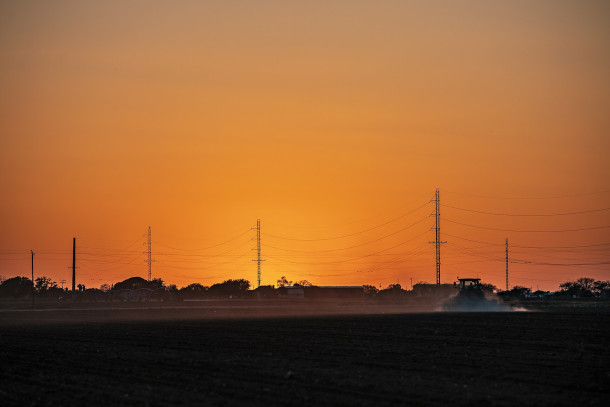
While climate wasn’t explicitly on the ballot this year, Stinnett notes that climate-adjacent issues, such as cost of gas and electricity, were high on the list of voters’ concerns. Above, power lines behind a sprayer in a field in Hondo, Texas. (Photo: USDA, Wikimedia Commons, Public Domain)
While climate was not on the ballot directly, many Democrats who made up a historic “blue wave” in the 2026 midterms campaigned on climate adjacent issues like utility affordability and high gas prices. And in a September survey, the Environmental Voter Project found voters in battleground states want politicians to spend more time talking about climate change, not less, offering insight into how climate might play out in the primaries of 2028. EVP founder and executive director Nathaniel Stinnett talks with Host Aynsley O’Neill.
Transcript
DOERING: From PRX and the Jennifer and Ted Stanley Studios at the University of Massachusetts Boston, this is Living on Earth. I’m Jenni Doering.
O’NEILL: And I’m Aynsley O’Neill.
With late word from Alaska, Democrats now have 56 seats in the US Senate. While climate was not on the ballot directly, many campaigned on climate-adjacent issues like utility affordability and high gas prices. In a September survey, the Environmental Voter Project found voters in battleground states want politicians to spend more time talking about climate change, not less. That challenges the wisdom of what’s been called “climate hushing” - keeping climate out of political campaigns - and offers insight into how climate might play out in the primaries of 2028. EVP founder and executive director Nathaniel Stinnett is here. Welcome back to Living on Earth, Nathaniel!
STINNETT: Thank you so much, Aynsley. I'm really excited to be here.
O'NEILL: So, for those who don't remember, tell us a little bit about the organization that you founded, the Environmental Voter Project. What is your goal here?
STINNETT: Our goal is to get millions of people who care deeply about climate and the environment who aren't voting to start voting more often, because at the end of the day, the only way we're going to get good climate policy is if voters force politicians to lead on climate. So we've identified tens of millions of people who care deeply about climate and the environment who don't vote, and they are disproportionately young. They're disproportionately people of color, and they're disproportionately lower income. And I know that goes against many of the stereotypes that people have in their mind. I think a lot of people think of environmentalists as sort of driving around in a Prius wearing a fleece or something like that, but it's not. We're seeing that a Latina teenager living in Arizona is just as likely to care deeply about climate and the environment as some hipster living in Brooklyn is.
O'NEILL: And in this November's midterms, I'm sure there were plenty of voters who wouldn't necessarily rank the environment as their number one issue, but they probably cast their ballot with things like data center development and high gas prices in mind. Tell us more about how these issues manifested in this election.
The Environmental Voter Project helps get environment-minded voters to the polls, especially in battleground states like Texas, where the stakes for energy policy are high. (Photo: @environmentalvoter on Instagram)
STINNETT: Yeah, it's a great point. And first, let me just say you're right. It isn't like the words climate change were on everybody's lips this year. They clearly weren't. However, if you look at exit polling data, it is very clear that voters are extraordinarily concerned about gas and diesel prices. We saw that 87% of voters said that they were either very or somewhat concerned about the cost of gas and diesel, and obviously, if you transition away from fossil fuels, you're not going to have those worries. Similarly, 86% were very or somewhat concerned about the cost of utilities. Well over three quarters of voters said that AI and data centers were a significant concern of theirs when they voted. So yeah, climate change wasn't at the front of everybody's mind, but these climate-aligned or climate-adjacent issues were.
O'NEILL: And now Nathaniel, we'll definitely give you some credit, of course, for getting some of those voters out to the polls, I don't want to take that away from you. But if you had to guess what all came together to get environmental voters so fired up for this particular midterms?
STINNETT: It was a perfect storm. I mean, thank you for giving the Environmental Voter Project some credit, Aynsley, but the truth is, I don't think anything was going to stop this historic wave election. And I think a huge part of it was certainly anti-Donald Trump sentiment. I mean, we saw even in the reddest of red states that people were sick of the president, and when you combine that with him not being on the ballot, so he couldn't drive the people who love him to the polls, but the haters still showed up. Boy, did it make it hard for any Republican who was running for office to keep their head above water. This was just an historic election.
O'NEILL: And I want to talk about one of these major pieces of history in Texas, where Democrats had a very surprising series of victories for a very deep red state. We're talking James Talarico in the Senate, Gina Hinojosa in the governorship. To what extent would you say that environment was on the ballot in Texas, even if not explicitly?
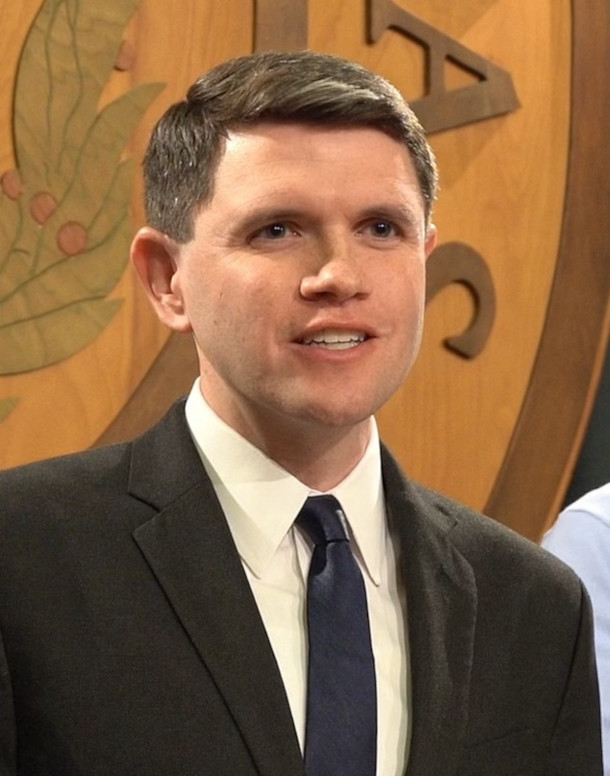
Texas leads the U.S. in combined wind and solar power, and Stinnett says there’s a lot of opportunity to expand renewables in the new Congress. Democrat James Talarico, above, flipped a Senate seat in this year’s midterms. (Photo: Antonioaesparza, Wikimedia Commons, CC BY-SA 4.0)
STINNETT: I think we need to be very careful and honest about claiming that climate and the environment drove people to vote in any state this year. It was not a top voter priority. It was kind of in the middle of the pack. But what we do know is that voters in Texas are very concerned about climate and environmental issues, and the fact that Democrats swept every statewide office and won with such margins, Aynsley, that many races were decided before the sun even rose on election day. I mean, James Talarico is a perfect example of this. He won his U.S. Senate race by so much that he amassed more early votes than his Republican opponent got in total votes. So he won before election day even dawned. And so, this new crop of Democratic politicians, who are typically more likely to lead on climate and environmental issues anyway, are going to look at this data and see how many of their supporters care about climate and the environment, and it's a real opportunity for a state that is at the very center of how we make energy and electricity in the United States.
O'NEILL: And now, from the policy making perspective, what kind of moves do you think that politicians, and specifically the incoming Democratic House and Senate, need to be making to respond to environmental-focused voters?
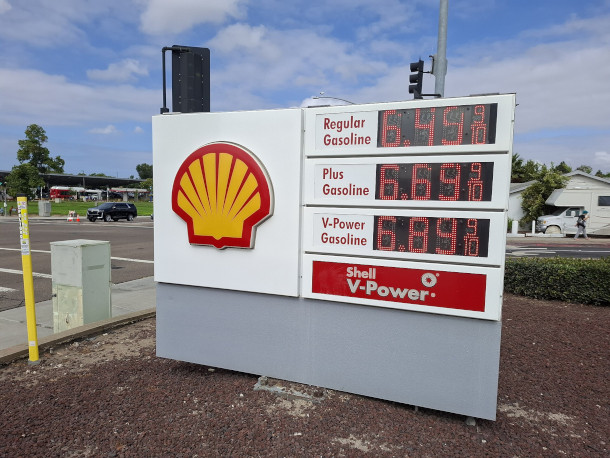
When we discuss affordability and healthcare in politics, we also need to link these issues to the ongoing climate crisis, Stinnett says. Above, a gas price board in Chula Vista, CA, in September 2026. (Photo: Bnuuy, Wikimedia Commons, CCO 1.0)
STINNETT: I think there are two things that incoming Democrats should bear in mind. The first is that across the ideological spectrum, voters are sick and tired of politicians making small adjustments on the dial. I mean, whether you're a liberal or a conservative or an independent, huge majorities of voters think that our entire system is rigged or broken or both, and so that is calling not for incrementalism, but for Democrats to really think about ways to completely change the system, and so that's the first thing I think they should bear in mind. The second thing is, and I know none of your listeners want to hear this, Aynsley, but the presidential election has officially begun, and so what this means is that politicians are going to become increasingly focused on a small sliver of the electorate, and those are the people who are likely to vote in the Democratic presidential primary and the Republican presidential primary. And on the Democratic side, in particular, likely primary voters do list climate and the environment among their top three priorities. And so yeah, the general electorate might not be hungering for climate policymaking right now, but all the voters who are going to decide who the presidential nominee of the Democratic Party are hungering for climate leadership, and it's not going to take very long for Democratic legislators to realize that.
O'NEILL: To what extent do you think there's a need to reframe how we think about climate when it comes to voting, from say a luxury issue to a more universal one?
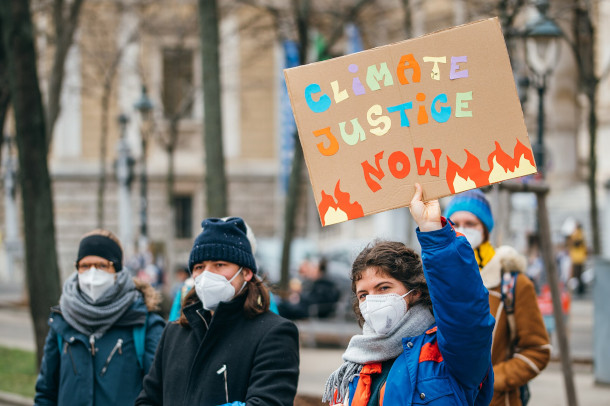
Stinnett believes that talking about climate change is necessary to ensure that people feel validated in their concerns, and continue to advocate for themselves and their communities. Above, activists at the 2021 Global Climate Strike. (Photo: Ivan Radic, Wikimedia Commons, CC BY 2.0)
STINNETT: That's a really great question, Aynsley, and I think we need to start with that basic misconception that the Americans who care deeply about climate and the environment are able to view it as a luxury issue, because that's just not the case when we look at all of our data, and we're not alone. If you look at Pew Research and Yale Project on Climate Change Communications, all of this data shows that the people who care most about climate and the environment are not viewing it as a luxury concern. These are the people who, on a daily basis, are worried about breathing toxic air, or drinking dirty water, or worried about extreme weather. These are people who are experiencing the climate crisis on a regular basis. Now, to get to the second part of your question, how can we change the way we approach this issue to make it more salient in elections? I think there are two ways to handle this. The first is, if anybody is concerned about climate change, we need to make sure they understand that it is not just a personal issue that affects their shopping habits; it's also a political issue. This is a systemic problem, and systemic problems require political solutions. The second thing that I would say is, the climate crisis is going to make people unhealthy, and it's going to make life really expensive. So whenever we talk about healthcare and affordability, we've also got to be talking about climate change.
O'NEILL: Now, Nathaniel, why do you think that it's so important for us to keep talking about climate in this moment?
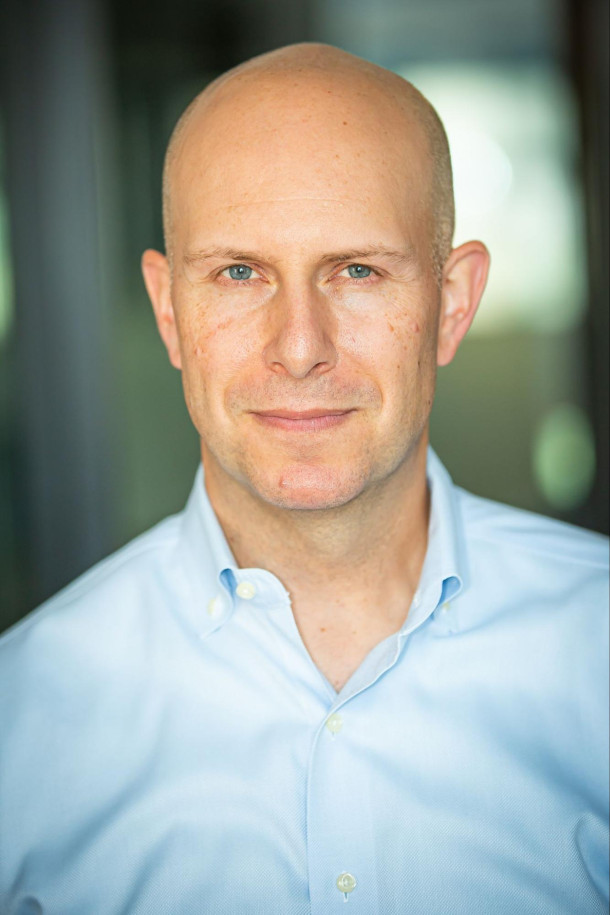
Nathaniel Stinnett is the Founder & Executive Director of the Environmental Voter Project. (Photo: Courtesy of Nathaniel Stinnett)
STINNETT: It's a great question, and I think it's important for two reasons. The first is that Americans are telling us they want politicians to talk about it more, and I'll go back to this climate hushing research that we've done at the Environmental Voter Project. 59% of voters want politicians to talk more about climate rather than less. And if you're a politician, and whenever you're in doubt about what to say, if voters want you to say something, maybe it's a good idea to start talking about it. But the second thing that I'll say is, social scientists do a lot of research about this concept known as pluralistic ignorance. And the basic idea about pluralistic ignorance is that people often underestimate how much other people share their views, and this is absolutely the case when it comes to climate change. There has been a whole lot of research showing that most Americans think that other people, their neighbors, or people across the country care less about climate change than they do, and they're wrong. They are ignorant of what the plurality of Americans think about climate change, and that's harmful, because if you think you're alone in your views, Aynsley, you are much less likely to go out and advocate for them. If you think you're alone in caring about climate and the environment, you're much less likely to be an activist. And so that, more than anything, is why it's important to talk about these issues. Whether you're a voter, whether you're a politician, whether you're in the media, because so many Americans share these concerns, but they're kind of keeping it a secret because they think they're alone, and we need to let them know that they're not alone.
O'NEILL: Nathaniel Stinnett is the founder and executive director of the Environmental Voter Project. Nathaniel, thank you as always for joining us today.
STINNETT: Thank you, Aynsley.
Links
Living on Earth wants to hear from you!
Living on Earth
62 Calef Highway, Suite 212
Lee, NH 03861
Telephone: 617-287-4121
E-mail: comments@loe.org
Newsletter [Click here]
Donate to Living on Earth!
Living on Earth is an independent media program and relies entirely on contributions from listeners and institutions supporting public service. Please donate now to preserve an independent environmental voice.
NewsletterLiving on Earth offers a weekly delivery of the show's rundown to your mailbox. Sign up for our newsletter today!
 Sailors For The Sea: Be the change you want to sea.
 The Grantham Foundation for the Protection of the Environment: Committed to protecting and improving the health of the global environment.
 Contribute to Living on Earth and receive, as our gift to you, an archival print of one of Mark Seth Lender's extraordinary wildlife photographs. Follow the link to see Mark's current collection of photographs.
 Buy a signed copy of Mark Seth Lender's book Smeagull the Seagull & support Living on Earth
© Copyright World Media Foundation. All Rights Reserved
Home | Contact | RSS | Donate | Newsletter