

Microplastics, Inflammation, and Your Health
Air Date: Week of October 30, 2026

A recent study published in the journal Nature found that microplastics are not entirely chemically inert, despite this being a known quality of many larger plastics. (Photo: Unsplash, Unsplash license)
Plastics have been widely adopted in all sorts of products from food packaging to toys to medical devices, in part because they don’t tend to chemically react. But new research challenges that notion when it comes to microplastics, finding that contact with water releases unstable molecules which in the human body are linked to inflammation. Dr. Leonardo Trasande, a pediatrician who directs the NYU Center for the Investigation of Environmental Hazards, tells Host Aynsley O’Neill about the health risks of tiny chips of plastic and ways to reduce them.
Transcript
DOERING: From PRX and the Jennifer and Ted Stanley Studios at the University of Massachusetts Boston, this is Living on Earth. I’m Jenni Doering.
O’NEILL: And I’m Aynsley O’Neill.
Plastics have been widely adopted in all sorts of products from food packaging to toys to medical devices, in part because they are shown to be chemically inert, meaning they don’t easily undergo chemical reactions when in contact with other substances. But a recent study challenges that notion when it comes to microplastics. The study published in the journal Nature looked at several kinds of microplastics in a lab and found that when they came into contact with water, it essentially acted as a catalyst to create free radicals. Those are unstable molecules which in the human body are linked to inflammation and disease. Unlike larger, intact pieces of plastic, microplastics have far more surface area as compared to their volume, creating the conditions for chemical reactions to occur. Here to explain is Dr. Leonardo Trasande, a pediatrician who directs the NYU Center for the Investigation of Environmental Hazards and was not part of the study. Dr. Trasande welcome back to Living on Earth!
TRASANDE: It’s great to be back. Thank you.
O’NEILL: So, Dr. Trasande, when we say that plastic is considered chemically inert, what exactly does that mean, and what did this new study find to change our understanding of that?
TRASANDE: So, when plastic is inert in the notion of human physiology, it means it doesn’t do anything or interact with the human body. It goes, enters, and leaves unseen essentially, from a human health perspective. And what this study reveals is that plastic is not inert, particularly micro and nanoplastics. The assumption was that micro nanoplastics don’t get transformed or cause any interaction with the human body. What this study found was that inflammation, the body’s response to a variety of exposures, was increased, and the inflammation in the human body is important because it underlies many different medically important conditions, particularly cardiovascular disease but I can think a host of others. Just to use cardiovascular disease as an analogy, we know that inflammation in the coronary arteries promotes the acceleration of plaque, narrowing, and ultimately, conditions like heart attack and even stroke. And so, when we talk about oxidative stress or inflammation being increased in the human body as a result of plastic exposures, that by definition is not inert. Means that these plastics are quite biologically active. To be clear, we’re not even talking about the chemicals added to plastic materials or the chemical impurities that exist in plastic materials. This was simply focusing on one aspect of the multi-dimensional threat that’s posed by plastic to human health.
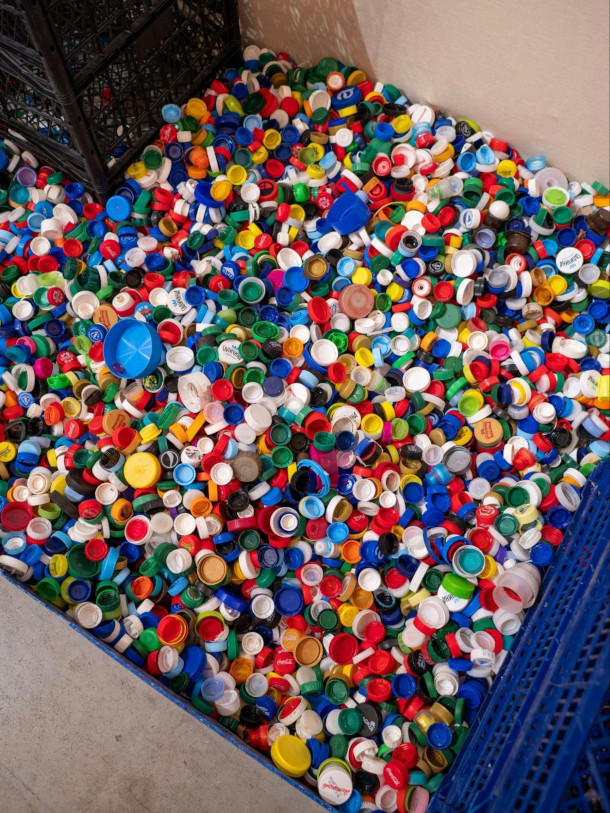
The study on microplastics conducted by Columbia University and UC Berkeley tested six common plastics, including polyethylene and polypropylene, a plastic commonly used in water bottle caps. (Photo: cameraobscura2000, Unsplash)
O’NEILL: Now, microplastics are fairly ubiquitous in the world these days, and as we were saying, they’ve already been linked to health concerns like inflammation, hormone disruption, to name a few. To what extent does this research simply explain why microplastics have these effects versus give us new health concerns to consider?
TRASANDE: So, if I can pick up the cardiovascular disease issue, the New England Journal of Medicine a couple years back had published a study looking at the carotid artery, which is the artery that provides large amounts of blood flow to the brain and essentially the head and neck, and what it found was that polyvinyl and polyethylene micro nanoplastics, the levels thereof in those carotid arteries, these are patients who underwent a procedure called endarterectomy to essentially clean out the carotid artery, the plaques, and the microplastic concentrations in those plaques were associated with a fourfold increase in the composite of heart attack, stroke, and death. So, what this study does is further unravels a mechanism that may directly explain why those microplastics were associated with such a steep increase in a major human health condition.
O’NEILL: Now, what if anything does this study tell us about why microplastics are acting differently than their macro counterparts?
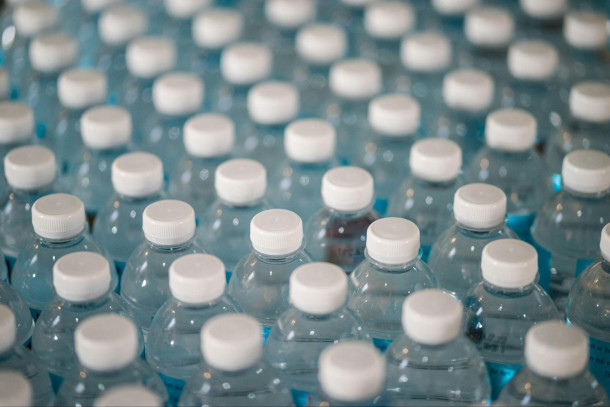
Microplastics have been accumulating on land, water, and even within our bodies. This new research offers a possible mechanism for why micro and nanoplastics have been tied to various human health concerns. (Photo: Jonathan Chng, Unsplash)
TRASANDE: So, microplastics may do one of two things: they may deliver chemicals of concern to human tissue, or they themselves can be human wrecking balls, or otherwise cause inflammation by just their interaction and physical properties. This study suggests a little bit more that the latter is the case, but it doesn’t preclude the fact that chemicals that are coming along for the ride may further exacerbate the inflammation that was observed in relationship to micro nanoplastics.
O’NEILL: And we’ve talked about a few of the health concerns here. Which of these would you say is stand out one to you?
TRASANDE: Well, oxidative stress and inflammation is such a common thread throughout so many human health conditions that it’s hard to pick any one. Let’s even take hormone disruption for example. Inflammation can further contribute to endocrine disruption. Inflammation can just contribute to immune dysfunction. So I can go condition by condition across the lifespan, and this study indirectly reveals a link that hadn’t been previously described. It’s not to say that microplastics are the cause of everything and anything under the sun, or not the totality of chronic disease. I’m still always going to say that diet and physical activity are important risk factors for obesity and cardiovascular disease, just to name those two. But this study adds further basis for considering a third leg to that stool, and those are environmental exposures that may be impactful.
O’NEILL: Well, Dr. Trasande, we’re throwing around some pretty concerning health conditions here. If listeners are listening and they themselves are concerned, what can they do to reduce their exposure to microplastics?
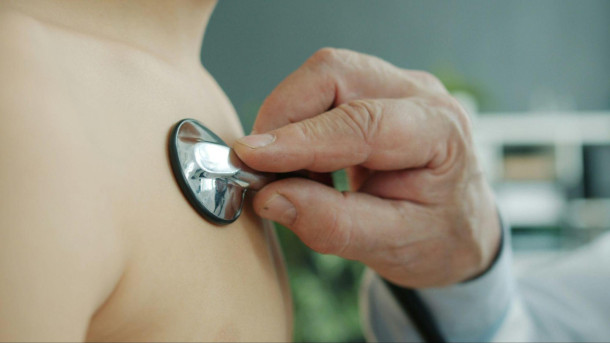
Recent studies published in the European Heart Journal show that micro- and nanoplastics can be detected in the blood and arterial tissues of cardiovascular patients. (Photo: Vitaly Gariev, Unsplash)
TRASANDE: So there are safe and simple steps that we can all take to reduce our plastic exposure. We can use more glass than stainless steel. So, for example, if I’m getting on a plane, I’ll bring an empty water bottle, clear security, and fill that water bottle out on the other end. We can avoid microwaving or machine dishwashing plastics. Maybe we can use more fresh fruits and vegetables and cook our food at home and bring it into the workplace. We can avoid non-stick cooking and use cast iron or stainless steel, which a little bit of a different category of the plastics compared to those that were chiefly studied here. Those are typically what we call fluoropolymers, forever chemicals. And we need to be the force of consumers that drives the change that we seek. That’s a very powerful thing. We forget back about 15 years ago when BPA baby bottles and sippy cups were the source of outrage among many moms, it was not science that drove the action to get BPA banned by the FDA. It was consumer activism that led the industry to run to the FDA and insist on getting that out in the first place. So we forget the power of the consumer in driving the change, both at a company level but also at a public policy level.
O’NEILL: And I do want to talk a little bit about public policy. I’m curious, what can you tell us about where U.S. regulation on plastic stands?

Dr. Leonardo Trasande is a pediatrician who directs the NYU Center for the Investigation of Environmental Hazards. (Photo: Cheryl Stockton)
TRASANDE: Well, the United States uses a lot of plastic in its day-to-day manufacturing. So do many industrialized countries. So I wouldn’t say that our plastic production per unit capita is particularly outlandish. It’s been accelerated by the modern lifestyle, but that doesn’t mean we don’t have the responsibility to be the proverbial change we seek. The Make America Healthy Again movement has really sparked further conversations about microplastic and nanoplastic, as well as chemicals in plastic materials. There have been efforts to increase federal investment in research to understand the effects of micro nanoplastic. This study is just an early stage, but important step in the right direction to know where microplastics are going in the body and ultimately doing harm. But we’ve had 50 years of evidence that plastic chemicals, particularly hack our hormones, are signaling molecules that underlie so many basic biological functions like temperature, metabolism, salt, sugar, and even sex. We know that plastic chemicals cost the U.S. economy 250 billion dollars, that’s billion, in disease burden. That’s 1.2 percent of our gross domestic product out the window. The reality is that we’ve misbalanced our priorities. Adam Smith, the father of modern economics, would be rolling over in his grave because this is creating externalities, this is creating harms that we bear, even though we did not buy or sell the material involved in many cases, and so the way to regulating our economy and putting it back in the more optimal line is through actions to reduce exposure to plastic, and that can come through individual action as well as regulatory action.
O’NEILL: Dr. Leonardo Trasande is a pediatrician who directs the NYU Center for the Investigation of Environmental Hazards. Dr. Trasande thank you so much for joining us today.
TRASANDE: It’s always a pleasure to be with you. Thank you.
Links
Living on Earth wants to hear from you!
Living on Earth
62 Calef Highway, Suite 212
Lee, NH 03861
Telephone: 617-287-4121
E-mail: comments@loe.org
Newsletter [Click here]
Donate to Living on Earth!
Living on Earth is an independent media program and relies entirely on contributions from listeners and institutions supporting public service. Please donate now to preserve an independent environmental voice.
NewsletterLiving on Earth offers a weekly delivery of the show's rundown to your mailbox. Sign up for our newsletter today!
 Sailors For The Sea: Be the change you want to sea.
 The Grantham Foundation for the Protection of the Environment: Committed to protecting and improving the health of the global environment.
 Contribute to Living on Earth and receive, as our gift to you, an archival print of one of Mark Seth Lender's extraordinary wildlife photographs. Follow the link to see Mark's current collection of photographs.
 Buy a signed copy of Mark Seth Lender's book Smeagull the Seagull & support Living on Earth
© Copyright World Media Foundation. All Rights Reserved
Home | Contact | RSS | Donate | Newsletter