

In Trees
Air Date: Week of September 18, 2026
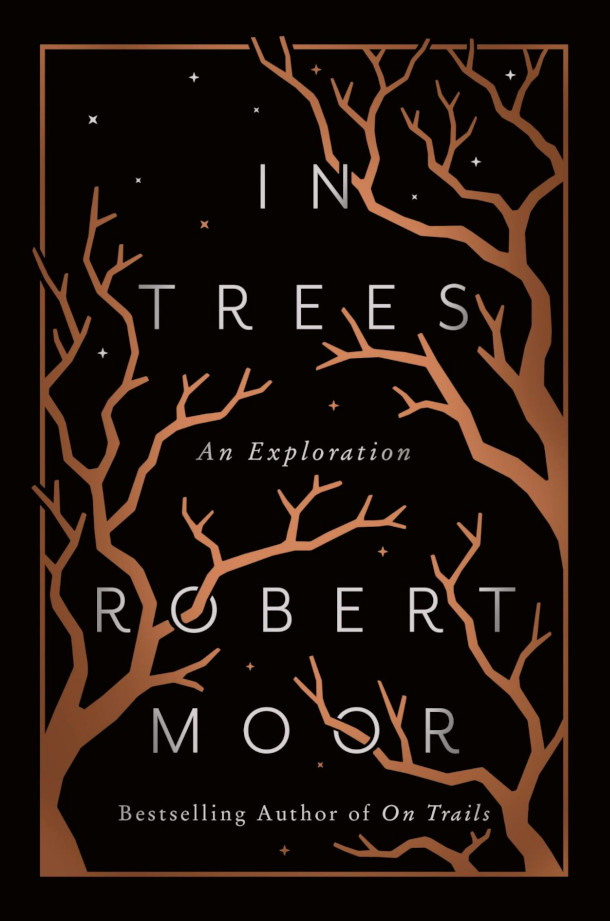
Robert Moor’s latest book is In Trees: An Exploration. (Photo: Courtesy of Robert Moor)
Trees provide us with shade, food, beauty and of course, oxygen to breathe. They often outlive humans, and can teach us about life, aging, and how to be better stewards of the earth. Journalist and author Robert Moor joined Steve Curwood to talk about Moor’s newest book “In Trees: An Exploration” while sitting under grand trees in a famous Boston area cemetery.
Transcript
BELTRAN: It’s Living on Earth, I’m Paloma Beltran.
CURWOOD: And I’m Steve Curwood.
Our ancestors swung from their branches. They provide shade, fruits, nuts, oxygen to breathe, and stunning foliage. They outlive us ten times over, and more. And they may hold answers to some of the great questions in life. Journalist and author Robert Moor has been thinking a lot about what trees can teach us about life, aging, thinking, and even how to be better humans. We met up in the summer of 2026 for a meander and chat under the grand trees in a famous Boston-area cemetery.
CURWOOD: With me now is Robert Moor. He's a journalist and author whose latest book is "In Trees: An Exploration." Rob, welcome to Living on Earth.
MOOR: Thank you so much for having me.
CURWOOD: And here we are in Mount Auburn Cemetery in Cambridge. This is probably the most amazing assemblage of trees inside the city limits here because well, you know a lot about trees.
MOOR: I do, it's true. And I want to add that this is a place I've always wanted to come. This was the first garden cemetery in the United States which then becomes essentially the blueprint for Central Park, which in some sense becomes the blueprint for, for the national parks.
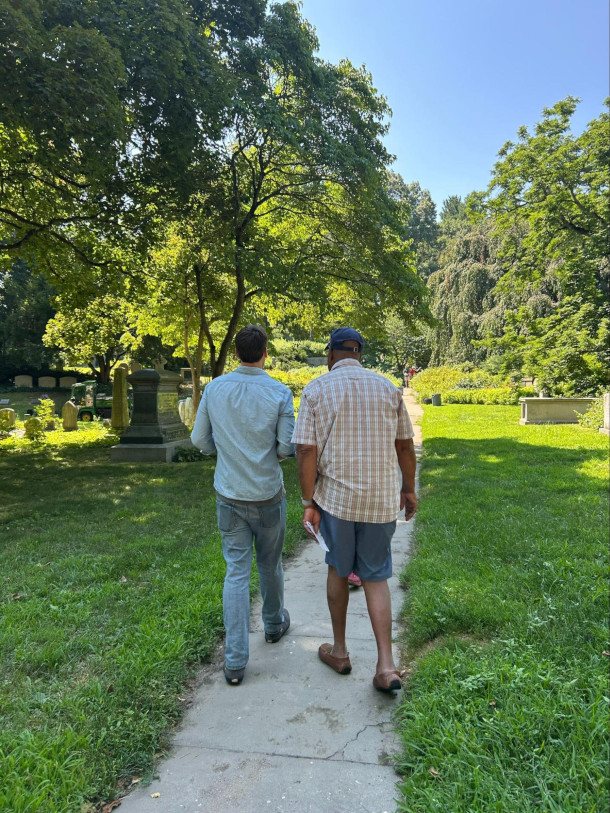
Host Steve Curwood (right) joins Robert Moor (left) in Cambridge’s Mount Auburn Cemetery. Moor says the cemetery inspired Ralph Waldo Emerson’s concept of the “noble earth” in the 1830s. (Photo: Bella Smith)
CURWOOD: Wow, I never knew. I just thought this was a great place to go birding during migration season.
MOOR: Well, it's also a beautiful place to look at all these wonderful trees and sit in their shade. And there were a lot of people who did, including Ralph Waldo Emerson, who was strolling through this cemetery in the 1830s and had this profound realization of what he called the "noble earth." That was one of the transformative experiences of his life, was walking right here through this very cemetery.
CURWOOD: So when we think of a tree, Rob, it's usually you know, the biological definition. But your book, you know, I guess you mention bark, you do mention leaves, but mostly it's a philosophical treatise. So what is a tree then, in your view?
MOOR: Yes, so it's a really hard thing to answer actually, it's funny. This is something that tree biologists will frequently tell you is that it is much harder to say what a tree is than people would commonly think. Colin Tudge has a definition. He said a tree is just a big plant with a stick up the middle, and what that means is that it's a plant, it branches, and it has wood. Wood is a really important component because it allows the tree to grow tall. But then, if you start thinking about family trees or evolutionary trees, the branching structures that make up our brains, you start to see that it's actually something even larger than that. It's a growth form. It's a way that things grow. They grow by branching, by pruning, by gnarling around the things that work, and then by setting down deep roots. That's what I think that the soul of a tree really is.
CURWOOD: And we're leaning up against a tree here as we talk. What are we looking at? This thing is humongous and well, amazing.
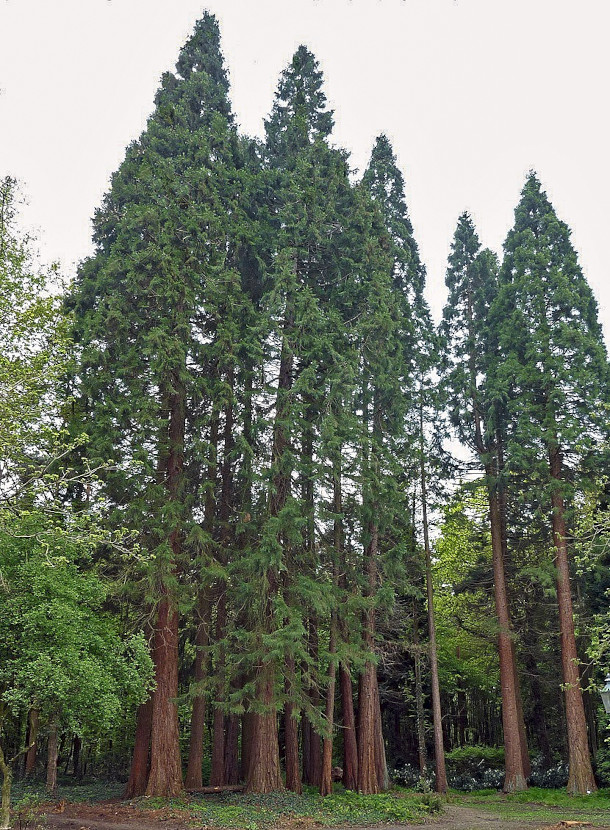
Moor describes climbing to the top of a giant sequoia, the world’s largest tree species by volume, in Sequoia National Park. (Photo: Sverrir Mirdsson, Wikimedia Commons, CC BY-SA 3.0)
MOOR: It is. I was just saying I would love to climb this tree. I believe the tag there says Castor Aralia, which is not actually a species I'm familiar with, says it's from East Asia. But one of the things that I love about trees in cemeteries and parks, is that they get this wide open branching crown, and it makes them a lot more fun to climb than the trees in British Columbia, where I live in the forest, which just shoot straight up out of the ground. You know, when they're growing in a forest, they're shading each other out, so they drop their lower limbs, makes them a lot harder to climb. This one would be a lot of fun. I mean, it's a beautiful tree, and it has this wide open crown, these long lateral branches. I actually took a tree climbing course with a guy named Ben Atkinson. He's this sort of barefoot, you know, roadkill-eating eccentric guy in England, and he makes these videos of himself walking on trees like this. He walks way out onto the branches, sort of tiptoeing out as if on a balance beam, and then he'll jump from branch to branch. And I saw these videos, and I was, I was so moved by them. They're so, they're so beautiful. It was kind of taking tree climbing and extending it into the realm of art or dance. And I had tried to climb a tree near where I live not long before that, and had this sort of, almost a panic attack. I was gripped by vertigo, and I couldn't make it any higher, and I started to kind of obsess about this question of like, why do we stop climbing trees? Right, every kid climbed trees that I know. Did you climb trees when you were a kid?
CURWOOD: Well, of course, but what about you?
MOOR: I did. Yeah, I mean, I was a big tree climber when I was a kid, and then I stopped. Right, and it happened sometime in my teenage years. You just sort of start to get interested in other things, but also something starts to grow in you. It's a kind of a reluctance, a hesitancy, a fear of taking chances. And as you get older, I think that that sort of pruning away of that wild spirit, that tree climber spirit you have as a kid, I think that that really becomes debilitating. And so I was trying to find a way to break myself out of that and refind that wild spirit, and I thought taking a tree climbing course might be one good way to do that.
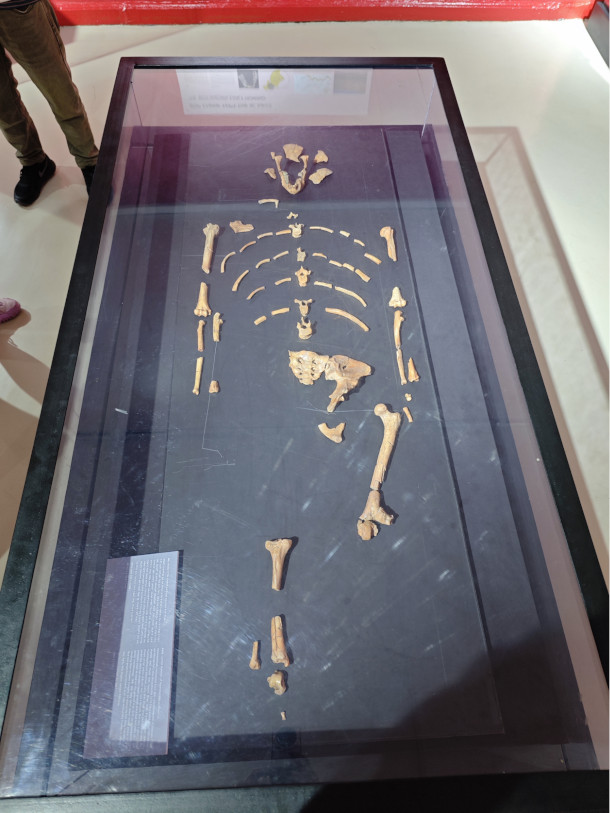
Lucy, the early human ancestor, slept in the treetops and came down during the day. Above, Lucy’s skeleton at the National Museum of Ethiopia. (Photo: FrogsLegs71, Wikimedia Commons, CC BY-SA 3.0)
CURWOOD: And you've climbed some big trees. I mean, I think famously in your book you talk about being with David Attenborough in the Sequoia land. Those trees are tall. It's like a 20 story building. How did you feel up there?
MOOR: I mean, that was one of the most profound experiences I've ever had in a tree, is climbing to the top of that giant sequoia. I climbed to the top of a couple of them there in Sequoia National Park, which was such an honor because most people are not allowed to climb those trees. So you're scaling up a rope, you know, an inch-thick nylon rope, 250 feet in the air, and you're dangling from a branch. You feel incredibly precarious, but you also feel this, this sense of awe because you're experiencing the size of that tree, right? I mean, physically, you're experiencing how huge it is, and it's exhausting, and it's scary, and it's beautiful, and you get this incredible view of the forest and the mountains beyond that you would never get otherwise.
CURWOOD: What's so special about tree canopies? I think you say that biologists said, ah, there's nothing up there. But in fact, there's all kinds of things.
MOOR: Yeah, so one of the fascinating things about climbing up into a giant sequoia is that you can feel the tree changing as you climb it. The shape of the bark changes, the shape of the needles change. You get to the top, and there's a different ecosystem up there. There's all these little wolf lichens and different species that are clinging to the tree, and this is especially true in the coast redwoods. I've climbed a coast redwood as well, which is sort of, you know, cousin to the giant sequoia, and in the tops of those you find whole worlds. I mean, you find huckleberry bushes, you find aquatic species that have been living up there for many many generations. In fact, I once found a bonsai tree, you know, a natural bonsai, a tan oak that was about 30 years old. It was only about a foot tall, and it was growing in the crook of this branch. There's a tree growing atop another tree, and that is something that is maybe the last you know, 30 years has has been this realization. They used to think it was an ecological desert up there. They thought it was just bare branches, and now they realize it's an entire ecosystem and trees are doing remarkable things up there. Redwood trees are learning to drink in the fog through their foliage. Big-leaf maples are learning to extend roots out of their branches into the patches of soil and moss to drink in that water. It's really one of the most unexplored regions of our planet, is the tops of trees, and scientists are just starting to divine all these amazing facts.
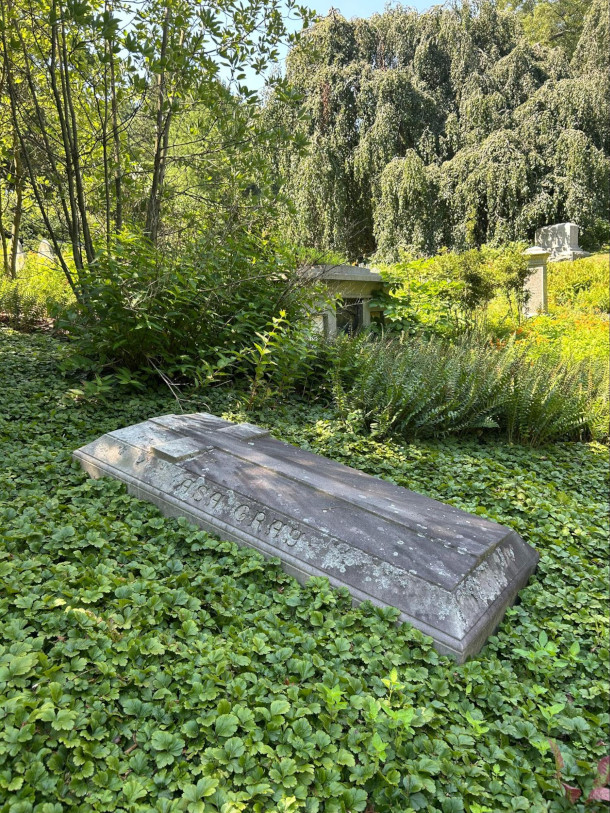
Asa Gray, the American botanist, was close friends with Charles Darwin while he was developing his theory of evolution. Above, Gray’s grave at Mount Auburn Cemetery. (Photo: Bella Smith)
CURWOOD: A number of people in your book are climbing trees. I'm thinking of Julia Butterfly Hill for one. What is it that brings these people to the treetops to say something to the rest of us?
MOOR: Yeah, I mean this is actually not a recent history. This is an unfathomably long history, if you think about it, because we are descended from an arboreal species. We're descended from arboreal mammals, but to some degree we remain an arboreal species. If you think about it, humans have always been climbing trees, and we're still climbing trees, going all the way back to our ancient hominid ancestors. You know, they were sleeping in nests. They believe that Lucy, the Australopithecus afarensis, would have spent her nights in a nest, and then we came down to the ground. But we were always climbing back up. We were climbing back up to gather fruits and honey, and in fact, there are peoples in, for example, the Congo who can still climb hundreds of feet high to gather honey, and their bodies are actually shaped differently. They have more dorsiflexion in their ankles. They've trained their bodies to become more arboreal than ours are through this daily practice, and so if you climb trees all the time, from the time you're a child until you're an adult, it's incredibly easy for you. I visited a group of people called the Korowai in Papua who live in treehouses, and one of their elders, this guy named Marcus, offered to climb a tree for me so I could just see how good he was at it, and it was astonishing. It was like watching a professional rock climber. He was so graceful. He was so agile, and he climbed to the top of this tree, grabbed a vine, swung into another tree, sat in those branches, you know, with this look of total nonchalance, and as if just to say, this is our home. This is where we, as a species, belong. We have always been arboreal.
CURWOOD: So you have a number of interesting factors in your book, or issues. Let's see, there's race. There's colonialism. There's Karl Marx. Okay, why do you explore these topics in this book that's called "In Trees?"
MOOR: Yeah. I mean, I think that that's been a blind spot of nature writing for a long time. The realm of human messiness and human history and domination and injustice are things that we tended to kind of sweep aside so that we could look at the beautiful parts of nature. And this is something that really came to the fore for me when I was talking to a relative of mine. We discovered by tracing my family tree that there's an entire branch of my family tree who are Black. And this cousin of mine, Gia, we traveled through Alabama together researching our family history, and one of the points she hammered home, and I subsequently ran across in other people's writings, is that for many Black Americans, the experience of a forest and of trees is very different than for for white people. For for me, I look at trees like these ones, and you know these symbols of health and nature and peace, and that's it. It's very simple. And for Gia and many other Black people in America, there's also a darker history, which is the history of lynching, the history of racial terror, that has extended from the time of slavery up to the present day. I mean, in many places, the town's lynching tree still stands in front of the courthouse, and in some cases they've tried to take that tree down, and the locals have fought to keep it there. So it's still standing today as a reminder of that, that painful history, and I think it's important to look at that history.
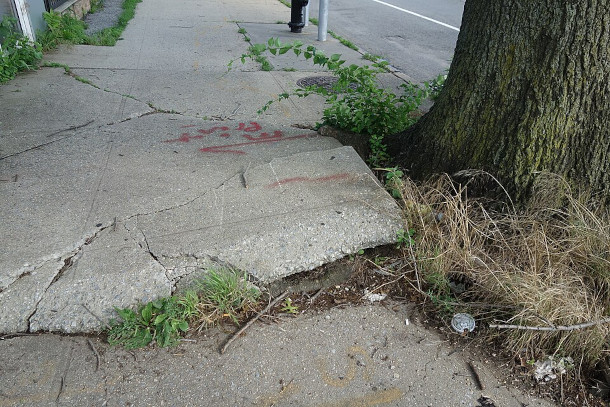
Moor likens history to tree roots bursting through a sidewalk – it will always find a way to come to light. (Photo: Tdorante10, Wikimedia Commons, CC BY-SA 4.0)
[FOOTSTEPS]
CURWOOD: So tell us where are we going?
MOOR: So what I'd like to do is find the grave of Asa Gray. Asa Gray is known as the father of American botany. He was an important botanist in the 19th century, and is someone who I'm kind of fascinated with, both because of that work, but also because he was close friends with Charles Darwin. And there's a great story about Darwin. He sent a letter to Asa Gray in 1857, outlining his theory of evolution. And in that letter, he uses the metaphor of a tree. This is one of the things you find when you look at Darwin's old notes, is that he was thinking in trees. He was drawing little sketches of trees. He was constantly referring to the metaphor of the tree, and that was his way of breaking out of this other model of evolution, which was the tower, the great chain of being, in which human beings are at the top and everything else is sort of arrayed down below. By thinking in trees, he managed to break that apart into something that was quite radical, which was to say that everything that is alive is equally evolved, and it's all related. The term they used back then was consanguinity. Wait, actually, let's ask these people. Sorry. Hi. Do you know where Asa Gray's grave is? Is it straight up here?
CEMETERY WORKER: I think it's that one right by that vehicle.
MOOR: Oh, there we go. Yeah. Okay. Thank you. [FOOTSTEPS] But so that, that letter that Darwin writes to Asa Gray ends up being really important because a year later, Alfred Russel Wallace comes forward with his theory of evolution, which is essentially the same as Darwin's. And Darwin had been sitting on his theory of natural selection for for decades, and had never put it forward. He was trying to really bolster it before he put it out, and that letter from Darwin to Asa Gray ends up being the key piece of evidence which secures Darwin's reputation, and it's why we think of him as the father of Darwinism and not Alfred Russel Wallace today.
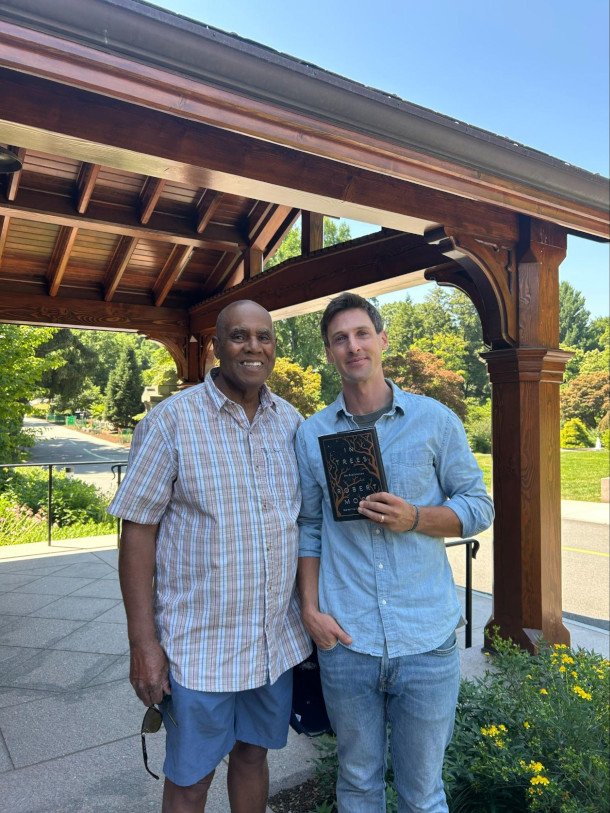
Host Steve Curwood (left) with guest Robert Moor (right). (Photo: Bella Smith)
CURWOOD: So we're headed up the ivy path here, huh?
MOOR: That's right.
CURWOOD: Let's see. Is it in here, maybe?
CEMETERY WORKER: Oh, it's right here. It's this one.
MOOR: Oh, we were standing right in front of it. So there you go, there's, let's see what it says on the side. Oh yeah, Asa Gray. Yeah, so this is really a formative figure in not just the history of botany, but the history of our understanding of evolution, and also I would say you know one of the people who really helped spread Darwin's tree-like understanding of the world, his, his notion of of tree thinking, and it's actually a term that evolutionary biologists use is tree thinking, which means seeing evolution as a branching process and not just as a straight road, right, from tiny bacteria to humans, as if we were always evolving towards this state of being human or something. Tree thinking is a really powerful tool to break yourself out of that.
CURWOOD: So you say that tree thinking is a way people should look at aging and the human experience.
MOOR: I do think so. I think that there's a distinction that is sometimes made between getting old and growing old, and that's one way in which trees can really inform our understanding of how to grow old, because trees grow old beautifully. They're always growing throughout their lives, and they're always shedding. They're always dropping the limbs that don't work. And so I think studying trees is a way that we can learn to to grow old gracefully and creatively, and to stay branchy throughout our lives. This is something that neuroscientists will tell you is one of the most important things about growing old in a healthy way is that you got to stay branchy. You got to try new things. You have to take risks. You can't just get winnowed away into these little ruts. You know, I think that that's something that the modern world does to us, is it forces you to specialize and it makes it so that you just become narrower and narrower as you get older. In some ways, staying branchy is an act of resistance. You know, it's it's resisting that system that wants to make us into these narrow little instruments.
CURWOOD: So America is actually very young as a nation. How do you think it could take the power of a tree to grow older in a graceful way?
MOOR: Well, I think one of the beautiful ideas of America has always been that branchiness, the notion of diversity, but diversity and unity, right? E pluribus unum. That is what a tree is. A tree is e pluribus unum. It is many branches and one trunk, and that arborescent growth of the United States has been one of its greatest assets throughout its history. Unfortunately, I feel that we're now living in a time when diversity has become a dirty word, and people want to return to some kind of simplistic notion of what America is, that America is a certain type of person. It's a person of a certain race or a certain culture, and of course, that is not true. It's not true historically, but it's also not true in the larger philosophical sense. It's not a beautiful idea. It's not a useful idea. It's a corrupt idea.
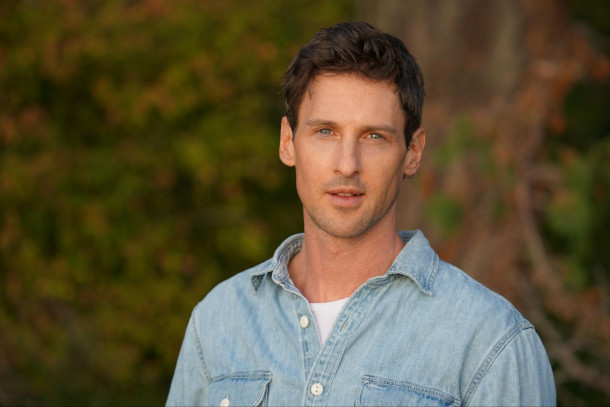
Robert Moor is an author and journalist whose latest book is In Trees: An Exploration. (Photo: Remi Morawski)
I mean, I think that one of the great lessons of studying history is to to see those gnarls, right? To see all of the challenges that America has gone through, all of the wounds that its people have suffered, and how we've grown around those moments, and hopefully outgrown them. That is, I think, one of the big takeaways of tracing my family tree, and then also looking into the history of slavery and Jim Crow, and the relationship that Black Americans have with trees, forced me to grapple with that in a very concrete way. You can't just paper over history. You know, it's kind of like when you look around and you see the tree roots bulging through the, the sidewalks. That's what history does. It will, it will come to the fore again, even when you try to cover it up. And the only healthy thing to do, the only useful thing to do, the only wise thing to do, is to grapple with that history and, and to be honest about it, and then hope that we can outgrow it.
CURWOOD: Tell me, what should people take away from your book?
MOOR: I think that the biggest lesson I try to impart is that, if possible, we should try to think like a tree. What I mean by that is to think in that growth form, to think in a way that's branchy, in a way that's rigorous and pruning away the things that don't work, in a way that's resilient and gnarls around the things that do, and most importantly in a way that's deeply rooted. And when you start thinking in that shape of mind, I think that what you find is that a lot of our bad habits of thinking, being reductive and simplistic, thinking in binaries, the tree starts to split them apart, and you start to find this broader, more creative, and more relational way of seeing the world. And I think if more people could think like a tree, the world we live in would be a very different place.
CURWOOD: Robert Moor is a journalist and author, and his latest book is "In Trees: An Exploration." Rob, thanks so much for taking the time with us today.
MOOR: Thank you so much. It's been a lot of fun.
Links
Purchase In Trees: An Exploration and support Living on Earth and independent booksellers
Living on Earth wants to hear from you!
Living on Earth
62 Calef Highway, Suite 212
Lee, NH 03861
Telephone: 617-287-4121
E-mail: comments@loe.org
Newsletter [Click here]
Donate to Living on Earth!
Living on Earth is an independent media program and relies entirely on contributions from listeners and institutions supporting public service. Please donate now to preserve an independent environmental voice.
NewsletterLiving on Earth offers a weekly delivery of the show's rundown to your mailbox. Sign up for our newsletter today!
 Sailors For The Sea: Be the change you want to sea.
 The Grantham Foundation for the Protection of the Environment: Committed to protecting and improving the health of the global environment.
 Contribute to Living on Earth and receive, as our gift to you, an archival print of one of Mark Seth Lender's extraordinary wildlife photographs. Follow the link to see Mark's current collection of photographs.
 Buy a signed copy of Mark Seth Lender's book Smeagull the Seagull & support Living on Earth
© Copyright World Media Foundation. All Rights Reserved
Home | Contact | RSS | Donate | Newsletter