

Saving the Klamath, Salmon, and Yurok Culture
Air Date: Week of July 31, 2026
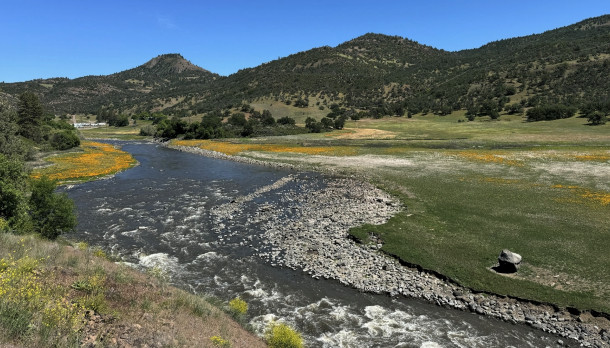
The Klamath River is approximately 257 to 263 miles long, stretching from its headwaters near Upper Klamath Lake and Lake Ewauna in southern Oregon emptying into the Pacific Ocean in northern California. For indigenous peoples like the Yurok, Karuk, the Klamath River is a sacred life force. (Photo: Ridges to Riffles)
The Yurok tribe has inhabited the lower stretches of the Klamath River in Northern California since time immemorial, and their culture is deeply intertwined with the river’s salmon. So, when toxic conditions caused by the dams on the river resulted in a massive fish kill, the Yurok people sprang into action. Yurok attorney Amy Bowers Cordalis joins Host Jenni Doering to talk about the historic removal of Klamath dams and her 2026 book, The Water Remembers: My Indigenous Family’s Fight to Save a River and a Way of Life.
Transcript
DOERING: The Klamath River flows for roughly 260 miles through south-central Oregon and northern California. Dams went up along the river starting in the early 1900s, separating migrating salmon from spawning grounds and creating toxic river conditions that killed many fish. For the Yurok tribe, which has inhabited the lower stretches of the Klamath River since time immemorial, the problems caused by the dams created an existential crisis. Their culture is deeply intertwined with the salmon, and the Yurok saw a sacred obligation to protect them. Amy Bowers Cordalis is a Yurok mother, fisherwoman, and attorney who co-founded Ridges to Riffles Indigenous Conservation Group. As General Counsel for the Yurok Tribe, Amy helped lead the legal and community movement that achieved an unprecedented dam removal and river restoration project on the Klamath. She’s written a wonderful 2026 book telling the story of this effort, called The Water Remembers: My Indigenous Family’s Fight to Save a River and a Way of Life. Amy Bowers Cordalis, welcome to Living on Earth!
BOWERS CORDALIS: Ayakui. Thank you for having me.
DOERING: You don't hold back in this book. I mean, you don't try to wash over some really horrible things that happened. And I think that history is really important for people to know and understand because your people have survived a lot of stuff. And part of the point of this story is, it was standing up and continuing to live your traditional ways that actually helped preserve your culture in the end.
BOWERS CORDALIS: Yeah, and thank you for framing it all that way. There was a lot of privilege to be able to write a book like this, and you know I remember after the fish kill, feeling so marginalized and like nobody cared about our river, about our culture, the salmon, and then also that what had caused the fish kill was essentially by decisions made in D.C., things off our reservation, and so it felt pretty helpless. Like, how are we going to heal the river if nobody cares, and so in writing this book, I get the privilege of telling the story from our perspective. And this is of course my family's story, but there are many families, indigenous families on the Klamath of all different tribal nations, whose family stories are very similar to the one that I wrote here, and I really hope that by putting my story out there, that we can uplift those unspoken, those uncelebrated heroes who fought for generations just to be who they were.
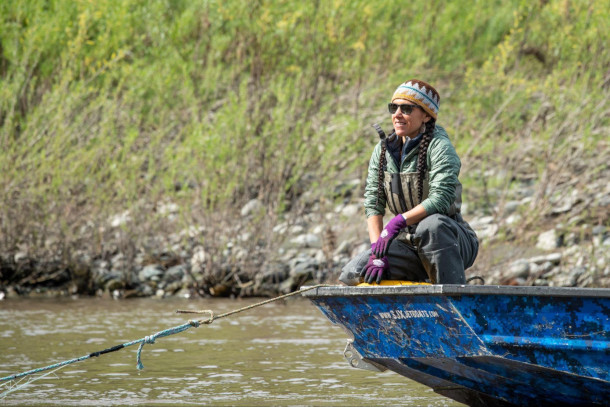
Amy Bowers Cordalis on a fishing trip with her family. She is an attorney and Yurok Tribe member, as well as the author of The Water Remembers: My Indigenous Family's Fight to Save a River and a Way of Life. (Photo: Swiftwater Films, Courtesy of Amy Bowers Cordalis.)
DOERING: Well, one of the ways that your family has tried to preserve and successfully, I would say, preserved a lot of the culture and traditions of the Yurok people is through song and dance medicine. You come from a long line of dance and song medicine people. One of those people is your great grandmother Geneva, so I would love to hear about her and the role that she played in protecting life on the river.
BOWERS CORDALIS: She was a force, and she was a very petite woman. She had a phenomenal life, and just the time and what was happening in the world during her lifespan. So she was born in 1904 and passed away in 1986, and I knew her, but she was raised by her grandparents, and so they only spoke Yurok. They lived a completely Yurok Aboriginal life of subsistence, of hunting, gathering, and then through her life transitioned in some ways to a more modern lifestyle. But really, at her core, maintained those Indian values and an Indian perspective. And in the book, you know, I refer to it as the Indian way, and she was tested many times in her life. You know, and one of the stories in the book– and, and that's like one of my most favorite stories too– is just how there's so many times in life where she prayed. She prayed all the time, and she deeply believed in her Indian way, yet it was tested all the time through trying to be a bootleg salmon fishing people and get salmon out the river to go, you know, sell, all these sort of like just tests. And every time her Indian way protected her, and so she grew up, and even as she, you know, as an adult and later in her life, she deeply believed in the Indian way, and then she taught it to the family, and so in many ways, that's how that like passing down of the knowledge was carried forward through some of the hardest times of colonization. Many families, many indigenous families, didn't have that same sort of passing of the knowledge because people were killed or you know whatever happened and so, so she just played a critical role in passing down the knowledge and you know there were people who acknowledged that too, and there were these great transcripts of her oral interviews and I tapped into those for many of the stories in the book, and it was really such a treasure chest, right? Because I could hear these stories. Many of them I had heard as a very small girl, but they were filled in with more detail and context through these transcripts. But she was so powerful, you know, like the story about when they were doing the fishing, the protest, and you know the feds coming with full riot gear and machine guns just to pull her and my grandma off the river, and was getting really violent, uncle Ray was coming in, there were people yelling along the shore, and that easily could have turned into a situation where someone got shot. And she knew that, and so she just stood up in the boat and started singing a Yurok song and called in the birds from all over, and they just swarmed around her and the boat and the feds, and the feds got so freaked out they just hightailed it out of there. [LAUGH] And I love...
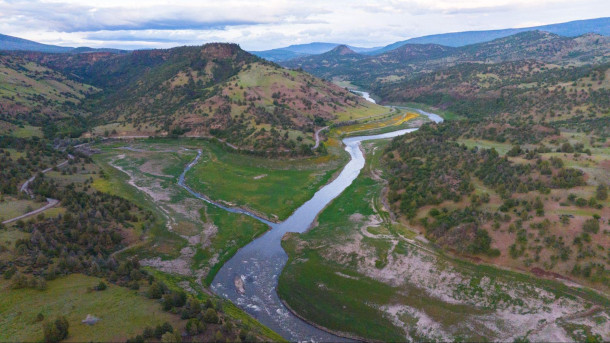
A bird’s-eye view of the Klamath River, once the third largest salmon producing river in the continental U.S. Many Indigenous peoples along the river, including the Yurok Tribe, have led efforts to protect and restore its waters through the removal of major dams. (Photo: Ridges to Riffles)
DOERING: They were not prepared for that. Yeah. [LAUGH]
BOWERS CORDALIS: No, no, they no! I mean, like, had somebody pulled out a gun, they would have been ready for that. But like, some deep, you know, like cultural nature power like no, they were totally freaked out, and then they never came back. You know, so that's how powerful she was, that she could control things. And I really enjoy sharing that story with people because it reflects the deep power, the deep relationship of the Indian way that Yurok people have, and I think it's important for folks to know that that kind of relationship is possible between humans and nature. It's possible through ceremony and ritual and prayer and living a really good life, and it's not gone. You know, it's not gone.
[MUSIC: Redwood Solitude]
DOERING: We’re speaking with Amy Bowers Cordalis, Yurok author of The Water Remembers: My Indigenous Family’s Fight to Save a River and a Way of Life. We’ll be back with more right after the break. Keep listening to Living on Earth!
ANNOUNCER: Support for Living on Earth comes from Hansjörg Wyss in honor of Rosamund Stone Zander. Celebrated painter, environmentalist, and author of The Art of Possibility, who inspired others to see the profound interconnectedness of all living things, and to act with courage and creativity on behalf of our planet. Support also comes from Sailors for the Sea and Oceana. Helping boaters race clean, sail green and protect the seas they love. More information at SailorsForTheSea.org
[CUTAWAY MUSIC: R. Carlos Nakai, Black Lodge, William Eaton, “Beyond The Edge” on Ancestral Voices, Canyon Records]
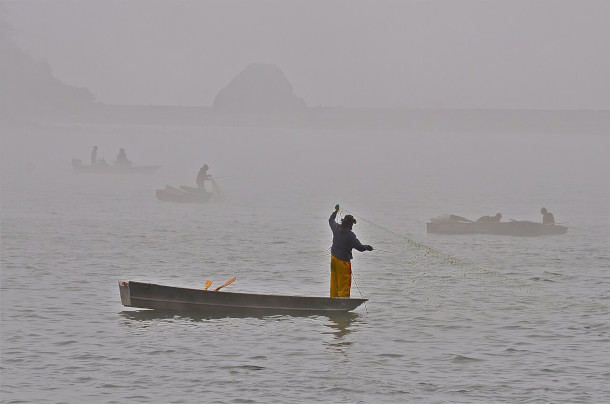
Yurok fishermen on the Klamath River. The tribe’s culture and livelihood for generations have been connected to the salmon runs, with the spring fishing season long serving as a time of gathering and unity for the community. (Photo: Linda Tanner, Wikimedia Commons, CC BY-SA 2.0.)
O’NEILL: It’s Living on Earth, I’m Aynsley O’Neill.
DOERING: And I’m Jenni Doering.
We’re back with more from my conversation with Amy Bowers Cordalis, Yurok author of The Water Remembers: My Indigenous Family’s Fight to Save a River and a Way of Life. The Yurok people are known as “the salmon people,” and I asked Amy to describe that relationship.
BOWERS CORDALIS: Yeah, our whole way of life to this day revolves around the salmon runs. You know, there's three salmon runs now in the Klamath. There's Spring Chinook, Fall Chinook, and then a Coho run. And when the salmon are running, many people come down to the river. They go to their traditional fish holes. They bring their family and they fish. You know, and that's a great moment of like, unity and commonality. And it's just a very healthy thing to go and do, right? Like you're outside. You're working together as a family. You're catching food for your family in this place where you know, your family has been fishing since the beginning of time. So it's so deep and powerful just on that level, and then you add the element of fun. When the fish are running, it is just fun, like you know, it's just a good, good time. And I tried to write about that experience, in a chapter in the book, you know, I talked about how my generation, you know, my sisters and brother and mom, dad, we used to call ourselves Team Fishhog, and we were sort of a well-oiled machine where everybody knew their role and just felt good doing it, and it's really fun just being out there.
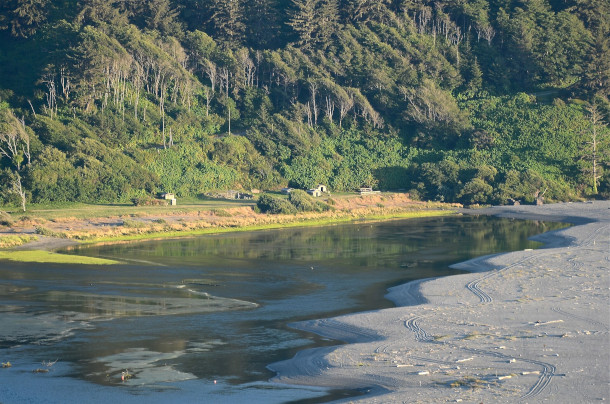
The Klamath River estuary, featuring a number of structures on the bank that are part of a Yurok Tribe ceremonial site. Photo: Linda Tanner, Wikimedia Commons, CC BY-SA 2.0)
DOERING: You're pulling in, you're pulling in these nets, and then untangling the fish, and they're like flapping around, and yeah, it sounds amazing. It sounds fun.
BOWERS CORDALIS: Well, yeah, and your adrenaline is pumping because you know these salmon are large salmon, and when you do everything right, you catch them when they first get caught in the net, and so they're still alive, and they're fighting for their lives. And literally, you're checking the net, and you're pulling the net up out of the water. And when you find the salmon, you have to lean over the side of the boat and do a hefty lift to get the salmon in the boat, and it's flopping around and then you got to untangle it. And you know the thing that my dad taught us too was, you always thank the fish for giving its life so that you can continue yours. And so there's this deep respect for the fish, and we always make sure that we use almost every piece of the salmon to honor that salmon. And then a big thing too, you know, I should share is that the Yurok tribe heavily regulates its fishery to try to ensure sustainable practices. We haven't had a commercial fishery in over 10 years because the salmon runs are so compromised, and so we've greatly reduced our catch and limited our livelihoods in order to protect the salmon because that's our responsibility to it. a]And I think that's really important to appreciate is like yes, we have this great privilege of being the beneficiaries of these iconic salmon runs, but we also have this responsibility of caring for them, and we try to do that in a multitude of ways. By restoring the river, by limiting our fishing practices, all the things. So it's a symbiotic relationship.
DOERING: Yeah, and you took it all the way to court, and well, you took it into this partnership with actually the company that owned the dams itself. You wanted to help restore the river in a way that would mean that the river could flow for the first time in more than 100 years. So, just remind us why are these dams so damaging to the salmon ecosystem? Like, why, you know, why was this so important? These dams were for a while; they were making electricity. It's very expensive to take them out. So, why is that so important?
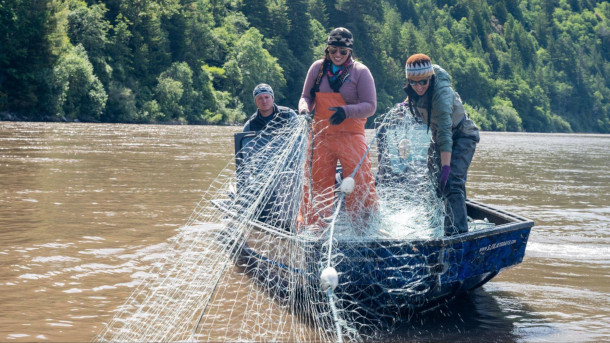
Amy Bowers Cordalis, right, aboard a fishing boat with her sister Ashley Bowers, center. Cordalis’s family used to spend spring fishing together on the Klamath River. In her book, Amy Bowers Cordalis recollects on these trips and the bonds they forged in her book. (Photo: Swiftwater Films, Courtesy of Amy Bowers Cordalis)
BOWERS CORDALIS: Yeah, excellent place to start. So, in a little more context, the Klamath River was historically the third largest salmon-producing river in the continental U.S. and in part that's because of the stewardship of the indigenous peoples on the Klamath, right? Like we actively managed it so that the salmon could grow and the river was healthy, and then of course when colonization happened, all that changed. So, there were four dams that were built in the mid part of the Klamath between 1913 and 1964, and they blocked salmon from spawning. They were built without fish ladders. So Iron Gate Dam was literally an iron gate that blocked any salmon from passing, and if you go, even in my lifetime, if you went to Iron Gate Dam, it looked like a salmon graveyard. There were carcasses of rotting salmon who had died trying to get past the dam and failed because there's no fish passage, so that was one big reason why they were harmful. But then the other one is that behind the dams there were, so four dams, and then there were about 2000 acres of reservoirs that were created by the dams. And underneath those reservoirs there were several cold water springs that used to come up and flow down the river and chill the entire 173 miles of the river from the point of Iron Gate all the way down to the mouth of the river, and so that cold water was blocked. And then on top of that, there was agricultural runoff that came off the Klamath Reclamation Project, which is one of the largest reclamation projects in the whole country, and that was built, the construction started in 1905, and essentially they drained about 2,000 acres of wetlands that were connected to the Klamath system.
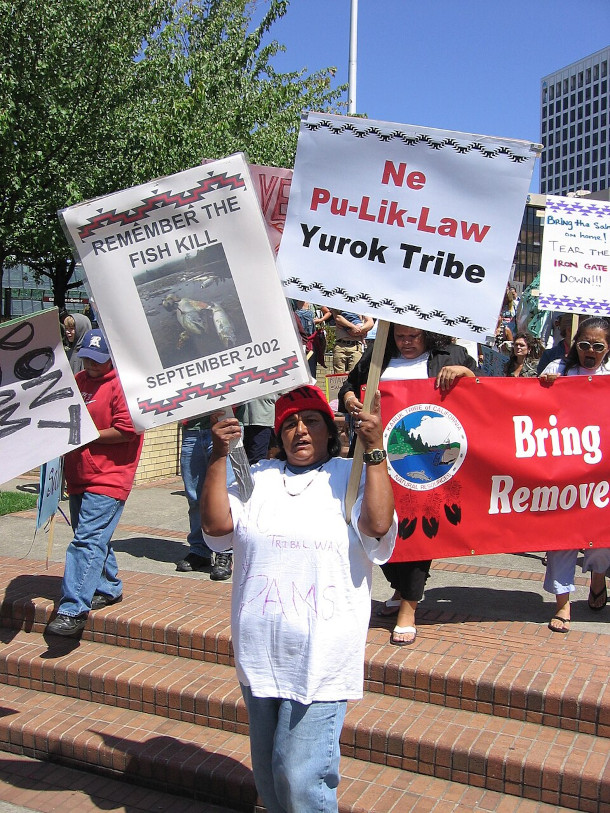
Members of Klamath Basin Tribes joined by the commercial fishing and conservation groups rallied outside the bi-annual meeting of the international hydropower industry -- Hydrovision 2006. They were calling for the removal of PacifiCorp’s four Klamath River dams as part of efforts to restore the river’s salmon runs. Photo taken on August 2nd, 2006. (Photo: Patrick McCully, Wikimedia Commons, CC BY-SA 2.0)
They drained Lower Klamath Lake, they built canals and then diverted a bunch of water out to the fields, and as a result of having been built on wetlands, you apply agricultural chemicals, and then that went into the river, which eventually pooled behind these dams in the 2000 acres of reservoirs. And so, what happened was that the water quality was terrible, and the water temperatures just skyrocketed, and every year we would have outbreaks of toxic blue-green algae, which would then go down the river. And then there's this other interesting thing too, is that the dams disrupted the natural sort of flow of sediment down the river, such that like below the dams you didn't have a natural riverbed with sediment, and that's really important because that sediment usually like it's almost like a scrub brush that cleans the bottom of the river, and so the conditions the dams were creating were one, they were blocking salmon passage, and then two, it was poisoning the water that came below, and then the water was poisoned and hot, and then you didn't have the little you know sediment scrubbing the bottom, and so the bottom of the river got really dirty, so think about like the nastiest dishwater you've ever been in that is like turning toxic green and bubbling and toiling like that's, that's, that was essentially what was happening. And then the dams, in many ways, were becoming obsolete because they were producing a very very small percentage of Pacificorp, the owners eventual owners, overall power portfolio, and then eventually we got to a FERC hearing about relicensing the dam, and at that point they would have required installation of fish ladders and other significant updates in order to comply with existing law, and so it just didn't make sense to keep them in anymore.
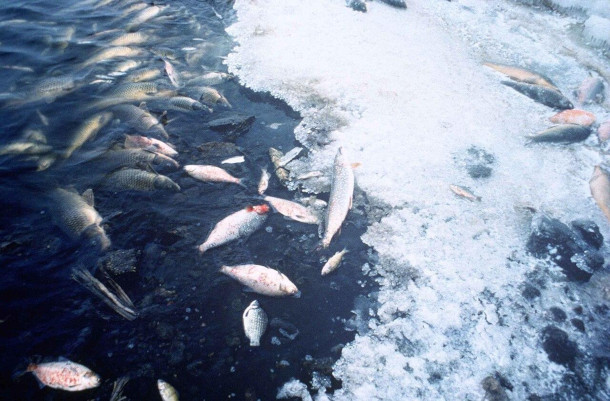
A fish kill, like that shown above, is a mass die-off of a local fish population. While the above fish kill came from a drop in dissolved oxygen thanks to cold temperatures, there are a variety of causes behind a fish die-off. The Yurok tribe has documented several fish kills in the Klamath River. One of the worst fish kills documented was in 2002 when 34,000 to over 70,000 adult Chinook salmon died. (Photo: United States Fish and Wildlife Service, Public Domain)
DOERING: And Amy, it took tragically this fish kill crisis that you mentioned to wake up the world to all of these problems. Like, who could imagine that so many different problems could come from you know one structure from– well four of these dams on this river. So you were there when this fish kill happened, but it sounds like from your book, in the end, I think you kind of came to recognize that death was, was necessary, that it led to new life for the river. So tell us about that horrible moment, and then what followed.
BOWERS CORDALIS: Yeah, it um, it was heavy. And it was, all of this has been a part of the indigenous peoples on the Klamath recovering from colonization. And so, what had happened, and I write about this in the book, was that we hosted a world renewal ceremony that hadn't been done in 100 years, and in its resurrection, there were questions about whether it could be done right, and also an acknowledgement that the medicine was so powerful it could be fatal, and it could be fatal to people, it could be fatal to salmon.
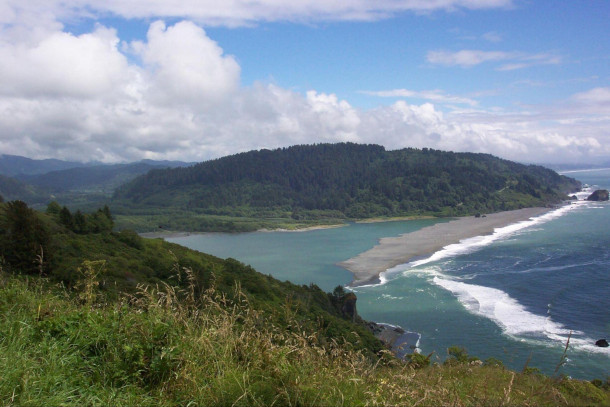
Shown above is the mouth of the Klamath River where it meets the Pacific Ocean. (Photo: Jennifer Silveira, USFWS, Public Domain)
So, the salmon started dying on the last day of that dance, the day they, you know, were closing it up, and it's a 10-day dance, and then the salmon started dying, and so, you know, at the time, it was so tragic, and there's different estimates. The Yurok tribe says it's somewhere about 70,000 salmon that died. It was completely caused by illegal water diversions that caused the river water levels to drop lowest they'd ever been on record, right at a time when a very large salmon run returned to the river. And so it was like this perfect storm of low flows, big salmon run, and also it was hot and a drought, and so a fish disease spread and killed all those salmon, and the fish disease was called ick. And once it starts, it's very difficult to stop it, and so that's why so many salmon died, and we didn't know, like, was that the ceremony's medicine, and how was it working? And in any event, the fish kill launched, you know, myself, but also a whole new generation of Yurok people, of Indigenous people from the Klamath and our allies into the fight to protect the river. And it was an eye opener because I think the whole– well, all the people who worked on the Klamath realized like we can't keep managing this river the same way we had been, and we really needed to figure out a path to restoring the river. Otherwise, it was gonna die right before our eyes. And at Yurok, one, there's our relationship to the river, our responsibilities, our relationship to the salmon. But also, there's a myth that says if the Klamath salmon die, so too will the Yurok people, because there will be no more purpose for us on Earth. And so, seeing those salmon die in such large quantities, and also seeing our river just filled with dead salmon bodies, and it smelled like a war zone. You know, for us, it's literally we're witnessing the end of the world. It was an existential crisis, and so we all responded with that level of urgency. And many people went and got degrees, me including. But you know, there was people who became scientists. There were people who led grassroots movements. There were people that went into tribal leadership, and it really launched the undam the Klamath movement that led to the undamming of the Klamath. And so now I, I look back, and it is undeniable that the medicine of that first world renewal ceremony was very powerful. And I, in the book, you know, write about how maybe there was an agreement between the creator and the, and the salmon, where the creator said, "We'll take this one for the team". [LAUGH] You know, sort of like a martyr.
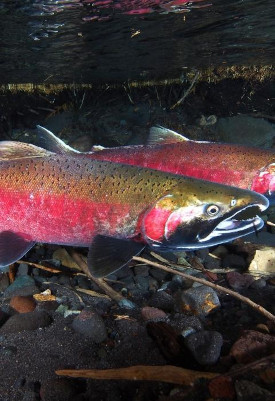
Two coho salmon swimming. (Photo: Roger Tabor/USFWS, Flickr, Public Domain)
DOERING: It'll, it'll be bad for a bit and a while, and then it will get better. What is the health of the river now? Can you share an update for us on the Klamath River since the dam removal was completed?
BOWERS CORDALIS: Yeah, so the river is healing. Water quality has improved, water temperatures have dropped, and following the first year of dam removal, even more salmon came home and went even further into the tributaries up in Oregon, past Upper Klamath Lake. And we also had a nice outmigration of babies from the places that they spawned, and so it's an exciting time to be watching the, the sort of– and we don't use the word recolonization, but that is like the the technical word that they use when you reintroduce salmon. We're like, no... [LAUGH]
DOERING: You don't want to be seen as, as colonizers, right? I get that.
BOWERS: [LAUGH] No we're not recolonizing. But they're you know they're they're replenishing and going home and creating their homes and growing, let's say that. So that's pretty remarkable. We've been able to reduce carbon emissions significantly. Those reservoirs were emitting a lot of methane, and so by removing the dams, we have reduced the carbon footprint significantly on the river. We've returned land to the Shasta Indian Nations, so that's pretty exciting. We've got people, Indians too, going home to and back to their traditional lands, so that's been encouraging.
DOERING: Lands that were flooded by these reservoirs.
BOWERS CORDALIS: Yeah, exactly, yeah. The Yurok tribe has planted over 20 billion, billion with a B, native seeds throughout the whole project area, and are rebuilding ecosystems with traditional foods like acorns and hazels and different basket making materials. And with those new ecosystems, all the creatures that survive and live off them are also coming back. And it's all about fixing the world, and putting things back together so that everything can play their role, so that the balance is restored. And I think when the balance is restored, that's when that Indian way becomes so powerful. You know, we're talking about Geneva, and it's not something that has to just be limited to us. This could be an approach, a model, a way of thinking that the world gets behind. And that was one of the points that I tried to make in the book, ss you know, Klamath dam removal and the work we did was really a model for how we can heal the planet and bring a lot of social, political, and economic stability to the Earth.
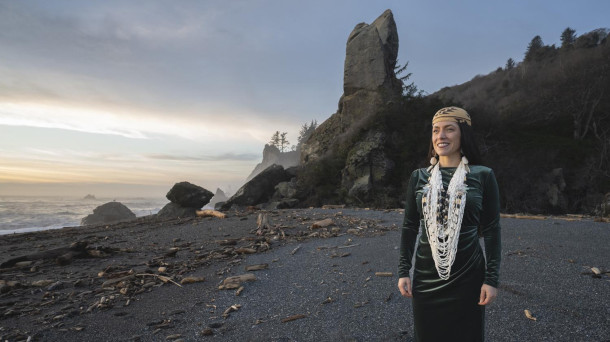
Amy Bowers Cordalis is the author of The Water Remembers: My Indigenous Family's Fight to Save a River and a Way of Life. (Photo: Courtesy of Amy Bowers Cordalis)
We were able, with the dam removal, to use grassroots, use the law, policy, and leadership to enter into a $500 million settlement agreement that equally valued the rights of nature, business, and indigenous peoples. And dam removal, at the end of the day, it was profitable. Like there was a, you know, a company that came in and did the dam removal and made money. They wouldn't have been there had it not been profitable. But then also, it was huge for protecting our way of life, huge for restoring the river and the salmon. And so what that tells me is, if we can do it on the Klamath, it could be replicated anywhere. And if you can bring about that kind of, like, stability, and still use some of our dominant, you know, modes of being, capitalism, for example, like there's a way forward where we can really change the trajectory and honor the earth, restore the earth, honor indigenous cultures, and still, you know, be in business. Sure, we have to make some adjustments, but there's a model there that starts on the Klamath.
DOERING: Amy Bowers Cordalis is the author of The Water Remembers: My Indigenous Family's Fight to Save a River and a Way of Life. Thank you so much, Amy.
BOWERS CORDALIS: Well, thank you, wokhleř, to you and to the audience for being here, it's really a pleasure.
Links
Learn more about Amy Bowers Cordalis
Living on Earth wants to hear from you!
Living on Earth
62 Calef Highway, Suite 212
Lee, NH 03861
Telephone: 617-287-4121
E-mail: comments@loe.org
Newsletter [Click here]
Donate to Living on Earth!
Living on Earth is an independent media program and relies entirely on contributions from listeners and institutions supporting public service. Please donate now to preserve an independent environmental voice.
NewsletterLiving on Earth offers a weekly delivery of the show's rundown to your mailbox. Sign up for our newsletter today!
 Sailors For The Sea: Be the change you want to sea.
 The Grantham Foundation for the Protection of the Environment: Committed to protecting and improving the health of the global environment.
 Contribute to Living on Earth and receive, as our gift to you, an archival print of one of Mark Seth Lender's extraordinary wildlife photographs. Follow the link to see Mark's current collection of photographs.
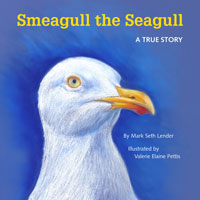 Buy a signed copy of Mark Seth Lender's book Smeagull the Seagull & support Living on Earth
© Copyright World Media Foundation. All Rights Reserved
Home | Contact | RSS | Donate | Newsletter