
Melting Glaciers Trigger Earthquakes
Air Date: Week of July 17, 2026
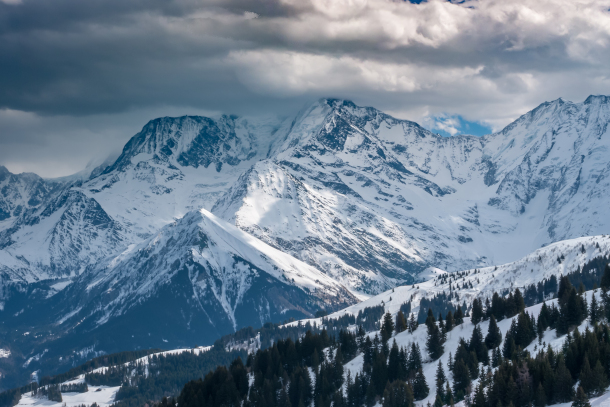
Scientists discovered that a 2015 heat wave sparked a wave of small earthquakes under Mont Blanc, the tallest mountain in Western Europe. (Photo: Matti Blume, Wikimedia Commons, CC BY-SA 4.0)
A 2025 paper published in the journal Earth and Planetary Science Letters documented a link between melting ice in the Alps caused by a heat wave, and an uptick in small earthquakes. In this note on emerging science written by El Wilson, Living on Earth’s Bella Smith explains this unexpected aspect of the warming planet.
Transcript
DOERING: Climate change is so profoundly affecting our world that perhaps we shouldn’t be surprised by another unexpected consequence, described in this note on emerging science written by El Wilson and voiced by Bella Smith.
[SCIENCE NOTE THEME]
SMITH: When we think of natural disasters caused by the climate crisis, many of us picture hurricanes and forest fires. But now, scientists are discovering that the earth beneath our feet is shifting too. In a paper released in September 2025, in the journal Earth and Planetary Science Letters, seismologists describe how increased snow melt on our warming planet appears to be leading to earthquakes. Their investigation began at Mont Blanc, the highest mountain in Western Europe, which has an unusual feature: a deep tunnel connecting Italy and France. Scientists examined the interior tunnel and identified fault lines where different sections of rock can slip past each other, just a little bit, resulting in earthquakes. After studying decades of seismic records, they saw a notable jump in earthquake frequency beginning in 2015, when a massive heat wave melted large portions of snow and ice in the Alps. To help us understand how this could work we called up Colin Meyer, an associate professor of engineering at Dartmouth who studies the fluid dynamics of snow and ice and wasn’t involved in the research itself.
MEYER: The general idea of the paper is that some water from the glaciers, as they are melting, is making its way into this fracture zone, and it's changing the friction on the fractures, causing them to be a little bit more seismically active.

Colin Meyer is an associate professor of engineering at Dartmouth who specializes in snow and ice mechanics. (Photo: Greg LeClaire Wagner)
SMITH: In other words, the pressurized water makes those cracks in the rock a little bit more slippery. Now, if you’re picturing giant avalanches, take a deep breath. Most of the earthquakes measured by the seismologists were a one or two on the Richter Scale, which you would barely notice. And while there is the potential for these small earthquakes to lead to larger ones, other hazards from melting glaciers, like floods from ice dams bursting, are likely going to be more of a concern for people living near these glaciers than the increased seismic activity. Still, Meyer believes the research is valuable.
MEYER: What I like about this paper, it's connecting things about the climate crisis, about glaciers melting, to things that are innately concerning. You know, we in most of our lifetimes have not seen 50 centimeters of sea level rise before, whereas we have heard and watched movies about earthquakes. It's connecting the story about how climate is causing mountain glaciers to melt, and how that's affecting systems that are beyond the typical systems we think about.
SMITH: For Living on Earth and with Producer El Wilson, I’m Bella Smith.
Links
Science | “Global Warming Is Triggering Earthquakes in the Alps”
Living on Earth wants to hear from you!
Living on Earth
62 Calef Highway, Suite 212
Lee, NH 03861
Telephone: 617-287-4121
E-mail: comments@loe.org
Newsletter [Click here]
Donate to Living on Earth!
Living on Earth is an independent media program and relies entirely on contributions from listeners and institutions supporting public service. Please donate now to preserve an independent environmental voice.
NewsletterLiving on Earth offers a weekly delivery of the show's rundown to your mailbox. Sign up for our newsletter today!
 Sailors For The Sea: Be the change you want to sea.
 The Grantham Foundation for the Protection of the Environment: Committed to protecting and improving the health of the global environment.
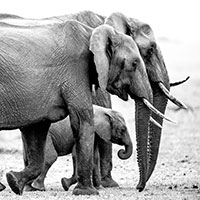 Contribute to Living on Earth and receive, as our gift to you, an archival print of one of Mark Seth Lender's extraordinary wildlife photographs. Follow the link to see Mark's current collection of photographs.
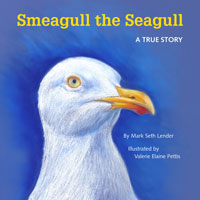 Buy a signed copy of Mark Seth Lender's book Smeagull the Seagull & support Living on Earth
© Copyright World Media Foundation. All Rights Reserved
Home | Contact | RSS | Donate | Newsletter