

The Spectacular Regrowth of New England Forests
Air Date: Week of July 3, 2026
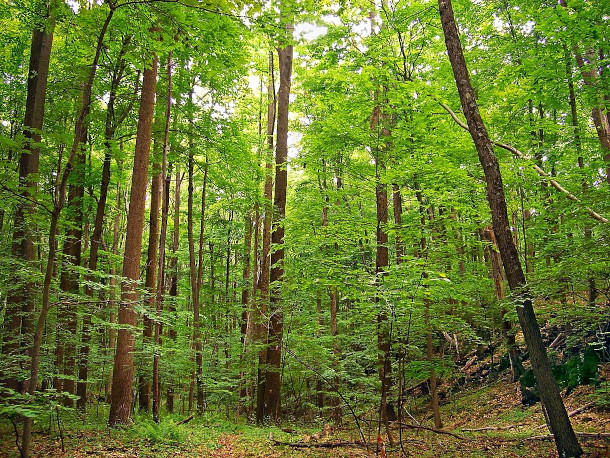
This second-growth forest in New Jersey was once a plot of farmland; it has since become a mature deciduous forest. (Photo: Nicholas A. Tonelli, Wikimedia Commons, CC BY 2.0)
When European colonists landed in North America, some of the most dramatic changes they made were to our forests. Clearcutting ran rampant, but now, on the 250th birthday of the United States, much of our forests have recovered, particularly in the Northeast. Bill Moomaw, Distinguished Visiting Scientist at the Woodwell Climate Research Center, tells that story of recovery to Host Steve Curwood and explains why maintaining our forests is vital for mitigating the effects of climate change.
Transcript
DOERING: It’s Living on Earth, I’m Jenni Doering
CURWOOD: And I’m Steve Curwood.
When we take a look at the history of the United States, after the European colonists landed, some of the most dramatic changes they made were to the landscape, and especially our forests. Clearcutting ran rampant, but now, on the 250th birthday of the United States, much of our forests have recovered, particularly in the Northeast.
DOERING: Since they function as carbon sinks, maintaining our forests is a key tool we have for mitigating the effects of climate change. During negotiations for the Kyoto Protocol, the United States even tried to argue that our forests should be taken into account as an offset for our historic carbon emissions.
CURWOOD: Joining us now is Bill Moomaw, Tufts Emeritus Professor and a Distinguished Visiting Scientist at the Woodwell Climate Research Center. He was a lead author of several Intergovernmental Panel on Climate Change reports, and the organization shared the Nobel Peace Prize in 2007 along with US Vice President Al Gore. Bill has spent decades studying how the process of rebuilding American forests could shape the country’s climate future, but I started off asking him to look back in history to when the United States was just getting started.
MOOMAW: Well, it's remarkable. John Winthrop is quoted as after arriving on the Mayflower: "We have been sent to a wilderness filled with savages and wild beasts." Clearly, they weren't impressed with the massive forest they saw or the people who were here, and this notion that the forests were in the way of making the new world not look like England. And to make it look like England, they had to have agriculture, they had to clear forests for their villages, come cities, and it didn't stop there. The value of the tall white pines in the primary forest that were here were so magnificent that the sovereign in England required that they all be saved for Her Majesty's ships in order to have the tallest masts, taller than the Spaniards, for example, and it was just seen as a resource and a barrier, and therefore it had to be removed. And that's the New England part and the Virginia part, which were the first areas settled.
CURWOOD: So we're talking about King Pines, huh?
MOOMAW: King Pines, absolutely.
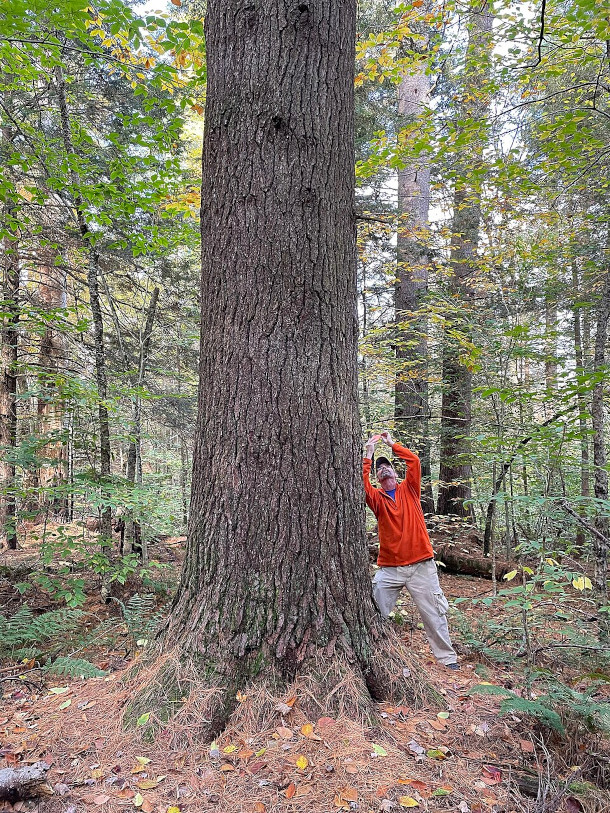
A large white pine towers above an observer in William Cullen Bryant Homestead, located in Cummington, MA. (Photo: Marty Aligata, Wikimedia Commons, CC BY-SA 4.0)
CURWOOD: So, how much of the forest was lost in the Northeast once the Europeans came?
MOOMAW: Well, it took a little while, but by 1850 New England was probably 80% deforested, and in some places 90% and 100% I mean, it was just absolutely decimated. And it wasn't until after 1900 when Gifford Pinchot returned from Europe, learning how the Europeans had managed their forest in order to be a resource for hundreds if not thousands of years, that we changed our practices from just wanton destruction. I mean, we were cutting down whole hemlock forests in the Northeast, in New England, just to get the bark, to get the tannin to tan leather, and the rest was just dumped and then burned, so these raging fires in New Hampshire, and so forth, as they were just burning the wood that they had cut down.
CURWOOD: So, actually, what was needed to happen to have the forest come back in the Northeast? We'll talk about the rest of the country in a moment, but what kind of recovery did we see for the forest in the northeast?
MOOMAW: Well, it's a remarkable story, but what happened was — just to give you an example — Massachusetts, which is the, I think, the third most densely populated state in the United States, is 60% forested today. Now, it was probably 90% plus forested when the Europeans arrived, but it went through a period in which 80 to 90% of the forest was removed, and that was exacerbated between 1850 and 1900 by the railroads. The railroads had to be fueled, they were fueled by burning wood to make steam. The railroad tracks had to have ties, trees were cut down to make ties for railroads, so what we extol is this great industrialization that carried in America in the last half of the 19th century was a disaster for the forests. But around 1850, the Ohio territories were opening up, and so New England farmers who had been cutting down forests and then plowing the rocks discovered all you had to do in Ohio was cut down the forest, and there were no rocks. And so they abandoned their farmland, and the regrowth of forest in the northeast US, particularly New England, is the greatest forest recovery in the history of the world, and it all happened because of what I call benign neglect. It was not a plan, it was just abandonment of agricultural lands that receded spontaneously for the most part. Now, in other parts of the country, forests that were cut were then turned into giant tree plantations of single species. Same is happening in the southeast, actually, didn't happen so much in the northeast. So we didn't really plant our way back into forests, we planted our way back into tree farms, because if you're a forester and you have a piece of land you wanted to improve it, meaning to replace the trees you'd cut down with the trees you wanted to cut the next time, so the species were changed to accommodate that. And so we didn't get our natural forest back in some parts of the country, but in New England we pretty much did. It's remarkable what has happened in the last hundred years.
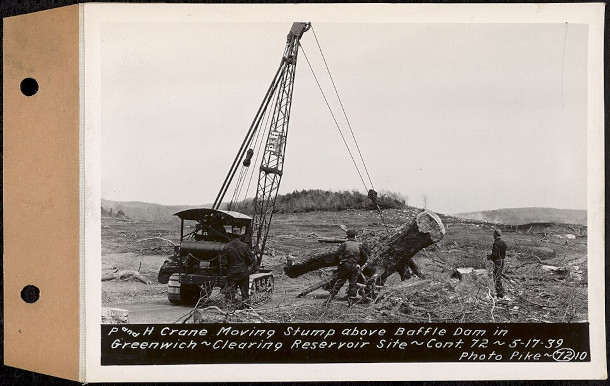
A crane moves a tree trunk in 1939 to clear a site for the new Quabbin Reservoir in Massachusetts. (Photo: Metropolitan District Water Supply Commission, Wikimedia Commons, public domain)
CURWOOD: So, here are the 250th anniversary of the United States, and it begins in the east and northeast. We start by cutting down all the trees, essentially we can celebrate that they're mostly back. Huh?
MOOMAW: Well, we can. I think it is worth celebrating too. I mean, the battle's not over, in the sense that you know most states have a department of natural resources, which means that a forest is considered a resource. A resource is something to be exploited for economic reasons. And then there's been this huge battle going back to the late 19th century that somehow some people thought, well, we should save some of our forests. So John Muir is the most famous person who was advocating that, and so while Gifford Pinchot was saying we needed to use it as a resource and use it wisely, Muir is saying it was somehow sacred and should be protected, and that's been the debate. And there's now a third view, which is forests and other ecosystems are essential components of the earth's operating system. This is why we're talking about them, for climate, for example, and in that role we can't have a planet that has the climate that made our whole civilization possible if we don't have forests and oceans and other ecosystems that are functional.
CURWOOD: Bill, we've talked a lot about the forests of the Northeast. Tell me a little bit about the other forests throughout the United States. What should we be celebrating about those at the 250th?
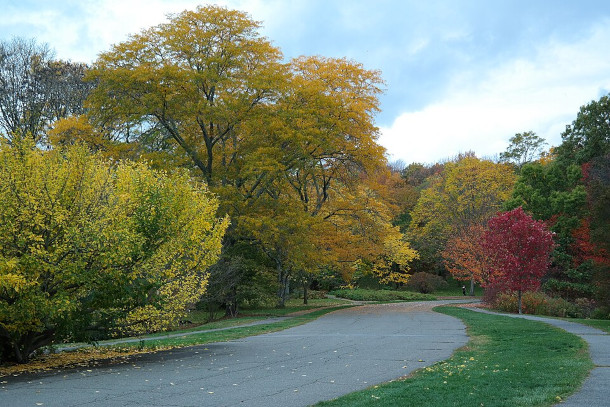
The Arnold Arboretum in Massachusetts is a large, designed landscape within Boston’s city limits. But Bill Moomaw says much of New England’s forests were recovered not through purposeful design, but rather through “benign neglect”. (Photo: TanRo, Wikimedia Commons, CC BY-SA 4.0)
MOOMAW: Well in the upper Midwest, those were all devastated in the last half of the 19th century. Again, I said mostly for the railroads, and those forests have begun to come back, just as ours have, in a more deliberate way. The Pacific Northwest and California, I mean, you think about the redwoods and the giant sequoias and everything. There's some extraordinary photographs of lumbermen vying with each other to cut down the biggest redwood, to cut down the biggest sequoia, and it was all done by hand, of course. And this was a great feat, and was seen as such. It got to the point that we had removed 90% of the coastal redwoods. These trees that are 2000 years old, they were all cut down and used for everything from toothpicks to clothespins to whatever. So those forests, of course, are now protected. You may recall that when Ronald Reagan was president, he opposed creating a redwoods national park, because, as he said, when you've seen one redwood, you've seen them all. That was kind of the attitude that a lot of people had. But now we have some of our greatest national parks in the west, and they're protecting some areas, but they're relatively small areas compared to the total forests. And what we're discovering is that the forests that have been left are doing the really heavy lifting, the ones that have been allowed to keep growing, which is what I call proforestation, that is letting the forest continue to grow, to accumulate carbon and to develop its full biodiverse potential, is another way of managing forests rather than cutting them down and then letting them grow back and then cutting them down again.
CURWOOD: So, Bill, I understand you collaborated with folks to write a major paper on proforestation. What was that paper, and what did it say, in sum?
MOOMAW: Well, actually, it's the paper that invented the term, because there was no word for it. Forestation means to grow a forest, deforestation means to take it down, reforestation means to replant it, afforestation means to plant trees somewhere, and there was no term for permitting forests to continue growing to achieve their potential for carbon accumulation and biodiversity. And we carefully phrased it that way, "achieve its potential," because different forests are in different locations with different soils and different climates, and so on, and so we wanted to make it general enough, but get the concept across.
CURWOOD: Bill, you worked a lot with the Intergovernmental Panel on Climate Change. What did you folks have to say there about trees?
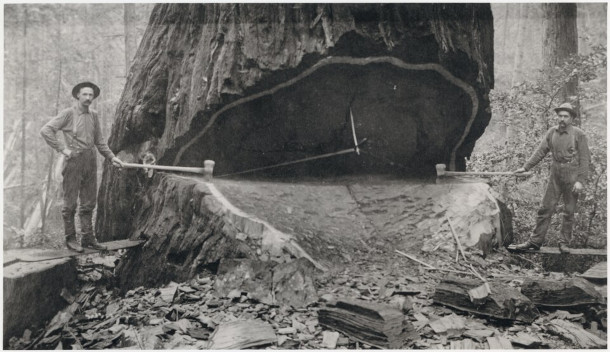
Two Union Lumber Co. employees fell a redwood in Fort Bragg, California. This photo, from an unknown year in the 20th century, is a reproduction from the original negatives in the Georgia-Pacific Corporation Archives. (Photo: Georgia-Pacific Corporation Archives, Wikimedia Commons, public domain)
MOOMAW: Well, actually, when I was working on it, it was mostly about the technologies, and just beginning to recognize that, amazing fact, the increase in carbon dioxide every year in the atmosphere is less than half of what we put in. And it took a long time to figure out why that was happening, and where that carbon dioxide was going, and it turns out, of course, it's going into forests and other plants on land, primarily forests and in the oceans, but it took a long time to find out just exactly where that was going and how it was getting there. And more recent reports, they're now making statements that I couldn't have imagined being made during the era when I was working on it. Here's just one: "Safeguarding biodiversity and ecosystems is fundamental to climate resilient development." That's a pretty strong statement for a bunch of engineers and climate modelers, and so forth. "Maintaining the resilience of biodiversity and ecosystem services at a global scale depends on effective and equitable conservation of approximately 30 to 50% of Earth's land, fresh water, and ocean areas, including currently near natural ecosystems." And that statement is made with high confidence. Now it's interesting, because E.O. Wilson, his last great work was Earth needs half, so it's interesting that the climate scientists are coming up with similar sorts of things, and then I was very pleased to see this one, because it referred to our paper on proforestation. It said "Protection of existing natural forest ecosystems is the highest priority for reducing greenhouse gas emissions, and restoration may not always be practical." And then it cites our paper on proforestation, and a number of studies have concluded that globally, forests could store twice their current carbon stocks, and some of that's done regionally, and some of it's done globally, and it all comes out about that number.
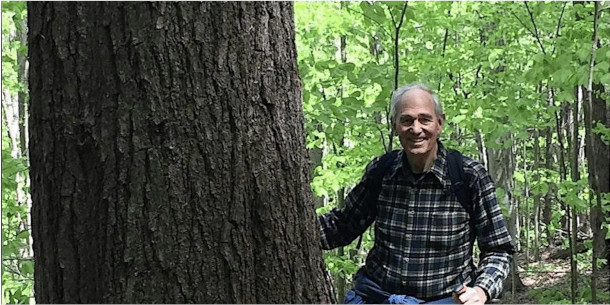
Tufts University Emeritus Professor William Moomaw is a Distinguished Visiting Scientist at Woodwell Climate Research Center. He has been a contributing author to several Intergovernmental Panel on Climate Change reports, the group that shared the Nobel Peace Prize in 2007, with Vice President Al Gore. (Photo: Courtesy of Bill Moomaw)
CURWOOD: So, Professor Moomaw, looking ahead for another 250 years here in America, how do you think our forest management will change? How should it change?
MOOMAW: Well, I think it needs to change in a way that protects a large enough percentage that it will be able to maintain both the global climate and our regional weather conditions. So, for example, the Northeast temperature rise with global warming is significantly less than the global warming is doing because we are so heavily forested. And those forests are both providing shade, but they're also, in order to grow, they have to draw water up into their trunks, and the water contains minerals and nutrients they need, and then they evaporate the water from the leaves, and as the water evaporates from the leaves, it cools the surrounding area, and so Boston, for example, is probably three or four degrees cooler than it has any right to be, because of global warming. In other words, the global warming would make it that much warmer, but our forests are cooling it by that amount, so it has a huge benefit from that point of view. And that has economic consequences, by the way. A few years back, when Worcester, Massachusetts had to cut, I think, was 30,000 trees that were infected the following summer, the air conditioning electricity use went up dramatically, and we can't all stay inside. People building houses can't be air conditioned while they're building houses, they have to work outdoors. Farmers have to work outdoors. So I think it's just really important that we have a climate that is suitable for all of us.
CURWOOD: Bill Moomaw is a Distinguished Visiting Scientist at the Woodwell Climate Research Center. Thanks so much for taking the time with us today, Bill.
MOOMAW: Thank you very much for having me. I really appreciate the opportunity.
[MUSIC: Moss and Fern]
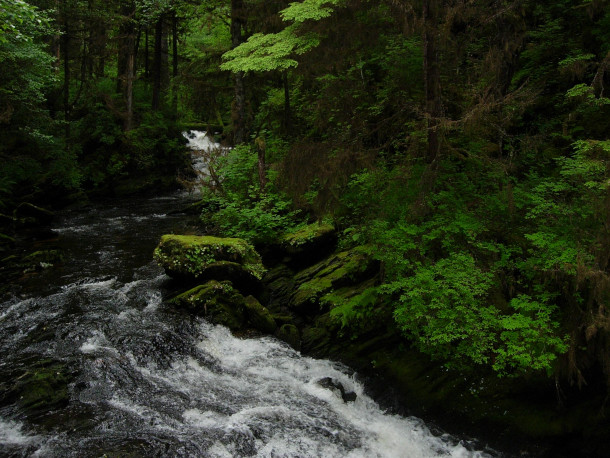
Tongass National Forest is the largest national forest in the United States. At nearly 17 million acres, it is larger than several U.S. states. (Photo: Mark Brennan, Wikimedia Commons, CC BY-SA 2.0)
CURWOOD: By the way, though the Tongass National Forest in Southeast Alaska has less than ten percent of our national forest acreage, the Woodwell Climate Research Center says its peat-rich soils and dense old growth trees sequester fully 40 percent of the carbon in our national forest system. The Tongass, with many 200-foot-tall evergreens more than ten feet in diameter, and with some cedars as much as 4 thousand years old is also the largest remaining temperate rainforest on Earth. Its preservation is a prime example of the pro-forestry espoused by Professor Moomaw. It takes no new technology to stop cutting down trees to fight climate change, just action on the awareness of their value. And that is why the Tongass National Forest is often called America’s climate sanctuary.
[MUSIC: Moss and Fern]
Links
The Bulletin | “Does Wood Bioenergy Help or Harm the Climate?”
Watch a recent presentation from Bill Moomaw on the history of forests in Concord, Massachusetts
Living on Earth wants to hear from you!
Living on Earth
62 Calef Highway, Suite 212
Lee, NH 03861
Telephone: 617-287-4121
E-mail: comments@loe.org
Newsletter [Click here]
Donate to Living on Earth!
Living on Earth is an independent media program and relies entirely on contributions from listeners and institutions supporting public service. Please donate now to preserve an independent environmental voice.
NewsletterLiving on Earth offers a weekly delivery of the show's rundown to your mailbox. Sign up for our newsletter today!
 Sailors For The Sea: Be the change you want to sea.
 The Grantham Foundation for the Protection of the Environment: Committed to protecting and improving the health of the global environment.
 Contribute to Living on Earth and receive, as our gift to you, an archival print of one of Mark Seth Lender's extraordinary wildlife photographs. Follow the link to see Mark's current collection of photographs.
 Buy a signed copy of Mark Seth Lender's book Smeagull the Seagull & support Living on Earth
© Copyright World Media Foundation. All Rights Reserved
Home | Contact | RSS | Donate | Newsletter