
The Enduring Wild and Public Lands
Air Date: Week of July 3, 2026
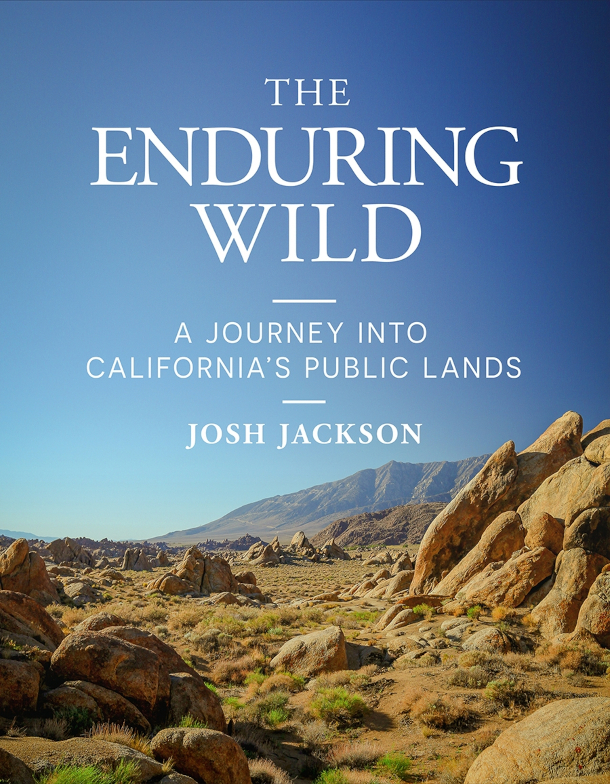
Josh Jackson’s debut book is The Enduring Wild: A Journey Into California’s Public Lands. (Photo: Courtesy of Heyday Books)
Around 30% of the land in the United States is federal public land, and the biggest chunk or 245 million acres falls under the purview of the Bureau of Land Management. BLM lands are sometimes called “leftover” or “forgotten” lands, but they offer free or very cheap camping and feature a stark beauty that captivated writer and photographer Josh Jackson, author of the 2025 book, The Enduring Wild: A Journey into California’s Public Lands. He speaks with Host Jenni Doering about some stunning BLM lands to start exploring.
Transcript
CURWOOD: It’s Living on Earth, I’m Steve Curwood
DOERING: And I’m Jenni Doering.
Author and conservationist Wallace Stegner wrote of U.S. national parks like North Cascades and of course the iconic Yellowstone and Yosemite that they were “… the best idea we ever had. Absolutely American, absolutely democratic, they reflect us at our best rather than our worst." And they certainly feature stunning scenery and wildlife as well as vital American history.
CURWOOD: But the national parks are just a fraction of the roughly 640 million acres of federal public lands across the country. That’s about 30% of all the land in the United States. The biggest chunk, around 245 million acres, falls under the purview of the Bureau of Land Management, or BLM.
DOERING: These lands are sometimes called “leftover” or “forgotten lands” because they were considered too arid or rugged for farming, so they were passed over by homesteaders. And they’re often not suitable for growing the trees overseen by another big land manager, the US Forest Service, though logging does take place on some BLM territory.
CURWOOD: Today they’re mostly multi-use places with a mosaic of recreation, wildlife conservation, grazing, mineral and fossil fuel extraction, and increasingly the prospect of data centers to power AI. Needless to say, these uses don’t always play nicely with each other.
DOERING: Still, these public lands unite us more than they divide us. They are a shared heritage for all Americans since we are co-owners of these vast public lands, and they enjoy broad bipartisan support. They also feature a stark beauty that captivated writer and photographer Josh Jackson and led to his 2025 book, The Enduring Wild: A Journey into California’s Public Lands. He joins me now from Los Angeles – Josh Jackson welcome to Living on Earth!
JACKSON: Thanks so much for having me. I'm happy to be here.
DOERING: So, as forgotten lands, leftover lands, they certainly don't have the best reputation. They're not on a pedestal the way that the national parks are, and yet you kind of fell in love with these public lands in California. You wrote a book about them. There's gorgeous pictures in here. What inspired you to set out on this journey, I guess more than 10 years ago now?
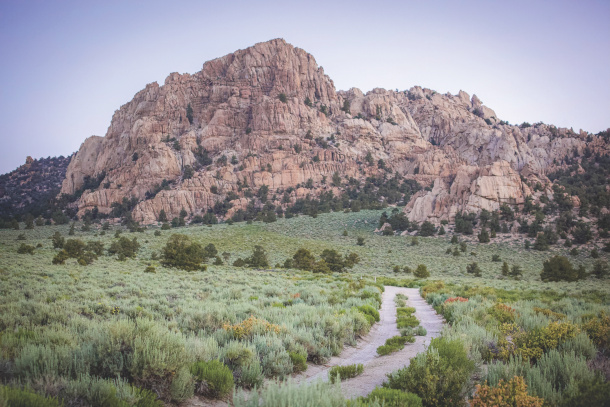
When Jackson and his family first explored California’s public lands, they were amazed at the natural beauty and “otherworldly landscape” of the Eastern Sierra, pictured above. (Photo: Josh Jackson)
JACKSON: Yeah, I had always been an avid outdoor enthusiast. I'm from Michigan, so I grew up in Michigan. I moved out to the West 21 years ago, and I immediately fell in love, you know, the national parks that we have - nine national parks here in California, and lots of forest service lands, 50 million acres of the 100 million acres of land in California is public land shared by all of us and open for all of us, and even as an avid outdoor enthusiast who spent a lot of time on the coast, a lot of state park camping, a lot of national park camping, it wasn't until 2015 that I even learned about Bureau of Land Management lands. I remember I was looking for a place to camp. My wife and I just had our third child, and those last few months of pregnancy are kind of hunkering down, you're not getting out much. And my five-year-old and two-year-old at that point were pretty desperate to get out of the house, and so I looked for state park campgrounds that we could go camping at over the New Year's. My third child was only a month old at that point, and everything, of course, it's California, everything was booked solid. Couldn't find anywhere to go. I reached out to my friend, he had this special knack of finding campsites out of thin air, and he said to me on the phone, "why don't you camp on some BLM land?". This was in 2015, first time I'd ever even heard of the term BLM land, and I said, I remember saying, like, oh, okay, where is that? And he said, I think it's out in the desert somewhere. I remember thinking, oh, you don't really know either, but it like planted this seed that I got on the BLM website, which felt like going into the pixelated domains of dial-up, you know, from the 90s, super slow, not a lot of information, pictures that were like, you know, 100 kilobytes in size, very very little happening on that website. It's a little better now, but I found this place called the Trona Pinnacles which is out in the middle of the Mojave Desert. It's about three hours from L.A. I loaded up my two-year-old and five-year-old in our Honda Element, and we took off, and we had this amazing weekend camping at this really special place. It's kind of an ethereal, otherworldly landscape, where hundreds of tufa spires just pop out of the desert. They look like those drip sand castles you make at the beach, surrounded by these beautiful salt flats. So, like, as we're running around, the kids felt like it was this giant trampoline, and it's just really kind of ethereal landscape, we had the wonderful weekend together, and I remember being there and just thinking, like, what is happening? What are these BLM lands like? How many lands are there? Are there other places like this? Is this the only one? Like, it's crazy to think that now, right, because there's 245 million acres across the West, and we were at, like, you know, 500 acres.
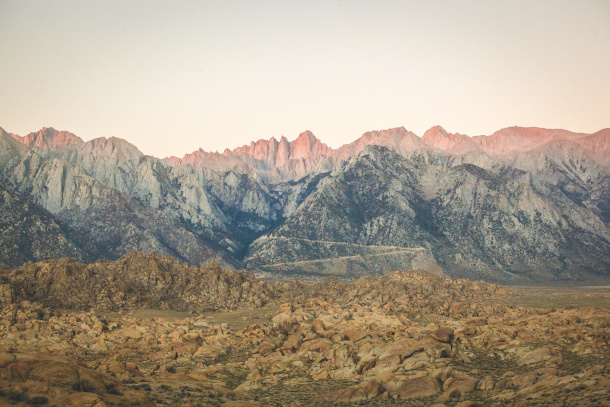
U.S. Route 395 runs along the eastern side of the Sierra Nevada mountain range in California. Since much of this land is owned and managed by the Bureau of Land Management, camping here is affordable and easy, Jackson notes. (Photo: Josh Jackson)
DOERING: It does seem hard to miss them, but we just don't know they're there, right?
JACKSON: Yeah, and I think, like, if you're driving across the West, like, you've driven right through BLM managed public lands, but that was really the impetus for, like, the curiosity that started forming about what these lands were, what kind of landscapes they contained, and so you know, at that point I had three kids under the age of six at a full-time job, and the only thing I could really do at the time was read, and so I just went to the library, I ordered books offline, and just read as much as I could, kind of pouring this foundation of understanding for all the questions that I was having. And so during all that time, those years, like this is, you know, 2016 new administration, and then, of course, in 2017 as probably a lot of your listeners understand, there was this big push to reduce the size of national monuments, which are managed by the park service, but mostly they're managed by the BLM, and so that was the first time I had really understood that there's big time threats to BLM lands and that sort of kicked me into gear. Like, wait a second, if nobody knows about these places and they're increasingly under threat, how are we going to protect something that we don't know exists?
DOERING: So I want to get to talking about some of these public lands in California, this BLM, or Bureau of Land Management land, because people might be thinking about, you know, I want to go explore the outdoors this summer, I want to go see some dark skies, the kids are out of school, we want to get out there, so for folks who are interested in exploring those public lands this summer, especially in California, is there a spot or two that they might want to start with?
JACKSON: Yeah, I always tell people the gateway to BLM lands are through their campground system. So, a lot of people don't know that BLM lands have campgrounds. So there's across the west, if you think about the Rocky Mountains west to the coast, there's 245 million acres of BLM there, and there's hundreds and hundreds of campgrounds, and they're all first come, first serve, there's no reservations. So, after me traveling for years and years and years to all these places and writing about them, I've never once had a time where I showed up at a campground and it was full. So, I think that's the easiest gateway, because campgrounds have infrastructure, they have bathrooms, they have picnic tables, they have shade structures. If you're in a hotter area, so...
DOERING: Rustic bathrooms, right?
JACKSON: Yeah, they're vault toilets.
DOERING: Alright. Just to disclose! [LAUGH]
JACKSON: There's no showers on BLM campgrounds. [LAUGH]
DOERING: Ok, it's not glamping.
JACKSON: No, it's not glamping, it's not, but it is, you know it has the basic amenities you need to kind of, you don't need to bring a bathroom with you, you know, you have one there at least, you might need to bring toilet paper because sometimes they're out [LAUGH] but yeah, those are probably the easiest gateway, they're all free to like $6, $10 a night. I think the most I've paid for a BLM campground was $12 a night, so they're really affordable. You can find those on the BLM website. That's probably the easiest gateway to experience BLM lands, is through their campground system, and often from the campgrounds, there's lots of hiking trails for example. In terms of California, you know, like the desert is not the best time to visit June, July, August, just because it's so hot, but there are plenty of beautiful, wonderful places to camp and to hike and to experience BLM land in California in the summer. The Eastern Sierra, there's a highway called the 395 that runs up the Sierra Nevada on the east side of the Sierra Nevada. Everything along that road is BLM land.
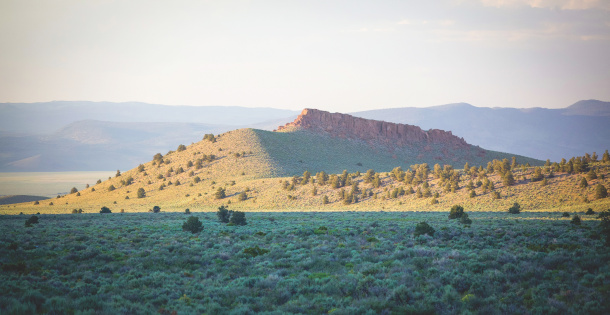
The Eastern Sierra features vastly diverse landscapes, from rolling hills of sagebrush to rocky mountains and treacherous cliffs. (Photo: Josh Jackson)
DOERING: Wow.
JACKSON: I think there's nine campgrounds up the 395 that you can camp at, and those are kind of like good access to if you want to go up into the Sierra Nevada mountains, or if you want to go into the foothills, if you want to go on the east side, which is more desert. There's some beautiful camping along the 395 that goes, you know, from the desert all the way to the Oregon border. Including a place like the Bodie Hills, which I wrote about in my book, that's just above Mono Lake, and it's like 130,000 acres of beautiful BLM land.
DOERING: I wonder if one of the places, when you say, you know, maybe folks should start with some established campgrounds on BLM land, and one of the places in your book that really made an impression on me is the King Range on the coast, and you know, I'm thinking about people getting out this summer wanting to maybe get some of those coastal breezes, you know, it's too hot for the desert, but the Lost Coast of California might be a wonderful place to go. What should people know if they want to explore that area? What did you take away from it?
JACKSON: Yeah, the Lost Coast of California is a really special area. It's very remote, but it's where, you know, the famous Highway One that goes, you know, you can drive all along the coast. Essentially, when the road builders in the 40s and 50s were building Highway One they got to the Lost Coast, which is the King Range Mountains, and they rise really precipitously, like it's a 4,000 foot rise within three miles from the ocean. And so road builders essentially were like, this is going to be crazy, let's go around the King Range. And so the one diverts over to the 101 kind of goes around the Lost Coast and around the King Range, and then connects back to the one up in a town called Eureka, and so there's this huge chunk of land. It's the longest undeveloped coastline in California, and it's one of the longest undeveloped coastlines in the lower 48 which nobody would guess that would happen in California, right? Romantics call it the Lost Coast, because once you're inside, it's very remote. There's not a lot of people, there's not a lot of things happening. It's hard to get to. People that live inside the Lost Coast have to carry helicopter insurance because there's so much flooding. It's a really interesting place. It's a temperate rain forest. In the winter, they have over 100 inches of annual rain, so it's this really interesting, diverse ecosystem, because you've got the ocean, you've got this incredible amount of rain. Sometimes they get 150 inches of rain. The Mattole River kind of circles around the King Range National Conservation Area, which is managed by the BLM. It's an undammed river, one of the last undammed rivers that flows in California never been dammed, and so you've got this where the Mattole River hits the Pacific Ocean, you know, when it's closed, it's an estuary, you know, it's really this beautiful place, but where coho and chinook salmon, steelhead trout come up, they find there, there's 74 tributaries on that river. But then it's also this place where there's three tectonic plates that are all meeting at the Mendocino Triple Junction, it's called, and so they get like 80 earthquakes a year.
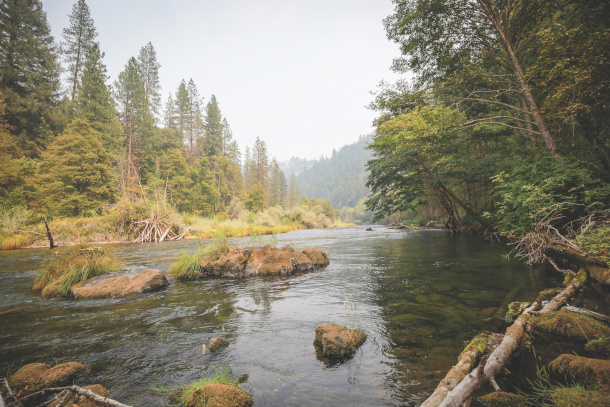
The Trinity Wild and Scenic River, located in northern California, features many BLM-managed campgrounds open to the public. Many BLM campgrounds feature basic amenities, like pit toilets. (Photo: Josh Jackson)
DOERING: Oh my gosh.
JACKSON: So it's this really crazy, like there's old growth redwood and douglas fir forest, it's a hot spot for biodiversity, the Northern Spotted Owl can be seen there, lots of wildlife, bears, mountain lions, mule deer, it's this really, really special area, but there's also a huge trail network for hikers. There's four BLM managed campgrounds, one of them's right on the coast, called the Mattole Beach Campground, right where the Mattole Estuary is. There's the Lost Coast Trail, which is this famous trail that runs 25 miles from the Mattole Beach Campground, which is in the northern part of the King Range, to another south. If you walk south, most people walk south, 25 miles right on the coast, and you're walking in some of the most pristine habitat you can imagine, for like elephant seals and black bears and mountain lions, and yeah, it's an incredible area. It's really hard to get to, but it is accessible, you know. If you have a car, all those campgrounds in there are first come, first serve, and there are some amenities. There's a little town called Shelter Cove. Yeah, it's a really, really special place. I wrote about it for a reason, you know. It's like not many people think of BLM lands on the ocean, but this is like one of those places. It's where my, we go up every year. It's my kind of my kids' second home, because we spend so much time up there. And I write about this in the book, but a story behind how the King Range was saved and preserved is one of the most remarkable stories in, like, American history.
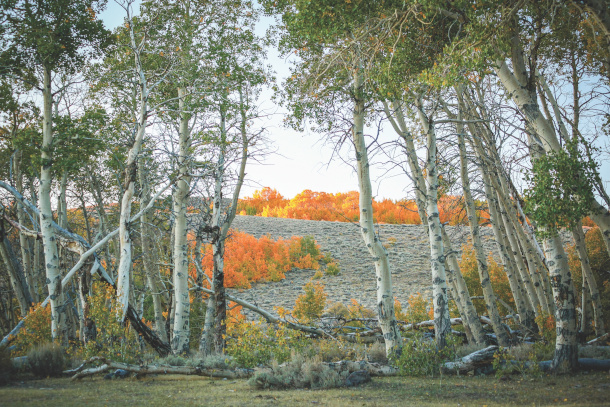
The Bodie Hills is another BLM spot that Jackson recommends for camping. They are located north of Mono Lake, and serve as a transition zone between the Sierra Nevada and the Great Basin. (Photo: Josh Jackson)
DOERING: That's right! So, yes, because this started with, was it a Democrat who proposed this? And then tell us the story of how this, this was a really bipartisan long-term effort to get this place protected.
JACKSON: Yes, so these were lands that were BLM managed lands, somehow the BLM, you know, we talked about these being the leftover lands. It's kind of shocking that these lands along the coast were actually under the jurisdiction of the BLM. So, the BLM was formed 1946, in 1960 there was a Democratic congressman named Clement Miller, who his district kind of ran up the coast there, and he gives this amazing hour, you can find this speech online, but he gave an hour long speech on the house floor about protecting this particular stretch of land called the King Range National Conservation Area. I mean, he's the first one ever to even consider that BLM land would be designated for conservation and recreation, at this point the BLM is only 14 years old, and they called it the Bureau of Livestock and Mining, because if you thought of BLM land, all you thought about was cows and mining. So this Clement Miller, and he was like the reason the Point Reyes National Seashore was designated, there's a picture of him standing behind JFK when that designation happened. So he proposes let's protect this King Range National Conservation Area. He actually says in his speech, I'm hoping for a Cinderella transformation at the BLM, like beautiful language, right? And at the time that would have been shocking, like, wait, we're gonna protect this for conservation and recreation, that makes no sense, but he pushed for it. His bill doesn't even make it out of committee. The next year he pushes for it again, doesn't even make it out of committee. And then a month before the 1962 election, he's flying in an airplane to a campaign event, and the airplane actually crashes; him, and the pilot and his son all die in this crash, and ironically one of the last places he would have seen from the airplane was as they were flying over the Lost Coast, the exact place that he wanted to protect. So, he dies a month before the election. His opponent, a Republican, Donald Clausen, ends up winning in January. So, he died so close to the election that they didn't even have an election for that seat, so Donald Clausen ends up winning the election early the next year. It assumes Clements Miller's seat, and then shockingly he takes over the mantle for trying to protect the King Range, so he pitches it over and over and over and over again, and on the 12th attempt, 10 years later, it finally passes, and like becomes the King Range National Conservation Area. So it was like this crazy bipartisan story. Donald Clausen had this thing hanging, he was a congressman, I think, for like 20, 25 years up into the early 80s in that district, and he has this kind of plaque hanging in the office where I'm paraphrasing here, but it essentially said something like, you can get a lot done where you don't care who gets the credit.
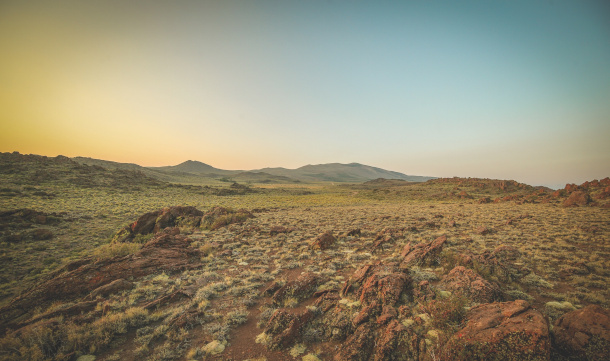
The Bodie Hills are also renowned for their vast expanses of sagebrush, which grows in silvery-green carpets across much of the desert West. (Photo: Josh Jackson)
DOERING: Oh, wow.
JACKSON: This like beautiful, kind of bipartisan, like working for the people, kind of quote. And he was known as that kind of guy, but he helped get Redwood National Park designated. He was the reason behind the King Range National Conservation Area, but yeah, the backstory there's like it's much longer and lots more details that I skipped over, but it's truly remarkable, this bipartisan remarkable story of protection for the land, and then you add in all the remoteness and like this, the biodiversity, and like it's just this really like. I think most people go there, and they think, why isn't this a national park? It's so beautiful, you know. But if it was a national park, it would be a lot more crowded.
DOERING: Exactly,
JACKSON: There'd be like a lot more infrastructure that would, it would take away from how special it is there.
DOERING: Yeah, and very bipartisan work.
JACKSON: Yep.
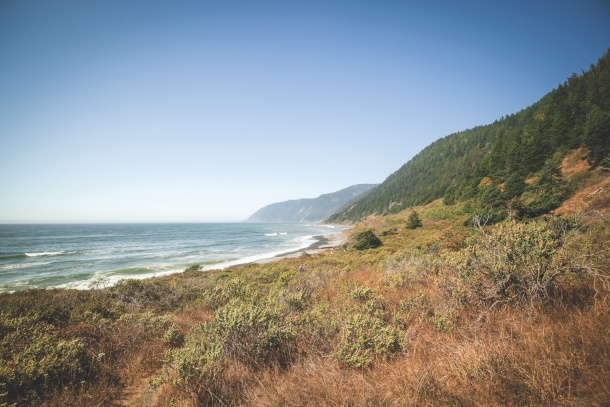
Though many may not think of BLM public lands being coastal, the King Range National Conservation area in northern California includes amazing access to the coastline near 4000 foot mountains. (Photo: Josh Jackson)
DOERING: Yeah so, of course I mean there was a long time of intense extraction, theft of these lands from Native Americans, realizing that you know maybe we should be protecting some of these places as wilderness, as places “untrammeled by man,” right, which is a complicated phrase, and more recently we have been collectively realizing the importance of the longstanding relationship of Native Americans with the land. There's a Land Back movement we've reported on, including in California. So, how do you think about holding this complicated past and present all in one as you visit these public lands, you know, the theft from Native Americans, acknowledging the dark history of colonialism and genocide, as well as enjoying these lands for what they are now?
JACKSON: It's a great question. Yeah, to my Indigenous friends, like these lands were never forgotten, right? They're not forgotten lands, they weren't leftover lands to them, these were their homelands, these were places that they lived and worked on the land for thousands of years, right. And so there's a great book called Tending the Wild, where M. Kat Anderson writes that they knit themselves to nature, and I think that's such a beautiful phrase of the way that Indigenous people can have this deep, deep reciprocal relationship with the land, where the land's giving to them, they're giving back, and so we have so much to learn, right? And I think acknowledging that awful history is the first step. The second step, and something I carried with me, and still carry with me to all the places that I visit, is trying to understand and learn the history of these people, because they're not gone, they are still here. My Indigenous friends are still living on these lands, and they might not be their land, but they are our shared lands. One of the things that's really so interesting about the BLM is because it's so like some of these new national monuments, for example, are so new and so recently designated, we actually have co-management plans now, which is kind of unheard of, like if you think of the National Park Service or US Fish and Wildlife or US Forest Service. The BLM has this really special relationship in different parts of the West with tribes where they co-manage the land together or co-steward the land together, so you have like a whole place, like I write about a place up in Berryessa National Monument, which is in Northern California, that was expanded under Biden Moloch Loyok, which in Patwin means Condor Ridge, I think it's like around 16 to 20,000 acres of land that was added to that national monument, and the Patwin tribes actually manage that land alongside the BLM, so it's not just land back, because that is happening too, but you have like tribal co-management happening with the BLM. So who knows these landscapes better than tribes, right? I mean, it's like in deep in their bones, and so that's another cool thing that we're, we're doing as we move into the future is these tribal co-managements, which is having a big net positive on the landscape.
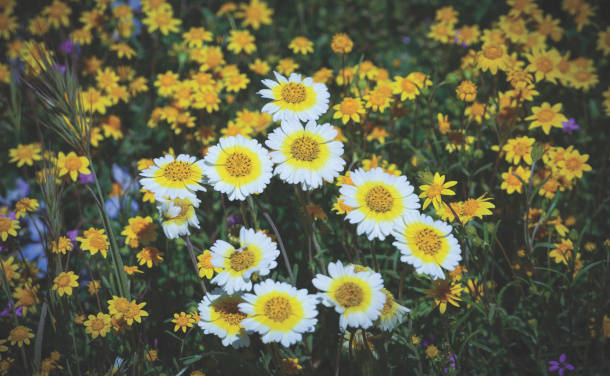
This photo was taken at the Berryessa Snow Mountain National Monument, an area of public land in northern California co-managed by the Bureau of Land Management and two local Indigenous tribes; the Yocha Dehe Wintun Nation and the Kletsel Dehe Wintun Nation. (Photo: Josh Jackson)
DOERING: Josh Jackson is the founder of Forgotten Lands Project and the author of The Enduring Wild: A Journey Into California's Public Lands. Thank you so much, Josh. This has been a real pleasure.
JACKSON: Thanks so much for having me.
Links
Living on Earth wants to hear from you!
Living on Earth
62 Calef Highway, Suite 212
Lee, NH 03861
Telephone: 617-287-4121
E-mail: comments@loe.org
Newsletter [Click here]
Donate to Living on Earth!
Living on Earth is an independent media program and relies entirely on contributions from listeners and institutions supporting public service. Please donate now to preserve an independent environmental voice.
NewsletterLiving on Earth offers a weekly delivery of the show's rundown to your mailbox. Sign up for our newsletter today!
 Sailors For The Sea: Be the change you want to sea.
 The Grantham Foundation for the Protection of the Environment: Committed to protecting and improving the health of the global environment.
 Contribute to Living on Earth and receive, as our gift to you, an archival print of one of Mark Seth Lender's extraordinary wildlife photographs. Follow the link to see Mark's current collection of photographs.
 Buy a signed copy of Mark Seth Lender's book Smeagull the Seagull & support Living on Earth
© Copyright World Media Foundation. All Rights Reserved
Home | Contact | RSS | Donate | Newsletter