
Seeking Environmental Justice in Papua New Guinea
Air Date: Week of June 5, 2026
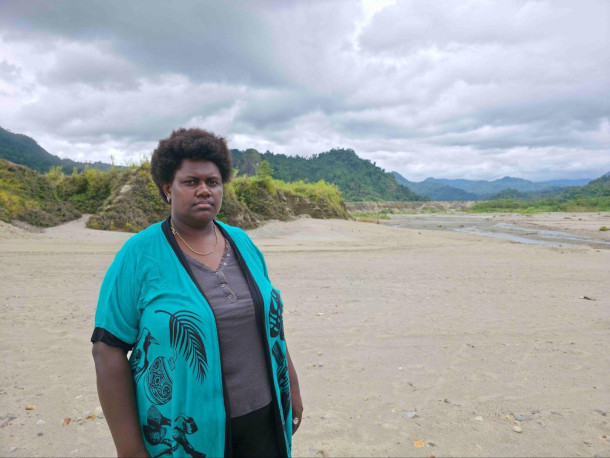
Theonila Roka Matbob is the winner of the 2026 Goldman Environmental Prize for Islands & Island Nations. (Photo: Goldman Environmental Prize)
The indigenous residents of Bougainville island in Papua New Guinea say their home used to provide them with everything they needed—shelter, fertile land, and clean water. That is until a copper and gold mine run by British-Australian company Rio Tinto set up shop and operated in the 1970s and 80s. Today, heavy metals like copper sulfate and cadmium still pollute waterways, and Theonila Roka Matbob, the 2026 Goldman Environmental Prize Winner for Islands and Island Nations, has been fighting for years to pressure Rio Tinto into taking full responsibility for remediating this damage. She joins Host Jenni Doering.
Transcript
DOERING: The indigenous residents of Bougainville island, part of an autonomous region in Papua New Guinea, say their home used to provide them with everything they needed—shelter, fertile land, and clean water. That is until the Panguna copper and gold mine, run by the British-Australian company Rio Tinto, set up shop there in 1972 and began to wreak havoc on the island’s ecosystem and its people, with heavy metals like copper sulfate and cadmium entering waterways. While Rio Tinto abandoned the mine in 1989, without a proper clean up, its toxic legacy persists. Theonila Roka Matbob, the 2026 Goldman Environmental Prize Winner for Islands and Island Nations, has been fighting for years to pressure Rio Tinto into taking full responsibility for remediating this damage. And due to her activism, in 2024 the company officially signed a landmark memo of understanding to address environmental and social devastation caused by the Panguna mine. But Theonila says this is not enough, and she’s here now. Theonila Roka Matbob, welcome to Living on Earth!
ROKA MATBOB: Thank you. Thank you very much.
DOERING: So what kinds of health impacts have your people seen from these toxic chemicals, copper sulfate and other things?
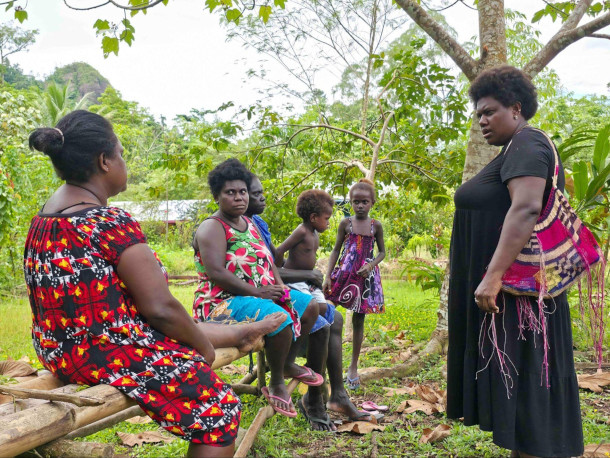
Theonila (right) saw firsthand how toxic chemicals from the mine impacted members of her community, ranging from skin conditions to impacts on mental health and fertility. (Photo: Goldman Environmental Prize)
ROKA MATBOB: One of the things that is physical and visible is– especially when we have like prolonged sun, like the dry season– you see skin cracking up, and if it's prolonged wet season, you're seeing people's, the tissues beneath the feet, they literally rot away, and even like sores on the skin. You see like, a skin on top of a skin building up or a growth, and that's because of the chemical's presence in the tailings. So that's how disturbing the impacts are to the people who are living on the environment right now.
DOERING: Oh my gosh. So you're describing sores, skin even like, rotting away on people's feet. And I think I have heard about some pregnancy complications as well. How has that affected the community?
ROKA MATBOB: One of the things that we've seen is the deformity, and also at the mental level, you can realize that those kids that are coming off post toxic environment, you will realize that their mental stability and focus is very limited, and these are children like, some are my generation, and some are younger than me.
DOERING: Theonila, I believe you're a mother,
ROKA MATBOB: A proud mother.
DOERING: A proud mother. Congratulations. What is it like, though, to see things like this affecting your community and the people around you, and, you know, affecting your generation and future generations?
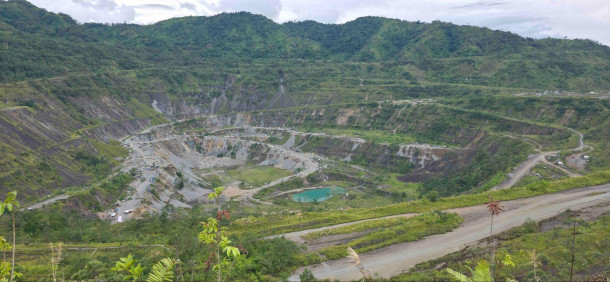
The Panguna copper and gold mine was abandoned by Rio Tinto in 1989, and no actions were taken to remediate the human and environmental harms caused during its operation. (Photo: Goldman Environmental Prize)
ROKA MATBOB: It's very challenging to give birth to a child to inherit a broken portion of the environment. It's like, you've got no explanation, and every time, like, your children ask you, like we're traveling there for holidays and we see fish in the water, why is it that we have a big river running by our house, there's no fish? There's no life? Like, this is not something any mother would easily answer, and the answer that you would give is not an answer that you will be proudly giving.
DOERING: Yeah, it must be really hard to explain that to your children.
ROKA MATBOB: Very challenging, very challenging.
DOERING: And I understand that, you know, even after the mine was abandoned in 1989, there was no cleanup of its toxic waste, and you were pretty upset about that, and you helped gather community testimonies about how this mine was impacting people decades later. What are some of the most powerful stories that you heard, and why do you think it's so important that these voices are highlighted?
ROKA MATBOB: There are two things that really inspired me to go back and start telling the story and demanding questions to be answered. The first is people, even before the mine, they were publicly coming out to say, we will die protecting the land. The second issue that really stood out when people were wanting to guard their land against all odds was the communication barrier. English is not a native language to us, and Rio Tinto, when it went on to the land, it used the language as a weapon.
DOERING: How so?
ROKA MATBOB: Well, because people can't speak that language, you know, and everything, all the documents that were needed to be signed, were all written in English, and my people were found at the time when there was no access to education. And those two issues really stood out for me, and I took that very personal, that we can't be fighting physically, but we need to demand answers. If we can speak the language Rio Tinto spoke coming in, then it is time to go back onto the table and say, I'm doing this on behalf of my family. I'm doing this on behalf of my clans and tribes.
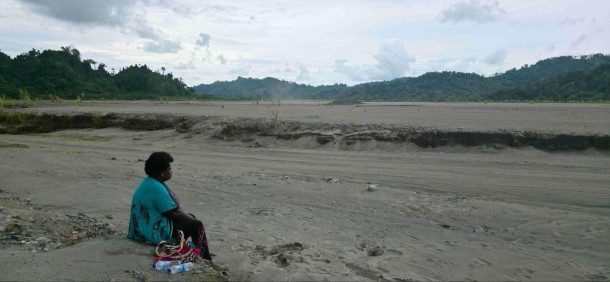
Language was a powerful weapon wielded against the people of Bougainville, Theonila reflects. Since English is not their native tongue, it put them at a disadvantage when communicating with Rio Tinto. (Photo: Goldman Environmental Prize)
DOERING: So in 2020, you led a complaint that accused Rio Tinto of environmental and human rights violations linked to this Panguna mines legacy. And you know, it's no easy feat to stand up against a powerful corporation like this. That kind of action comes with a whole lot of risk. So how did you even begin to fight back?
ROKA MATBOB: It was a very, very long journey that I'd say it had to take me to put my feet into the cold, even if it was gonna take and cost my life, at least there's a story that I can leave behind for the later generation to say that even though we do not deserve this, there is someone, there was a mother who came ahead, who wanted to do this. So it was a very slim sort of an opportunity, I'd say, because my country, Papua, New Guinea and Bougainville, have never done these things previously. They went through the courtroom where they wanted to approach it by suing Rio Tinto to court, but because obviously, the corporate courtroom is not our place, I thought that we should rather do it the mediation way. And we're so blessed to have had Human Rights Law Center in Australia to really give us that advice we needed. And the opportunity was there because Rio Tinto is Australian, and in their justice system, there's a place for facilitation of Australian corporate companies operating offshore. So we were blessed to have Human Rights Law Center giving us that advice on pro bono basis.
DOERING: So it takes courage from people like yourself, and it takes, I guess, allyship from other people in positions of power who are able to help, you know, communities like yours.
ROKA MATBOB: Yes.
DOERING: Theonila, as of 2024, Rio Tinto has officially agreed to address some of the worst impacts of its legacy, thanks in large part to the work that you have put in and your courage. At this point, what has Rio Tinto committed to?
ROKA MATBOB: So at the moment, what they've done is they're funding water supply distribution in the impacted communities, and also addressing the most imminent, severe risk that are in front, so they're already into it. But I am here, and my people are there to keep reminding them that there is more than just this.
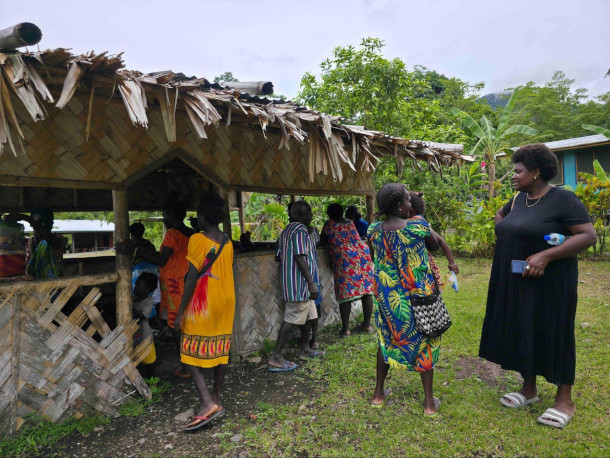
Theonila hopes that Bougainville can be an inspiration for other Indigenous communities taking a stance against large corporations. (Photo: Goldman Environmental Prize)
DOERING: And when you say severe risks, are you talking about the possibility that some of these mine structures left behind could collapse, and you know, run through a community?
ROKA MATBOB: Absolutely. There are actually a couple of them, and first imminent, which is the collapsing brick walls within the old infrastructure has been removed, and there's a chemical removal process as well. But look, it is one step towards the right direction, but Rio Tinto really needs to come out very clear to have its full commitment to taking our full responsibility in addressing the recommendations that came out from the Independent Assessment Report. It's not to say that what we're looking at will restore that balance we had, but this is what I expect, and my community expects, is for Rio Tinto to commit to funding a remediation package that would get people to still sustain themselves.
DOERING: So Rio Tinto is starting on the right path, it sounds like, maybe willing to work with you. More is needed, but to what extent do you think they could serve as an example for you know, other mining legacies that are really harming communities around the world?
ROKA MATBOB: Rio Tinto prides itself as a socially responsible company globally, and the process on Bougainville is an opportunity for them to really demonstrate that social responsibility card on the dent that has been abandoned. It's an opportunity that they can take with both hands to really prove their, their stance as socially responsible leader in the extractive industry, and that is where Bougainvillians are openly saying, even though we have lived with the impacts and the continuous destruction on the environment, the room is here, and it can be the pilot or prototype for the other indigenous communities impacted, not just by Rio Tinto, but every other corporate company who carelessly comes in without embracing the life and the culture of the people.
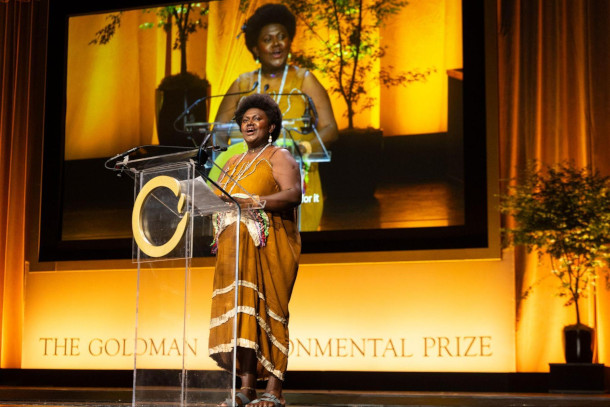
Theonila Roka Matbob at the Goldman Environmental Prize award ceremony. (Photo: Goldman Environmental Prize)
DOERING: And how does it feel to receive this Goldman Environmental prize?
ROKA MATBOB: It is really humbling to be recognized at the global level, because being a lone voice somewhere in the remotest part of the world is not an easy feat to be fighting and demanding accountability from a company that is massive. And sometimes you want to give up on yourself, and you're like, what am I doing? But to be recognized at this, this level is really humbling, and because my fight is not over. I am still on it, and being recognized is a push and a tap on the shoulder that we are not alone. There are hearts throughout the world who are watching and who are part of us, directly or indirectly, and it means, like I'm, I'm truly empowered by this recognition, and I am not going to give up, because there are so many people who are reliant on the ground, on this process, that if this process goes on, it is their healing, it is their closure.
DOERING: Well, it is such a pleasure and an honor to speak with you. Theonila Roka Matbob is the 2026 Goldman Environmental prize winner for Islands and Island Nations. Thank you so much for your time, Theonila.
ROKA MATBOB: Thank you very much, Jenni. It's lovely having this interview with you as well.
Links
Theonila Roka Matbob’s profile at The Goldman Environmental Prize
The Goldman Environmental Prize
Watch The Goldman Environmental Prize video profile of Theonila Roka Matbob
Human Rights Law Centre | “After the Mine: Living with Rio Tinto’s Deadly Legacy”
Living on Earth wants to hear from you!
Living on Earth
62 Calef Highway, Suite 212
Lee, NH 03861
Telephone: 617-287-4121
E-mail: comments@loe.org
Newsletter [Click here]
Donate to Living on Earth!
Living on Earth is an independent media program and relies entirely on contributions from listeners and institutions supporting public service. Please donate now to preserve an independent environmental voice.
NewsletterLiving on Earth offers a weekly delivery of the show's rundown to your mailbox. Sign up for our newsletter today!
 Sailors For The Sea: Be the change you want to sea.
 The Grantham Foundation for the Protection of the Environment: Committed to protecting and improving the health of the global environment.
 Contribute to Living on Earth and receive, as our gift to you, an archival print of one of Mark Seth Lender's extraordinary wildlife photographs. Follow the link to see Mark's current collection of photographs.
 Buy a signed copy of Mark Seth Lender's book Smeagull the Seagull & support Living on Earth
© Copyright World Media Foundation. All Rights Reserved
Home | Contact | RSS | Donate | Newsletter