

Sea of Grass and the Disappearing Prairie
Air Date: Week of January 9, 2026
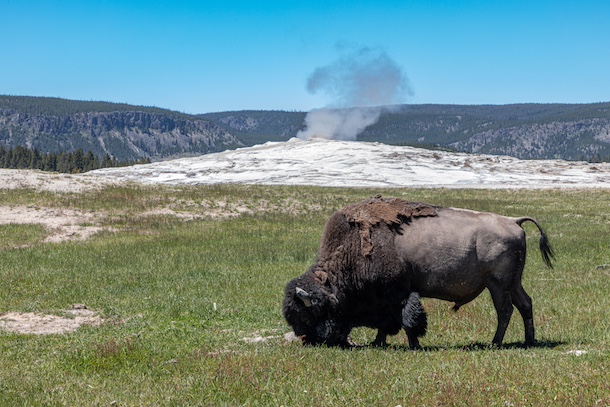
The American bison is a well-loved symbol of the prairie, and for good reason. Bison provide important ecosystem services, such as creating wallows for smaller animals and increasing grassland seed diversity. (Photo: Dietmar Rabich, Wikimedia Commons, CC BY-SA 4.0).
The American prairie is one of the most biodiverse ecosystems in the world, with numbers of species rivaling even a tropical rainforest. But today, just one percent of eastern tallgrass prairie remains, and western shortgrass prairie is disappearing at a rate of more than a million acres a year. Author Josephine Marcotty joins Host Paloma Beltran to discuss her book Sea of Grass: The Conquest, Ruin, and Redemption of Nature on the American Prairie.
Transcript
BELTRAN: Many different creatures call the American prairie home, from the lovable, shaggy buffalo to the endangered rusty patched bumblebee. Often overlooked, this prairie is actually one of the most biodiverse ecosystems in the world, with numbers of species rivaling even a tropical rainforest. But it’s also one of the most threatened. Today, just one percent of eastern tallgrass prairie remains, and western shortgrass prairie is disappearing at a rate of more than a million acres a year. Authors Josephine Marcotty and Dave Hage have teamed up to document the rapid destruction of these grasslands and the people working to save them. Their new book is Sea of Grass: The Conquest, Ruin, and Redemption of Nature on the American Prairie. Josephine Marcotty joins us now. Welcome to Living on Earth!
MARCOTTY: Thank you. Thank you for having me. It's a pleasure.
BELTRAN: So Josephine, how did the idea for Sea of Grass first come about?
MARCOTTY: I mean, like most people in this country, growing up, I really had little or no contact with the prairie because it was gone. I mean, I grew up in Michigan, I grew up in a suburb of Detroit, and the prairie was something I read about in books like Laura Ingalls Wilder, but not something that I had experienced. So it was only when I started exploring the prairie that was left and understanding what we had lost that inspired me to write, not only about agriculture, but about what we were losing by expanding agriculture in the Midwest.
BELTRAN: Can you describe the American prairie for us? You know, what does it feel like to visit such a place and what makes it special?
MARCOTTY: The tallgrass prairie, which is now almost completely gone, used to be an extraordinary place where grasses would be taller than a standing person, and in order to see over the top of them, you had to stand on top of a horse. It was a place where people could get lost, and often did in those tall grasses, or in the massive wetlands that used to occupy a third or 25% of the mid part of the country. It was an extraordinary place full of animals that we no longer have, wolves and bears and other carnivores, extraordinary birds. So I mean, the thing that I like about a prairie is the immense silence. All you hear is the sound of wind, and that enormous sense of space that you get, which is very similar to like, being out on a great lake or out on an ocean. Those are, of course, also lovely. But a grassland is just different.
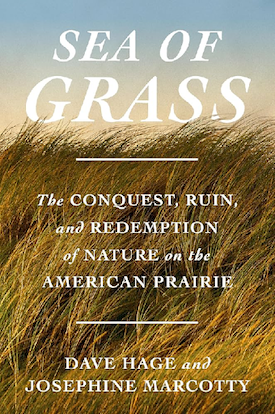
Josephine Marcotty and Dave Hage’s latest book, Sea of Grass: The Conquest, Ruin, and Redemption of Nature on the American Prairie. (Photo: Courtesy of Josephine Marcotty).
BELTRAN: It sounds beautiful. Let's talk about one of the main characters in your book, the buffalo. Tell us about how you know, these large, lovable mammals fit into the narrative about grasslands and conservation.
MARCOTTY: So they are what biologists call a keystone species on the prairie. They have been around for millions of years. I mean, a long time ago, before Europeans arrived here, they were ginormous animals. They were just, they were huge. And they shared the grasslands with giant sloths and other animals that you know have long gone. But over time, they became a key part of the grassland ecosystem. So they come through and they eat the grass short and that creates an environment that's conducive to birds that like short grass, or insects that need short grass, and then they move on, and then the grass grows taller, and then that becomes an ecosystem for other animals that like taller grass. One of the things that they do is they wallow. If you've ever been to Yellowstone National Park or any other park where you can see bison, you'll see them roll over and just create these huge clouds of dust, and then when they leave, there's a little wallow. Those wallows are really important for collecting water when it rains, and scientists have found that there's unique species of animals and insects that will live in and around those wallows when they collect water. Bison, they carry seed across thousands, hundreds of miles when they eat the grass, and then they move the seed up to other parts of the of the grassland. And that's really important for evolution and mixing genetics amongst plants, so they create environment that's good for other species that use the same ecosystem.
BELTRAN: Yeah. So Sea of Grass centers around what you and Hage call the "paradox of the prairie." Please explain this concept and why it's especially relevant today.
MARCOTTY: So the paradox of the prairie is, I think, partly rooted in the fear that early colonialists had when they first encountered it. It is a vast grassland, and that's not something that most Europeans had experience with. They didn't like that openness. They were fearful of the wetlands. They would easily get lost. The winters were terrifying because they were cold and windy, but it was, at the same time, a remarkably fertile place. At first, they thought nothing would grow there because there were no forests, and they thought, well, there must be just bad soil. But it turned out to be the most productive soil in the world, as we know now, based on our agricultural output from those former grasslands. So that's one of the paradoxes.
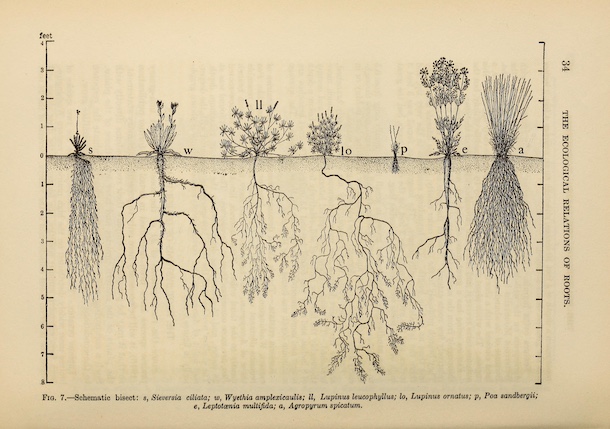
Prairie plants are highly effective at sequestering carbon because of their extensive root systems, which also help them withstand wildfires and prevent erosion. (Photo: John E. Weaver, Wikimedia Commons, Public Domain).
BELTRAN: Yeah, I think most of us don't really equate prairies with biodiversity, but they are actually some of the richest ecosystems in the world. A recent study showed that the number of organisms present in grassland soil even rival the Amazon rainforest. What are some of the benefits of healthy prairies for humans and also for our planet?
MARCOTTY: Well, there is a whole world and a whole ecosystem beneath your feet when you're on a prairie, because the soil is so deep, and also because the roots of prairie plants are so long. I mean, Kentucky bluegrass, which is the kind of grass we often grow in our yards, is only about six inches deep, the roots. But other plants, like cup plant, those roots can extend down 15 feet into the soil, and so they create a whole universe of organisms around them, and that's an excellent way of sequestering and processing carbon, of sequestering and processing nitrogen, both of which are very important for world health in terms of air pollution and in terms of climate change. The world's grasslands contain more carbon than humans have released since the Industrial Revolution, more than the planet's forests and atmosphere.
BELTRAN: Wow.
MARCOTTY: So, and at the current rate of plowing up Western grasslands, we're plowing up about a million acres a year, and that's the equivalent of adding 11.2 million cars to the road every year.
BELTRAN: Wow. How are we losing our grasslands in the United States at such an astonishing rate?
MARCOTTY: So for many, many decades, intensive agriculture stopped at around the 98th parallel because it was too dry in the West to really graze crops properly. And instead, that's why we have cattle there. That's because it was good country for cattle and bison. But through genetic technology, we now are creating seeds, like for corn, that is much more capable of withstanding severe weather, that can thrive in dry conditions. So we now have the kinds of seeds that will allow us to grow crops in places where we could never grow them before. And the profits from that are much greater than from growing cattle. So you can sell a piece of land that has been plowed for much higher price than you can sell it if it hasn't been plowed.
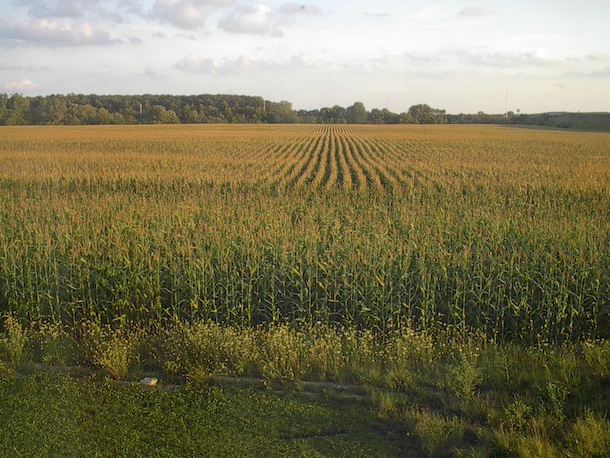
Industrial farming is one of the driving forces behind prairie destruction. The practice of growing monoculture crops such as corn and soybeans uproots grasslands, depletes prairie soil, and increases the risk of pests, making farmers dependent on chemical fertilizers. (Photo: TwoScarsUp, Wikimedia Commons, CC0 1.0).
BELTRAN: So prairies are vanishing largely due to commercial agriculture replacing grasslands with monoculture crops. To what extent is industrial farming to blame for the disappearing of the prairies?
MARCOTTY: Yes, it's mostly agriculture. If you look at a map, or if you fly over the country, what you will see is farmland below you when you, when you fly over the Midwest. What's driven the loss of grasslands really is agriculture, and much of that, and in recent years, much of that is driven by ethanol, which is a fuel derived from corn. And ethanol was created in part to create a new market for corn, and the price of corn increased dramatically after those ethanol mandates were established by the federal government, and that has driven a lot of the expansion of agriculture, is just growing corn for our gas tanks.
BELTRAN: We’re speaking with Josephine Marcotty about her book, Sea of Grass: The Conquest, Ruin, and Redemption of Nature on the American Prairie. We’ll be right back with more. Stay tuned to Living on Earth!
[MUSIC: Tallgrass Express String Band, “Last Stand of the Tallgrass Prairie” on Clean Curve of Hill Against Sky – Songs of the Kansas Flint Hills, Anne B. Wilson]
ANNOUNCER: Support for Living on Earth comes from the estate of Rosamund Stone Zander - celebrated painter, environmentalist, and author of The Art of Possibility – who inspired others to see the profound interconnectedness of all living things, and to act with courage and creativity on behalf of our planet. Support also comes from Sailors for the Sea and Oceana. Helping boaters race clean, sail green and protect the seas they love. More information @sailorsforthesea.org.
[CUTAWAY MUSIC: Punch Brothers, “Passepied (Debussy)” on The Phosphorescent Blues, orig. by Claude Debussy, 2015]
O’NEILL: It’s Living on Earth, I’m Aynsley O’Neill.
BELTRAN: And I’m Paloma Beltran.
And we’re back now with Josephine Marcotty, coauthor of the book, Sea of Grass: The Conquest, Ruin, and Redemption of Nature on the American Prairie. And of course, the assault on prairies couldn't have been possible without the forced removal of Indigenous peoples from their native land. Describe for us how Native farming practices differ from industrial farming and how Indigenous peoples know to protect the land they live on.
MARCOTTY: So Native American people grew crops for their own consumption. So they would grow a variety of food depending on where they were. They would have corn, they would have beans, they would have squash. So they had much more diversity within their farming system, and so they could grow their food on a plot of land, and when the soil played out, they could move on to another place and grow food in another spot and let that area recover and become more fertile again. When European colonialists came in, they began to grow food for markets. So they grew far more food than they needed for themselves, and then they would sell the extra. Indians, they never, they didn't function like that. They didn't have like, a capitalist system. They were people who grew their food for themselves and and for their community, and they just grew what they needed for a season or for a year. And you know, bison were the primary source of food for Western Native Americans for many, many, many years, and they still are. In the last several decades, there has been a push to bring the bison from Yellowstone National Park and return them to the Native Americans and the tribal lands that used to rely on them, and this has been a great story of revival, not only for bison, but also for those native tribes to be able to have food sovereignty and their own source of food, and also to develop businesses around that source of food that they can generate income for their communities. And it's such a story of the underdog. You know, if you think of Native Americans as an, as an underdog, and bison as an underdog, and their ability to come back together and find strength together in restoring bisons to the tribal lands.
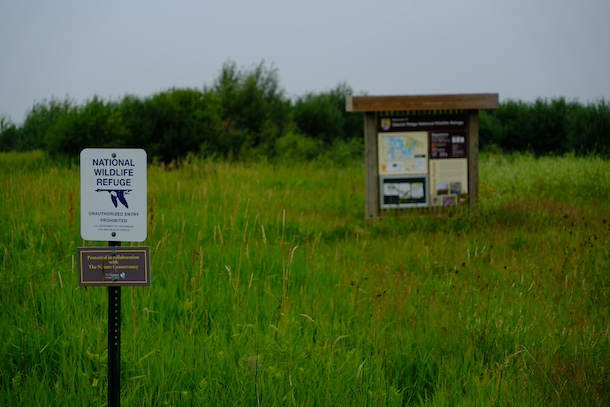
The Glacial Ridge National Wildlife Refuge was created in part out of a nearby agricultural town’s need for clean drinking water, emphasizing that restoring prairies is beneficial to farmers and conservationists alike. (Photo: Jasper Shide, Wikimedia Commons, CC0 1.0).
BELTRAN: So your book details the struggle between the farming industry and land conservation in the American West, but it sounds like restoring prairies is actually beneficial to farmers and to people everywhere. Could you describe that contradiction?
MARCOTTY: One of the contradictions is that we have many different viewpoints and opinions on what land is for. So farmers and the agricultural industry and farming communities often believe that land is best used to produce food and to produce crops, and that that is the economic engine of those small, rural communities. That's been true for hundreds of years. That is the basis of what drove much of colonialism across the country. But at the same time, one of the chapters we have in our book is about a prairie restoration in Northwest Minnesota called the Glacial Ridge. It is the largest prairie restoration in the country, it's like 24,000 acres. And The Nature Conservancy and the other organizations that helped restore that prairie, one of the reasons they were able to do that was because the city of tiny, little city of Crookston, which is primarily an agricultural economic city, needed a place to get clean drinking water, and they were able to put the city's drinking wells in this restored prairie, and know that they would never be contaminated with fertilizer or with other farm contaminants. So just clean drinking water alone is one real benefit. The other of course, is pollinators. I mean, the prairie is a place where you find more pollinators than almost anywhere else in the country, and we need those pollinators to pollinate the crops that we eat for food. But there are estimates that pollinators have declined by up to 25% in some parts of the country, and we're losing bumblebees at a high rate. The rusty patched bumblebee is on the endangered species list because it's disappeared in much of the prairie states. So those are just two of the ecosystem services that prairies can provide.
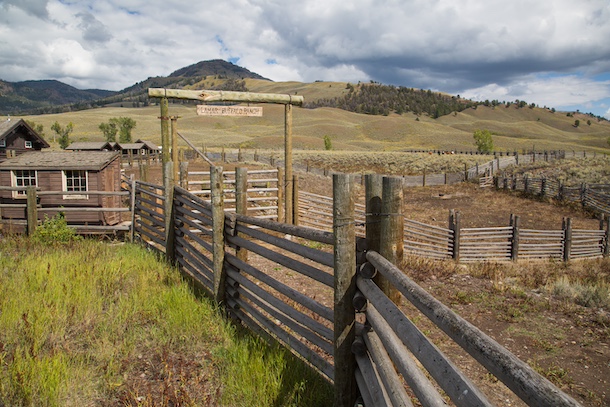
Bison ranchers are especially important to the health of prairies, but the steady income promised by corn makes it difficult for farmers to want to convert their land. (Photo: Lamar Buffalo Ranch, Wikimedia Commons, Public Domain).
BELTRAN: And Josephine, you talk to multiple farmers, and you know, people within the agricultural industry for your book. What's their sentiment around the loss of the prairie and the loss of our grasslands?
MARCOTTY: I think many of them grieve it. I think that many people who live on the grasslands today love it the same way we all love the place where we grow up and appreciate its beauty and its wildlife and what it means to them culturally. But it's very difficult to compete with corn. And if you are a rancher that owns land, and you want to retire, and all of your pension, all of your savings, are essentially the land that you own, and the only way that you can sell it is to sell it to someone who wants to raise corn and soybeans on it, you're in kind of a bad spot. You don't have a lot of options in terms of finding another rancher who wants to raise cattle on it. It's going to be much easier in many places to sell it to someone who wants to raise corn. I think that farmers are caught in a system, just like the rest of us, we are all part of a food system that we created and that we rely on. They don't have a lot of room to experiment with different kinds of growing systems or different kinds of crops, and they often feel like they can't really afford to let grasslands be and to maintain grasslands. For them, land has to produce. They need to make money on it.
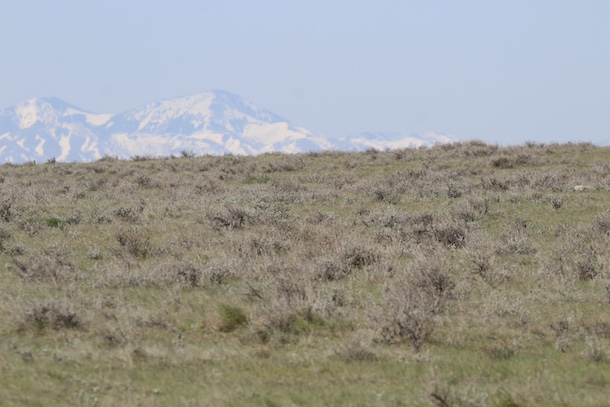
Marcotty encourages listeners to find a prairie to explore in order to understand the importance of preserving them. (Photo: Qwexcxewq, Wikimedia Commons, CC BY 4.0).
BELTRAN: And the farming industry relies heavily on support from the federal government, including from important legislation like the Farm Bill, which provides aid for farmers through programs like crop insurance and funding for research and development. How can the Farm Bill aid in preventing the loss and collapse of the American prairie while continuing to support farmers?
MARCOTTY: One of the things that would help a lot would be parity. So the Farm Bill is designed to help certain kinds of farmers, so the people who grow corn and soybeans and other commodities like cotton. It is not designed to help people who grow cattle. Grasslands need grazers. Ungulates have been a part of the grassland system for millions of years, and humans need ungulates, or animals on the land, because that is the way that we turn sunshine into protein, is those animals who graze on the grasslands. And it's enormously important for our diets and for our food system, but the protections that ranchers get, or anybody who raises animals on the land, is not equal to what you get if you are raising corn or soybeans. So if Congress was able to provide parity, so that all farmers and all producers, like whether you're a rancher or even a fisherman, if you also had the same kind of protections from risk that farmers have, that would give landowners much greater diversity in what they can grow on the land.
/content/2026-01-06/sog_Marcotty_hage_headshot.jpg

Josephine Marcotty and Dave Hage are co-authors of Sea of Grass: The Conquest, Ruin, and Redemption of Nature on the American Prairie. (Photos: Courtesy of Josephine Marcotty)
BELTRAN: What are some of the restoration efforts currently taking place across the country?
MARCOTTY: So there's a bill that's been introduced or is pending, called the Grassland Act, and it would help protect existing prairies by providing support for ranchers and by installing protections elsewhere in the law. So that is one thing we could do, is we could pass some policy that is designed to protect grasslands. Minnesota is one of the only states that has a statewide plan to protect prairies, and they're doing a lot here to buy up marginal cropland, mostly, and converting it back to prairies, and helping landowners who have prairies protect them and understand what they have and how to manage them. So that is really important, is for the nation and for the federal government to recognize that they are something of immense value that needs to be protected. You know, there are many ecosystems that are under threat. The prairie is just, is just one of them that we thought the risks to it were not recognized and needed to be recognized. But all of the outdoors is under threat, either from agriculture or development or from pollution, and the way to really protect all of them is for people to get outside and understand what they have and what they can do to stop whatever destruction is going on.
BELTRAN: Josephine Marcotty is an award-winning environmental writer. She's the co-author along with Dave Hage of Sea of Grass: The Conquest, Ruin, and Redemption of Nature on the American Prairie. Thanks for joining us!
MARCOTTY: My pleasure. Thank you.
Links
Living on Earth wants to hear from you!
Living on Earth
62 Calef Highway, Suite 212
Lee, NH 03861
Telephone: 617-287-4121
E-mail: comments@loe.org
Newsletter [Click here]
Donate to Living on Earth!
Living on Earth is an independent media program and relies entirely on contributions from listeners and institutions supporting public service. Please donate now to preserve an independent environmental voice.
NewsletterLiving on Earth offers a weekly delivery of the show's rundown to your mailbox. Sign up for our newsletter today!
 Sailors For The Sea: Be the change you want to sea.
 The Grantham Foundation for the Protection of the Environment: Committed to protecting and improving the health of the global environment.
 Contribute to Living on Earth and receive, as our gift to you, an archival print of one of Mark Seth Lender's extraordinary wildlife photographs. Follow the link to see Mark's current collection of photographs.
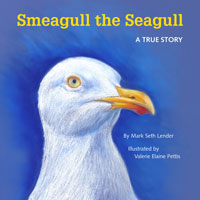 Buy a signed copy of Mark Seth Lender's book Smeagull the Seagull & support Living on Earth
© Copyright World Media Foundation. All Rights Reserved
Home | Contact | RSS | Donate | Newsletter