

Environment and Rule of Law Under Trump
Air Date: Week of January 9, 2026
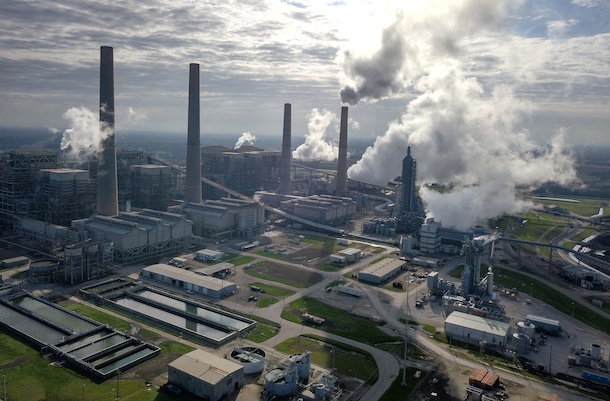
During his second term President Trump rescinded past environmental justice orders, stopped Inflation Reduction Act grants and eliminated EPA's environmental justice arm, leading to lawsuits from environmental groups and states. Pictured above is the W.A. Parish coal and gas generating plant in Texas. Frontline communities face disproportionate exposure to toxic smoke and other air pollutants due to systemic environmental injustices. (RM VM, Wikimedia Commons, CC BY SA 4.0)
In its first year, the second Trump Administration slashed environmental regulations and programs, overstepping its executive authority in the eyes of some environmental advocates. Pat Parenteau, who served as EPA regional counsel under President Reagan, talks with Host Aynsley O’Neill about the inability or reluctance of the judicial and legislative branches to provide a check on what he sees is abusive executive power that is threatening the health of people and planet.
Transcript
BELTRAN: From PRX and the Jennifer and Ted Stanley Studios at the University of Massachusetts Boston, this is Living on Earth. I’m Paloma Beltran.
O’NEILL: And I’m Aynsley O’Neill.
It's been approximately a year since President Trump took office for a second time, and environmental protection has once again been on the chopping block. During the past year, federal agencies cut or reduced environmental justice programs and funding across the board. The EPA, an agency tasked with protecting human health and the environment, relaxed limits on air and water pollution. It also proposed scrapping a mandatory program in which power plants, refineries, and oil and gas suppliers report their greenhouse gas pollution. And in recent days the Trump Administration said the US would withdraw from the Intergovernmental Panel on Climate Change and no longer abide by the UN Framework Convention on Climate Change treaty, which was ratified by the Senate in 1993.* But the reality of the climate crisis is here. And 2025 was also a year of record-setting heat and catastrophic storms. Pat Parenteau served as EPA regional counsel under President Ronald Reagan and he’s currently an emeritus professor at Vermont Law and Graduate School. He often joins us to analyze active environmental legal challenges across the US. But he’s here now to share his grave concerns about the direction of US environmental policy under President Trump’s second term.
PARENTEAU: The big difference between Trump one and Trump two is that the courts were able to stop Trump in his first term 90% of the time. In this term, the Trump administration has been much more successful in blocking efforts to challenge them in court. That's primarily because of the Supreme Court, with its ultra conservative, six member majority that steps into these cases even before they've reached the merits, even before there's been briefing and argument and facts and evidence, the Supreme Court has shown an inclination to step in and stop environmental rules in their tracks. That's a big difference. The lower courts are struggling to hold the line, hold the government accountable to the rule of law. This administration has no regard whatsoever for the rule of law. In fact, the courts are struggling with whether they can hold the Trump administration in contempt when the Department of Justice has, according to a New York University study, lied to the courts over and over and over again, misrepresented what the administration is doing, falsified declarations that are filed in court. It's amazing the outlaw behavior of an administration. And the courts do have the power to issue contempt citations, but the problem is the Department of Justice has to enforce contempt citations, and we know that under Pam Bondi, the Department of Justice will never enforce contempt citations against the Trump administration. So we're in a terrible pickle, if you want to call it that, but we are really in an unprecedented situation where the institutions of government, the checks and balances of government are not working. And of course, the environment is suffering, but many other parts of our society are suffering as well.
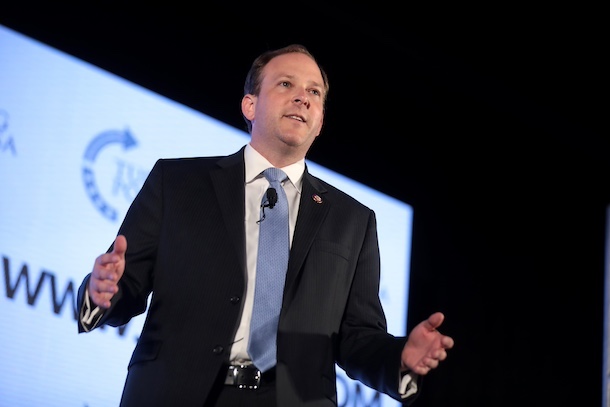
Under President Trump EPA Administrator Lee Zeldin has pushed to reduce or eliminate environmental protections. (Photo: Gage Skidmore, Wikimedia Commons, CC BY SA 2.0)
O'NEILL: So in this current landscape in the United States, what would it take in order to get back this rule of law?
PARENTEAU: Well, that's a very interesting question, one we've never faced, at least to the scale that we're dealing with. And the United States has dealt with many crises over its period. I mean, you start with the Revolution, the Civil War, Civil Rights Movement, the anti-war movement. We've seen all kinds of political challenges. We've never seen an administration bent on violating the law, determined not to follow the law, determined not to follow the Constitution, daring the courts to stop them. And I don't know when or if the courts are going to be capable of stopping this administration. We've seen victories in the lower courts, in the trial courts, the district, the federal district courts, but what happens is they get appealed. And if they don't get appealed immediately to the Supreme Court, they get appealed to the intermediate Courts of Appeal, where there are hundreds of Trump appointees on the bench. Sometimes you draw a panel in the circuit courts where there are two Trump appointees on the bench, and guess what happens? If a lower court has stopped the administration, it gets to the Court of Appeals and two Trump appointees vote to stay the lower court's orders. That's what happens. So lawyers are scratching their heads about, "what do we do in this situation?" You could turn to Congress, right? You could have Congress impeach members of the administration — and there are several that I could nominate, right? — but Congress isn't going to do that. Congress is in the grip of President Trump's political power right now. We've seen that. It's incapable of correcting and challenging and dealing with what the Trump administration is doing. So I'm not sure where this goes. It's clear that unless and until we get different people elected to national governments and state governments, and that's a long process, I grant you, and it's not a legal question, it's a political question, but unless and until we do that, I'm not sure we can rely on the courts to save us.
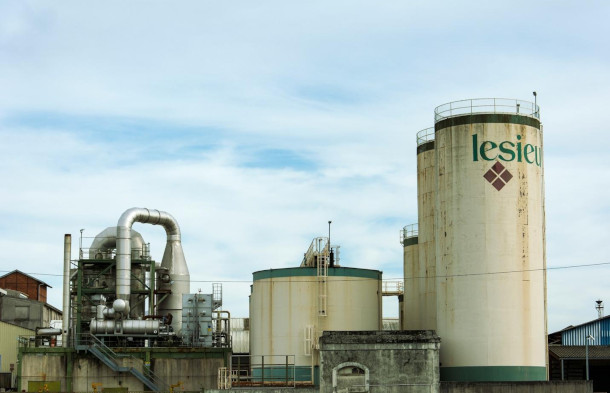
Scientists with the EPA’s Office of Research and Development were charged with conducting independent research. One such area of study would have the goal of ensuring that emissions from factories don’t endanger neighboring communities. (Photo: André Robillard, Unsplash, public domain)
O'NEILL: Now, in the past, we've talked about how the Trump administration went after the endangerment finding. This is the finding authorized by the Supreme Court and by former President Obama's EPA that determined that climate heating endangers health. Where does that legal challenge stand?
PARENTEAU: Yeah, we were promised by administrator Zeldin a repeal of the endangerment finding in December, but because of the government shutdown and some other things, they've had to postpone that. But we're expecting any day now, literally, that Zeldin will issue a final decision repealing the endangerment finding, which undergirds all of the climate regulation. It undergirds the power plant rule, the methane rule, the tailpipe rule that regulates emissions from automobiles and trucks and so forth. So we're now expecting to see the repeal of the endangerment finding this month. That will trigger judicial review in the Court of Appeals for the District of Columbia, which still has a balanced representation of judges appointed by bipartisan administrations, in other words, Democrats and Republicans. So there's a very good chance that the repeal of the endangerment finding will be overturned by the DC Circuit, but it will then go to the United States Supreme Court, where all bets are off. We do have the Massachusetts versus EPA landmark decision of the Supreme Court. This was the prior Supreme Court, the one that still had a balance of judges on it. So this Supreme Court would have to overrule or substantially revise the Massachusetts versus EPA ruling. So we're going to have to watch very carefully what happens this year into next year into 2027 on the endangerment finding. All of the climate rules rest on what happens to the endangerment finding. So that's huge.
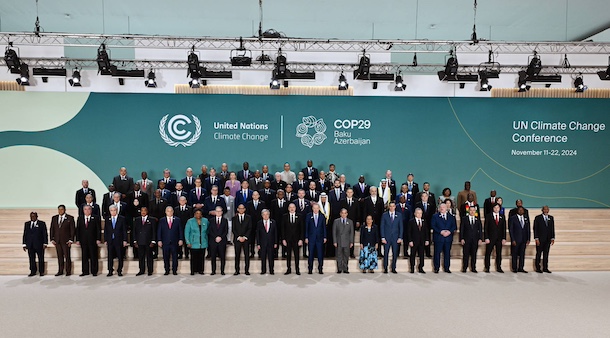
President Trump is moving to withdraw the United States from the United Nations Framework Convention on Climate Change or UNFCCC treaty, which was ratified by the US Senate in 1992 and went into effect in 1993. Pictured above are world leaders during the 2024 UNFCCC Climate Action Summit, COP29, in Baku Azerbaijan. (Photo: President, Wikimedia Commons, CC BY 4.0)
O'NEILL: Energy has definitely been brought up as a major theme and concern for the Trump administration. You know, the President even declared an energy emergency. How did we see that reflected in the 2025 legal system?
PARENTEAU: Yeah, I mean, one of the most radical decisions that this administration has made is to go after renewable energy. Five of the major offshore wind farms have just been stopped by this administration. These are electric generation facilities or systems that supply electricity to millions of people up and down the East Coast. These wind farms were critical to stabilizing the grid system in a vast portion, almost half of the United States, because, of course, these data centers are imposing enormous demands on the electricity system as well as the water systems and land use systems. And these wind farms were critical components of being able to deal with those demands and still keep the lights on for average Americans. And the Trump administration, for reasons that defy reason or logic, have stopped them, and they're arguing that there's a national security risk. This is a favorite ploy of this administration because by declaring that, then they can say, well, the information is classified, so we don't have to share it with anybody. We don't have to share it with the courts. We don't have to share it with the public. We don't even have to share it with the Congress. It's amazing, isn't it? So that is now being challenged in court. An earlier decision of the courts ordered the administration to allow completion of one of these major offshore wind farms, the Revolution Farm, off of Rhode Island, and the court said there's no basis for this administration to stop the completion. It was 80% complete, and throw thousands of people out of work, by the way, that are finishing it up and linking it to the onshore facilities. So that's just one, one example of what this administration is doing. You can go across the country. They're stopping solar development on public land. They're stopping offshore wind on the Gulf Coast. They're opening up the Alaska wildlife refuge to oil and gas development for the first time in 50 years, etc. It's an all-out attack on the cleanest, most affordable, most efficient systems of energy generation that we have.

The People’s Climate March of 2017 brought together people concerned about President Trump’s environment policies. (Photo: Dcpeopleandeventsof2017, Wikimedia Commons, CC BY-SA 4.0)
O'NEILL: So Pat, 2025 is just year one of Trump 2.0, and we're heading into 2026 right now. There's a lot still to come, like we said, with the endangerment finding. What else are you keeping an eye out for that you think the Trump administration might move forward with in 2026?
PARENTEAU: Well, we know that they want to repeal the Rules implementing the Endangered Species Act. And what they're proposing to do would mean that restrictions on destruction of critical habitat would essentially be removed. And, as we know, the biodiversity crisis by itself, poses what, some scientists would say, is an existential threat to human life on earth. And the institutional damage that's being done to our systems of environmental regulation and protection are being decimated. The only way that that can be arrested, stopped, or at least slowed down, is if control of the Congress changes this year. It looks as if the house is definitely going to flip to the Democratic side. That will slow down any efforts by Trump in the Congress to further cripple these programs.
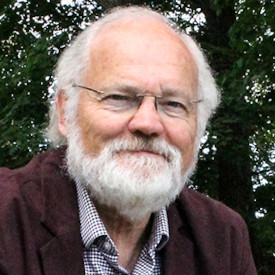
Pat Parenteau is a professor at Vermont Law and Graduate School. (Photo: Vermont Law and Graduate School)
O'NEILL: Pat you've been involved in environmental law for more than a half century at this point. What keeps you going?
PARENTEAU: Well, first of all, you can't quit. I mean, you know, the stakes are too great. What I like to say sometimes is, if I didn't have kids, I probably wouldn't care so much, because I'm not going to live to see all of these problems that I've been describing. You know, I hope to live a little while longer, but, you know, I'm not going to live forever, and some of the worst consequences are going to happen after I'm gone. But here's the thing, in addition to keeping up the good fight as long as I can and I will, there is reason to believe we can get beyond this situation. And the reason I say that is the technologies that we need we know to deal with 80% of the climate challenges we're facing right now, there's probably 100% of clean energy technologies that could deal with climate change. We know how to design systems and programs and laws and policies to do what we need to have done. We know how to do that. So that's the future that we all, I think, want to see happen, but it isn't going to happen accidentally or by osmosis. It's only going to happen if people, the public and voters in particular, insist that these things happen that need to happen. You know, climate change is a wicked, hard problem, but it can be dealt with. We can deal with these challenges, if we're willing to do it.
O'NEILL: Pat Parenteau is a former EPA Regional Council and emeritus professor at Vermont Law and Graduate School. As always, thank you so much for joining us, Pat.
PARENTEAU: Thanks, Aynsley. Good to be with you.
*Correction: The U.S. Senate ratified the UNFCCC treaty in 1992; the treaty went into effect in 1993.
Links
Living on Earth wants to hear from you!
Living on Earth
62 Calef Highway, Suite 212
Lee, NH 03861
Telephone: 617-287-4121
E-mail: comments@loe.org
Newsletter [Click here]
Donate to Living on Earth!
Living on Earth is an independent media program and relies entirely on contributions from listeners and institutions supporting public service. Please donate now to preserve an independent environmental voice.
NewsletterLiving on Earth offers a weekly delivery of the show's rundown to your mailbox. Sign up for our newsletter today!
 Sailors For The Sea: Be the change you want to sea.
 The Grantham Foundation for the Protection of the Environment: Committed to protecting and improving the health of the global environment.
 Contribute to Living on Earth and receive, as our gift to you, an archival print of one of Mark Seth Lender's extraordinary wildlife photographs. Follow the link to see Mark's current collection of photographs.
 Buy a signed copy of Mark Seth Lender's book Smeagull the Seagull & support Living on Earth
© Copyright World Media Foundation. All Rights Reserved
Home | Contact | RSS | Donate | Newsletter