

This Week's Show
Air Date: October 9, 2026
FULL SHOW
SEGMENTS
Maine Race for Senate, Climate and Environment
/ Kevin MillerView the page for this story
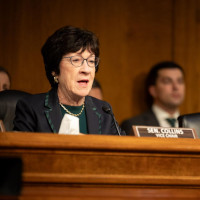
The closely watched race for US Senate in Maine is pitting two environmentally concerned candidates against each other. Not only do they both have fairly similar green and climate views, they’re from the same rural county and both have roots in the lumber industry that’s so important to the state. Maine Public Radio’s veteran state house and environmental reporter, Kevin Miller, joins Host Steve Curwood to discuss incumbent Republican US senator Susan Collins and her Democratic challenger, Troy Jackson. (12:04)
New Snake Named After Rockstar Slash
/ Don LymanView the page for this story
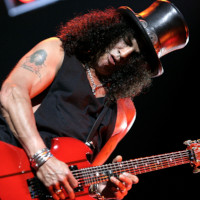
A new species of snake recently discovered in the dense forests of New Guinea has been named after Slash, the lead guitarist for the rock band, Guns N’ Roses. Living on Earth’s Don Lyman reports in this note on emerging science that Slash has had a lifelong interest in reptiles and at one time even owned a python, an anaconda, and a boa. (01:45)
Public Power and Industry Pushback
/ Tom PerkinsView the page for this story
In Ann Arbor, Michigan, public power advocates have battled since 2018 to take electricity non-profit, and hope to win a referendum vote in November. But strong opposition from dividend-paying DTE Energy is being stoked by an alleged misinformation campaign with claims of higher costs of going public from what seems to be at least one citizen group that is in fact funded in part by DTE. Tom Perkins wrote about this for the Guardian Newspaper and speaks with Host Steve Curwood. (11:55)

BirdNote®: Squirrel or Bird?
View the page for this story
Keep your ears peeled this fall for the sounds of animals as they go about preparing for winter. You might be surprised at just who is making those chirps and barks. BirdNote®’s Ariana Remmel reports. (02:01)
The Carbon Wave
View the page for this story
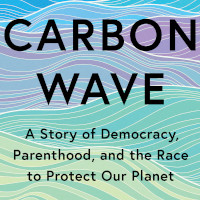
In 2022, President Biden’s signature climate bill appeared doomed in the 50-50 divided Senate when West Virginia Senator Joe Manchin, a centrist Democrat with close ties to the fossil fuel industry, declined to pledge his critical vote. But negotiations restarted in secret, and the largest climate package in US history became law. Leah Stokes’ 2026 book The Carbon Wave: A Story of Democracy, Parenthood, and the Race to Protect Our Planet tells the gripping story of how the Inflation Reduction Act came together and cleared the final hurdles, and she joins Host Jenni Doering. (19:00)
Show Credits and Funders
Show Transcript
261009 Transcript
HOSTS: Steve Curwood, Jenni Doering
GUESTS: Kevin Miller, Tom Perkins, Leah Stokes
REPORTERS: Don Lyman, Ariana Remmel
[THEME]
CURWOOD: From PRX – this is Living On Earth.
[THEME]
CURWOOD: I’m Steve Curwood
DOERING: And I’m Jenni Doering.
The high stakes of the Maine Senate race.
MILLER: Senator Jackson was very prominently supporting our current Democratic governor’s, her very ambitious climate agenda. Senator Collins has also been largely supportive of some of these climate issues, but I think it comes down to which candidate the environmental community feels is going to be a bigger advocate on environmental issues.
CURWOOD: Also, why a “carbon wave” might be far more useful than a “carbon footprint.”
STOKES: We don't control the fossil fuel-based energy system. We were all born into it, even our grandparents were born into this system, but the goal should be to not pass it along to the next generation. And so that points us towards working together to create infrastructure change or systemic change.
CURWOOD: That and more, this week on Living on Earth. Stick around!
[NEWSBREAK MUSIC: Boards Of Canada “Zoetrope” from “In A Beautiful Place Out In The Country” (Warp Records 2000)]
[THEME]
Maine Race for Senate, Climate and Environment
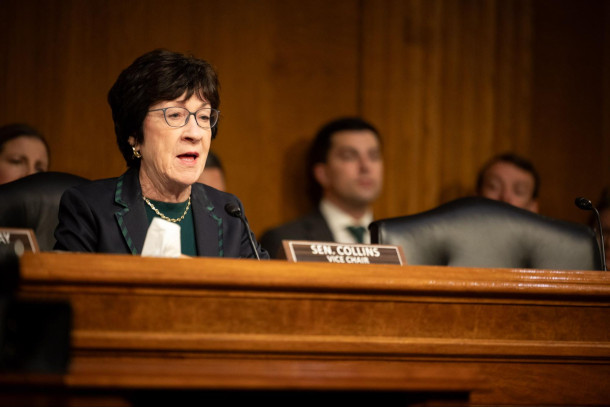
Republican Susan Collins has served as a Senator for Maine for nearly thirty years. She has also served as the Chair of the US Senate Appropriations Committee since 2025. (Photo: DHSgov, Wikimedia Commons, public domain)
DOERING: From PRX and the Jennifer and Ted Stanley Studios at the University of Massachusetts Boston, this is Living on Earth. I’m Jenni Doering
CURWOOD: And I’m Steve Curwood.
The closely watched race for the US Senate in Maine is pitting two environmentally concerned candidates against each other. Not only do they both have fairly similar green and climate views, they’re also both from Aroostook County, the sparsely populated and northernmost region in a state that is 90 percent forested. Incumbent republican US senator Susan Collins, seeking her sixth term in office, comes from a family that dates back five generations in the lumber business and is a political dynasty. Her father and uncle served multiple terms in the Maine state senate and both her father and mother were mayors of her hometown, Caribou. Democratic challenger Troy Jackson grew up in a working class family of loggers in the Allagash region, deeper in the woods and about 75 miles from Caribou. Jackson entered politics as a prominent labor activist in the logging industry and served six years as the president of the Maine State senate. He got into this US senate race late, as the winner of the Democratic primary had to drop out. Joining me now is Maine Public Radio’s veteran state house and environmental reporter, Kevin Miller. Welcome to Living on Earth!
MILLER: Hi, thanks for having me.
CURWOOD: So, give me a sense of these two candidates: Susan Collins, the Republican, and, and Troy Jackson, the Democrat.
MILLER: Yeah. So, Senator Collins has been in office for 30 years. She is one of the more senior Republican members of the Senate. She is a fairly moderate Republican and centrist Republican. There are some people who will probably be yelling at the radio right now, saying she's not a moderate, but when you look at her in the context of where the Republican Party is today, she's definitely kind of more to the center, and she also kind of describes herself as, as a deal maker. Troy Jackson, on the other hand, he was a state lawmaker for 20 some years. He's a logger from far northern Maine, and he's a fairly progressive candidate. He's been closely aligned with Bernie Sanders. He became candidate after our last progressive candidate, Graham Platner, his campaign kind of imploded because of rape allegations against him from a former girlfriend of his. But Troy Jackson, he's had a similar approach to policies as Graham Platner, so he was able to kind of step in and say, "I'm going to carry Graham Platner's progressive movement, which had a lot of momentum in Maine before Platner had to step down.
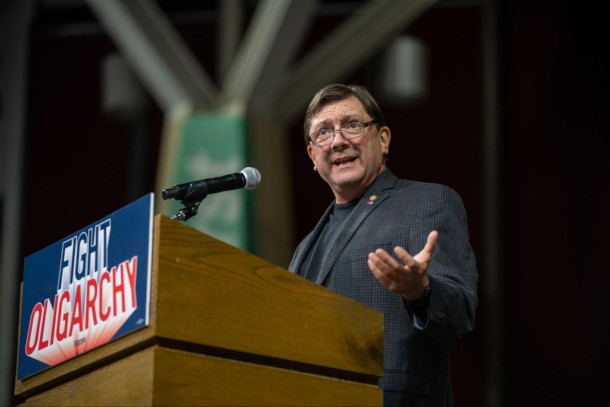
Democrat Troy Jackson served in the Maine legislature for over two decades, holding the position of President of the Maine Senate for six of those years. (Photo: Rebecca Conley of Maine Public)
CURWOOD: At one point, you worked as an environmental reporter, so talk to me about climate and environment as a priority for Maine voters in this race. Where does it fall on the list, so to speak?
MILLER: Well, it doesn't fall very high from what we're seeing from polls and hearing from voters. Environment and conservation issues are always fairly important in Maine, just because it's a big natural resource-based state. So much of our industries are tied to natural resources. But I think, like we're seeing in a lot of other places around the country, it's the other issues. It's affordability. It's, you know, inflation. It's gas prices. One of the big concerns I think headed into the election right now, or at least into winter, is Maine is the most heavily reliant state on heating oil. More than 50% of houses in the state use heating oil, and heating oil is diesel, pretty much. So when the price of diesel and heating oil are up above $6 a gallon, that's a big concern for people. So the affordability issues are probably top of mind for a lot of people.
CURWOOD: So how do these candidates come down on environmental issues? Let's talk about renewable energy to start with.
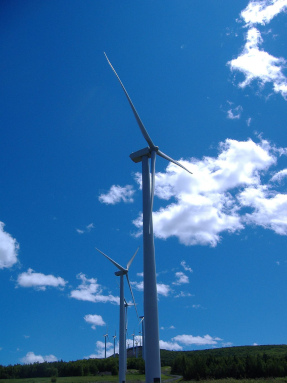
Both Maine candidates are fairly supportive of wind energy and criticize President Trump’s attempts to block renewable energy in the state. (Photo: Michael Surran, Wikimedia Commons, CC BY-SA 2.0)
MILLER: I guess they're fairly well aligned in some respects, at least on renewable energy. They're both known as being fairly prominent supporters of the push to convert Maine and other states to more renewable sources. They're both supporters of wind energy, especially offshore wind. The Gulf of Maine is a very windy place. There have been proposals that were in the works to build large offshore wind facilities there. They have now been kind of put on hold by the Trump administration, and I think Senator Collins has been critical of that. Troy Jackson has certainly been critical of that. We do have a significant number of land-based wind resources here, and Troy Jackson actually was key to, when he was the Senate president, key to kind of greasing the skids to helping build a large wind farm that would stretch from his area of northern Maine down and would be a major generator. That project's also been stalled for other reasons. One other issue that I think they're closely aligned is on biomass energy. Some people don't regard this as a renewable energy or it's a more controversial source because of its impact on the climate, you're burning wood, you're releasing carbon dioxide. So some environmentalists don't view this as a truly renewable source, but because we are such a heavily forested state, it's a big issue up here. On the broader climate issues, Senator Jackson was very prominently supporting our current Democratic governor's, her very ambitious climate agenda. He's not quite as progressive as some people would like him to be. Senator Collins has also been largely supportive of some of these climate issues, but I think it comes down to which candidate the environmental community feels is going to be a bigger advocate on environmental issues, and in this case, certainly hearing from the environmental groups, it's Troy Jackson.
CURWOOD: Now, why is that? Is it because it would be part of flipping the Senate to the Democratic majority, which would have a large impact, obviously, on environmental policy of the federal government? I mean, the Trump administration has rolled back almost everything, gotten out of the climate agreements, and in fact, doesn't believe that climate's a problem.
MILLER: Yeah, I think that's a key part of it is that a lot of the environmental community just looks at the Democrats as being more favorable to achieving their goals, certainly than Republicans, and, and compared to what the Trump administration has been doing, so they see flipping the Senate as as key to that.
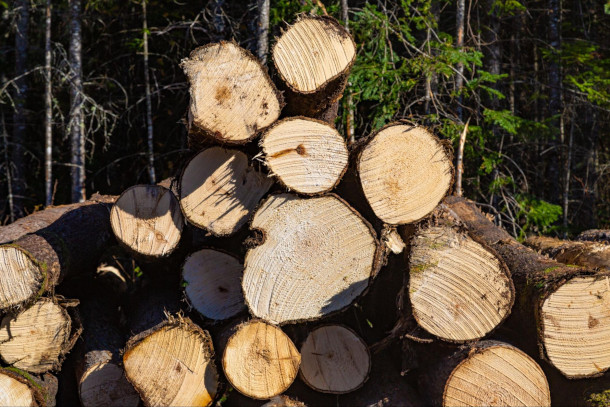
While some environmental groups raise concerns about Jackson’s identity as a logger, he has been critical of clear cutting, labor abuses, and pesticide use in the industry. (Photo: Tony Webster, Wikimedia Commons, CC BY 2.0)
CURWOOD: Now, Kevin, Troy Jackson is what a fifth generation logger from Allagash? You can't go any further north there in Maine than be it Allagash. What's his relationship to the industry?
MILLER: Well, he has a pretty complicated relationship, I'd say. He's been a logger his entire life, so he kind of grew up in the industry. But he actually got into politics because of that experience. Back about, I guess 30 years ago now, there was a lot of tensions between the forest landowners and the loggers from Maine because they believed that the forest landowners were hiring too many Canadian workers, which they could hire for cheaper. So Troy Jackson and a number of the loggers actually led a blockade of the logging road border crossings with Canada. This got a huge amount of attention, and he said that he was so frustrated with that experience, he didn't feel like the folks here in Augusta, the state capital, and in Washington were listening to him and were listening to the other loggers, and that's how he actually he ran for the state legislature a couple of years later. So he has kind of a complicated relationship, I think, with the landowners. He, you know, obviously he works in the industry, but he has always felt that the landowners are not respecting especially the labor rights of Maine loggers.
CURWOOD: What about the ecology? I mean, some of the land companies up there are clear cutting. How does he feel about that?
MILLER: Troy has been critical of land management in the past on that respect, and he also led the fight to try to ban the aerial spraying of glyphosate, which most folks probably know as Roundup. That is a herbicide that a lot of landowners use to try to eliminate the undergrowth that they don't want, so that they can encourage the trees that they want, but of course, glyphosate kills a lot of things. And Troy Jackson led the effort to pass a bill in the legislature to ban aerial spraying of glyphosate, but that was eventually vetoed by our Democratic governor Janet Mills because of the opposition from the forest industry.
CURWOOD: Interesting. So Susan Collins been in the Senate for quite a while at this game, what 30 years? What's her environmental record? Where does she stand?
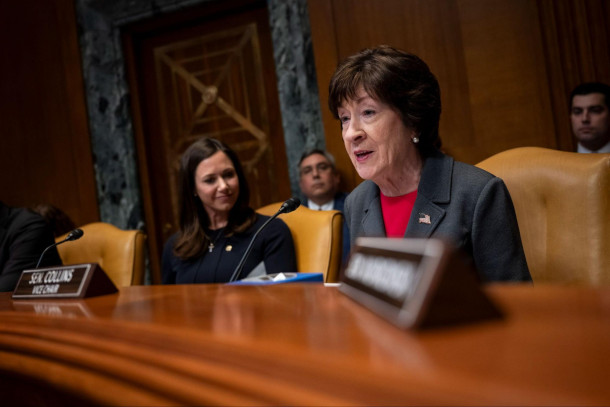
As Chair of the U.S. Senate Appropriations Committee, Collins has led efforts to reduce proposed cuts to the EPA from 55% to 5%. Some environmental activists maintain that she still does not push back enough against the Trump administration. (Photo: U.S. Department of Homeland Security (DHS), Wikimedia Commons, public domain)
MILLER: Well, like I said, Susan Collins is a fairly prominent supporter of the push towards renewable energy. She has also supported or helped pass legislation in the past to reduce greenhouse gas emissions. So she's looked at by some, or at least has been looked at in the past, as one of the environmental community's best allies when it comes to environmental issues in the Republican Party. I think that's changed to some respect under the Trump administration, and that some in the environmental community now view her as not doing enough to push back against the Trump administration, especially on these drastic cuts to some of the programs. So I think that's where we're seeing that disalignment now between the environmental community and Susan Collins.
CURWOOD: So she's chair of the Senate Committee on Appropriations, and between that and the House chair, they sit on money, and if you want it, you have to go through her committee. So, what's her record on how federal funds are allocated when it does come to environmental protection?
MILLER: She's only been chairwoman for a couple of years now under the Republican leadership. What we've seen in this most recent cycle with President Trump, he actually proposed a 55% cut to the EPA. What the Senate Appropriations Committee did, you know, under her leadership, and certainly working with Democrats, they actually reduced that to a 5% cut in the budget that eventually came out. The committee as a whole was, you know, applauded by some in the environmental community for lessening that impact, but again, there are still some folks on the left who feel like she's not doing enough to push back against the Trump administration.
CURWOOD: Now, Kevin, every year the League of Conservation Voters publishes the National Environmental Scorecard, which tracks and rates how members of Congress vote on environmental and climate issues. What is the LCV saying about Troy Jackson and Susan Collins?
MILLER: Yeah, it's interesting because the League of Conservation has actually endorsed Susan Collins in the past, going back to 2014, they endorsed her and called her as one of the leaders in the fight against climate disruption. This time around, they're endorsing Troy Jackson because they, again, they see him as being a more effective advocate on environmental issues than Senator Collins, and I think a big part of that is, as we talked about before, is that Democratic control of Congress. The environmental community sees that as key to being able to get done what they want to do, or at least stopping the Trump administration from doing what they want to do. But what I think is really interesting is if you go back to that same year, 2014, the League of Conservation Voters actually came out against Troy Jackson when he was running for one of our congressional seats, and I think they paid more than $150,000 in ads against Troy Jackson, and he ended up losing that Democratic primary in part because of the pushback from this group and from some of the abortion rights groups. So I think it's fascinating now to kind of see how even within that one group, how the dynamics have changed between these two people.
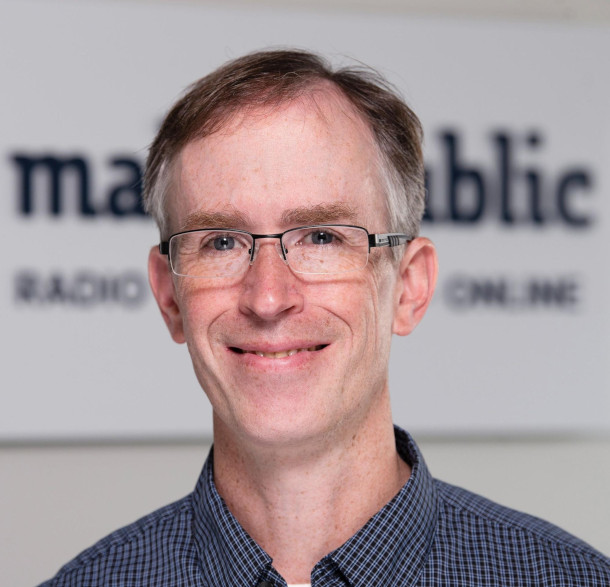
Kevin Miller is the State House Correspondent for Maine Public Radio. (Photo: Maine Public)
CURWOOD: Let's say that Troy Jackson wins, but the Senate doesn't flip. What does that do to the state of Maine's position in national politics?
MILLER: Well, I think that's a key thing that Senator Collins has been arguing, is that Maine would lose that influential voice in Washington, and it's going to affect the amount of money that's flowing back to Maine. Not only would they lose the Chairperson of the Senate Appropriations Committee, but they would lose somebody in Collins who has, she's frequently in the center of a lot of these hotly contested issues because, especially when the Senate is so closely divided, she's frequently a swing vote, which she says allows her to use her influence more than someone else would. That's a key part of her argument. Troy Jackson's argument is: Look, I'm going to be a better advocate overall for the working people of Maine, for the progressive policies that I've been pushing, and also for these environmental issues, than Susan Collins would be, especially if the Senate was in Democratic hands.
CURWOOD: Kevin Miller is a State House Correspondent for Maine Public Radio. Kevin, thanks so much for taking the time with us today.
MILLER: Thank you for having me.
Related links:
- Maine Public | “Maine Revives Aroostook County Wind Power Project”
- Maine Public | “Mills Vetoes Bill That Would Have Banned Aerial Herbicide Spraying In Woods”
- Maine Senate Democrats | “Jackson Introduces Bond Package to Support Biomass Energy”
- Environmental Protection Network | “Environmental Protection Network Commends Senate Appropriators for Bipartisan Cooperation on EPA Budget”
- LCV endorses Susan Collins in 2014
- LCV endorses Troy Jackson in 2026
- Inside Climate News | “Susan Collins and Climate Change: ‘The Silence is Deafening’”
[MUSIC: La Veillée]
DOERING: After the break, the push for public owned power – and industry pushback. But first, this note on emerging science from Don Lyman.
[MUSIC: Guns N’ Roses, “Sweet Child O’ Mine” on Appetite For Destruction, Geffen Records]
New Snake Named After Rockstar Slash
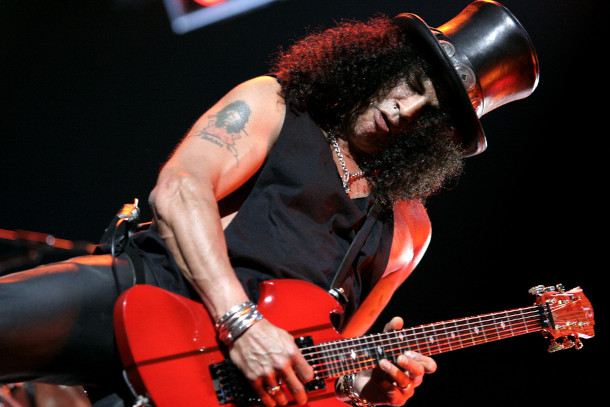
Slash is a hard rock and heavy metal guitarist, best known for playing in bands like Guns N’ Roses and - aptly for his love of reptiles - Slash’s Snakepit. (Photo: daigooliva, Wikimedia Commons, CC BY-SA 2.0)
LYMAN: A new species of snake recently discovered in the dense forests of New Guinea has been named after Slash, the lead guitarist for the rock band, Guns N’ Roses.
A research team led by Sara Ruane, associate curator of herpetology at Chicago’s Field Museum, made the discovery. The specimen of Lielaphis slashi, also known as Slash’s groundsnake, was slender, 28 inches long, and reddish-brown. Ruane explained that snakes in this genus are poorly studied because they are elusive and nocturnal, making them difficult to observe in the wild.
Ruane had read a 1995 interview with Slash from Reptiles magazine, where the guitarist talked about his interest in reptiles, and how much he loved zoos, museums, natural history, and looking for snakes as a kid. At one time Slash even owned a python, an anaconda, and a boa, so it felt natural to Ruane to name the new snake species after him.
When the rock star found out about his namesake, Slash said, “As a long-time herpephile, I’m extremely honored and humbled to have Lielaphis slashi from New Guinea named after me. It’s really exciting. I never would have imagined this moment would arrive.”
As a biologist with a lifelong interest in herpetology, and a guitarist who used to sing in rock bands, I share Slash’s interest in snakes and music, but no one has named a snake after me – not yet, anyway.
With this week’s note on emerging science, I’m Don Lyman.
Related links:
- Popular Science | “New Snake Species Named in Honor of Guns N’ Roses Guitarist Slash”
- Field Museum | “Welcome to the Jungle: Newly Discovered Snake Named After Slash From Guns n’ Roses”
[MUSIC: Guns N’ Roses, “Sweet Child O’ Mine” on Appetite For Destruction, Geffen Records]
ANNOUNCER: Support for Living on Earth comes from the Waverley Street Foundation, working to cultivate a healing planet with community-led programs for better food, healthy farmlands, and smarter building, energy and businesses.
[CUTAWAY MUSIC: Kfir Ochaion, “Sweet Child O’ Mine (Acoustic)” on VIII, Kfir Ochaion]
Public Power and Industry Pushback
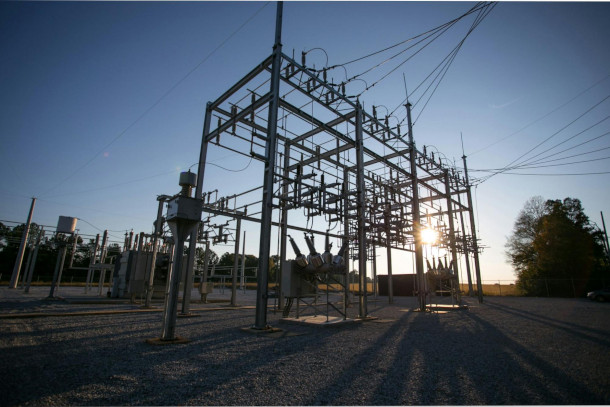
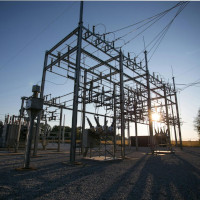
An electrical power station in Huntsville, Alabama, where the electric system was municipalized in 1940. (Photo: American Public Power Association, Unsplash, Unsplash License)
DOERING: It’s Living on Earth, I’m Jenni Doering
CURWOOD: And I’m Steve Curwood.
According to the American Public Power Association, the customers of municipally owned electric utilities pay on average about 15 percent less for electricity than those served by investor-owned utilities, and based on the math alone, it would seem to be an easy choice for voters when asked. But back in 1923 when the citizens voted to create SMUD, the Sacramento Municipal Utility District as a community-owned, not-for-profit electric service they had to wait until 1946 to actually get started, thanks to push back in the courts from PG & E. Current efforts to move to public power are also taking patience as they face headwinds in San Diego, California, St. Petersburg, Florida and Ann Arbor, Michigan. There, public power advocates have battled since 2018 to take electricity non-profit, and hope to win a referendum vote in November. Strong opposition from dividend-paying DTE Energy is being stoked by an alleged misinformation campaign with claims of higher costs of going public from what seems to be at least one citizen group that is in fact funded in part by DTE. Tom Perkins wrote about this for the Guardian Newspaper and joins me now from near Detroit. Welcome to Living on Earth, Tom.
PERKINS: Hi, thanks for having me.
CURWOOD: How are these front groups created, and just what do they do? How do they operate?
PERKINS: Yeah, this isn't totally unique. This is something that industries, not just utility industry, do. I've seen this in my reporting on chemical industry and gas and oil companies will set up these types of front groups, but in this case, they hire a consultant, somebody who who knows the industry. It varies by state, but they set up a nonprofit or some kind of organization, and they put sort of a a community vibe on it. That if the average person looks at their marketing material or their mailers or their website or whatever, they might think, "oh, okay, here's a bunch of my neighbors out fighting against this thing" but if you scratch even a little bit below the surface, there are signs that point to it not really being a grassroots effort.
CURWOOD: So the Ann Arbor Responsible Energy Coalition (A2REC) was started in response to this ballot initiative coming up in November. What is that ballot initiative pushing for exactly?
PERKINS: It's pushing for the full municipalization of Ann Arbor's grid. So the city of Ann Arbor would take over the grid and be responsible for not just delivering the power, but they might have to buy it from DTE Energy. They might have to buy it from some other company, and then they would also, you know, they plan to to build out their own clean energy generation, so solar and other means to, you know, provide clean energy, which DTE Energy hasn't done a whole lot of here, but they would take over the grid, break that off from DTE, and the city of Ann Arbor would be then in charge of all the maintenance, all the upkeep, all the improvements, and making all the decisions about it going forward.
CURWOOD: So I believe that there's another major point of the November elections in Ann Arbor: is the candidacy of a new mayor who defeated the incumbent in the Democratic primary, talk to me about this candidate. What's his name?
PERKINS: Yousef Rahbi, he is a former state legislator who, while he was in the state house, was a thorn in the side of of DTE and Consumers Energy, the two big investor-owned utilities in the state, regularly introducing legislation to boost rooftop solar and rein in DTE's price increases, and he ran for he's a member of the DSA. He ran against an incumbent mayor who's been there for a long time, and he's also one of the leaders of the public power push in Ann Arbor, and that was a key piece of his campaign. And I think it really probably bodes well for the public power initiative's chances that Yousef really cleaned up in the primary.
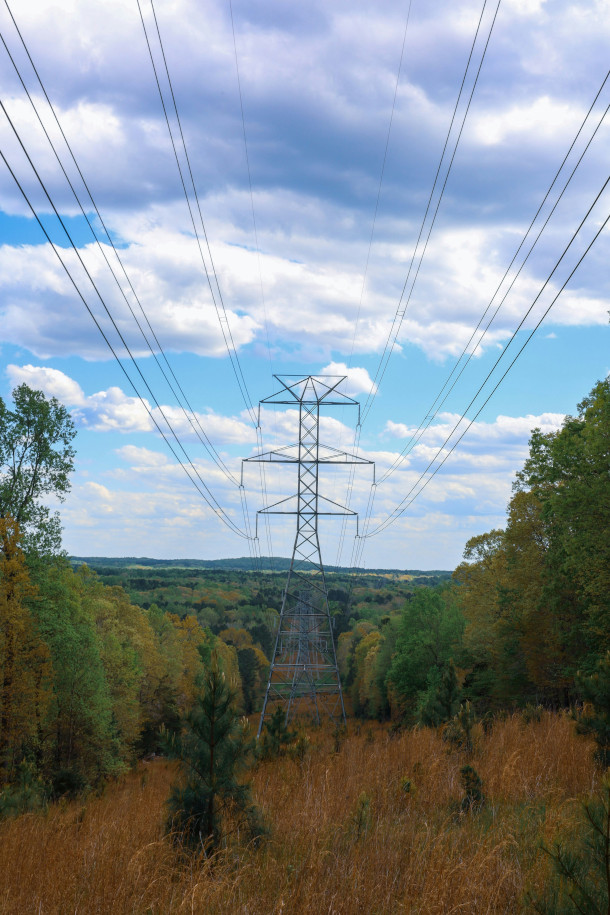
Overhead power lines transport electricity from a power plant across an electrical grid. In the case of municipalization, these structures are transferred from private to public ownership. Here, a power line stretches out over Durham, North Carolina, where the electrical grid is privatized. (Photo: Brandon Griggs, Unsplash, Unsplash License)
CURWOOD: You've talked to people across Michigan about DTE Energy, and there seems to be a lot of pushback against this company. Why does it face such headwinds from some consumers and activists?
PERKINS: There are a lot of problems with DTE, and and it's gone on for decades. For a long time, we've had among the most unreliable service in the nation, and among the highest rate increases. And this all goes back to DTE in the past decades, in the past 40, 50, years, not investing enough money in improving the grid and taking shortcuts on tree trimming, and so we're in the situation now where the climate's changing. May, June, we're getting more strong storms, high winds, and trees down, and branches falling, and you just have decades of disrepair, and trees that are right up against the power lines, and so there have been some storms where a million people are without power, and it takes a week or two for some of those people to get the power turned back on, and the problem is the worst in the low-income areas in Detroit, where there's been some population loss, and so it's just been building over the last, I think, 10 years or so. And again, it's just it coincides with these really strong storms that we're getting as the climate changes.
CURWOOD: So that's a strong indictment on one side. What does the company say about its performance on the other? How does it defend itself?
PERKINS: Well, the company executives say things to reporters like, Oh, well, we live in Michigan. There are all these wonderful trees. It's beautiful here, but you know those trees-they'll knock the power lines out. They'll get blown over in a strong storm, etc. etc. But I've compared the reliability in Michigan to similar states like Wisconsin and Minnesota, and the power companies there have done a much better job trimming, and they don't have the same problems that we have here. This is directly result of DTE taking shortcuts on trimming the trees.
CURWOOD: So let me ask you, what are the chances in your mind of this public power ballot initiative passing?
PERKINS: I think it has a good chance of passing. People are frustrated with the company, and they're tired of paying high rates, they're tired of the power going out, so we'll see. But DTE’s, they have set up a front group here, and and they're fighting back. So it's hard to say, but I think there is a good chance that it passes.
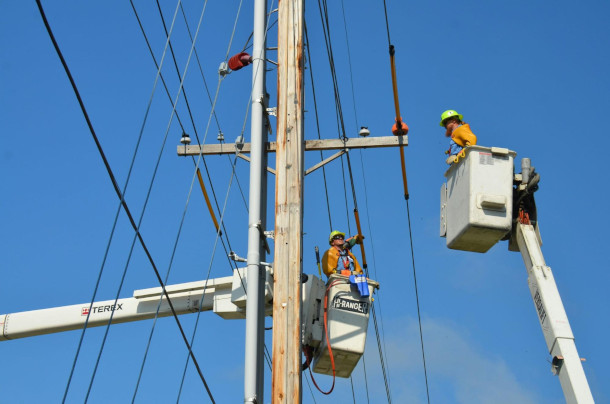
Linemen on cherry-pickers work on power lines in Bryan, Ohio, another municipalized electric system. (Photo: American Public Power Association, Unsplash, Unsplash License)
CURWOOD: In your view, what's the quality of the information that people are given by this group, the Ann Arbor Responsible Energy Coalition?
PERKINS: Yeah, A2REC is what they go by. They send out mailers that cite a lot of I would say what can fairly be called manipulated data of what it would take to switch to a municipal utility, like in terms of cost and resources. DTE wants to make sure that voters think that the cost up front is just too steep, and so that's the kind of thing that you see in in the mailers and in their information is oh this is going to be impossible, so let's not even try, let's do something else.
CURWOOD: By the way, not so long ago, a push, a referendum for public power in Maine went down to defeat. To what extent do you think that's related to this kind of tactics of apparent community groups getting a lot of money to oppose?
PERKINS: Yeah, it was the utility industry used the same tactics there. There was a front group that was set up and was in the mix and pushing many of the same talking points, and that's a great example of why the utility industry sets up these front groups, sometimes they're effective. I think I wrote a little bit about Maine when they were trying to get things together early on, and they had a lot of momentum, and it really felt like they were going to succeed. And then industry hit back, and one of the ways that they hit back was to deploy a front group that spread misinformation, and ultimately the public power proposal went down. So, you know, I mean, these things are effective. My sense in Ann Arbor is that most people see through this. This has been something that's been talked about so much. People understand the lay of the land with DTE, and they understand what's going on, and they understand where most of their neighbors are at with DTE. So even on its face, the idea that a bunch of people are going to get together, that there's going to be a grassroots effort to back DTE, I think most people are skeptical of that.
CURWOOD: So Tom, what else is on the ballot now statewide in Michigan about this issue? What could happen?
PERKINS: Yeah, there's an initiative that would prohibit DTE Energy, Consumers Energy, the other major investor-owned utilities from making political donations, which would really go a long way toward breaking DTE's grip on the legislature, and I think there's a little bit of a synergy here between what's going on in Ann Arbor and and that statewide effort. I think the statewide effort has pretty broad bipartisan support, and people in Ann Arbor are are excited about both of them, and I think they can draw the connection between the high bills, the the power going out frequently and for a long time, and what happens at a local level if they take over the grid, and that's only going to propel the the local initiative.
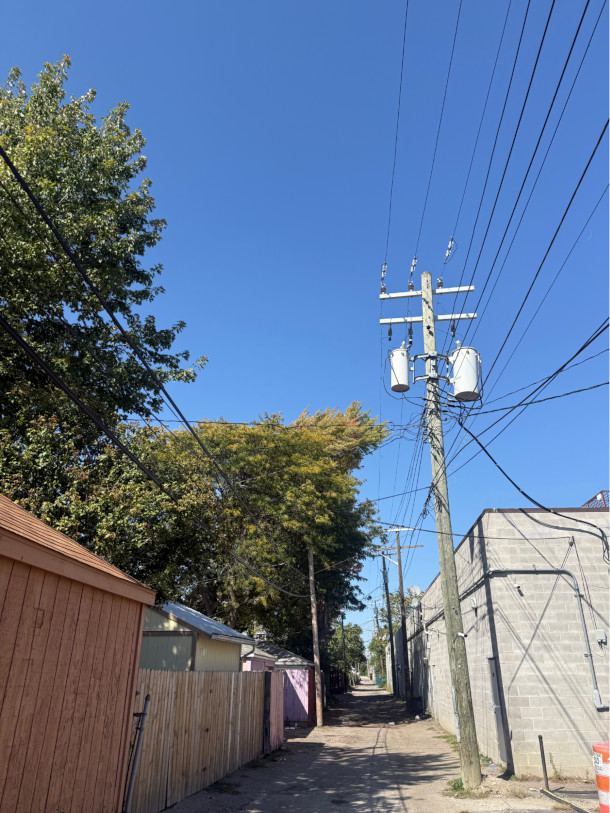
A utility pole owned by DTE Energy in Ann Arbor, Michigan. Residents have reported complaints of trees covering their power lines. (Photo: Courtesy of Tom Perkins)
CURWOOD: To what extent do you think that concerns about the climate emergency are driving this push for public power for publicly owned utilities?
PERKINS: Publicly owned utilities are are generally a lot more responsive to the customers, and customers generally want things like clean energy. People more and more draw the connection between the wildfire smoke and the the strong storms that we're having in Michigan and and all the other things that come with climate change and the gas plant down the road and the utility that doesn't want to change. People understand that that DTE Energy makes a bunch of money when it builds gas plants and it doesn't make as much money when it builds solar panels. So they know that a public utility is the way to go. That it's more responsive. You know that's like a reason why you see places like Ann Arbor and Saint Petersburg, Florida, and there's a municipalization effort in in Southern California around San Diego and and other cities. I mean that's like one of the big drivers. People get that this is a really a meaningful way to address climate change.
CURWOOD: Tom Perkins is a freelance reporter based in Michigan. Thank you so much for talking with us today.
PERKINS: Great, thanks for having me.
CURWOOD: On October 5, citing cost concerns, the Ann Arbor City Council voted nearly unanimously to oppose Proposal E, which is still on the ballot for voters to decide this November. We reached out to DTE Energy, which shared a statement that reads in part, quote: “DTE is focused on customer affordability, keeping energy bills below the national and regional averages, even as we continue to invest in delivering improved reliability and cleaner energy for our customers across the state.” A spokesman for the Ann Arbor Renewable Energy Coalition or A2REC provided an email response saying it has a broad membership base and “acknowledged that DTE, among other organizations, has been a funder of” its work. You’ll find both full responses on the Living on Earth website, loe dot org.
Related links:
- The Guardian | “Powerful US Utilities Secretly Fund ‘Grassroots’ Groups to Sway Cities Away From Switch to Public Power”
- Response from the Ann Arbor Responsible Energy Coalition
- DTE Statement
[BIRDNOTE THEME]
BirdNote®: Squirrel or Bird?

Listeners may confuse the call of the red-bellied woodpecker, above, with the bark of a fox squirrel. (Photo: John Brighenti, Wikimedia Commons, CC BY 2.0)
DOERING: Keep your ears peeled this fall for the sounds of animals as they go about preparing for winter. You might be surprised at just who is making those chirps and barks. BirdNote®’s Ariana Remmel reports.
BirdNote®
Squirrel or Bird?
Written by Conor Gearin
[Fox Squirrel barks]
Identifying birds by ear means getting familiar with each species’ unique voice. And that means learning the other voices in the ecosystem, too. Like the Fox Squirrel’s barks:
[Fox Squirrel barks]
This squirrel’s alarm barks could at first sound like the calls of a Red-bellied Woodpecker:
[Red-bellied Woodpecker calls]
But with enough practice, you can hear how the squirrel’s barks are more throaty, and more frequent than the woodpecker. Here’s the squirrel again:
[Squirrel barks]
And the woodpecker:
[Red-bellied Woodpecker calls]
That’s not the only voice that could trip you up in the forest — take a listen to this cute little trill:
[Eastern Chipmunk chip-trill call]

Above, a fox squirrel climbs over a log in Asilomar, California. Over time, learning to distinguish the two can help birders appreciate all the wildlife around them. (Photo: Skyttea, Wikimedia Commons, CC BY-SA 3.0)
While it might sound a bit like a kingbird, it’s really the chip-trill call of a chipmunk, given when they’re telling another chipmunk to back off.
[Eastern Chipmunk chip-trill call]
In comparison, Eastern Kingbirds sound more shrill, increasing in volume rather than decreasing as they continue:
[Eastern Kingbird call]
Here’s the chipmunk again:
[Eastern Chipmunk chip-trill call]
And here’s the kingbird:
[Eastern Kingbird call]
Eventually, you might recognize each species’ voice, like recognizing a friend. All it takes is time.
[Eastern Chipmunk chip-trill call]
I’m Ariana Remmel.
###
Senior Producer: Mark Bramhill
Producer: Sam Johnson
Managing Editor: Jazzi Johnson
Content Director: Jonese Franklin
Bird sounds provided by The Macaulay Library of Natural Sounds at the Cornell Lab of Ornithology, Ithaca, New York. Red-bellied Woodpecker ML 230037631 recorded by Wil Hershberger, and Eastern Kingbird ML 534398 recorded by Wil Hershberger.
BirdNote’s theme was composed and played by Nancy Rumbel and John Kessler.
© 2023 BirdNote March 2023 / 2025
Narrator: Ariana Remmel
ID# sound-33-2023-03-21 sound-33
DOERING: For pictures, flap on over or scurry on over to the Living on Earth website, loe dot org.
Related link:
Listen to this story on the BirdNote® website.
[MUSIC: Forest Fingers]
DOERING: Coming right up, Reframing from your carbon footprint, to a “carbon wave”. Keep listening to Living on Earth!
ANNOUNCER: Support for Living on Earth comes from Hansjörg Wyss in honor of Rosamund Stone Zander. Celebrated painter, environmentalist, and author of The Art of Possibility, who inspired others to see the profound interconnectedness of all living things, and to act with courage and creativity on behalf of our planet. Support also comes from Sailors for the Sea and Oceana. Helping boaters race clean, sail green and protect the seas they love. More information at sailorsforthesea.org
[CUTAWAY MUSIC: Forest Fingers]
The Carbon Wave
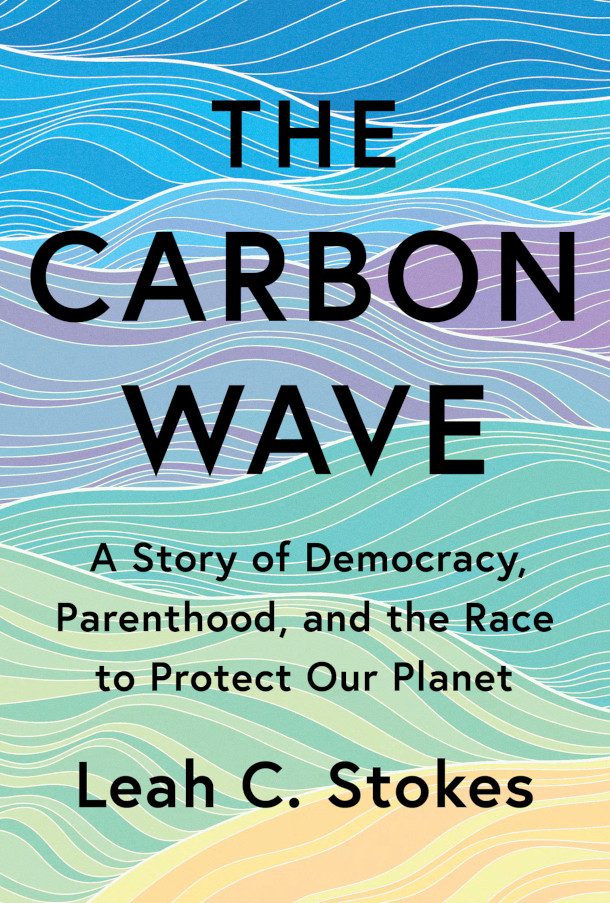
The Carbon Wave: A Story of Democracy, Parenthood, and the Race to Save Our Planet by Leah C. Stokes was released by MIT Press on September 1st, 2026. (Photo: Courtesy of MIT Press)
CURWOOD: It’s Living on Earth, I’m Steve Curwood.
DOERING: And I’m Jenni Doering.
Though it’s faded from public view amid this Trump administration, the 2022 Inflation Reduction Act is still largely intact and continues to deliver clean energy investments as the largest climate package in US history. And the turbulent story of how that bill became law is truly a political thriller, providing key insights into how major legislation works its way through a closely divided Congress and the White House. In 2022, with a 50-50 split in the Senate and Republicans staunchly set against any climate package, the only way President Biden’s signature climate bill could become law was through a special filibuster-proof process called budget reconciliation. That put West Virginia Senator Joe Manchin, a centrist Democrat with close ties to the fossil fuel industry, in the powerful position of being essentially the deciding vote. And since reconciliation has happened at most twice a year, the stakes were incredibly high. So, in July 2022, when Senator Manchin walked away from the negotiating table, it looked like the bill was dead. And then, it had a stunning resurrection as it rode a wave of public concern. The 2026 book The Carbon Wave: A Story of Democracy, Parenthood, and the Race to Protect Our Planet tells this gripping story of how the Inflation Reduction Act came together and cleared the final hurdles. Author Leah Stokes is an environmental politics professor at UC Santa Barbara who pushed for this strong climate bill to help usher in a clean energy transition. Leah, welcome to Living on Earth!
STOKES: Oh, thank you so much for having me on.
DOERING: Well, it's great to have you here. So, I want to start with the title of your book because I think it gives such a great insight into how you think about climate change and activism. You know, you you introduce this idea of the carbon wave as opposed to the, the familiar carbon footprint. What's the distinction? Why is this important?
STOKES: Yeah, so everybody knows what a carbon footprint is. If you go ask a normal person who doesn't want to listen to this amazing show, which they, there are people like that, hard to believe. People who aren't in the you know environment curious space, they will still know what a carbon footprint is, and so that concept has become a framework for how we think about the problem, and it's an idea that every person is responsible for, in the United States, something like 15 tons of carbon pollution a year. And what I try to show is that that makes no sense as a concept if you take a step back. We don't control the fossil fuel-based energy system. We were all born into it, even our grandparents were born into this system. But, the goal should be to not pass it along to the next generation, and so that points us towards working together to create infrastructure change or systemic change. And that can be as small as you know putting a heat pump in your house or getting an electric vehicle, or as big as you know changing a law, which is really what the book is about. So, I also created this carbon wave calculator on my own website that people can kind of explore what is this carbon wave idea and how can I sort of use it in my own life.
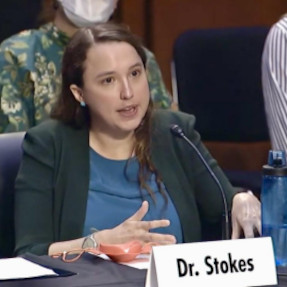
Leah Stokes has an extensive background speaking on climate and electrification issues. A holder of a PhD in public policy, she testified before Congress in the hearing titled “Examining the Economic Benefits of Electrifying America’s Homes and Buildings.” (Photo: U.S. Congress Joint Economic Committee, public domain)
DOERING: To harness the power that we all have.
STOKES: Yeah, I feel like in this moment, a lot of people are recognizing that democracy is a really powerful tool, and that if they join with others, they can change the world. They can protect their neighbors, for example. They can protect reproductive rights. They can really change the system, and it's the same for climate action. When we work with others, we can really be a force that goes way beyond our daily lives.
DOERING: Your book largely tells the story of this very monumental climate change legislation that took years and years to pass and eventually did become law. This is the Inflation Reduction Act, and you tell that story partly through the framework of new parenthood. It just so happened that you and several other people working on passing this bill were becoming parents at the time. Why did you decide to tell this story through that lens?
STOKES: So many people wonder if they should have a kid because of climate change, and that question actually has several sub questions within it. It's like, should I have a kid because the world is doomed, so that would be bad. And should I have a kid, even though they're just going to be another, you know, cog in the wheel of the fossil fuel-based, consumerist, terrible world? And what I'm trying to do here is debunk both of those ideas. That first of all, we're not doomed. The fossil fuel-based energy system was created by people, and it can be dismantled by people too, and in fact, it should be. And I also want to say to new parents who might be exhausted and changing diapers, and haven't even slept, to remind them that we can also find space in our lives for activism and to reach beyond the everyday. That we have a responsibility to create a better world, and that doesn't really matter if you're a parent or not. You should have a responsibility to do that for your neighbors, for your nieces and nephews, for all kinds of living beings on this planet.
DOERING: Yeah, absolutely. So the Inflation Reduction Act was this landmark win for climate action, but you were there through all the ups and downs. There's an especially gripping section of your book when the big climate bill looks to be dead, killed apparently by West Virginia's Democratic Senator Joe Manchin, and then in a bombshell we learn that he's come back to the table to support what becomes the Inflation Reduction Act. And when you hear about it, you're like, "What the heck is the Inflation Reduction Act?
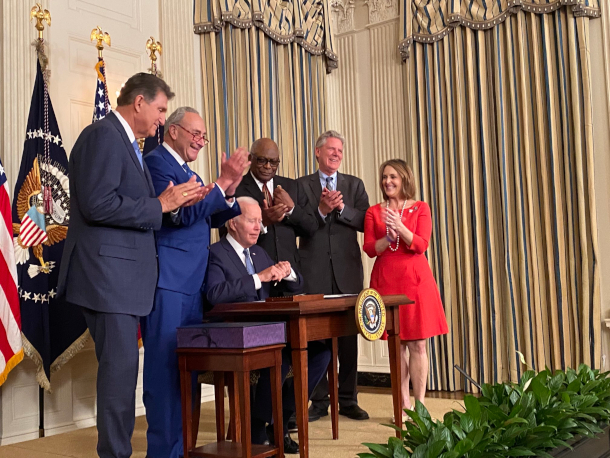
In August of 2022, then-President Joe Biden signed the Inflation Reduction Act into law. (Photo: Jennifer Granholm, Wikimedia Commons, public domain)
STOKES: Yes, exactly.
DOERING: It's got this new name. It preserves, I think, nearly all of the same climate investments. How fast did your head spin when you heard that news?
STOKES: Yeah, so it's been really fun writing this book because I got to learn behind the scenes about friends and colleagues, sometimes people I didn't even meet in the process, what it was like from their vantage point, and so my friend Adrian Deveny, who worked for Senator Schumer and was really his lead negotiator on climate, and he was inside that really tiny bubble when the world all thought that the climate bill was dead. He was one of perhaps 10 people who knew that the negotiations were still ongoing, and so I worked to understand in a lot of detail what was happening behind the scenes and telling that dramatic story. When in reality, when I was living it, I didn't know, I was on the outside, and so I literally just got a text message from him. I was reading my kids a story on the floor, a children's book, and at the end of the book, I looked at my phone, and there was a celebration emoji from my friend, and we were all mourning. We had all lost this bill two weeks earlier, and had spent much of that time depressed and sad and crying, and I didn't understand why he would send a celebration emoji at a time like this. And a few seconds later, my other friend Sonia Aggarwhal, who worked for the White House Climate Office, she sent a press release from Senator Joe Manchin's website that said the Inflation Reduction Act, that he supported it, and I was like, "What the heck is the Inflation Reduction Act?" Because Manchin had renamed the bill in this period when everybody thought the climate bill was dead, and so yeah, the book really tells the story from both vantage points, and it was a really fun part to write, and I think it's a real payoff for the reader too.
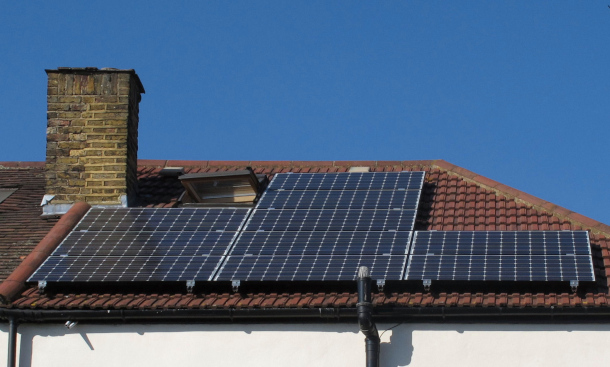
Putting up solar panels, installing a heat pump, purchasing an electric vehicle, or switching to an induction stove are all ways to electrify your life and start building your own carbon wave. (Photo: David Hawgood, Wikimedia Commons, CC BY-SA 2.0)
DOERING: Yeah, just gripping moments, I guess, to, to sort of live through that. And from your perspective, you wrote a pretty scathing op-ed about Joe Manchin killing this bill and just what a loss that was for the world. What do you think brought him back to the table? Like, was this his plan all along? Like, what was going on in Senator Joe Manchin's mind?
STOKES: Yeah. So, in fairness to Senator Joe Manchin, he really cared a lot about inflation and making sure that the economy wasn't going off the rails, and so he said in the press in the days leading up to this that he didn't know if they should be doing this climate bill. And then as I tell in the book, Senator Schumer calls up Senator Manchin and tries to say like, "Hey, look, we'll do everything you want," and Senator Manchin still wouldn't say yes, and so Schumer's team basically told the world that the deal had fallen apart. And the reaction that Thursday night was extreme anger from all kinds of people. It was also happening at a time when there was extreme heat waves. It's the summer, so these days the summer is climate disaster season, and so it felt like the whole world's anger about climate inaction was focused on this one man, fairly or not. And so by the next morning, he went on West Virginia talk radio and sort of tried to walk things back because I think he was getting called and texted and yelled at by pretty much everybody except perhaps the fossil fuel industry. He felt an enormous amount of pressure. I also wrote an op-ed in those days that ran in the New York Times. It was called "What Joe Manchin Cost Us," and it was very harsh.
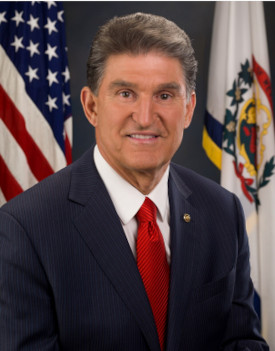
Senator Joe Manchin of West Virginia initially blocked the climate bill from passing, and Leah Stokes and her allies worked tirelessly to get it back on track. Eventually, he provided the deciding vote to pass the Inflation Reduction Act, the most consequential piece of climate legislation in United States history. (Photo: Rebecca Hammel, Wikimedia Commons, public domain)
And you know, it basically said that he was dooming his own grandchildren and that he strung everybody along. And so I think over that weekend he was under a lot of pressure from all kinds of corners. By Monday morning, as I tell it in the book, and as various journalists, including Jeff Stein at the Washington Post and Tony Rom, who's now at the New York Times, they reported that on Monday Senator Manchin went back to Senator Schumer and said, "Like, hey, are you mad at me? Do you think we could still do this?" And I sort of tell the dramatic way that the negotiations came back together behind the scenes, and there really were only a handful of people who knew-a couple people in the White House, people on Schumer's team and Manchin's team-and that was it. And they were sworn to secrecy because they just thought that if anybody caught wind of this and they failed again, it would be even worse. And there's also a lot of findings in political science that show that negotiations can actually benefit from some level of secrecy. You know, obviously in democracy, transparency is important, but you can get to a point in a negotiation where having too many people at the table and too much openness can make it harder to get to yes. So I think that the secrecy really helped because there was a story that the day that they eventually announced the deal, which was about 10 days later, Manchin met with all these fossil fuel executives on a Zoom call, and the day that they were about to announce, like, "Hey, we're actually doing this climate law," and those executives were just praising him, "Oh, you did such a good job killing this giant bill," and I think had they known that it was still on, think about all the lobbying they would have been doing and all the pressure they would have been pushing on him. Right, so I think that secrecy at the end was really important to actually landing the deal. You know, Senator Manchin's team they wouldn't talk to me for the book, which is fair enough, and I can't imagine that he likes me personally, which is also fair enough. But I did try to write it in a fair way, where I really tried to understand his motivations and treat him as a real human. He was an interesting senator in some ways, and I didn't agree with many things that he did. But he was also the deciding vote on the largest clean energy and climate investment in American history, and a lot of jobs went to West Virginia because of that. So, I think he's a more complex character than just sort of painting him as a one-dimensional villain.
DOERING: Of course, there were some provisions that Senator Manchin tucked into this bill that some climate activists really couldn't stomach. Fossil fuel leasing requirements, carbon capture support. What did you learn from this process about not letting, quote unquote, "the perfect be the enemy of the good?"
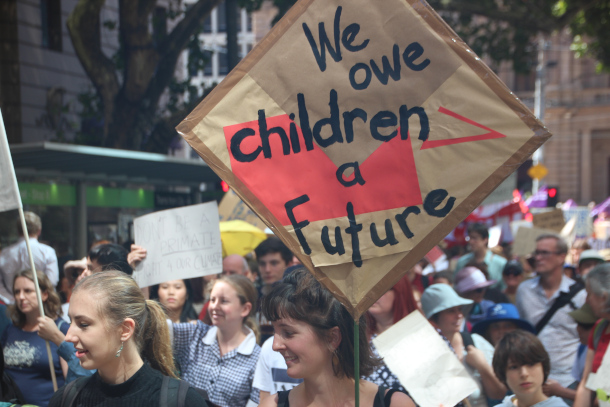
In The Carbon Wave: A Story of Democracy, Parenthood, and the Race to Save Our Planet, Leah Stokes writes that new parents should see their children, along with all the creatures on earth, as an extension of our responsibility to herald a healthy planet for the future, and inspire us all to take part in climate action and build a carbon wave in our communities. (Photo: Takver, Wikimedia Commons, CC BY-SA 2.0)
STOKES: Yeah. So in the climate movement, a lot of people were very angry at the moment that the bill text became public in late July 2022, and they tried to derail it because there were provisions that Manchin put in that many people did not agree with. I think that all bills are compromises. That's the reality. You know, none of us gets to be a dictator and say this is all of my ideas. Not even Trump has been able to do that, right? But I think if you take such a transformative law, it's like 20 times as much good stuff as bad stuff, and that can be hard to understand in the moment. So yeah, I also wrote about that conflict so that people reading the book who want to go and do activism or build a carbon wave aren't sort of blindsided by the fact that change is dramatic. You fight with your friends, you fight with your enemies, you fight with I don't know people you've never even met. It's hard to create change. My dad always says if you get up in the morning and you try to do something, you're gonna piss somebody off. This is what he always says to me, and that's the truth on some level that we can't shy away from what we believe to be the right direction, even if there's some compromise in the package.
DOERING: And I guess thinking about your carbon wave, you know, learning to surf that wave through the ups and downs, right?
STOKES: Yes, exactly, exactly.
DOERING: You know, it is hard to talk about climate policy these days without it acknowledging all the change in Washington that's happened since all of this went down-we're more than a year now into the second Trump administration and Republican control of Congress. When you think about what might have been had the Inflation Reduction Act not been mostly dismantled, what's the opportunity we lost?
STOKES: Yeah, so a lot of what Trump has done is not dismantling this law. It's dismantling regulations or creating new incentives for fossil fuels and blocking clean energy. The One Big Beautiful Bill Act, which passed last summer, did modify a lot of the law, but not actually the biggest parts of it. Had the One Big Beautiful Bill Act not passed, I think we would be on a much better trajectory for electric vehicles. For example, that's probably the thing that gets me the most bummed out right now. We are not having people buy electric vehicles at the pace that we need in the United States. In part because of what Elon Musk has been doing and how unpopular he is, in part because of the Trump administration's action to dismantle supports, electric vehicle sales have slowed. Now, they're not like reversing or negative or something like that. We're still deploying EVs. It's just that the pace is pretty relentless when it comes to the climate crisis. We kind of need everybody to, when they retire their fossil fuel car, replace it with an electric vehicle tomorrow.
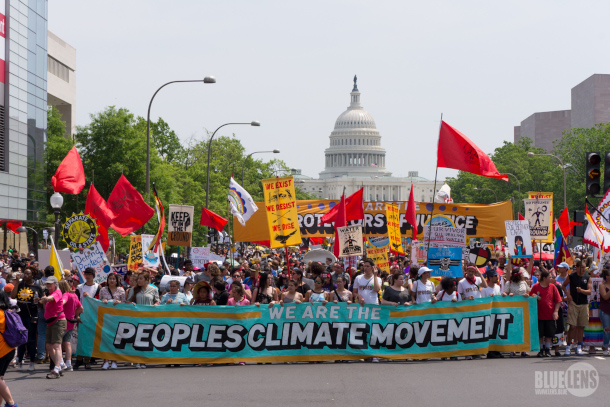
Leah Stokes describes a ‘carbon wave’ as ripples of movement and progress that are built when “thousands of people work together to create change, adding to the effort of the people before them.” (Photo: Mark Dixon, Wikimedia Commons, CC BY 2.0)
DOERING: So where are we now? Like, what is the good news side of the Inflation Reduction Act as it still stands, and where clean energy is in this country right now? What was the law able to accomplish and set in motion before some of it was repealed in 2025?
STOKES: Yeah, I think the brightest spots really have to do with two things: one, transforming our electricity system to be powered by clean energy, and two, the clean energy manufacturing buildout in this country. So, on the first thing, before the Inflation Reduction Act passed, in the years before, maybe about half of the new electricity that we were building in a given year would be clean. So that's things like wind or solar or batteries. After the Inflation Reduction Act passed, we're talking about north of 90% every year that is clean energy. Solar, batteries, I mean, they are just roaring ahead in this country, and it's everyday people too putting solar on their roof and getting a battery, and that's really looking good. And the tax credits for those technologies are largely still in place for the next couple years. So there's still support for building out solar and especially building out batteries. And the companies that develop these solar projects have found creative ways to make sure they can keep making progress in the coming years. So the largest tax credits in the Inflation Reduction Act were about building factories in the United States for solar panels and you know batteries and electric vehicles, and there are so many of these factories. It's kind of unfathomable. I think people don't understand how transformative this is. And you might think, "Oh well, now Trump's in power, so they must all be gone." No, we actually found that nine in 10 of those are still moving forward. That's going to really change the politics because now there will be good-paying manufacturing jobs in Republican districts all across the country. Now the bummer is that there were a lot of grants in the original Inflation Reduction Act law that were helping communities, for example, put a heat pump in a church or you know solar panels on on a roof. Those things all got pulled, but the good news is that they can be ready to go if and when there's another opportunity for action. And having those shovel-ready projects is often a barrier, you know, if you don't have them to making policy change. So, I think it's more of a delay than it is a reversal, if that makes sense.
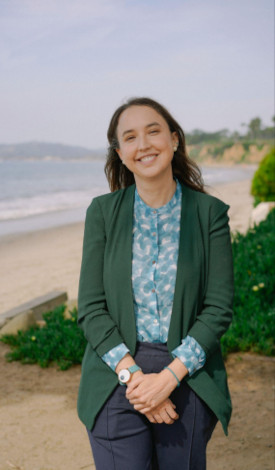
Leah Stokes is the author of The Carbon Wave; A Story of Democracy, Parenthood, and the Race To Save Our Planet (MIT Press, 2026) and Short Circuiting Policy: Interest Groups and the Battle Over Clean Energy and Climate Policy in the United States (Oxford University Press, 2020). She holds a PhD in Public Policy and currently teaches at the University of California, Santa Barbara. (Photo: Emmanuelle Pickett)
DOERING: Yeah, you were working on this bill while going through some incredibly difficult personal circumstances. You found out you were pregnant with twins, high-risk pregnancy at that. You watched the political setbacks begin to pile up. Tell me, how did you preserve your hope amid these challenges?
STOKES: So yeah, at the time that I was working on this bill, I was pregnant, and I discovered it was twins, and there was a lot of complications in my pregnancy. So essentially, one of my daughters was growth restricted, and so I didn't know if I would have two babies, one baby, or none. And so I tell that story alongside the bill because, in some ways, it was a very clear metaphor that we didn't know if the bill would pass or die or be mangled, you know, and not live in a way that was going to make the changes that we wanted to see in the world. And I think it's important too to say, when people read the book, they always want to know like, how are my daughters now? And like, they're great, much like the Inflation Reduction Act is still alive and well, so are my children. They're really smart and healthy and happy, and we're really lucky. So I just wanted to make the stakes of acting on climate really feel personal because they are personal. They affect all of our families and friends and neighbors and cousins and you know even non-human relations across the world. So I just wanted people to feel like this is such an important fight because it's really a fight for life on Earth, and all of us are part of that web.
DOERING: Leah Stokes' new book is The Carbon Wave: A Story of Democracy, Parenthood, and the Race to Protect Our Planet. Thank you so much, Leah.
STOKES: Thank you so much for having me on.
DOERING: And we’ll link to Leah’s Carbon Wave Calculator on the Living on Earth website, loe dot org.
Related links:
- Check out the Carbon Wave Calculator
- Leah Stokes’ Official Website
- Follow along at Leah Stokes’ Substack
- Purchase your copy of The Carbon Wave and support Living on Earth and independent booksellers
[MUSIC: Campfire Kin]
CURWOOD: Living on Earth is produced by the World Media Foundation. Our crew includes Naomi Arenberg, Paloma Beltran, Claire Brandes, Abby Edgecumbe, Swayam Gagneja, Mark Kausch, Mark Seth Lender, Don Lyman, Ashanti Mclean, Nhung Nguyen, Aynsley O’Neill, Sophia Pandelidis, Jake Rego, Andrew Skerritt, Bella Smith, and El Wilson.
DOERING: Tom Tiger engineered our show. Allison Lirish Dean composed our themes. You can hear us anytime at loe.org, Apple Podcasts and YouTube Music, and like us please, on our Facebook page, Living on Earth. Find us on Instagram, Threads and BlueSky @livingonearthradio. And we always welcome your feedback at comments@loe.org. I’m Jenni Doering.
CURWOOD: And I’m Steve Curwood. Thanks for listening!
ANNOUNCER: Funding for Living on Earth comes from you, our listeners, and from the University of Massachusetts, Boston, in association with its School for the Environment, developing the next generation of environmental leaders. And from the Grantham Foundation for the protection of the environment, supporting strategic communications and collaboration in solving the world’s most pressing environmental problems.
ANNOUNCER 2: PRX.
Living on Earth wants to hear from you!
Living on Earth
62 Calef Highway, Suite 212
Lee, NH 03861
Telephone: 617-287-4121
E-mail: comments@loe.org
Newsletter [Click here]
Donate to Living on Earth!
Living on Earth is an independent media program and relies entirely on contributions from listeners and institutions supporting public service. Please donate now to preserve an independent environmental voice.
NewsletterLiving on Earth offers a weekly delivery of the show's rundown to your mailbox. Sign up for our newsletter today!
 Sailors For The Sea: Be the change you want to sea.
 The Grantham Foundation for the Protection of the Environment: Committed to protecting and improving the health of the global environment.
 Contribute to Living on Earth and receive, as our gift to you, an archival print of one of Mark Seth Lender's extraordinary wildlife photographs. Follow the link to see Mark's current collection of photographs.
 Buy a signed copy of Mark Seth Lender's book Smeagull the Seagull & support Living on Earth
© Copyright World Media Foundation. All Rights Reserved
Home | Contact | RSS | Donate | Newsletter