
December 5, 2025
Air Date: December 5, 2025
FULL SHOW
SEGMENTS

AI Power Demand and the Climate
View the page for this story
Artificial intelligence or AI’s huge appetite for power is reviving demand for older and dirtier fossil fuel energy. Dan Gearino, clean energy reporter with our media partner Inside Climate news, speaks with Host Steve Curwood about the massive data centers that power AI, community pushback, and how the AI trend could put vital climate targets out of reach. (12:53)
MAHA and MAGA Divide Over Pesticides
View the page for this story
The Make America Healthy Again or MAHA movement has pinpointed some health concerns backed up by credible research, including concerns about pesticides such as the probable carcinogen glyphosate, the key ingredient in Monsanto’s Roundup. But after agribusiness lobbying the Trump Administration erased pesticides from its MAHA Commission report. Investigative journalist Carey Gillam, author of The Monsanto Papers: Deadly Secrets, Corporate Corruption, and One Man’s Search for Justice, joins Host Steve Curwood to discuss. (15:22)

Robin Wall Kimmerer on The Serviceberry
View the page for this story
Braiding Sweetgrass author Robin Wall Kimmerer is also the author of a 2024 book that continues her explorations of gift economies. Robin Wall Kimmerer joins Host Jenni Doering to share insights from The Serviceberry: Abundance and Reciprocity in the Natural World and how gift economies can offer an alternative to overconsumption. (16:38)
Earth Prayer
View the page for this story
Nulhegan Abenaki storyteller Joe Bruchac joins Host Steve Curwood to deliver his poem of gratitude for the gifts of the Earth, called “Earth Prayer.” (02:18)
Show Credits and Funders
Show Transcript
251205 Transcript
HOSTS: Steve Curwood, Jenni Doering
GUESTS: Dan Gearino, Carey Gillam, Robin Wall Kimmerer
[THEME]
CURWOOD: From PRX – this is Living on Earth.
[THEME]
CURWOOD: I’m Steve Curwood.
And I’m Jenni Doering.
The tensions between MAHA and MAGA.
GILLAM: I think it’s just this joining of forces and this really unique moment where we have people who are really interested in trying to make our world healthier aligned or trying to coordinate with an administration that is in many ways working to make our world far less healthy, and far more polluted and dangerous.
DOERING: Also, power hungry AI.
CURWOOD: And in this time of harvest and abundance we consider the value of gift economies.
KIMMERER: You know, I began looking for gift economies in modern society after having learned about them from both ancestral and contemporary indigenous societies, and I found them everywhere, once you kind of know what to look for.
CURWOOD: That’s this week on Living on Earth. Stick around!
[NEWSBREAK MUSIC: Boards Of Canada “Zoetrope” from “In A Beautiful Place Out In The Country” (Warp Records 2000)]
[THEME]
AI Power Demand and the Climate
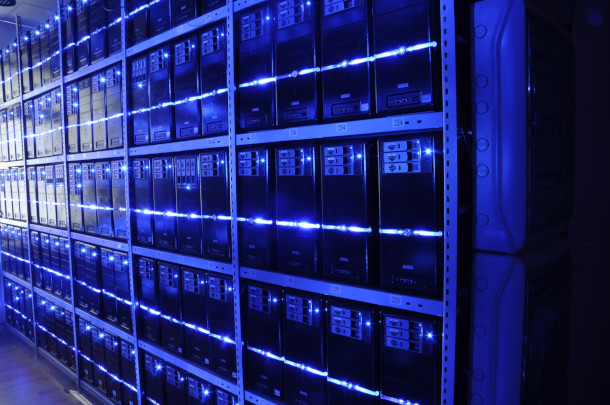
Data centers for artificial intelligence programs are becoming a major player in the tech industry as more and more electric power and storage is required for data use. (Photo: BalticServers, Wikimedia Commons, CC BY SA 3.0)
DOERING: From PRX and the Jennifer and Ted Stanley studios at the University of Massachusetts Boston, this is Living on Earth. I’m Jenni Doering.
CURWOOD: And I’m Steve Curwood.
AI or artificial intelligence can make it easy for us humans, but the computers behind it have to work very hard. In fact, to find the right word needed in an AI-generated document a computer might make 20 billion calculations, which takes a lot of energy. So, AI can conveniently summarize web searches or draft an email, but its huge appetite for power may make it harder to reduce global warming emissions from the electricity sector. By 2030 US data center energy use is projected to consume ten percent of all the energy of the grid. That's more than double current usage, according to the Pew Research Center, and climate friendly energy sources may not be able to keep up with the demand. Joining us now is Dan Gearino, a clean energy reporter with our media partner Inside Climate News. Dan, welcome back to Living on Earth!
GEARINO: Good to be here.
CURWOOD: Dan, when we hear the words “data center” getting tossed around, what exactly are we talking about here? What are the purposes of these places?
GEARINO: So data center is kind of an umbrella term. When this started to really boom, a lot of what we were talking about was cloud computing. So that's Gmail, that's the photos that you store online, that's a whole bunch of those things. And we're talking about large buildings filled with computer equipment, usually with really small headcount, so very few employees. What we're seeing now is a whole different kind of data center, which are AI data centers, artificial intelligence data centers, and they are much larger, doing the calculations behind various AI applications. So it is a totally different product, different on a whole bunch of different levels, but it's still a bunch of computer equipment inside a gigantic building with a small headcount, so we can say data center, and it includes all that stuff. But it is important to understand that we're talking about different kinds of things. Also, as we look ahead to the near future, the share of the overall data center market that is AI is rising a lot. So the new construction next year and the year after, AI is dominating that, whereas AI was a relatively small share of the construction we've seen up to this point.
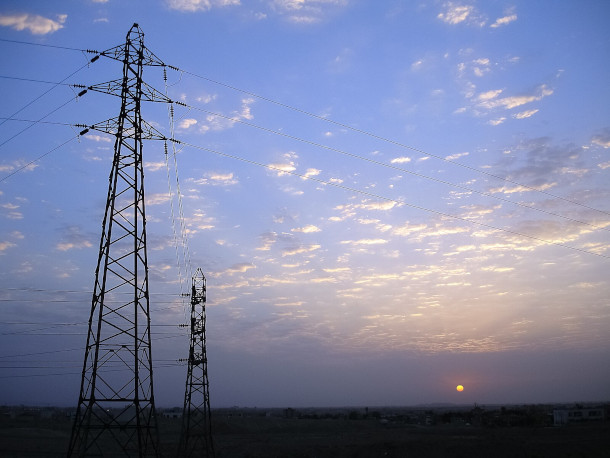
The electricity consumption required to run data centers can be a significant contributor to the climate crisis if more fossil fuel powered generation is used to meet the demand. (Photo: Mostafameraji, Wikimedia Commons, Public Domain)
CURWOOD: So we're here to talk today about artificial intelligence data plants, AI plants. Just how bad for the climate are these AI data centers?
GEARINO: The climate concerns come from mainly the fact that these things use so much electricity. They also use a lot of water, but the electricity is a main concern. And deploy it on a large scale, you look at certain parts of the country, where you're going to see substantial increases in the amount of power plants they need. You're also going to see significant disruption in the economics of power plants, plants that would not have been economically viable before are going to be because the price of electricity is going to go up, because demand has gone up. An old coal plant that would not have been making money could conceivably be making money now. You can justify stopping old and dirty power plants from going offline. So just right down the line, this transition we were seeing to a cleaner power sector, this is a serious obstacle to that.
CURWOOD: So where are the biggest data centers right now in the US? One taps the old Three Mile Island nuclear power plant, or they want to, well, they want to restart it, because it's so hungry for electricity. Where are the big ones right now?
GEARINO: So the talk of reopening nuclear plants, those are for kind of future looking you know, those are things that haven't happened yet. As far as projects that are up and running, and if we talk about the market as it stands now, the largest concentration of these things is in Northern Virginia, just right outside of DC, and that's for a whole bunch of interesting historical reasons that have to do with just the development of the internet and development of businesses around the internet. The advantage of having this collection of early companies in the space meant that other companies in the space moved there, meant that the infrastructure was there for companies. But with each passing year, you're seeing other markets rise up, and they're not to the point that they're anywhere close to eclipsing Northern Virginia, but you're seeing markets like Columbus. Central Iowa and other parts of Iowa are an absolutely booming data center market. And a lot of times you can trace this back to the one big project that was viewed as successful, the one big project that showed other developers that this is how you can do it here, and it's a pretty easy development process. There is this kind of herd mentality with some of where these projects are going.
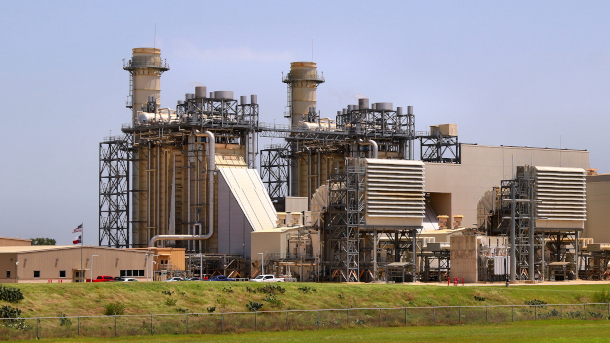
Because data centers draw enormous amounts of power, they may force utilities to keep fossil-fuel plants running longer in order to meet demand. (Photo: Larry D. Moore, Wikimedia Commons, CC BY SA 4.0)
CURWOOD: And where was this one big project?
GEARINO: One example is in Iowa, which is one of the fast-growing markets. There is a Microsoft Project in West Des Moines, Iowa that was, at its time, just mind blowingly large. And that was a project that helped to solidify the idea of Iowa as a viable and formidable market for this stuff. You see this in Columbus. There are several just gigantic, Meta has a pretty big presence here. Others do as well. And you see this where a project comes in, a lot of times, because there's some infrastructure there already in terms of internet lines and in terms of access to electricity. And you see others build somewhere close to there, because they're looking for some of those same things. And you have the local government or the permitting regime there becomes familiar with these projects, and it's easier rather than going to some random new place. We aren't yet at a point where these super, super projects are still in the future, and it'll be interesting to see where the market is once some of those are closer to going online, because of course, we're at a moment where everyone's kind of holding their breath, wondering, what in the world is going to happen with this market? Because it does seem like an unsustainable market.
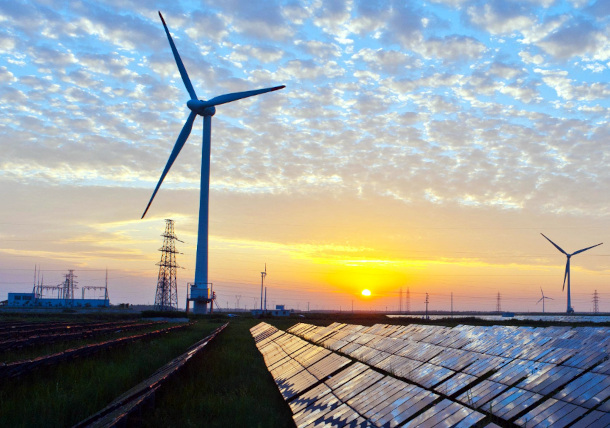
Renewable energy like wind and solar are the largest source of new power generation. (Photo: Kenueone, Wikimedia Commons, Public Domain)
CURWOOD: Yeah, what about renewables for these AI data centers? I mean, we're building lots of renewables. They need lots of power. Why not just use renewables?
GEARINO: There will be lots of renewables used. What's needed is electricity, and this whole idea of speed to power is what people in this industry talk about. So you want to get power plants up and running as fast as possible. You want to get as much power available as possible. Wind and solar are going to be natural, big parts of that, or at least they should be, because this is happening at the same time that there is an administration in Washington that is creating all of these impediments to developing renewable energy, taking away some of the programs and tax incentives and just kind of generally being hostile to, in particular wind power. And wind power is a really important part of the renewable energy mix. So you have this kind of one two punch of drastically increasing the demand for power and making it so that it's more difficult to build the cheapest and the cleanest forms of power, which are wind and solar. You add those two factors up, and it's not good for the climate.
CURWOOD: Now, Dan, we can't talk about energy use without talking about the power grid. The three of them, I guess in this country, we got the East, we got the West. And Texas has its own. They seem stretched pretty thin already. So as these data centers grow, what does that mean for the grid going forward, physically as well, as you know, the cost to us consumers?
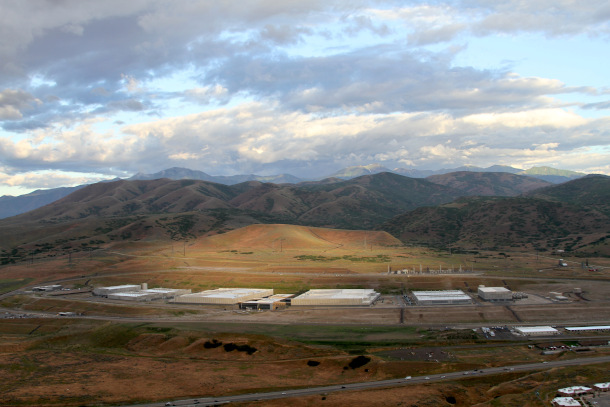
Due to the water and energy requirements of data centers in rural areas and near homes, they sometimes have drastically low approval ratings from neighboring towns and communities. (Photo: Parker Higgins, Wikimedia Commons, Public Domain)
GEARINO: It's interesting right now, how Texas' system, which has fewer barriers to entry, it's just easier to build there. It seems like that system works nicely for this moment where you need to add a ton of power quickly. The other regional grids, there are various other challenges where it's a little bit harder in some places, and it's a lot harder in other places, to the point where you could imagine some of these big data center projects, the only way they would be viable is if they are building power right next to them or within a really close distance of them, and the grid as a whole is built to be able to serve the public during times of peak demand, and that's actually only a few days a year. So you have an entire grid built for the hottest days of summer and the coldest days of winter. And if these large power users can find ways to ramp down when that demand is high, if these become this economic and power grid problem that creates the solution of improving flexibility in the system, that could be a really good thing.
CURWOOD: And how are various local communities responding to these plans to build data centers?
GEARINO: I think it's safe to say that data centers have about the lowest approval rating of just about anything. Wherever these are proposed, just about anywhere, there is community opposition. And what's fascinating to me is that this cuts across partisan lines. It cuts across income lines. In these complicated times, people can agree they don't want a data center anywhere near them, and this opposition is only going to grow. As you see data centers being built outside of some of the markets that are more used to these things, if you see them being built more in rural areas, more in new markets, the opposition is it's just about overwhelming. You're going to start to see projects that just don't happen because the opposition is too much, and you're going to see local governments not wanting these projects. So this is something that is an impediment on the path of development going forward, and I think it is a underappreciated factor that we need to keep an eye on.
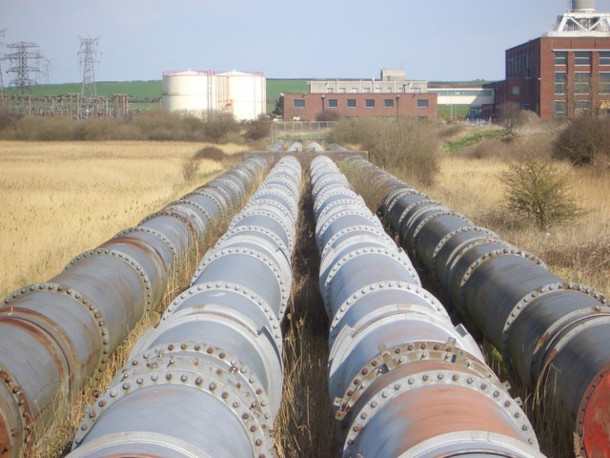
Many gallons of water must be pumped through data center cooling systems to offset the intense heat generated by constant computing. (Photo: John Mann, Wikimedia Commons, CC BY SA 2.0)
CURWOOD: And why don't communities want these things?
GEARINO: There is a lot of talk in communities about just how it affects water supply, how it may affect power. If you're building kind of a greenfield project, this is an absolutely gigantic thing that might be built on a woods or on a ridge or in an area that people don't want to see a giant new project. Also because these things do not have many employees, it's a different calculation in terms of the economic benefits to the community. It's not like this is an auto plant with 2000 employees, or something like that. This is a very small number of employees, so you're asking a community to sacrifice a whole bunch of its open land and potentially have this development that is sucking up a ton of water and power, with possible negative ramifications for other people who live in the area and the economic benefits for everyone else. I'm sure there are some benefits, these projects pay property taxes and things like that, but it's not enough for people to think this is something that they want to see.
CURWOOD: Dan, before you go, if data centers are here to stay and we're looking for net zero carbon emissions by 2050, how do you see sustainable development taking shape in this industry? Where will we be in 2050?
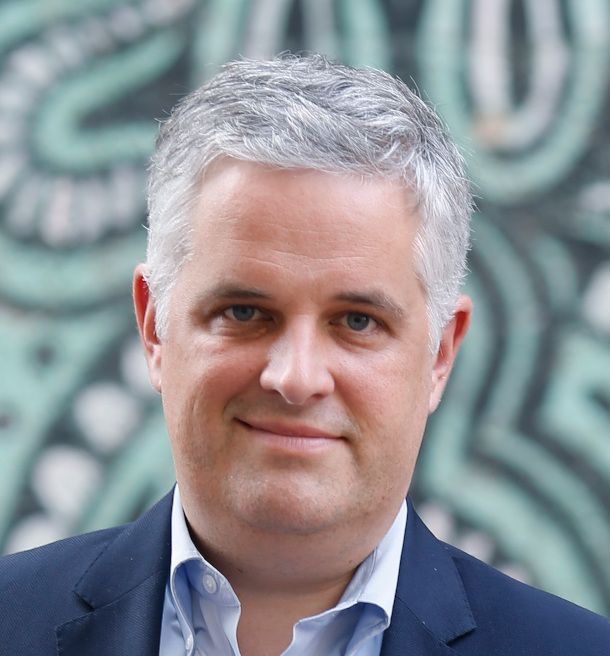
Dan Gearino is a clean energy reporter who writes for Inside Climate News, covering renewable energy and utilities. (Photo: Dan Gearino)
GEARINO: An important thing to remember is that for a solid decade, more than a decade before this recent boom in electricity demand, demand was pretty much flat. We had found various efficiencies through lighting, a whole bunch of different innovations to get more use from our existing electricity resources. And as a result of that, you saw the very most expensive and dirty electricity sources no longer be viable. You saw coal plants close. You saw a whole bunch of things that are good in the long run. We have shifted into a new era in which demand for electricity is super high, and in which inefficient and dirty power sources conceivably can make money because demand is incredibly high. That is very, very harmful for getting to anywhere close to net zero by 2050. It just doesn't work. The numbers don't work. And the way that you can get back on a path toward getting to net zero is to find ways to operate these data center systems more efficiently, to make it so they use much less power. Now, that kind of innovation is a natural part of the evolution of an industry. It could very well be that at some point, not far in the future, we realize there are ways to do this that are, use a lot less power and are much more flexible. That's what needs to happen. We're just not in that phase of development. But right now, based on what we know of what the power use of these things is, it is, it's pretty bleak in terms of imagining what this means for hopes for net zero.
CURWOOD: Dan Gearino is a clean energy reporter with our media partner, Inside Climate News, covering renewable energy and politics. Dan, thanks so much for taking the time with us today.
GEARINO: Thank you.
Related link:
Inside Climate News | “A New Unifying Issue: Just About Everyone Hates Data Centers”
[MUSIC: Pinetop Perkins with Ann Rabson, “Careless Love” on Ladies Man, M.C. Records]
DOERING: Coming up, the politics of making America healthy again. That’s just ahead on Living on Earth. Stay tuned!
ANNOUNCER: Support for Living on Earth comes from the Waverley Street Foundation, working to cultivate a healing planet with community-led programs for better food, healthy farmlands, and smarter building, energy and businesses.
[CUTAWAY MUSIC: Pinetop Perkins with Ann Rabson, “Careless Love” on Ladies Man, M.C. Records]
MAHA and MAGA Divide Over Pesticides
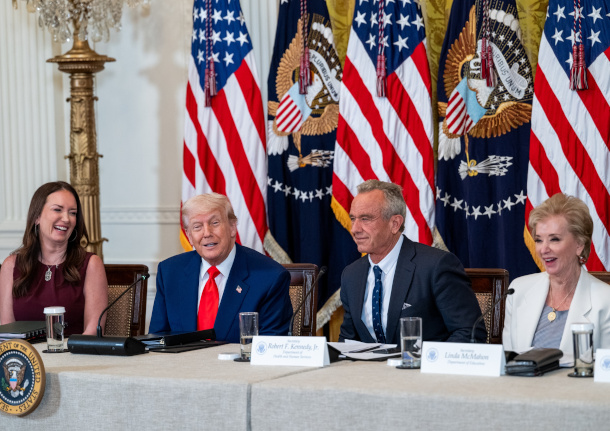
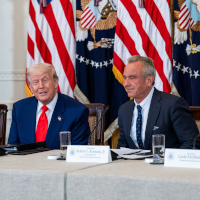
From left to right: U.S. Secretary of Agriculture Brooke Collins, President Donald Trump, U.S. Secretary of Health and Human Services Robert F. Kennedy and physician Deborah Birx. On May 22, 2025, the President announced his MAHA (Make America Healthy Again) Commission in the East Room of the White House. (Photo: Joyce N. Boghosian, Official White House Photo, Public Domain)
DOERING: It’s Living on Earth, I’m Jenni Doering.
CURWOOD: And I’m Steve Curwood.
America is deep in a health crisis, with rising cancer incidence among children, according to the National Cancer Institute. And the CDC reports a majority of Americans now suffer from some form of chronic disease. Though concerns about the health crisis are not new, the Trump administration promised to address them through the Make America Healthy Again or “MAHA” commission chaired by Bobby Kennedy, Jr., who is also US Secretary of Health and Human Services. The MAHA movement includes concerns over health impacts from pesticides, and in 2018 Bobby Kennedy publicly supported a successful multi-million-dollar lawsuit against Monsanto by a groundskeeper who claimed he had contracted cancer from exposure to glyphosate, the key ingredient in Roundup. While the World Health Organization found glyphosate is a probable carcinogen in 2015, today the Trump Administration is asking the US Supreme Court to block a wave of further lawsuits against Bayer, which purchased Monsanto, saying the EPA has not found glyphosate can cause cancer. And there are also bills in Congress to block such lawsuits. Here to discuss the MAHA Commission’s recent actions on agrochemicals is Carey Gillam, an investigative journalist and the author of The Monsanto Papers: Deadly Secrets, Corporate Corruption, and One Man’s Search for Justice. Carey welcome back to Living on Earth!
GILLAM: Thank you, thanks for having me.
CURWOOD: So we're going to talk about MAHA today, the Make America Healthy Again. So first, what is the history of the Make America Healthy Again Commission. What made it come to life?
GILLAM: Well, I think really that varies based on who you are talking to, right? I mean the formality of Make America Healthy Again and the Make America Healthy Again Commission came about through Bobby Kennedy, RFK Jr., Bobby Kennedy and his presidential campaign, and then when he was appointed to the Trump administration to head up HHS, they formally formed this commission, Make America Healthy Again, MAHA, you know, kind of a play on Make America Great Again, right the MAGA movement that is so associated with Trump. But for me, I think and many other people, this MAHA movement, this sort of distrust of big food, Big Ag, Big Pharma, this movement for cleaner living, cleaner food, pushing food companies to get rid of artificial dyes and to reduce chemicals in the foods, and you know, that's been going on for a really long, long time. So I certainly don't think it's new that people and groups have organized and come together. You know, I'm thinking of Moms Across America, for instance, as one group, but there have been an increasing number of people becoming aware of the health effects, the problematic health effects of all of these different things that are put into our food and that are put into our children's bodies, rising rates of chronic disease and cancers, and they have been increasing their voices and trying to make them heard over the years. I do think this is the first time I've really seen it translate into a pretty powerful political movement, and certainly we haven't seen it at this level in the White House or any other presidential administration. They're seemingly having some success. I think it really powered Bobby Kennedy into, and powered the Trump re-election, by having this kind of movement and association with Bobby Kennedy, who has been talking about these issues for many, many years himself. So I think it's just this joining of forces in this really unique moment and sort of ironic culmination where we have people who are really interested in trying to make our world healthier, aligned or cooperating or trying to coordinate with an administration that, in many ways, is working to make our world far less healthy and far more polluted and dangerous.
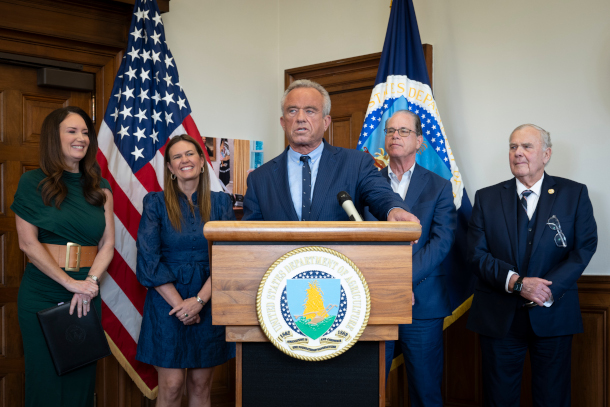
From left to right: U.S. Secretary of Agriculture Brooke Rollins, Governor of Arkansas Sarah Huckabee Sanders, U.S. Secretary of Health and Human Services Robert F. Kennedy Jr., Governor of Indiana Mike Braun, and Rep. Jim Baird (R-IN). On June 10, 2025, this group met at the USDA in Washington, D.C. to discuss the Make America Healthy Again Commission and remove sugary drinks from qualifying under SNAP benefits. (Photo: Tom Witham, USDA, Public Domain)
CURWOOD: So who are the people supporting MAHA?
GILLAM: Well a recent poll that came out in the middle of October took a look at that, and they, you know, asked thousands of people, sort of what their participation was in MAHA and what their beliefs were, and they showed that 38% of parents, like across partisan lines, 38% identified as supporters of MAHA, which I thought was really surprising. Sixty two percent of them were Republicans, 17% Democrats and 34% independents, and not all of them aligned with MAGA necessarily, they were seen as distinct. So, you know, I think it's an interesting movement. A lot of people that identified with MAHA had different positions on vaccines, but when it came to food and food additives and children's health and concerns about chronic disease, these people were locked in.
CURWOOD: Carey, from a food and chemical lens, just how unhealthy is America these days?
GILLAM: Oh my gosh, it's pretty bad. We have 76% of Americans now suffering from at least one chronic disease, and about half suffering from multiple chronic diseases.
CURWOOD: How is MAHA proposing to change agriculture and chemical regulation across the United States?
GILLAM: Well, gosh, if you read the MAHA commission report, it covers a whole range of areas, you know, from childhood depression and use of cell phones and antidepressants and too much screen time. And there's a lot of things packed in there, food additives, chemicals in the food, types of food people are eating. But if you look at pesticides in agriculture, which is what we're looking at today here, in the initial report, they were really trying to focus on a couple of the pesticides that are known to be most dangerous, glyphosate and atrazine. Atrazine was just last month declared a probable human carcinogen by the World Health Organization. Both of these chemicals are used liberally in our development of food, production of food, the residues are found on our food. The MAHA Commission, in its early April report targeted those chemicals specifically and talked about a need to reduce pesticide use overall. In the most final report that came out in September, they eliminated all discussion of those pesticides, and in fact, talked about what a great job the EPA was doing in terms of regulating pesticides. So I think there's some wins and some losses so far in the MAHA commission, and we're not really sure yet how far we're going to, we're going to see this movement go.
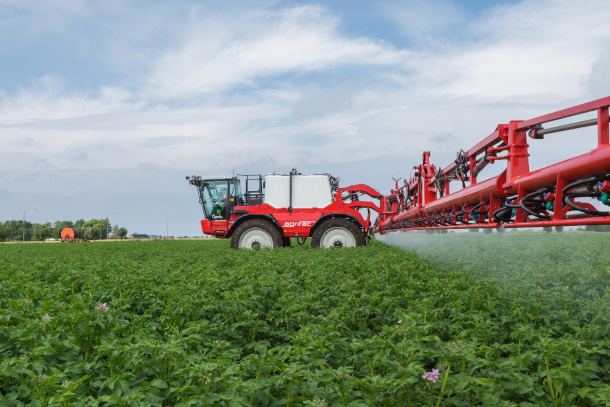
Common herbicides used in the United States include glyphosate, and 2,4-D. While there is no universal ban on products like glyphosate, some countries, states and localities have implemented their own restrictions citing health concerns. (Photo: Josephine v G, Wikimedia Commons, CC BY SA 4.0)
CURWOOD: So what's going on Capitol Hill to really reduce the exposure of these chemical companies to getting sued by consumers. What are they trying to do legislatively?
GILLAM: Yeah, it's a huge, huge push by the agricultural industry led by Bayer, a company that bought Monsanto in 2018. Bayer has formed the Modern Ag Alliance, they've pulled together dozens and dozens, they say, about 100 different ag organizations, and they are heavily lobbying Congress. They're marching around Capitol Hill, talking to legislators. A lot of money is flowing, a lot of advertising, trying to pass not only state laws, but get language into the farm bill and into appropriations and standalone bills to try to essentially, any way they can, to get legislation passed that would block consumers from being able to sue over a failure to warn, over the labeling. They're saying, we shouldn't be required to put anything on a label. Consumers shouldn't be able to sue us as long as the EPA has approved the product and approved the label.
CURWOOD: The State of California, course, has been fairly aggressive on going after some of these chemicals. To what extent is this legislation aimed at telling California, “shut up”?
GILLAM: I think they really want California to shut up, right? California has been very aggressive on many fronts, right, and trying to restrict and control and to better understand where and how and how much pesticides are being used. This would preempt, you know, state moves, localities, states, counties, would preempt a lot of things that are trying to be done outside of Washington, DC to try to better protect people from pesticide use. This is what the companies say they need. I mean, Bayer is telling us and telling lawmakers, that if you don't protect us from lawsuits, if you don't protect us from restrictions on our chemicals, we're not going to sell them anymore and if we don't sell them anymore, farmers won't be able to grow enough food, people will go hungry, grocery prices will rise, calamity will rain down upon us all. They're saying these things are essential to feed the world.
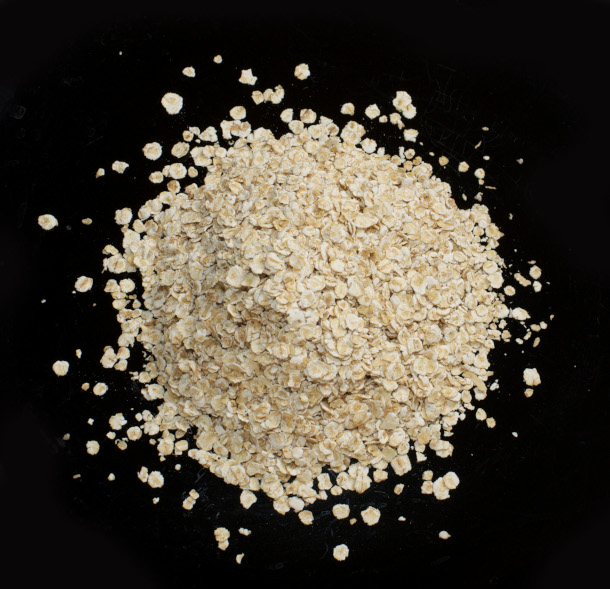
Oats are among the many products grown in the United States sometimes sprayed with glyphosate. (Photo: Wikimedia Commons, Bill Ebbesen, Free Use)
CURWOOD: It's ironic, isn't it, that a lot of American commodity crops can't be sold in many places because some countries tend to be more stringent on what chemicals they allow to be used on crops.
GILLAM: Yeah, there are many countries around the world that have restrictions, import bans, on bringing things in that might have residues of different pesticides on them, GMO crops as well. You know, there are a lot of countries that really don't want what the US is selling, which is why the US is such a very important market for these pesticide companies to protect.
CURWOOD: Now there's also what's called the Pesticide Accountability Act, introduced by New Jersey Senator Cory Booker. What does this legislation champion?
GILLAM: Well, Cory Booker essentially tried to flip the you know, script on these people and embed it into law that people could sue that this was a fundamental right, that people could try to hold these companies accountable. He hasn't gotten very far with that, unfortunately.
CURWOOD: You know, I believe the Trump Administration has approved new pesticides, including a couple of PFAS, and that the EPA, of course, has fired thousands of scientists from the Office of Research and Development, which looks at the impact of chemicals on human health and rolled back some programs at the USDA. I mean, talk to me about these actions and where they fall within the overall MAHA commission plan?
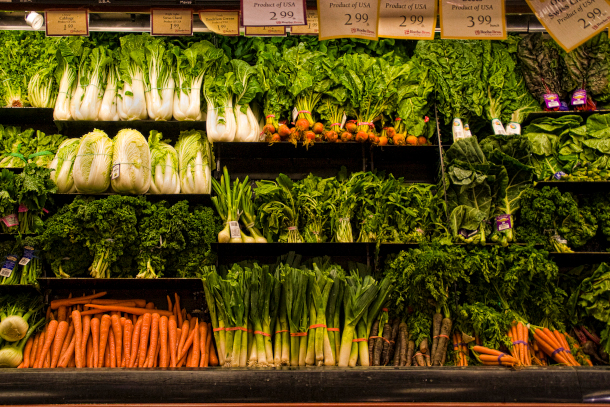
According to the Environmental Working Group’s 2019 analysis of US Department of Agriculture data about 70% of fresh produce sold in the US has pesticide residues on it even after it is washed. (Photo: Flickr, Liz West, CC BY 2.0)
GILLAM: Yeah, it really is paradoxical to see this movement, MAHA and Kennedy trying to address, why are our children sicker? Why are we sick? You know, how are we going to make America healthy again? How are we going to make our food healthy and our environment? And at the very same time, you have the Trump administration, as you said, sort of rolling back, making the environment much more dangerous for our children. They're not only introducing or approving new pesticides, but they are rolling back regulations on clean air, you know, tracking air emissions. They're rolling back clean water rules. They're allowing for more CAFOs, more runoff, toxic runoff from large, confined animal operations, more pesticide discharge into waterways. They say they're doing this in the name of helping business and helping the economy and spurring growth and jobs, but they're, you know, there's just a lot of concern out there that what they're doing is just making the environment much more deadly and toxic for all of us.
CURWOOD: Carey, you've been reporting on the agrochemical industry for years. From your perspective, why is it so hard to regulate chemicals in the United States?
GILLAM: So many reasons, right? I think the thing that comes to my mind most immediately is just the corruption that we've seen, the collusion, the corruption, the power that the agricultural industry wields over the EPA, wields over lawmakers. We have, is it four or five now, I can't keep track of industry officials, agricultural industry leaders who have been brought in now under the Trump administration to help run the EPA and help oversee what chemicals are going to be approved or not approved. These are people who've worked in the industry for their whole lives, pushing these chemicals, and they're now sitting in our top regulatory authority. And that's not new to the Trump administration. We've seen that over and over and over again, the sort of revolving door of people coming in and people coming out, and we have so many internal documents and messages from company leaders to EPA leaders, talking about how they're going to work together, you know, and Monsanto, the famous memos about talking about the EPA official who oversaw glyphosate, being a real friend and being someone who was helpful to them, and their defense of glyphosate. We got numerous whistleblowers who've come out of the EPA saying they won't let us publish true science, they're corrupting our science, they're hiding information about harmful effects of these chemicals. I mean, it's a corrupt agency, as I think corruption runs through many of our federal agencies, unfortunately.
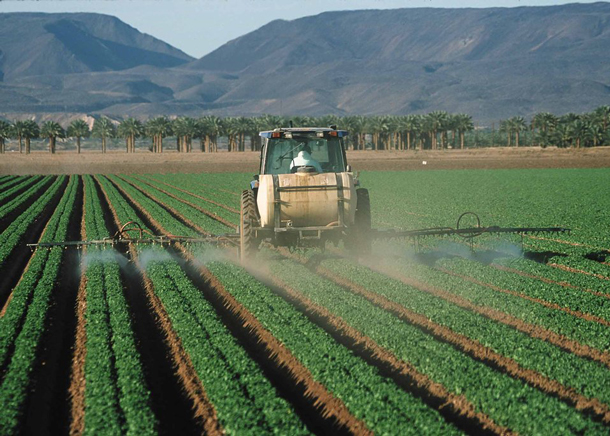
Glyphosate is a common ingredient in chemical herbicides and widely used in commercial agriculture. (Photo: Jeff Vanuga, NRCS)
CURWOOD: Stepping back a distance, what about the concept of chemical regulation in this country? In many places around the world, there is the precautionary principle to not approve chemicals unless you can prove that they are safe. In the United States, I believe it's the other way around.
GILLAM: Yeah.
CURWOOD: A chemical is considered innocent unless and until it's proven guilty. How well is that system working for us do you think?
GILLAM: You're right. I mean, I mean, I think you've explained it very well. There is much more a precautionary approach overseas, in Europe and other countries. Let's prove it's safe before it's on the market. Here, it's presumed to be safe. The companies bring in all of their scientific studies, and they say, here, we've shown this to the EPA, this is safe, let's go ahead and approve it, and in the majority of cases, they do. Our federal law does require that when they look at doing any sort of regulation of a pesticide, that they take into account the economic impact of that chemical being on the market, the jobs that it creates, you know, all of the money that farmers will be spending and pesticide companies will be getting and the yields that farmers will get from it. So that's sort of at the heart of it, and I think that that's been a real problem too, because you do have chemicals that have been out there, used on our food, used in farming, that have been shown for years, decades, to be dangerous to our health in scientific studies. And then you'll see, like in the case of chlorpyrifos, and it will take so long until the EPA eventually says, yeah, I guess we should do something about that, you know, but we'll have this chemical on the market for years and years.
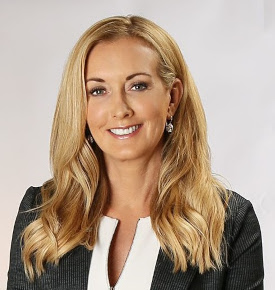
Carey Gillam is an investigative journalist and author of the Monsanto Papers: Deadly Secrets, Corporate Corruption, and One Man's Search for Justice. (Photo: Carey Gillam)
CURWOOD: You've been in contact with a number of the voices within the MAHA movement. I'm thinking of Zen Honeycutt, the Executive Director of Moms Across America, what's been their reaction to the Commission's involvement with the big ag industry?
GILLAM: Well, a lot of them, you know, were very disappointed, of course, angry, frustrated when the MAHA commission sort of kneeled, bowed down to the agricultural industry, editing out the criticism of pesticides in its final report that came out in September. They were not happy with that at all, but I don't know that they're deterred. I think it, you know, just means they're saying they have to work a little bit harder and they're keeping at it. The first round might have gone to the agricultural industry, but they certainly are not giving up the fight yet.
CURWOOD: Carey Gillam is an investigative journalist and the author of the Monsanto Papers: Deadly Secrets, Corporate Corruption and One Man's Search for Justice. Carey, thanks so much for taking the time with us today.
GILLAM: Thanks for having me.
CURWOOD: We reached out to the Trump Administration and the Make America Healthy Again Commission for comment but did not receive responses in time for this broadcast.
Related links:
- Read the Make America Healthy Commission Report from May 16, 2025
- Read the Make America Healthy Commission Strategy Report from September 9, 2025
- The New Lede | “Citing “Serious Ethical Concerns,” Journal Retracts Key Monsanto Roundup Safety Study”
- The Guardian | “Outrage Mounts as Republicans in Congress Move to Protect Pesticide Makers From Lawsuits”
- The Guardian | “Cory Booker Pitches Bill to Allow Lawsuits Against Pesticide Makers Over ‘Toxic Products’”
- Learn more about Carey Gillam
[MUSIC: Joey DeFrancesco, “Basin Street Blues” on Ballads And Blues, Concord Records, Inc.]
DOERING: Just ahead, Robin Wall Kimmerer on sharing and gratitude for the abundance of Earth. Keep listening to Living on Earth.
ANNOUNCER: Support for Living on Earth comes from the estate of Rosamund Stone Zander - celebrated painter, environmentalist, and author of The Art of Possibility – who inspired others to see the profound interconnectedness of all living things, and to act with courage and creativity on behalf of our planet. Support also comes from Sailors for the Sea and Oceana. Helping boaters race clean, sail green and protect the seas they love. More information @sailorsforthesea.org.
[CUTAWAY MUSIC: Joey DeFrancesco, “Basin Street Blues” on Ballads And Blues, Concord Records, Inc.]
Robin Wall Kimmerer on The Serviceberry

The cover of The Serviceberry by Robin Wall Kimmerer beautifully encapsulates the book's themes of nature’s abundance and reciprocity. (Photo: Courtesy of Robin Wall Kimmerer)
CURWOOD: It’s Living on Earth, I’m Steve Curwood.
DOERING: And I’m Jenni Doering.
Robin Wall Kimmerer is perhaps best known as the author of Braiding Sweetgrass, about living in a reciprocal relationship with other beings and the gifts of the Earth. And in her 2024 book, The Serviceberry: Abundance and Reciprocity in the Natural World, she focuses on gift economies. You might encounter gift economies in your daily life – Buy Nothing groups on Facebook, community fridges where people share food with neighbors, or the little free libraries down the street. Robin Wall Kimmerer is a member of the Citizen Potawatomi nation and professor of environmental biology at the SUNY College of Environmental Science and Forestry, and she joins us now. Hi Robin, and welcome to Living on Earth!
KIMMERER: Hi, Jenni, thanks for the invitation to join you.
DOERING: So what is a serviceberry, and why is it significant to you?
KIMMERER: A serviceberry is a beautiful genus of plants. It doesn't look like much. In fact, I tell my students, you can tell a serviceberry because it's kind of generic looking in that the leaves are just round, smooth, gray bark. But when it flowers and fruits, it's a whole different story. In the springtime, there's just a froth of white blossoms, and then in mid-summer, it's just heavily laden with these red, juicy fruits. You can mostly find it around edges of water, edges of trails. It's an ecotone species that kind of likes the forest edge.
DOERING: Mm. And it sounds like it brings this abundance in season, when these berries are ripe, all kinds of animals and people, including yourself, enjoy these berries. So what does that abundance of serviceberries lead to?
KIMMERER: Well, the abundance of serviceberries leads to an abundance of life all around because, for example, in the early spring, there's a whole group of bees that rely entirely on those early spring flowers, right? So it's feeding the pollinator community. And then later, when the berries start to ripen, oh, you can find a serviceberry tree, because of all the birds, they are all just gathering there, and they're so noisy. I use them for prospecting. That's how I find a serviceberry tree is I listen for the birds, so it's feeding that whole community as well. You know, those are the obvious ways that it's engaged, but it's also an important host for lots of different larvae of butterflies and the whole food web that grows around this tree.
DOERING: And you yourself describe in this book, harvesting, putting those berries into a pail, and then being able to share that abundance with your neighbors.
KIMMERER: That's right. They are so abundant that on my neighbor's farm, where they plant the Western variety of serviceberry known as saskatoons, they are just an exemplar of abundance. You can just pick them by the handful.

The serviceberry is a small, sweet fruit, deep purple or reddish-blue when ripe, with a flavor resembling a mix of blueberries and almonds. It's rich in nutrients and perfect for fresh eating, baking, or preserves. (Photo by Melissa McMaster, Flickr CC BY 2.0)
DOERING: And you can turn them into a pie?
KIMMERER: Oh, they make a good pie. They make good jam, good syrup. But you know, traditionally, a lot of native cultures, particularly Western cultures, used, it's the source of pemmican. It's the major fruit for pemmican. So the berries would be dried and pounded into this really super food. The berries are really rich in antioxidants and vitamin C. So it was an excellent choice to mix into the original energy bars, which were pemmican.
DOERING: And, pemmican, remind me is that a mix of berries and meat?
KIMMERER: It is, yeah, the berries are dried and pounded, and elk or venison is also dried and pounded, and then the whole thing is bound together with rendered fat. So it is quite literally the original energy bar, and our people used it for travel food and for trade, etc. It was a really important way to store excess calories.
DOERING: Tell me about the connection here between this idea of a gift economy and the way that resources are shared in the natural world. Could you maybe trace the path of a serviceberry for us? Maybe the berry itself falls to the ground or gets eaten by a bird, and what happens next?

A portrait of Robin Wall Kimmerer, author of The Serviceberry, reflecting her deep connection to nature and ecological knowledge. (Photo: The John D. and Catherine T. MacArthur Foundation)
KIMMERER: Well, I think it's important to preface that by talking about what I mean by “gift.” And a gift in my thinking, and this reflects a lot of ancestral teachings, a gift is something that we have not earned, and yet it comes to us, someone bestows it upon you. So let's follow the thread that you suggest, Jenni, of the growth of a serviceberry. The sun, the sun is the energy that animates all of it, and so all of that sunshine, through photosynthesis, turns into the body of the serviceberry. One could argue that the sun, the sun's energy, is a gift. We have not earned it, and yet it comes. But that gift of photosynthesis is then shared with others. It's shared with the larvae of those caterpillars that are eating the leaves. It's shared in the abundance of fruits that the robins and the cedar waxwings and the blackbirds are all coming to feast on. The gift is shared. It's passed on. And then, of course, those birds that are splattering bird poop all over the ground, all of that nitrogen, right, is feeding the food web below ground and building soil. The fox that comes and snatches one of those robins off the ground while it's all full of berries, the gift stays in motion. And so if we start with the premise that what life produces for us is a gift, it's all a gift economy.
DOERING: In the book, you quote an indigenous Brazilian hunter saying, "Store my meat? I store my meat in the belly of my brother." Can you tell me the story of that quote?

The serviceberry fruit, sweet and tart, supports pollinators and birds, playing a vital role in ecosystems. (Photo: Unsplash, public domain)
KIMMERER: Yes, that quote, that story that was shared by an anthropologist, linguist working with Amazonian indigenous peoples, is at the heart of what we understand to be a gift economy. In this story, the hunter had been successful that day and came back with a really sizable animal. And so the anthropologist linguist was talking with them and saying, "Well, how are you going to store the meat? Are you going to dry it or salt it? What will you do to store the meat?" And he reports the astonishment of the hunter, saying, "Store my meat? Why would I do that?" And so he asks again, and he said, "Well, no, I don't store my meat. I store my meat in the belly of my brother." Meaning he wasn't going to hold on to and accumulate this bonus, this surplus of meat. He was going to have a feast. He was going to invite his neighbors, his friends, his extended family, all to come and benefit from what the forest had provided him in the form of game. And the anthropologist was astonished because that breaks all the rules of Western economics, doesn't it, that says, "Well, you should hold on to that for yourself. You should store it so that when the hungry time comes, as it inevitably does, you'll have food security." But essentially, the lesson taught by that story is there are other ways to have material security, food security, and that is through relationship. That hunter was saying, when I feed my neighbors, when I feed my community, they're going to feed me when their nets are full of fish, they're going to invite me to a feast if I need their help. We've established good relationships of trust and kinship, so they'll take care of me, because I'm taking care of them. And that is the heart of a gift economy. No money is exchanged. The gift stays in motion. It creates this network of relationships that create the kind of material security that market economics is designed to produce.
DOERING: And in our own lives, what advice do you have for centering gift economies, participating in those, and reciprocity in our lives while also living in this modern world, this complex world?

Before it bears fruit, the serviceberry plant is characterized by its delicate white flowers in early spring, which attract pollinators. (Photo: Unsplash, public domain)
KIMMERER: Well, the book is full of examples of micro scale gift economies. Some of the ones that seem most appropriate to think about in a time of climate crisis. What is it that's driving the climate crisis? It's hyper consumption, overconsumption, and gift economies suggest, you know what? We don't all need to own everything that we need in life. We don't need to each go out and buy a lawnmower. We don't. We need, perhaps one for the neighborhood. And those kinds of neighborly sharing help to stem hyper consumption, but you also create a web of mutual relationship, which I think as human people, particularly in an industrialized society, we crave. We crave that sense of belonging, of being known, of being needed in our communities. So that's how I think about the role of gift economies as a sharing economy that produces abundance without market regulation. And so I think gift economies can live in coexistence with the dominant model of economics, if we encourage them. And I don't want in any way this idea of trying to promulgate small, highly localized gift economies to in anyway excuse us from rethinking capitalism and damage associated with it. In the book, I talk quite a lot about the ethical jeopardy of extractive systems and the cost that that has in the well-being of the planet, and while we could celebrate and cultivate small scale gift economies, that doesn't mean we aren't still complicit with this larger system that we need to seriously rethink.
DOERING: Can you describe for me scaling up this gift economy idea and how we can kind of work with this complex, global, interconnected world that we have, and integrate some more of this gift economy thinking into that system?
KIMMERER: You know, I began looking for gift economies in modern society after having learned about them from both ancestral and contemporary indigenous societies, and I found them everywhere, once you kind of know what to look for. One of the examples that I like to start with is, you know, when you read a good book, you want to pass it on to a friend. You don't sell that book to your friend. You give it to them. There it is a tiny, little gift economy. But how does that scale up? Well, in my neighborhood, we have little free libraries where people say, oh, let's leave our books here to share with one another. That's a gift economy. I think about public libraries as gift economies. We don't own the books. That's the idea. We have abundance of literature because we share. So that continuum from the giving a book to a friend, to little free libraries to public libraries, gives us a hint at what gift economies can look like. And at a larger scale, the way that we use our financial resources to invest in commons, common resources, like libraries, offers us an opening as well. What about things like common lands of parks and trails and water? Those are things we don't each of us own. We care for them in common. We enjoy them in common. So gift economies are also an invitation to the economy of the commons, rather than of private property and individual ownership.
DOERING: Before you go, Robin, in this season of harvest, how does giving thanks connect with abundance and reciprocity?
KIMMERER: Gratitude is such an important human response to the abundance of the world and deep gratitude. No, I don't mean just like that polite toss off thank you. I mean the kind of gratitude where you recognize that your life is totally dependent upon the lives of other beings, that you would not exist without water or those berries or that medicine, that kind of deep gratitude that allows us to look at the world of abundance and feel as if you have everything that you need. Let's be clear, everything that I need might be quite different than everything that I want. But everything that I need, I have and is provided for me as a gift from Mother Earth. It also makes you feel as if you have everything, and so why do you need to buy anything else? It creates a sense of sufficiency and “enoughness” that puts the brakes on consumption. I believe eco-psychologists have demonstrated that people who practice gratitude consume less than people who don't. To think about the world as gift is to think about the world not as objects that belong to us, but as stories. That shirt that you might want to buy, it's not just as an object, is it? It's the product of many hands, and it has consequences. It has costs. And so I think one of the most important things we can do as consumers is to really think about the stories associated with those objects. Was that fiber in the shirt that you're interested in, is it recycled? Is it part of a circular economy, or is it part of an extractive economy? And when we see the world as gift, we see that whole story of knowing where everything came from, and then that's what helps something be a gift, not a commodity, is we know all the relationships that are associated with it. But that same attention to the story of an object allows us to decide whether we're going to buy it or not. Are we going to participate in a dishonorable harvest, or are we only going to purchase those things which safeguard life, make life better?
DOERING: Robin Wall Kimmerer is the author of The Serviceberry: Abundance and Reciprocity in the Natural World and other books. Thank you so much, Robin.
KIMMERER: Thank you.
Related links:
- Purchase a copy of The Serviceberry (Affiliate link supports Living on Earth and local bookstores)
- Discover insightful reader reviews and more about The Serviceberry by Robin Wall Kimmerer
- Read The Guardian’s review of Kimmerer’s work, delving into the book’s exploration of ecological wisdom and reciprocity in nature
- Learn about the fascinating Serviceberry plant
[MUSIC: Andrew Gialanella, “Ease” Single, Andrew Gialanella]
Earth Prayer
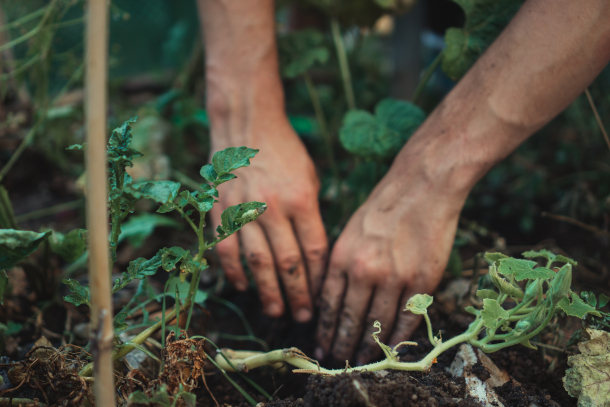
Joe Bruchac’s poem is dedicated to Mother Earth. (Photo: Jonathan Kemper, Unsplash)
CURWOOD: On the line now from Porter Corners, New York, is Joe Bruchac, a Nulhegan Abenaki storyteller and poet who’s here with his reflection on gratitude for the gifts of the Earth. Joe, good to talk to you again. How you doing?
BRUCHAC: Oh, I'm good, kwai kwai nidôbak, hello my friend.
CURWOOD: And what do you have for us today?
BRUCHAC: I have an original poem that I wrote. It's based on traditions among the Haudenosaunee, the Iroquois people, and the Wabanaki, my own people, of giving thanks and acknowledgement for the gifts that we often take for granted that are all around us. It's called “Earth Prayer.”
© 2023 Joe Bruchac
EARTH PRAYER (Adapted from Haudenosaunee and Wabanaki traditions)
Because this Earth is our first mother
we say Ktsi Wliwini, mina ta mina--
Great Thanks, again and again.
Because all our ancestors could see
the rain that falls, the air we breathe
the healing waters, the giving stones
our mother’s blood, our mother’s bones
are gifts we have been given.
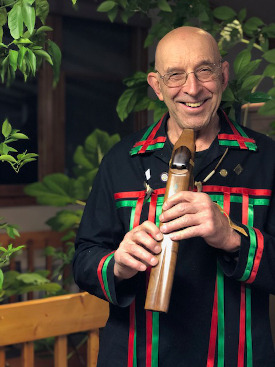
Joseph Bruchac is an author of more than 120 books for children and a member of the Nulhegan Abenaki Nation. (Photo: Courtesy of Joseph Bruchac)
It is from this Earth that all our lives,
those who came before us, those yet to come
like the seeds that sprout with each new spring
have grown, have grown, have grown.
And what does this Earth ask of us?
All that it asks is that we never
take too much, always remember
to give back in equal measure
for those gifts we may take for granted.
And also remember that we must
walk with care, always show kindness
to all those now here with us
sharing gifts of life and light,
never forget those who share our breath
two-legged, four-legged, those with wings.
those who swim or dig into the soil,
the grass, the trees, all living things
from the greatest to those too small
to see are also related, one and all,
Wli dogo wongan, all our relations.
So, as we continue on this circle
which has no beginning and no end
let us all say to our Mother Earth
Ktsi Wliwini, mina ta mina--
Great Thanks, again and again.
CURWOOD: Thank you, Joe Bruchac.
BRUCHAC: Doc hug we, don't mention it. You are very welcome.
Related links:
- Storyteller Joe Bruchac’s Website
- More on the Nulhegan Abenaki Nation
[MUSIC: Andrew Gialanella, “Reality” Single, Andrew Gialanella]
CURWOOD: Living on Earth is produced by the World Media Foundation. Our crew includes Naomi Arenberg, Paloma Beltran, Sophie Bokor, Daniela Faria, Swayam Gagneja, Mark Kausch, Mark Seth Lender, Don Lyman, Ashanti Mclean, Nana Mohammed, Aynsley O’Neill. Sophia Pandelidis, Jade Poli, Jake Rego, Andrew Skerritt, Bella Smith, Melba Torres, and El Wilson.
DOERING: Tom Tiger engineered our show. Alison Lirish Dean composed our themes. You can hear us anytime at L-O-E dot org, Apple Podcasts and YouTube Music, and like us please, on our Facebook page, Living on Earth. Find us on Instagram @livingonearthradio, and we always welcome your feedback at comments@loe.org. I’m Jenni Doering. And I’m Steve Curwood. Thanks for listening!
ANNOUNCER: Funding for Living on Earth comes from you, our listeners, and from the University of Massachusetts, Boston, in association with its School for the Environment, developing the next generation of environmental leaders. And from the Grantham Foundation for the protection of the environment, supporting strategic communications and collaboration in solving the world’s most pressing environmental problems.
ANNOUNCER 2: PRX.
Living on Earth wants to hear from you!
Living on Earth
62 Calef Highway, Suite 212
Lee, NH 03861
Telephone: 617-287-4121
E-mail: comments@loe.org
Newsletter [Click here]
Donate to Living on Earth!
Living on Earth is an independent media program and relies entirely on contributions from listeners and institutions supporting public service. Please donate now to preserve an independent environmental voice.
NewsletterLiving on Earth offers a weekly delivery of the show's rundown to your mailbox. Sign up for our newsletter today!
 Sailors For The Sea: Be the change you want to sea.
 The Grantham Foundation for the Protection of the Environment: Committed to protecting and improving the health of the global environment.
 Contribute to Living on Earth and receive, as our gift to you, an archival print of one of Mark Seth Lender's extraordinary wildlife photographs. Follow the link to see Mark's current collection of photographs.
 Buy a signed copy of Mark Seth Lender's book Smeagull the Seagull & support Living on Earth
© Copyright World Media Foundation. All Rights Reserved
Home | Contact | RSS | Donate | Newsletter