

Vanguard Retreats from ESG
Air Date: Week of March 20, 2026
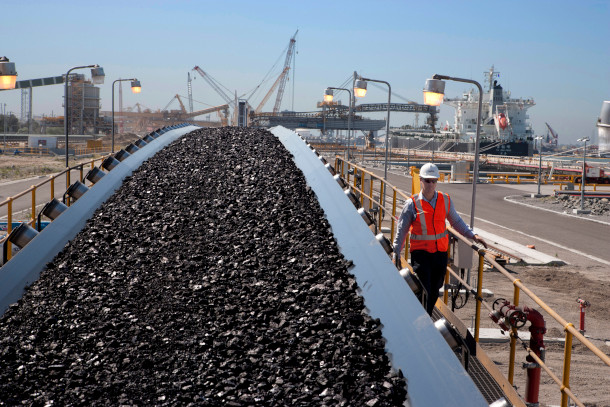
A mining technician oversees a coal export terminal. Republican attorneys general accused Vanguard, BlackRock and State Street of working together to negatively impact the coal industry and raise energy prices. Vanguard has settled the lawsuit but has denied any wrongdoing. BlackRock and State Street are still contesting the allegations. (Photo: Peabody Energy, Wikimedia Commons, CC BY 3.0)
The investment giant Vanguard is retreating from its climate initiatives as part of a $30 million settlement deal for an anti-trust lawsuit brought by Republican state attorneys general. The lawsuit alleged that Vanguard and fellow asset managers BlackRock and State Street, which are still fighting the suit, conspired to kill the coal industry. Vanguard did not admit to wrongdoing but is now barred from participating in climate investment watchdog groups such as Ceres. General Counsel for Ceres, Michael Boudett joined Living on Earth Executive Producer Steve Curwood to explain.
Transcript
DOERING: From PRX and the Jennifer and Ted Stanley Studios at the University of Massachusetts Boston, this is Living on Earth. I’m Jenni Doering
O’NEILL: And I’m Aynsley O’Neill.
The investment giant Vanguard is retreating from its climate initiatives as part of a settlement deal for an anti-trust lawsuit brought by red state attorneys general, led by Texas AG Ken Paxton. The lawsuit alleged that Vanguard and fellow asset managers BlackRock and State Street, which are still fighting the suit, conspired to kill the coal industry by being involved in climate initiatives that hurt coal companies.
DOERING: Vanguard, which manages more than twelve trillion dollars in global assets, did not admit to wrongdoing but agreed to pay Texas, Missouri, Indiana and ten other Republican-led states about thirty million dollars. Vanguard also agreed to withdraw from the Principles for Responsible Investment network and not participate in any organization that advocates for specific emissions targets or requires climate-focused investment commitments.
O’NEILL: That means it’s barred from participating in the groups Net Zero Asset Managers, Climate Action 100+, and Ceres. Michael Boudett, General Counsel at Ceres, told our Executive Producer Steve Curwood the lawsuit was never really about anti-trust law or financing the coal industry.
BOUDETT: Many politicians feel that there are points to be scored and votes to be won by attacking targets they see as “woke capitalism.” And in my view, that political backdrop has as much to do with this lawsuit as anything else.
CURWOOD: So what was agreed to in the settlement?
BOUDETT: Well the settlement had a lot of terms, some of which are very concerning for those of us in the sustainability movement. One is the large amount of money, I should say, possibly not large in the eyes of Vanguard, which is very, very large, but large to a red state attorney general. But the other terms are, if anything, more concerning. Some of them restrict Vanguard to being purely a passive investor, contrary to its approach in recent years, and some of them restrict what kinds of organizations Vanguard is allowed to join and restrict what kinds of shareholder proposals Vanguard can bring.
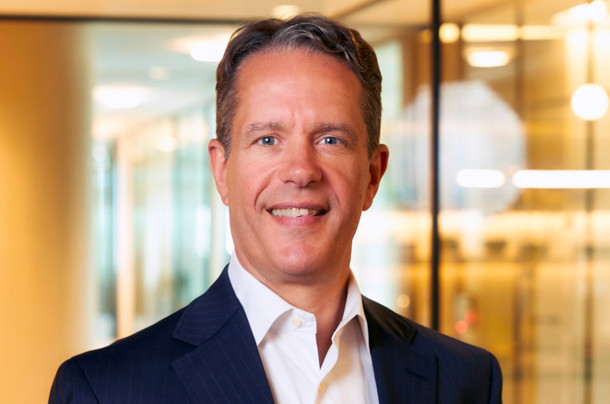
Ceres General Counsel Michael Boudett is concerned that by settling an anti-trust lawsuit brought by 13 Republican state attorneys general, Vanguard gave up its First Amendment right to join organizations concerned with climate and sustainability. Vanguard used to be a member of Ceres, a non-profit advocacy organization that is working to promote the use of more sustainable, cleaner energy. (Photo: Courtesy of Ceres)
CURWOOD: Some say that this settlement that Vanguard has given to these red state attorneys general underscores that for the states that sued, their primary objective is not anti-trust, but it appears to be dismantling participation in climate-focused organizations more than altering day to day investment practices. What does that look like? And why is that a concern?
BOUDETT: Well, it's a concern for many reasons, Steve, and I think that's an accurate observation. It hurts the efficacy of our movement over the long term. You know, the economy follows big money to a degree, and losing influence with large market players is not a good thing for the sustainability movement. The other concern, speaking more as a lawyer, is the First Amendment. I believe that even if the red state attorneys general win this case, they could not get a judge to order a company, “you cannot belong to this association or that association.” That is basic First Amendment, freedom of association principles in play, but Vanguard here voluntarily agreed to do that in a settlement in order to get rid of a case. So that's very concerning from a constitutional point of view as well. And you know, again, we do hope that at least one of these companies continues to fight this case and test it in court.
CURWOOD: So a company like Vanguard has trillions of dollars of assets under management. So while a $29 million payment to have what they see as an annoying lawsuit go away is small, and their scale of doing things for people who invest with them, people at home, perhaps, who have purchased bonds through Vanguard. That's a piece of change. In your view, what is the public and what are consumers and investors losing with this type of settlement?
BOUDETT: Well, they're losing the full benefit of having an asset manager that looks out for their interests, and in our view, part of that role should be talking to companies about their game plan for sustainability and their game plan for climate-related scenario planning and climate-related transition. So you and I, if we own a couple shares in a mutual fund that Vanguard runs, we're not going to go meet with a company, be it Caterpillar or Amazon or whoever. We're not as individuals, going to go meet with that company and say, “Hey, what's your strategy?” We couldn't even get in the door. Vanguard and BlackRock and State Street have the ability to say, ”Hey, collectively, we manage millions of your shares. How about a meeting?” And they'll get that meeting, and they can have a constructive dialogue with the board of directors or the sustainability department of that corporation and have meaningful back and forth. And importantly, Steve, I want to make clear, that meeting centers around profitability as well as sustainability. In other words, if you're a big pension fund or a university endowment or what have you, you want that company to be profitable this quarter, next year and 20 years from now. So you're not telling them, you know, stop doing business because you're harming the planet. Other organizations do that. The kinds of meetings we're talking about are more around, what can you do, consistent with long term profitability, to be more sustainable and reduce your own risk? So a good asset manager would be having those conversations. Vanguard has just promised not to be that kind of asset manager.
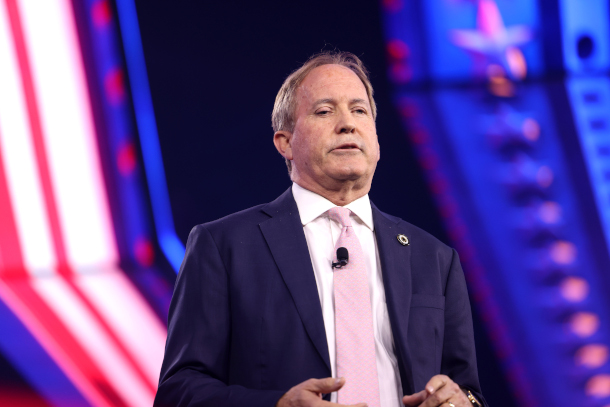
Texas Attorney General Ken Paxton led 12 other Republican state attorneys general in accusing Vanguard, BlackRock and State Street of anti-trust and other violations. In announcing the settlement with Vanguard, Paxton said while Vanguard has taken appropriate action to resolve the case, BlackRock and State Street have continued to ignore state laws, engage in anticompetitive schemes that hurt American energy, and undermine those who use their services to invest. (Photo: Gage Skidmore, Wikimedia Commons, CC BY-SA 2.0)
CURWOOD: Why does Vanguard feel vulnerable on this?
BOUDETT: Well, there are a lot of levers that have been used to influence the big asset managers. They were sent requests for information that were very burdensome from the House Judiciary Committee. Another one is that some states passed laws saying that any asset manager that considered climate related issues, therefore was de facto boycotting the oil and gas industry, so they would go on a boycotter list and be ineligible for handling business in that state, which means important things like being able to manage state pension money in a red state, or bidding for state and local municipal bonds in that state, which is a huge market. So some of them were, in fact, banned by these laws, and very much wanted that business back, and that's another lever that's been used against them.
CURWOOD: Michael, at the same time that Vanguard has agreed to settle this case, there's a former employee at Cushman and Wakefield who's suing that commercial real estate firm for failing to protect its employees' 401K plans from climate related risks. Can you contrast that case to this settlement, please?
BOUDETT: Yeah, it's really interesting that case against Cushman Wakefield that's in Seattle, out in Washington State, and we'll be watching it. Yes, the employee there makes the argument that you, my employer, failed to look out for me because you put on your 401 K Options menu, and many of us have seen these menus where you allocate your retirement contributions. You put on there a fund that did not consider climate risk, and therefore put my money and my retirement security at risk of not considering a whole category of risk. So yes, that makes the argument that an asset manager should, as part of its fiduciary duty, consider all risks, including climate related risks and environmental risks, which is contrary to some of the arguments being made in Texas. It's even more directly contrary, there was a you know, exactly converse case brought down against American Airlines by a pilot, and the pilot argued, you're putting my retirement at risk because you are considering what's called ESG factors, environmental, social, governance factors, the “E” being the most important one to us at Ceres, and that's wrong, and so you've put me at risk. And there was a trial in that case that that pilot won, and there's a district court opinion that later got amended, but it has some, some interesting language. So this case in Washington State argues the opposite, and we'll be watching it closely. It'll be interesting to see as the case plays out, what that fund says about whether it really did consider any climate related risk.
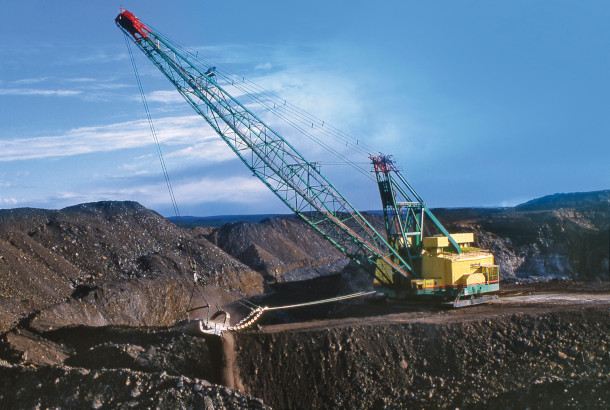
A Marion 8200 working to strip overburden at an opencut coal mine. In announcing the settlement with Vanguard, Texas Attorney General Ken Paxton said “coal is an essential industry to support America’s ever-growing energy demands”, and vowed to “continue to uproot and destroy any attempt by investment giants to push a woke agenda that puts American energy at risk.” (Photo: Peabody Energy, Wikimedia Commons, CC BY 3.0)
CURWOOD: Why should our listeners care about this issue?
BOUDETT: Broadly, most of us hope that our 401K money, and the few of us who have investments beyond that, will be there for us down the road when it's time to retire, and we expect that it will be managed in a way that accounts for risk and minimizes risk. And if companies and asset managers are promising red state attorneys general or other actors out there, we will not think about climate risk. Think about PG&E going bankrupt because of the wildfires in California. I could list many more examples. I won't go on. It's obviously financial. And if you owned shares in PG&E and you lost them in that bankruptcy, you would care a lot. So that's one answer. Then a much more specific answer, Steve, is that people are going to start getting more paperwork coming their way. Because it used to be that your asset manager would take care of all the many, many votes that happen at shareholder meetings, whether it be re-election of the company directors, or whether it be voting on a sustainability related shareholder proposal. We didn't have to think about that because someone else was handling it, and we trusted them to make smart decisions. Now, Vanguard has promised they're not going to play a role in that anymore, and they're going to try and pass through all the voting to individual investors who will now have to deal with all these decisions. They're going to give you a form, and one of the options in that form is going to say, check this box if you just want to agree with management all the time. We hope that many of your listeners choose not to check that box. Management is not always right. Another box will say check here if you would like your shares voted consistent with environmental, social and governance principles. And we hope that many of your listeners will choose to check that box consistent with their values and consistent with smart management of money.
DOERING: That’s Ceres General Counsel Michael Boudett, speaking with Living on Earth Executive Producer, Steve Curwood. On February 26, Vanguard released a statement that reads in part: “We made the decision to settle the litigation filed by the Texas attorney general and other states with our investors’ best interest in mind as it allows us to put this distraction behind us and focus on what matters—giving our investors the best chance for investment success.”
O’NEILL: And in announcing the settlement, Texas Attorney General Ken Paxton vowed to “continue to uproot and destroy any attempt by investment giants to push a woke agenda that puts American energy at risk.” To read the full Vanguard and Texas AG statements visit our website, loe.org.
Links
Read Texas Attorney General Ken Paxton’s press release
Read the text of the Vanguard settlement agreement
Vanguard | “Texas Settlement: What Investors Should Know”
Living on Earth wants to hear from you!
Living on Earth
62 Calef Highway, Suite 212
Lee, NH 03861
Telephone: 617-287-4121
E-mail: comments@loe.org
Newsletter [Click here]
Donate to Living on Earth!
Living on Earth is an independent media program and relies entirely on contributions from listeners and institutions supporting public service. Please donate now to preserve an independent environmental voice.
NewsletterLiving on Earth offers a weekly delivery of the show's rundown to your mailbox. Sign up for our newsletter today!
 Sailors For The Sea: Be the change you want to sea.
 The Grantham Foundation for the Protection of the Environment: Committed to protecting and improving the health of the global environment.
 Contribute to Living on Earth and receive, as our gift to you, an archival print of one of Mark Seth Lender's extraordinary wildlife photographs. Follow the link to see Mark's current collection of photographs.
 Buy a signed copy of Mark Seth Lender's book Smeagull the Seagull & support Living on Earth
© Copyright World Media Foundation. All Rights Reserved
Home | Contact | RSS | Donate | Newsletter