
Air Date: Week of April 8, 2022
Transcript
DOERING: April is Poetry Month and we’re kicking it off with a collection of poems that peers deep into the past at species long gone to grapple with the extinctions unfolding today. “Dear Specimen” by W.J. Herbert examines the extinction crisis through the eyes of a woman who is facing her own death after a terminal diagnosis. But now, rest assured the speaker in the poems is an invented persona and the author herself is alive and well. W.J. Herbert joins me now from Portland, Maine. Welcome to Living on Earth!
HERBERT: Thank you, Steve. I'm glad to be here.
CURWOOD: It's our pleasure. Now many of your poems are in the form of well, let's say it's a one-sided conversation that your speaker is having with fossils and other specimens in a museum. So what inspired this?
HERBERT: Well, the true muse of this collection was the 2016 presidential election, when Trump pulled us out of the Paris Climate Accords, when he began dismantling all the hard-won victories environmental activists and policymakers had fought for, and I felt despair. And on a trip to New Mexico, Las Cruces I'd stumbled upon the Zuhl Museum. And there, fossils of 500-million year old species, extinct species, were displayed beside the few whose descendants survive. And it's at that point that the magnitude of the loss we face really hit me. Those animals, many of them died in the Permian extinction, which took 96% of our marine species and maybe 94% of our terrestrial. And it seemed to me that we were facing this kind of loss, and that we're culpable. And so that's where many of the poems began.
CURWOOD: So let's go right to the poetry along the lines of what you've been talking about. I'm thinking of the poem Nautiloid. This is one of these poems where the speaker is directly talking to a fossil. Tell us about the nautiloid creature and, and read the poem for us, please.
HERBERT: Well, the nautiloid that I'm addressing in this poem was the straight-shelled nautiloid, very prolific in the Ordovician, and all the way up until the Permian. And there is an epigraph for this poem:
"Of the 2500 species that evolved in warm, shallow seas, only six survive."
It's called, ”Nautiloid.”
[READING]
Little squid, you're swimming
as if this black granite
only seconds ago skeined you,
though you haven't siphoned
through your fleshy tube
in 400 million years.
How is it you're still glistening?--
as if reflecting the same sunlight
I felt this morning
as I walked through your sea bed.
It's a desert, now, for coyote
& scavenging rabbit, occasional
jogger with her dog. all the green
-leaved creosote
scorched stones & gravel can gather.
Living on Earth wants to hear from you!
Living on Earth
62 Calef Highway, Suite 212
Lee, NH 03861
Telephone: 617-287-4121
E-mail: comments@loe.org
Newsletter [Click here]
Donate to Living on Earth!
Living on Earth is an independent media program and relies entirely on contributions from listeners and institutions supporting public service. Please donate now to preserve an independent environmental voice.
NewsletterLiving on Earth offers a weekly delivery of the show's rundown to your mailbox. Sign up for our newsletter today!
 Sailors For The Sea: Be the change you want to sea.
 The Grantham Foundation for the Protection of the Environment: Committed to protecting and improving the health of the global environment.
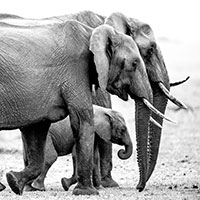 Contribute to Living on Earth and receive, as our gift to you, an archival print of one of Mark Seth Lender's extraordinary wildlife photographs. Follow the link to see Mark's current collection of photographs.
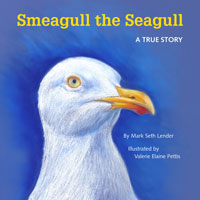 Buy a signed copy of Mark Seth Lender's book Smeagull the Seagull & support Living on Earth
© Copyright World Media Foundation. All Rights Reserved
Home | Contact | RSS | Donate | Newsletter